







 Language
Best places to see the northern lights: 2026 guide
Where to see the northern lights around the world, from Norway to Alaska, with timing, cost, and access compared so you can pick the right destination.

The best places to see the northern lights lie within or near the auroral oval, a band covering parts of Alaska, Canada, Iceland, Scandinavia, and northern Finland. However, the right destination depends on when you travel, how much you want to spend, and how easily you can reach areas with dark, clear skies.
This guide compares the top countries and regions for aurora viewing based on season, accessibility, cost, and the wider travel experience. It also explains how weather, daylight hours, and solar activity affect your chances of seeing the lights.
You’ll find practical guidance on choosing your destination, identifying the best months to travel, and planning a northern lights trip around realistic viewing conditions.
Where are the best places to see the northern lights?
The best destination depends on your budget, preferred travel season, and whether you want an accessible base or a more remote setting with minimal light pollution. Cost tiers below are relative and reflect the typical expense of transport, accommodation, and aurora tours.
| Country/region | Peak season | Best for | Cost tier |
|---|---|---|---|
| Norway (Tromsø, Lofoten) | September to March | Reliable viewing, dramatic scenery | Very high |
| Iceland | September to April | Easy access, varied road trip | High |
| Sweden (Abisko) | Early September to late March | Clear-sky microclimate | Moderate to high |
| Finland (Lapland) | Late August to early April | Family-friendly, glass igloos | High |
| Canada (Yukon) | Mid-August to mid-April | Remote, low light pollution | Very high |
| Alaska (Fairbanks) | Late August to late April | Most reliable in the US | Very high |
The following sections examine what each location offers, helping you narrow down the best places to see the northern lights for your travel priorities.
When is the best time to see the northern lights?
Across most northern destinations, the viewing season runs from late summer or early autumn until early spring. Exact dates vary by latitude, but darkness matters more than choosing one particular month.
The aurora occurs throughout the year, yet it is only visible when the sky is sufficiently dark and clear. Staying for several nights also improves your chances of encountering suitable weather and solar conditions.
- Season window: The northern lights viewing season generally runs from late August to late April, depending on the destination. However, the darkest winter months often provide longer viewing windows.
- Why summer does not work: Auroral activity continues year-round, but near-continuous daylight at high latitudes prevents the sky from becoming dark enough to see it.
- Kp index and solar activity: The Kp index measures global geomagnetic disturbance on a scale from 0 to 9. Higher values generally indicate stronger activity and a greater chance of seeing the aurora farther south. Check NOAA’s 30-minute aurora forecast alongside local cloud cover before heading out.
Best places to see the northern lights in Norway
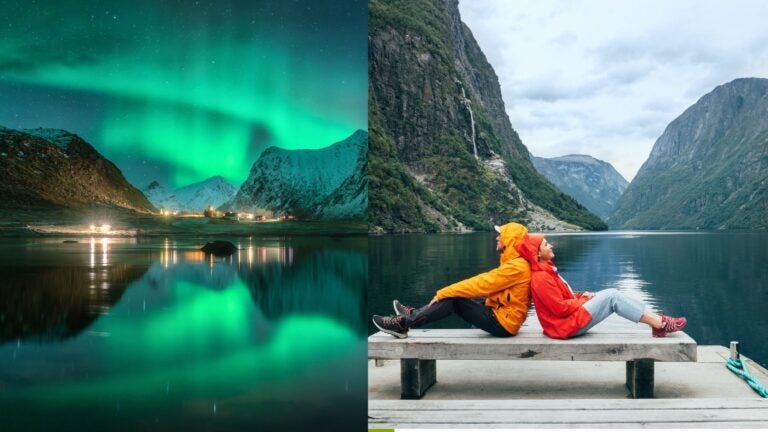
Northern Norway is one of the most consistent aurora-viewing regions because much of it lies beneath the auroral oval.
From September to March, long periods of darkness create frequent viewing opportunities, while established transport links, guided tours, and coastal towns make the region easier to explore than many remote Arctic destinations.
Tromsø
Tromsø combines a location within the auroral zone with an international airport, city accommodation, and a wide selection of guided excursions.
The lights can sometimes be visible from the city, but tours can travel beyond its light pollution and follow clearer weather across the surrounding region. This makes Tromsø particularly suitable for first-time visitors who want a convenient Arctic base.
- Best time to visit: Late August to early April, when the sky can become sufficiently dark for aurora viewing.
- Best for: An accessible base with numerous guided tours.
- Tip: Allow at least three nights and choose a tour that can travel in search of clearer skies.
Lofoten Islands
The Lofoten Islands pair northern lights viewing with fishing villages, beaches, mountains, and open coastal landscapes.
The archipelago offers excellent photography opportunities, although its changeable coastal weather means clouds can sometimes hide the northern lights.
Compared with Tromsø, exploring Lofoten generally requires more planning and independent travel between viewing locations.
- Best time to visit: Late August to mid-April, provided the sky is dark and clear.
- Best for: Dramatic coastal scenery and aurora photography.
- Tip: Stay several nights and remain flexible enough to move between areas when cloud cover changes.
Best places to see the northern lights in Iceland
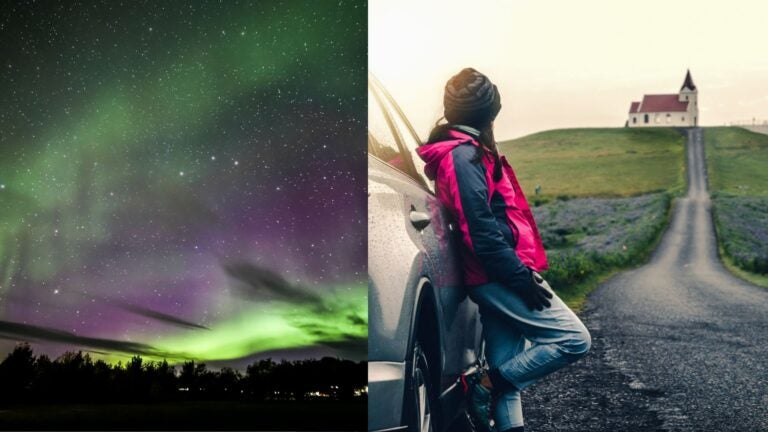
Iceland is an accessible, road-trip-friendly option with direct international flights, established tours, and dark-sky locations within reach of Reykjavik.
Travelers can combine aurora viewing with waterfalls, glaciers, and geothermal sites, although changing weather and winter road conditions make a flexible itinerary essential.
Reykjavik and the Golden Circle
Reykjavik provides the easiest base for a short northern lights trip, with an international airport nearby and numerous evening tours departing from the city.
Travelers can explore the Golden Circle during the day, then move beyond the capital’s light pollution at night. However, seeing the aurora still depends on clear skies and sufficient solar activity.
- Best time to visit: Late August to early April, with the longest viewing windows generally available from November to March.
- Best for: Short trips, easy access, and organized excursions.
- Tip: Book a tour that offers another attempt if weather prevents the excursion from running.
Vík and the South Coast
Vík is a practical base for combining aurora viewing with South Iceland’s black-sand beaches, waterfalls, and nearby glaciers.
Its small-town setting has less artificial light than Reykjavik, while Route 1 connects it to many of the region’s main attractions. Nevertheless, cloud cover and winter driving conditions can affect evening plans.
- Best time to visit: September to April, when South Iceland has sufficiently long, dark nights.
- Best for: Combining the aurora with waterfalls, glaciers, and coastal scenery.
- Tip: Check the weather and road conditions before driving to a viewing location.
Best places to see the northern lights in Sweden
Northern Sweden combines reliable aurora viewing with dark skies, large wilderness areas, and established winter tourism infrastructure.
Its viewing season extends from early autumn to early spring, with options ranging from remote national parks to well-connected Arctic towns.
Abisko National Park
Abisko National Park has a strong reputation for clear skies due to its distinctive local microclimate. The area is sometimes associated with the “blue hole,” a patch of clear sky that can remain over Abisko when surrounding areas are cloudy.
Its position within the auroral zone, limited light pollution, and open landscapes further support favorable viewing conditions, although sightings are never guaranteed.
- Best time to visit: September to early April, when the nights are sufficiently dark.
- Best for: A greater likelihood of clear skies than in many surrounding areas.
- Tip: Stay for several nights, as Abisko’s microclimate does not guarantee clear weather every evening.
Best places to see the northern lights in Finland
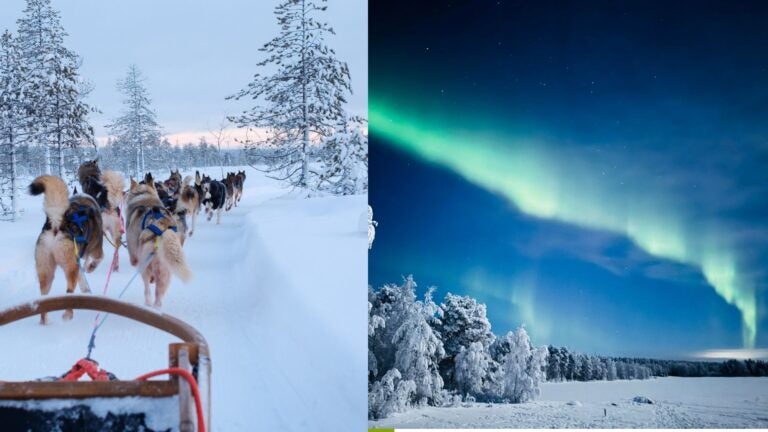
Finland combines frequent aurora opportunities with organized winter activities and a broad range of purpose-built accommodation. In the north, travelers can choose between accessible resort towns and quieter wilderness areas.
It is particularly suitable for families and visitors who want a comfortable Arctic experience rather than a highly independent trip.
Finnish Lapland (Rovaniemi and Levi)
Rovaniemi and Levi make it easy to combine northern lights viewing with winter activities such as reindeer rides, husky tours, and skiing.
Both destinations offer guided excursions and glass-roofed accommodation, while Rovaniemi has better transport connections and Levi provides a quieter resort setting. However, seeing the aurora still requires dark, clear skies and sufficient solar activity.
- Best time to visit: September to March offers the best overall conditions, although the viewing season can extend from late August to around mid-April.
- Best for: Family trips, winter activities, and glass-igloo stays.
- Tip: Stay for several nights and book an outdoor tour rather than relying only on your accommodation.
Best places to see the northern lights in Canada
Canada’s northern territories offer long viewing seasons, extensive wilderness, and very low levels of artificial light outside their main communities.
These conditions support strong aurora viewing, but greater travel distances and limited infrastructure can increase costs. Canada therefore suits travelers who prioritize remote landscapes over a compact, easily connected itinerary.
Yukon (Whitehorse)
Whitehorse provides accommodation, guided excursions, and transport connections while remaining close to Yukon’s dark, open landscapes.
The northern lights may appear within the city, but traveling beyond its artificial light provides better viewing conditions. Compared with many European destinations, Yukon offers a quieter and more remote experience, although winter temperatures and travel distances require additional preparation.
- Best time to visit: Mid-August to mid-April, with autumn and winter providing two distinct viewing periods.
- Best for: Remote viewing with very little light pollution.
- Tip: Join a guided excursion if you are not comfortable driving in Yukon’s winter conditions.
Best places to see the northern lights in the USA
Alaska offers the most dependable aurora viewing in the United States due to its northern latitude, dark winter skies, and position beneath the auroral oval.
Fairbanks is the main hub, combining frequent viewing opportunities with accommodation, tours, and access to darker locations outside the city.
- Best time to visit: Late August to late April, with Fairbanks’ official aurora season running from August 21 to April 21.
- Best for: Fairbanks as the most reliable northern lights hub in the US.
- Full guide: Explore Alaska’s best viewing spots in detail, including Fairbanks and other destinations across the state.
Iceland vs. Norway: Which is better for the northern lights?
Iceland is generally the better choice for easy access and road-trip variety, while Norway suits travelers who prioritize consistent viewing opportunities and Arctic coastal scenery. Neither country is universally better, as visibility ultimately depends on solar activity, darkness, and cloud cover.
In Iceland, travelers can base themselves in Reykjavik, join an organized excursion, or drive to darker areas around the Golden Circle and South Coast. Its relatively compact routes also make it easy to combine aurora viewing with waterfalls, glaciers, black-sand beaches, and geothermal attractions. However, rapidly changing weather can disrupt both visibility and driving plans.
Northern Norway places visitors directly within the auroral oval, with established viewing hubs, experienced tour operators, and a long season. Tromsø is particularly convenient for guided aurora chases, while Lofoten offers fjords, mountains, beaches, and fishing villages as photographic settings. Coastal clouds can still affect visibility, so no destination provides guaranteed sightings.
Choose Iceland for a flexible road trip with varied attractions. Choose Norway for a more focused Arctic experience supported by extensive aurora tourism infrastructure. Both are relatively expensive destinations and benefit from a stay of several nights.
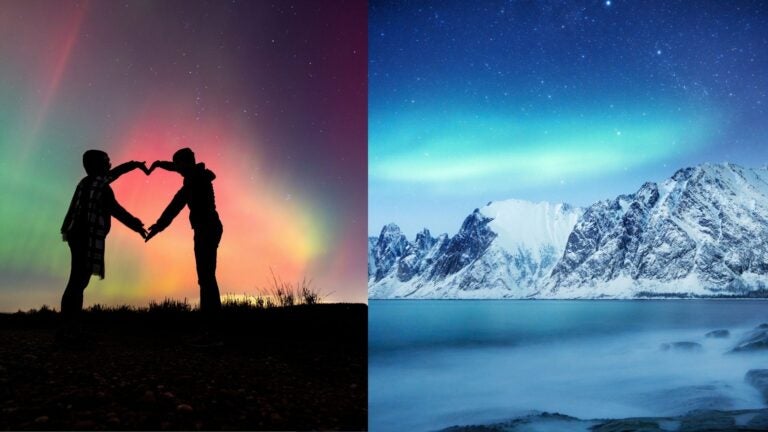
How to plan a northern lights trip
A successful aurora trip requires flexibility because darkness alone does not guarantee a display. Plan around several possible viewing nights and prepare for changing weather, road conditions, and limited services in remote areas.
- Choose your destination carefully: Compare its viewing season, travel costs, accessibility, and activities rather than choosing based only on popularity.
- Check live forecasts: Review an aurora forecast and local cloud cover before finalizing each night’s plans, as strong solar activity is of little use beneath overcast skies.
- Allow several nights: Spend at least three nights in the region, since aurora activity and weather can change considerably from one evening to the next.
- Dress for extreme cold: Wear several insulating layers, including thermal base layers, a windproof outer layer, warm boots, gloves, and a hat.
- Stay connected during your trip: Mobile data helps you check real-time aurora forecasts, monitor road conditions, and navigate between viewing areas. Choose a Holafly destination eSIM to access the internet throughout your trip without changing physical SIM cards.
Stay connected with Holafly Plans wherever you are
Aurora trips can span several countries, especially when combining Norway, Iceland, and Sweden. Buying and installing a new eSIM at every stop adds extra work when your priority is following clear skies.
Holafly Plans solves this by connecting you across more than 160 destinations with a single eSIM. Your connection switches automatically when you cross borders, so you do not need to arrange a new plan for each country. The Unlimited Plan includes unlimited data, while the Light Plan provides 25 GB. Both support hotspot sharing and can be cancelled at any time.
Plans also include Always On, which provides 1 GB of monthly backup data once your main allowance ends. If your trip covers only one country, you can instead choose a Holafly destination eSIM.

FAQ about seeing the northern lights
These quick answers address common questions about comparing destinations, travel costs, aurora colors, and solar activity.
Which country is best to see the northern lights?
Norway is one of the strongest all-around choices due to its position beneath the auroral oval, established tours, and accessible northern hubs. However, Iceland is better suited to road trips, while Sweden offers particularly favorable clear-sky conditions around Abisko.
What is the cheapest country to see the northern lights in?
There is no single cheapest country because airfare, accommodation, and tours vary by season and departure point. Sweden and Finland generally have lower consumer price levels than Iceland and Norway, but remote Arctic stays can still be expensive.
Which Scandinavian country is best for the northern lights?
Norway is the strongest all-around Scandinavian option for accessibility, tour availability, and varied Arctic scenery. Sweden may be preferable if clear-sky conditions are your priority, particularly around Abisko.
What is the rarest aurora color?
Blue is generally considered one of the rarest aurora colors and is seen much less frequently than green. Aurora colors depend on which atmospheric gases interact with charged particles and the altitude at which this occurs.
Is 2026 a good year to see the northern lights?
Yes, 2026 remains a good year for aurora viewing, although it is not guaranteed to be the “best” year. Solar Cycle 25 is now in its declining phase after solar maximum, but the Sun remains in a heightened period of activity and produced several strong flares during 2026.
Plans that may interest you


Hi! I'm a Spanish-English copywriter working with Holafly, helping bring travel content to life for curious travelers. As a digital nomad with a passion for exploring, I'm always adding new spots to my bucket list. If you love to travel like me, stick around because you're in the right place to find inspiration for your next trip! ✈️🌍
