Language
Best places to stargaze: 2026 guide
Where to stargaze across the US and Europe, from Death Valley's dark skies to Kerry's coastal reserve, with the apps and timing tips to plan around.

Some of the best places to stargaze are easier to reach than you might think. Certified dark-sky sites across the US and Europe offer excellent views without a trip to a remote corner of the world.
This guide covers standout destinations in both regions, the best time of month and year to go, and the apps and tools that make planning a stargazing trip easier.
Quick picks: The best places to stargaze
The best places to stargaze across the US and Europe include desert parks, mountain landscapes, and protected dark-sky areas. Use this table to compare destinations and choose a season; for the darkest night, plan your visit around a new moon.
| Destination | Region | Dark Sky status | Best time to visit |
|---|---|---|---|
| Big Bend National Park, Texas | US | Gold-tier International Dark Sky Park | Fall–spring |
| Death Valley National Park, California/Nevada | US | Gold-tier International Dark Sky Park | Winter–early spring |
| Bryce Canyon National Park, Utah | US | Gold-tier International Dark Sky Park | Year-round, clearest fall/winter |
| Natural Bridges National Monument, Utah | US | First designated Dark Sky Park | Spring and fall |
| Chaco Canyon, New Mexico | US | 99% natural darkness | Spring and fall |
| Zselic Starry Sky Park, Hungary | Europe | Certified Dark Sky Park | Autumn–winter |
| Alqueva Dark Sky Reserve, Portugal | Europe | Starlight Tourism Destination | Spring–autumn |
| Teide National Park, Tenerife, Spain | Europe | Starlight Reserve | Year-round |
| Kerry Dark Sky Reserve, Ireland | Europe | Gold-tier International Dark Sky Reserve | Autumn–early spring |
| Kielder Forest, Northumberland, UK | Europe | Verify certification tier | September–March |
Best places to stargaze in the US
From the deserts of Texas to the canyons of Utah, some of the best places to stargaze in the US are protected parks with exceptionally dark skies. Here’s where to start.
Big Bend National Park, Texas
Big Bend has some of the darkest skies in the lower 48 states. It earned Gold-tier International Dark Sky Park status and forms part of the Greater Big Bend International Dark Sky Reserve, the world’s largest protected dark-sky place.
- Best time to visit: Fall through spring. Summer heat can be extreme, especially at lower elevations.
- Best viewing spots: Chisos Basin overlook and Cottonwood Campground.
- Practical tip: Cell service is patchy, so download offline maps and a star chart app before entering the park.
Death Valley National Park, California/Nevada
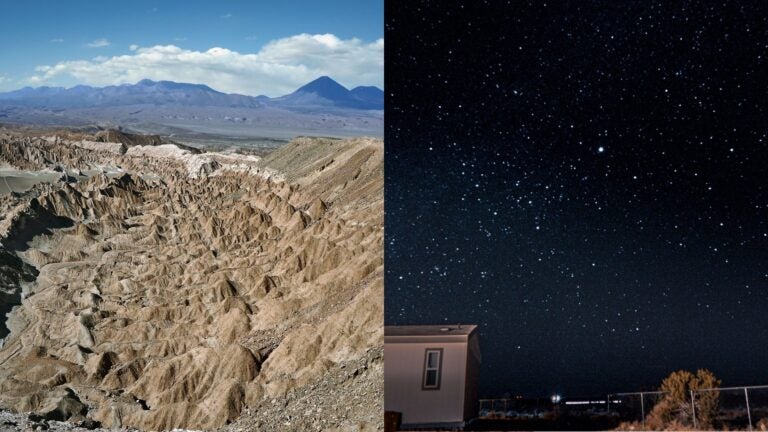
Death Valley is the largest national park in the contiguous US and a Gold-tier International Dark Sky Park. Its distance from major cities keeps light pollution low across much of the park.
- Best time to visit: Winter to early spring, when temperatures are more comfortable. Summer temperatures can exceed 43°C (110°F).
- Best viewing spots: Harmony Borax Works and Badwater Basin.
- Practical tip: Bring water and a flashlight, even for a short nighttime visit. Badwater Basin sits below surrounding mountains, so parts of the horizon are obscured.
Bryce Canyon National Park, Utah
Bryce Canyon’s high elevation, clean air, and distance from cities give it some of the darkest skies in the US. Its amphitheater of red rock spires makes a distinctive setting for stargazing, and the park is a Gold-tier International Dark Sky Park.
- Best time to visit: Year-round; fall and winter bring longer nights, though snow can temporarily close roads.
- Best viewing spots: Sunset Point and Bryce Point.
- Practical tip: The viewpoints sit at around 2,440 m (8,000 feet). Bring warm layers, even if the day felt mild.
Natural Bridges National Monument, Utah
Natural Bridges became the world’s first International Dark Sky Park in 2007. Its three sandstone bridges give stargazers a distinctive foreground, with Owachomo Bridge a particularly striking place to see the night sky.
- Best time to visit: Spring or fall for milder temperatures and a better chance of a comfortable night outdoors.
- What makes it distinct: The chance to see the stars above the monument’s natural stone arches.
- Practical tip: The campground is open year-round, but every site requires a reservation. Book ahead if you want to stay overnight.
Chaco Canyon, New Mexico
Stargazing at Chaco Canyon connects today’s night sky with a long history of astronomical observation. Ancestral Puebloans incorporated celestial movements into their buildings, and Casa Rinconada is known for its solstice and equinox alignments.
- Best time to visit: Spring or fall, when temperatures are more moderate.
- Cultural and historical angle: Check for a ranger program on archaeoastronomy or telescope viewing; these run only when staffing and weather allow.
- Practical tip: Check road conditions before setting out. Access roads can be rough after storms.
Best places to stargaze in Europe
The best places to stargaze in Europe range from protected forests to Atlantic islands. These five destinations offer dark skies, with some also offering observatories and guided tours.
Zselic Starry Sky Park, Hungary
Zselic is a certified International Dark Sky Park in southern Hungary, with skies largely unaffected by light pollution. It offers a quieter-feeling alternative to Europe’s more familiar stargazing destinations, plus a public observatory and guided night tours.
- Best time to visit: Autumn and winter for longer nights; choose a clear night near the new moon.
- What makes it distinct: Its dark forest setting and observatory make it a worthwhile addition to a longer Hungary trip from Budapest.
- Practical tip: Book an English-language program in advance. Observatory visits are guided, and night programs are typically held on Fridays.
Alqueva Dark Sky Reserve, Portugal
Alqueva became the world’s first certified Starlight Tourism Destination in 2011. The reserve spans a wide area of Portugal’s Alentejo region, with an official observatory in the village of Cumeada for guided stargazing sessions.
- Best time to visit: Spring through autumn. Summer offers warmer nights, while spring and autumn are more comfortable for exploring during the day.
- Nighttime temperatures: Summer evenings are generally milder than winter nights, though it’s still sensible to bring a light layer.
- Practical tip: Reserve an observatory session ahead of time; scheduling depends on the moon phase and weather.
Teide National Park, Tenerife, Spain
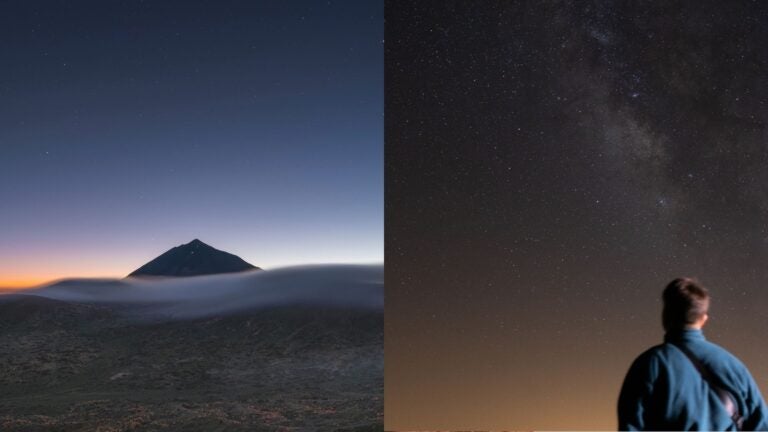
Teide National Park puts stargazing among Tenerife’s high-altitude volcanic landscapes. The viewing areas at Las Cañadas offer dark skies above the island’s coastal towns, with striking views on clear, moonless nights.
- Best time to visit: Year-round, provided skies are clear; aim for a night near the new moon.
- Getting there: Fly into Tenerife South Airport, then drive up to the park via the island’s mountain roads.
- Practical tip: Bring warm layers and check the forecast for the park itself. Conditions at altitude can be very different from those on the coast.
Kerry Dark Sky Reserve, Ireland
Kerry Dark Sky Reserve stretches across part of the Iveragh Peninsula, pairing dark skies with the coastal scenery of Ireland’s Wild Atlantic Way. Its Gold-tier designation makes it a compelling choice for a stargazing trip, provided the weather cooperates.
- Best time to visit: Autumn through early spring for the longest nights.
- Weather caveat: Atlantic cloud cover can block the view, even on a moonless night. Leave room in your itinerary to try again the following evening.
- Practical tip: Check both the cloud forecast and moon phase before choosing your viewing night.
Kielder Forest, Northumberland, UK
Kielder Water & Forest Park forms part of Northumberland International Dark Sky Park, one of England’s largest protected dark-sky areas. The forest is also home to Kielder Observatory, which runs guided astronomy events throughout the year.
- Best time to visit: September through March for longer nights.
- Practical tip: Book Kielder Observatory tickets in advance. Entry is for ticket holders, and events can sell out early.
What is the best month for stargazing?
There’s no single best month for stargazing: the answer depends on where you’re going and what you want to see. For the darkest skies, plan around the new moon, ideally within three days before or after it, and check the cloud forecast before you travel.
August is a popular choice for meteor watching because the Perseid shower usually peaks around August 12–13.
For the destinations above, autumn through early spring generally brings longer nights, although weather and viewing conditions vary by region. A clear, moonless night in a suitable season matters more than choosing the same month for every destination.
Best apps and tools for stargazing
Choosing a stargazing destination is just the start. These apps and tools help you find a darker viewing spot and see what will be visible on the night you visit.
- Stellarium: A free planetarium for identifying stars, planets, and the Milky Way. It’s a good starting point if you’re new to stargazing.
- SkySafari: A paid app with detailed sky charts, observing plans, and telescope controls. It’s well suited to keen amateur astronomers.
- PhotoPills: A paid app for planning astrophotography shots. Use it to see where and when the Milky Way will appear in your photos.
- Dark-sky finders and light pollution maps: Free tools for comparing light pollution and finding a darker place to stargaze.
- The Bortle scale: A scale from 1 to 9 that rates how dark the sky is. Class 1 means a nearly pristine night sky; class 9 means heavy inner-city light pollution.
How to plan a stargazing trip
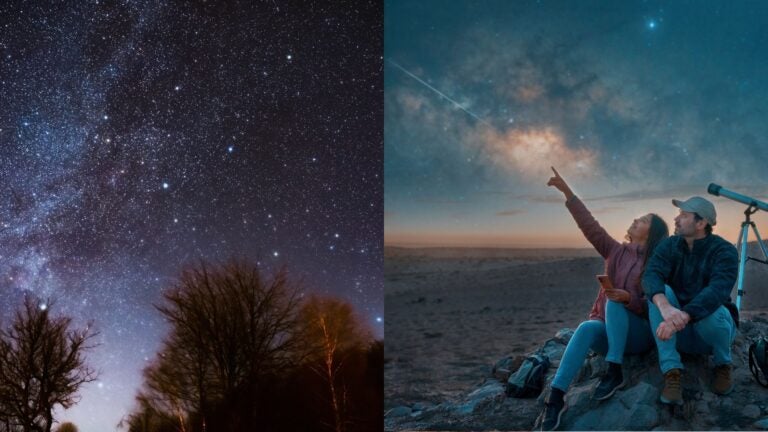
A good viewing spot is only part of the plan. Choose your night carefully and prepare for conditions after dark, especially if you’re heading somewhere remote.
- Book around a new moon: With less moonlight in the sky, fainter stars are easier to see.
- Check the weather: Cloud cover can hide the stars even at the darkest sites. Check the forecast shortly before you set out.
- Bring warm layers: Temperatures can drop sharply after sunset, even where daytime conditions are hot.
- Use a red-light headlamp or flashlight: Red light helps preserve your night vision while you move around safely.
- Stay connected during your trip: Mobile data lets you check updated weather and moon forecasts while traveling. A Holafly USA eSIM is useful if you’re visiting US stargazing sites, while a Holafly Europe eSIM covers trips across multiple European countries with one eSIM. Download offline maps and your star chart before heading to remote viewing spots.
Stay connected with Holafly wherever the sky takes you
Stargazing trips often take you far from reliable mobile service. Coverage is limited in places like Big Bend and Chaco Canyon, so check the forecast and download maps before heading to a remote viewing spot.
If you’re visiting multiple stargazing sites over a longer trip, Holafly Plans lets you install one eSIM and use it in more than 160 destinations, without switching eSIMs as you travel. Light includes 25 GB per month; Unlimited offers unlimited data. Both include hotspot sharing, can be canceled anytime, and come with 24/7 human support.
Always On is included at no extra cost. After your purchased data or plan ends, it provides 1 GB of backup data every 30 days, useful for checking forecasts or directions between stops.

FAQ about the best places to stargaze
The best place depends on the weather, moon phase, and what you want to see. These quick answers can help you narrow down your options.
Where is the best place in the world to stargaze?
There’s no single best place in the world to stargaze. Conditions such as cloud cover and moonlight affect what you’ll see at any destination. For a fuller global ranking, see Holafly’s Clean Sky Index.
What country is best for stargazing?
The US is a strong choice for stargazing, with dark-sky destinations in Texas, Utah, California, and New Mexico. If you’re traveling in Europe, Spain stands out for the high-altitude skies around Teide in Tenerife.
Where is the best spot for stargazing in the US?
Big Bend National Park in Texas is one of the strongest choices. The National Park Service says it has the darkest night skies of any national park in the lower 48 states.
If stargazing has you thinking about your next trip, explore our guides to other natural sights and outdoor experiences:
- More night skies: The best places to see the northern lights and where to see the aurora in Alaska
- Autumn scenery: The best places to see fall foliage and autumn leaves in Japan
- Wildlife and water: The best places for whale watching and where to snorkel in Hawaii
Plans that may interest you

Hi! I'm a Spanish-English copywriter working with Holafly, helping bring travel content to life for curious travelers. As a digital nomad with a passion for exploring, I'm always adding new spots to my bucket list. If you love to travel like me, stick around because you're in the right place to find inspiration for your next trip! ✈️🌍