Language
Best places to see autumn leaves in Japan: 2026 koyo guide
When and where to see Japan's autumn colors this year, from Hokkaido's early koyo to Kyoto's temple gardens, plus free viewing spots and planning tips for your trip.

Japan’s autumn foliage season doesn’t arrive everywhere at once. The first colors usually appear in the high mountains of Hokkaido in September, then move through Tohoku, the Japanese Alps and Kanto before reaching Tokyo, Kyoto, and other warmer areas in November and sometimes December.
The Japanese word koyo (紅葉) refers to autumn foliage, more specifically the changing colors of maple trees. And this guide covers the best places to see autumn leaves in Japan, when to visit each one, what you can see for free, what requires admission, and how to plan your first trip to Japan around the 2026 foliage season.
Where is the best place to see autumn leaves in Japan?
The best place depends mainly on when you’re visiting. Mountains are your best bet for early autumn, while Tokyo and Kyoto are more rewarding later in the season.
Costs vary too: some of the best spots are completely free, while several famous Kyoto temples charge admission. If you’re planning to visit paid attractions, it’s worth checking the most common payment methods in Japan beforehand.
| Place | Best time to visit | Best for | Ideal trip/base | Free/paid |
|---|---|---|---|---|
| Daisetsuzan | Mid-Sep to early Oct | Earliest foliage, mountains | Asahikawa/Hokkaido | Mostly free. Ropeway paid |
| Oirase Stream | Mid to late Oct | Forests, waterfalls, hiking | Aomori/Towada | Free |
| Nikko | Oct to early Nov | Mountains, lake views, temples | Nikko | Mostly free. Some sites paid |
| Tokyo | Mid-Nov to early Dec | Parks, gardens, ginkgo | Tokyo | Mixed |
| Kyoto | Mid to late Nov | Temples and maple gardens | Kyoto | Mixed |
| Nara | Mid to late Nov | Parks, temples, deer | Nara/Kyoto | Park free. Some sites paid |
Japan fall foliage forecast 2026
The latest 2026 Japan autumn foliage forecast, released on September 2, 2026, suggests that fall colors may arrive later than usual in several parts of the country. The forecast puts peak red leaves at around November 29 in Tokyo, December 11 in Kyoto, November 13 in Aomori, and November 7 in Sapporo, while yellow leaves are expected from early to late November depending on the region.
The timing varies significantly by elevation and location. Mountain areas such as Daisetsuzan can see foliage from September, while places such as Oirase Stream and Nikko turn earlier than the major cities.
Check the 2026 Japan fall foliage forecasts and local foliage reports before planning your trip.
Best places to see autumn leaves in Tokyo
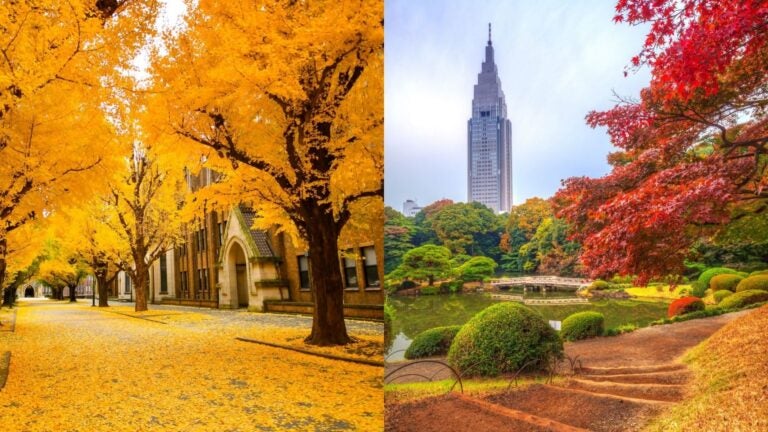
Tokyo is one of the easier places to see autumn leaves in Japan in 2026. Expect the main season around mid-November to early December, with areas such as Mount Takao changing earlier than some city parks.
- Shinjuku Gyoen: Visit from mid-November into early December to see maple and ginkgo trees turn vivid shades of red, orange, and gold. Admission is ¥500 ($3.13) for adults.
- Rikugien: One of Tokyo’s best traditional gardens for autumn, particularly from late November to early December. Adult admission is ¥300 ($1.88). Its famous autumn night viewing includes stunning illumination.
- Koishikawa Korakuen: Go in mid-to-late November for maple trees around the garden’s ponds and bridges. Admission is ¥300 ($1.88).
- Icho Namiki: This famous Meiji Jingu Gaien avenue is the place for golden ginkgo rather than red maple leaves. Late November into December is the sweet spot, and the avenue itself is free to walk.
- Ueno Park: A convenient option if you’re already visiting Ueno’s museums or zoo. Maple, ginkgo, and other trees add color from mid-November into December.
- Yoyogi Park: Best for a relaxed, free, autumn walk, and it’s easy to combine with Harajuku and Meiji Jingu.
- Mt. Takao: A great choice if you want to go hiking too. From Shinjuku, the journey to Takaosanguchi Station takes roughly 50 minutes by train. From there, you can hike or use the cable car or chair lift for part of the climb.
Best places to see autumn leaves in Hokkaido and Tohoku
If your Japan autumn trip starts in September or early October, head north. Hokkaido’s higher elevations are among the first places in Japan to turn, while Tohoku gives you excellent forest landscapes later in October.
Daisetsuzan National Park
The higher elevations around Mount Asahidake begin changing from mid-September, with colors descending into lower areas later.
- Best time: Mid-September to early October.
- Best viewing spots: Mt. Asahidake, Ginsendai, and Kogen Onsen. The Asahidake Ropeway makes the journey easier.
- How to get there: From Asahikawa, drive about 60 minutes to Asahidake Onsen. From JR Asahikawa Station, the drive is roughly 70 minutes.
- Car vs. public transport: A car gives you much more flexibility around Daisetsuzan. Public transport works, but connections are less convenient.
Practical tip: Mountain weather changes quickly. Check conditions before hiking and bring proper layers and footwear, even if the weather in Asahikawa looks mild.
If you’re planning to explore the area by car, understanding the basics of driving in Japan can make getting around Daisetsuzan much easier.
Oirase Stream
Oirase Stream in Aomori is a 14-kilometer forested stream running from Lake Towada. Waterfalls, moss, rocks, and colorful trees give the whole place an enchanted feel.
- Best time: Mid to late October.
- Best viewing spots: The stretches around Choshi Otaki, Kumoi no Nagare, and Ishigedo.
- How to get there: JR buses connect the Towada area with Oirase, while driving gives you more flexibility.
- Approximate travel time: Allow several hours if you want to walk sections of the stream rather than simply stop for photos.
- Car vs. public transport: Both work, but a car is useful for covering more ground. An electric bicycle is another option; rentals cover the 14-kilometer stream route.
Practical tip: Don’t rush through Oirase. The scenery changes every few minutes, so leave enough time to walk.
Best autumn foliage spots in Nikko and the Japanese Alps
These destinations work well for travelers visiting Japan in October. Their higher elevations mean you can catch autumn colors before Tokyo and Kyoto reach their peak.
Nikko and Oku-Nikko
Nikko gives you mountains, lakes, waterfalls, and historic sights in one trip. The Oku-Nikko area around Lake Chuzenji changes colors earlier than central Nikko.
- Best time: Early October to early November, with Oku-Nikko generally earlier.
- Best viewing spots: Lake Chuzenji, Kegon Falls, Ryuzu Falls, and the Yumoto Onsen area.
- How to get there: Take the train from Tokyo to Nikko, then local buses toward Lake Chuzenji.
- Approximate travel time: Around 2 hours from central Tokyo, depending on the connection.
- Day trip vs. overnight: A day trip is possible, but staying overnight makes much more sense during peak autumn season in Japan.
Practical tip: Weekends in October can be extremely busy.
Kamikochi and the Japanese Alps
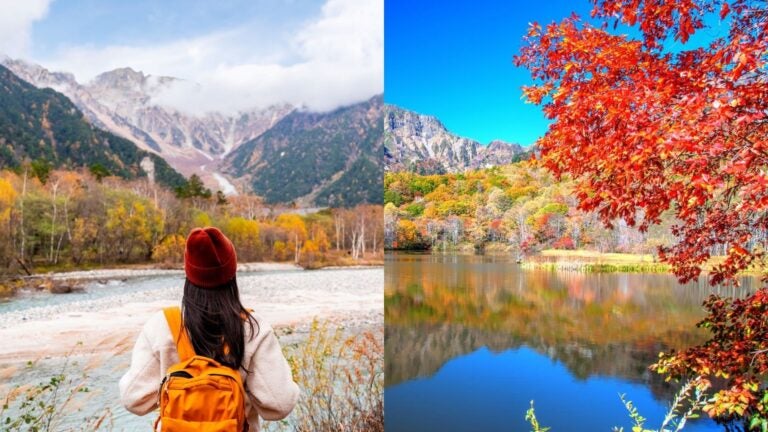
October is the key month, when the valley takes on shades of yellow, orange and red.
- Best time: October.
- Best viewing spots: Kappabashi, the Azusa River, Myojin, and the walking trails around the valley.
- How to get there: Matsumoto is a convenient base. From there, take the train and bus combination to Kamikochi.
- Approximate travel time: Roughly 1.5 to 2 hours from Matsumoto.
- Car vs. public transport: You cannot simply drive into central Kamikochi. Drivers leave cars at Sawando or Hirayu and continue by bus or taxi. Public transport is therefore straightforward.
- Seasonal access: Kamikochi is open until November 15. From November 16, the area closes for winter, and buses and facilities stop operating.
Practical tip: October weekends can be crowded, so travel on a weekday if possible.
Tofuku-ji
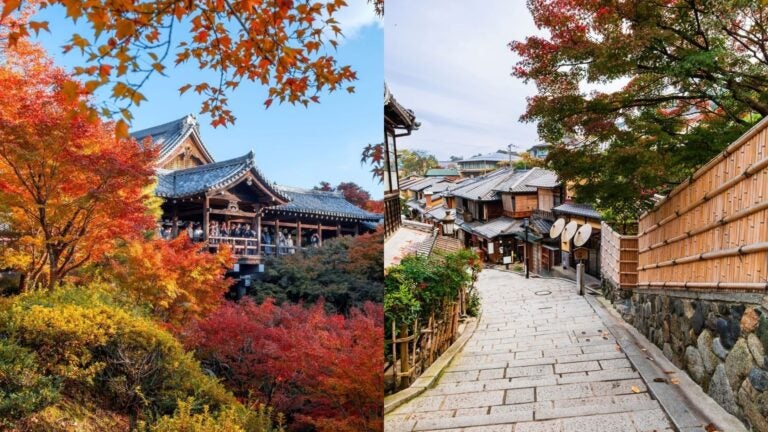
Tofuku-ji is one of Kyoto’s biggest autumn foliage draws, particularly around the famous Tsutenkyo Bridge.
- Best time: Mid to late November.
- Best viewing area: The view from Tsutenkyo Bridge is the main attraction, with dense maple trees filling the valley below.
- Admission: Tickets cost ¥1,000 ($6.26) for adults.
- How to get there: It’s about a 10-minute walk from Tofukuji Station.
- Crowds: Expect heavy crowds around peak autumn foliage. Avoid weekends if you can.
Practical tip: Getting there early can make a noticeable difference.
Kiyomizu-dera
Kiyomizu-dera has 2 things going for it right from the beginning. It has Kyoto’s famous hillside architecture and it has beautiful autumn colors across the surrounding valley.
- Best time: Mid to late November.
- Best viewing areas: The main stage and the trees below it provide the classic autumn view.
- Admission: Adult admission is ¥500 ($3.13).
- How to get there: Buses go towards the Kiyomizu-dera area, followed by a walk uphill.
- Autumn night illumination: Kiyomizu-dera regularly holds autumn illuminations, but the 2026 dates should be confirmed before planning your Japan autumn trip itinerary.
Practical tip: Visit early in the morning for the temple itself, then explore the surrounding Higashiyama streets before the biggest crowds arrive.
Also consider: Nanzen-ji’s also an excellent foliage stop around mid-to-late November. It’s easy to combine with the eastern Kyoto temple route. Nara Park is another worthwhile day trip and is free to enter, although individual temples and attractions charge their own fees.
Lake Kawaguchiko and Fuji Five Lakes
Want autumn foliage with a chance of seeing Mt. Fuji? This one’s for you!
- Best time: Late October to mid-November.
- Best viewing spots: The northern shore, especially the areas around the Maple Corridor, offers some classic lake-and-Fuji views.
- How to get there: Buses and trains connect Tokyo with Kawaguchiko.
- Approximate travel time: Around 2 hours from central Tokyo.
- Car vs. public transport: Public transport is convenient. Car makes it easier to explore the wider Fuji Five Lakes area.
- Autumn event: The Fuji Kawaguchiko Autumn Leaves Festival is traditionally held around the peak season, but check the official 2026 schedule before planning.
Practical tip: Keep aside extra time if seeing the mountain is a priority.
Best places to see autumn leaves in Kyoto
Kyoto is usually at its best for koyo from mid to late November. The city’s official tourism information says leaves generally begin changing in late October and pass their peak toward the end of November (higher areas such as Takao can change earlier).
The catch? November is also one of Kyoto’s busiest tourist periods. Start early, choose weekdays where possible and check the latest foliage reports before deciding where to go.
Arashiyama
- Best time: Mid to late November.
- Best viewing spots: The riverside, Togetsukyo Bridge area, Tenryuji’s gardens and the surrounding hills.
- How to get there: From central Kyoto, take the JR Sagano Line or Hankyu Line toward Arashiyama.
- Approximate travel time: Around 20 to 30 minutes.
- Free vs. paid: Walking around the Arashiyama area and along public paths is free. Individual temple gardens and attractions charge admission.
- Best time of day: Early morning is your best bet if you want fewer people, especially around the bamboo grove.
Practical tip: Arrive early and explore beyond the most photographed paths.
Eikando
Eikando is one of the best places to see autumn leaves in Japan, especially when its maple trees turn bright red around the pond and temple buildings.
- Best time: Mid to late November.
- Best viewing areas: The temple gardens, pond, and elevated temple buildings offer different perspectives.
- Admission: A special autumn admission fee is charged during the peak season. Check the temple’s 2026 notice before visiting.
- How to get there: It’s within walking distance of the Keage area and can also be reached by bus.
- Evening illumination: Eikando’s known for autumn night illumination. Confirm 2026 dates and admission before planning.
Practical tip: Visit in daylight if you want to explore the grounds properly, then consider returning for the evening illumination.
Tofuku-ji
Tofuku-ji is one of Kyoto’s biggest autumn foliage draws, particularly around the famous Tsutenkyo Bridge.
- Best time: Mid to late November.
- Best viewing area: The view from Tsutenkyo Bridge is the main attraction, with dense maple trees filling the valley below.
- Admission: Tickets cost ¥1,000 ($6.26) for adults.
- How to get there: It’s about a 10-minute walk from Tofukuji Station.
- Crowds: Expect heavy crowds around peak autumn foliage. Avoid weekends if you can.
Practical tip: Getting there early can make a noticeable difference.
Kiyomizu-dera
Kiyomizu-dera has 2 things going for it right from the beginning. It has Kyoto’s famous hillside architecture and it has beautiful autumn colors across the surrounding valley.
- Best time: Mid to late November.
- Best viewing areas: The main stage and the trees below it provide the classic autumn view.
- Admission: Adult admission is ¥500 ($3.13).
- How to get there: Buses go towards the Kiyomizu-dera area, followed by a walk uphill.
- Autumn night illumination: Kiyomizu-dera regularly holds autumn illuminations, but the 2026 dates should be confirmed before planning your Japan autumn trip itinerary.
Practical tip: Visit early in the morning for the temple itself, then explore the surrounding Higashiyama streets before the biggest crowds arrive.
Also consider: Nanzen-ji’s also an excellent foliage stop around mid-to-late November. It’s easy to combine with the eastern Kyoto temple route. Nara Park is another worthwhile day trip and is free to enter, although individual temples and attractions charge their own fees.
How to plan an autumn foliage trip to Japan
A good koyo trip is less about ticking off famous spots and more about following the season.
- Plan your route around the season: For early autumn, look at Daisetsuzan and northern Japan. October works well for Tohoku, Nikko and the Japanese Alps. Save Tokyo and Kyoto for mid-to-late November. Japan trip planning guides can help you work out the bigger route before you start fitting foliage stops into it.
- Check the latest foliage forecast: Foliage timing changes every year. Check current reports shortly before your trip and again during the journey.
- Pack for changing temperatures: Autumn in Japan can range from mild afternoons to chilly mornings and evenings. Bring layers, a light jacket and comfortable walking shoes.
- Plan your transport: Trains are excellent for major cities and many foliage destinations. A rental car’s more useful in rural Hokkaido, Tohoku and the Fuji Five Lakes.
- Start popular spots early: This is especially important in Kyoto, Nikko and Kamikochi. Weekday mornings are your friend.
- Stay connected with an eSIM: Mobile data makes it much easier to check foliage updates, navigate unfamiliar train and bus routes, translate signs and menus, and find your next viewpoint. A Holafly eSIM for Japan offers unlimited data plans, 4G/5G connectivity where available and 1GB of backup data through Always On.
Staying connected during a longer stay in Japan
If you’re staying in Japan for several weeks or months, reliable mobile data becomes part of your everyday routine. Holafly Plans offers monthly global eSIM subscriptions that renew automatically every 30 days. Current options include a 25GB Light Plan and an Unlimited Plan, with coverage in more than 160 destinations, hotspot support, and the option to cancel anytime.
Getting started is straightforward: Choose your monthly plan, install the eSIM on a compatible unlocked device and manage the subscription through your Holafly account. Remember that the monthly plan starts from purchase rather than activation, so it’s best not to buy it too far ahead of your trip.

FAQ about autumn leaves in Japan
Japan’s foliage season lasts for just a few months, and the right destination depends heavily on your travel dates. These answers should help narrow it down.
When is the best time to see autumn leaves in Japan in 2026?
Mid-November’s the safest general window. However, northern and high-elevation areas can peak from September into October, while some southern and lower-elevation areas remain colorful into December.
Can you see autumn leaves in Japan in November?
Yes. November is one of the best months for autumn foliage in Japan. Tokyo and Kyoto usually become colorful from mid-November onwards.
Is Tokyo or Kyoto better for autumn leaves?
Choose Kyoto for temples, traditional gardens and red maple foliage, and Tokyo for parks, gardens, and ginkgo-lined streets. Visiting both gives you two very different versions of koyo.
Where to see autumn leaves in Japan for free?
Free options include Icho Namiki and Yoyogi Park in Tokyo, parts of Ueno Park, Oirase Stream and many public walking areas around Arashiyama.
What part of Japan is best to visit in October?
Hokkaido, Tohoku, Nikko and the Japanese Alps are best for October.
Plans that may interest you


With an MBA degree I used to put to good use in another life, I now write for both passion and profession! When not writing, I'm exploring the world, collecting stories and souvenirs along the way.