




 Language
Best places to see aurora in Alaska: 2026 northern lights guide
Find the best places to see the northern lights in Alaska, from Fairbanks to Anchorage, plus the best time to go and how to check the forecast.

Alaska is one of the most reliable places on Earth to see the northern lights. Most of the state lies beneath or near the auroral oval, the ring around the Arctic where aurora activity is concentrated.
This position creates frequent displays, particularly across Interior and northern Alaska, although clear, dark skies and solar activity must still align.
This guide explores the best places to see aurora in Alaska, when to visit for the highest chance of a sighting, and how conditions vary by location.
You’ll also find a quick-reference comparison table and practical tips to help you choose a destination and plan your northern lights trip.
Where are the best places to see aurora in Alaska?
The best location depends largely on how far you are willing to travel from a major hub and whether you prefer city convenience or darker skies with minimal light pollution.
| Place | Best time to visit | Best for | Distance from major city |
|---|---|---|---|
| Fairbanks | Late August to mid-April | Most reliable viewing, low light pollution | Hub city |
| Anchorage | September to April | Convenience, short trips outside downtown | Hub city |
| Wiseman | Late August to April | Remote, dark-sky viewing | Around 275 miles north of Fairbanks |
| Chena Hot Springs | Late August to April | Viewing + hot springs | Around 60 miles northeast of Fairbanks |
| Denali | Late August to September | Combining aurora with national park visit | Around 120 miles south of Fairbanks |
| Skagway | September to March | Southeast Alaska viewing, less common | Standalone |
Below, we look at what affects aurora visibility before exploring each destination in more detail.
Aurora forecast and solar activity in 2026
The KP-index measures geomagnetic activity on a scale from 0 to 9. A higher number generally means stronger aurora activity and a greater chance of seeing the lights farther south.
However, northern locations such as Fairbanks may see the aurora even when the KP-index is relatively low.
Before heading out, check the NOAA Space Weather Prediction Center’s live aurora forecast alongside the local cloud cover forecast.
No guide can guarantee a sighting on a specific night, as visibility depends on real-time solar activity, darkness, cloud cover, and light pollution.
Best time to see the northern lights in Alaska
The northern lights season in Alaska typically runs from late August through April, once the nights become dark enough for the aurora to appear clearly.
September to March usually offers the best viewing opportunities, mainly because the longer nights provide more hours of darkness rather than because aurora activity is always stronger during these months.
In midsummer, near-endless daylight makes the lights difficult or impossible to see, even when solar activity is present.
Conditions can vary throughout the season, so a clear, dark night is ultimately more important than the month itself. Cold winter nights often offer good visibility, although cloud cover can still hide an active display.
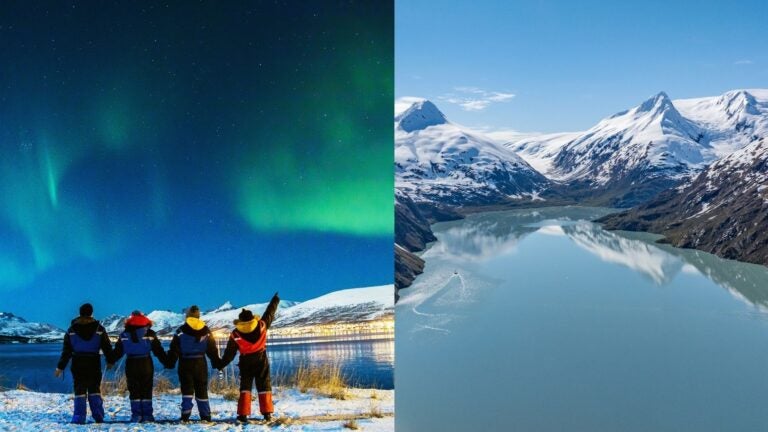
Best places to see the northern lights in Fairbanks
Fairbanks is Alaska’s most reliable single hub for northern lights viewing because it sits beneath the auroral oval and offers easy access to darker areas outside the city. These three locations combine strong viewing conditions with relatively straightforward access.
- Chena Hot Springs Resort: Visit from late August to April for long, dark nights. Around 60 miles northeast of Fairbanks, the resort combines aurora viewing with hot springs, accommodation, and guided activities. You can drive there or book a shuttle, but hot spring admission, transport, and aurora tours are charged separately.
- Cleary Summit: September to April offers the darkest conditions. Its elevated position and limited light pollution make it a strong viewing spot around 20 miles north of Fairbanks. It is reached by car via the Steese Highway, with no regular public transport or visitor facilities at the roadside viewing areas.
- Murphy Dome: Visit between late August and April, ideally on a clear night. At around 2,900 feet above sea level, its elevation provides wide views of the sky above Fairbanks. The site is roughly 25 miles northwest of the city and accessible by road, although snow and ice can make winter driving difficult.
Best places to see the northern lights in Anchorage
Anchorage has more light pollution than Fairbanks, so most visitors head a short distance outside the city for a better chance of seeing the northern lights. Glen Alps and Eklutna Lake offer darker skies while remaining easy to reach from Anchorage.
- Glen Alps: September to April offers the longest hours of darkness. Located around 15 miles from downtown, this elevated Chugach State Park trailhead provides broad views of the sky. It is accessible by car, but parking is limited and a day-use parking fee applies, so arrive early and check road conditions in winter.
- Eklutna Lake: Visit from late August through April on a clear night. Around 40 miles north of downtown, the lake is far enough from central Anchorage to reduce light pollution considerably. It is reached by car, and visitors should check seasonal road, parking, and park access conditions before leaving.
For same-day viewing, check the live aurora forecast and Anchorage cloud cover shortly before heading out, as conditions can change throughout the day. The northern lights may be visible within the city during strong solar activity, but driving a short distance to darker surroundings usually provides a better chance of seeing them.
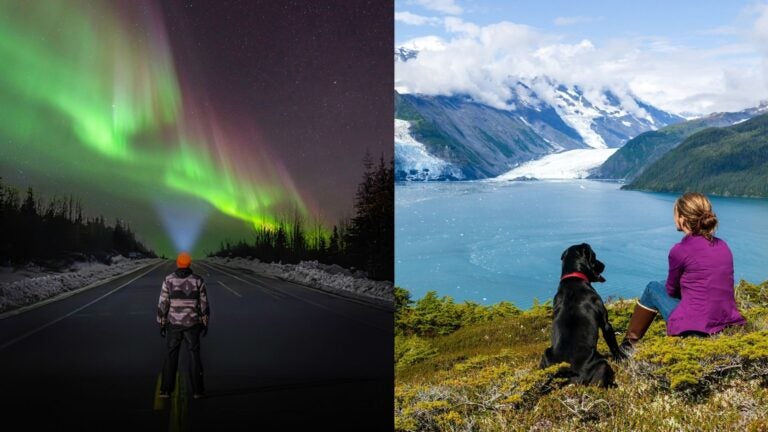
Other places to see the northern lights in Alaska
Beyond Fairbanks and Anchorage, several smaller destinations offer distinctive northern lights experiences. These locations generally require more planning, but they can provide darker skies or the chance to combine aurora viewing with other parts of an Alaska trip.
- Skagway: September to March provides the necessary darkness, although sightings are less consistent than in Interior Alaska. Skagway is covered less often because its southeastern location and cloudy coastal weather can limit visibility. However, it offers a different setting for travelers visiting the region by road or during the cruise season.
- Denali: Late August to mid-September offers the best balance between dark skies and access to park activities and visitor services. The aurora can also appear in winter, but services and road access are much more limited. Staying near the park entrance makes it easier to combine nighttime viewing with a Denali National Park visit.
- Wiseman: Late August through April offers long, dark nights with almost no light pollution. Located around 275 miles north of Fairbanks along the Dalton Highway, Wiseman is a serious dark-sky option for committed aurora viewers. Accommodation and services are limited, while difficult road conditions and rental-car restrictions make a guided transfer or tour the safer option.
How to plan a northern lights trip to Alaska
A successful aurora trip depends on flexibility and preparation, since even strong solar activity can be hidden by clouds. Build your itinerary around several possible viewing nights rather than a single fixed outing.
- Stay outside bright urban areas: When possible, choose accommodation away from city light pollution or somewhere that offers an aurora wake-up service.
- Check forecasts every night: Review both the live aurora forecast and local cloud cover, as conditions can change quickly throughout your trip.
- Allow several nights: Plan at least three nights for aurora viewing. More time gives you a better chance of finding clear skies and suitable solar activity.
- Prepare for extreme cold: Wear thermal base layers, an insulating fleece or down layer, and a windproof outer layer. Add insulated boots, wool socks, gloves, a warm hat, and hand warmers, especially when waiting outside for long periods.
- Stay connected: Mobile data helps you check real-time forecasts, navigate remote roads, and stay in touch when cellular coverage is available. A Holafly eSIM for Alaska lets you arrange data before departure, although downloading offline maps is still advisable for areas without service.
Stay connected with Holafly Plans anywhere you go
Travelers spending several weeks in Alaska or moving between Fairbanks, Denali, Anchorage, and other viewing locations may need more flexibility than a short-term eSIM provides. A monthly plan can cover an extended itinerary without requiring a new eSIM for each stage of the trip.
Holafly Plans uses one global eSIM across more than 160 destinations, making it useful if you travel beyond Alaska before or after your aurora trip.
The Unlimited Plan includes:
- Unlimited data
- Hotspot access
- A local US, UK, or Canadian number for bank confirmations and verification codes
The Light Plan includes 25 GB and suits moderate data users, while both options are contract-free and can be cancelled at any time. Each plan also includes Always On, providing 1GB of free backup data that refreshes automatically each month.
To get started, check that your phone supports eSIMs, choose a plan, and install it using the Holafly app or the instructions sent by email. If you’re combining your aurora trip with a cruise, Holafly also offers an eSIM for Alaska cruises to keep you connected at sea. The plan activates immediately after purchase and renews every 30 days, so buy it close to your departure date and cancel through your profile when you no longer need it.

FAQ about seeing the northern lights in Alaska
These quick answers cover common questions about choosing where and when to see the aurora. Keep in mind that no location can guarantee a display on a specific night.
What city is best to see the northern lights in Alaska?
Fairbanks is the best city for seeing the northern lights in Alaska. It sits beneath the auroral oval and provides easy access to dark viewing areas such as Cleary Summit, Murphy Dome, and Chena Hot Springs.
What month is best for northern lights in Alaska?
March is often considered the best all-around month for northern lights viewing in Alaska. It still provides long hours of darkness, while temperatures are generally less severe than in midwinter, but clear skies and real-time solar activity remain essential.
What part of Alaska can see the northern lights?
Interior and northern Alaska offer the most reliable northern lights viewing, particularly around Fairbanks and areas farther north. The aurora can also appear around Anchorage and Southeast Alaska, but greater light pollution, cloud cover, or a more southerly location can make sightings less consistent.
Is Fairbanks or Anchorage better for the northern lights?
Fairbanks is generally better than Anchorage for northern lights viewing. It lies beneath the auroral oval, has less light pollution, and offers more reliable access to dark skies, while Anchorage often requires driving outside the city for better visibility.
Are the northern lights visible every day in Alaska?
No, the northern lights are not visible every day in Alaska. Sightings depend on solar activity, darkness, clear skies, and location, while the near-endless daylight of summer makes the aurora impossible to see across much of the state.
Is Alaska or Iceland better for viewing the northern lights?
Alaska is generally better for maximizing your chances of seeing the northern lights, particularly around Fairbanks. Iceland also offers excellent viewing opportunities and makes it easy to combine the aurora with waterfalls, glaciers, and coastal scenery. Alaska tends to offer more reliable conditions, while Iceland is better suited to a varied road trip.
Plans that may interest you

Hi! I'm a Spanish-English copywriter working with Holafly, helping bring travel content to life for curious travelers. As a digital nomad with a passion for exploring, I'm always adding new spots to my bucket list. If you love to travel like me, stick around because you're in the right place to find inspiration for your next trip! ✈️🌍