Language
Camping in Arizona: 2026 guide
Where to camp in Arizona, from winter desert sites to summer high-country escapes like Flagstaff and the White Mountains, plus how to camp for free on BLM land.

Camping in Arizona is shaped by elevation more than in almost any other US state. Desert campgrounds are generally best from fall through spring, while high-elevation sites offer cooler conditions in summer, the opposite of what many first-time visitors expect.
This guide covers the best desert and mountain campgrounds, places with water access, and free or dispersed camping options across the state.
Quick picks: The best places to camp in Arizona
The best places to camp in Arizona range from warm desert sites near Phoenix and Tucson to pine forests and lakes at higher elevations. Use this quick comparison to match each campground with the right season and reservation system.
| Campground | Region/type | Best time | Reservation system |
|---|---|---|---|
| Lost Dutchman State Park | Sonoran Desert, near Phoenix | October–April | Arizona State Parks |
| Catalina State Park | Sonoran Desert, near Tucson | October–April | Arizona State Parks |
| Flagstaff (Coconino National Forest) | High-elevation forest | May–October | Recreation.gov or first come, first served, depending on the campground |
| White Mountains | High-elevation forest | June–September | Recreation.gov or campground-specific booking |
| Lake Powell | Desert lake camping | March–May and September–October | Varies by campground |
| Show Low Lake, White Mountains | High-elevation lakeside camping | May–October | Show Low Lake online reservation system |
Is camping allowed anywhere in Arizona?
No, camping is not allowed everywhere in Arizona. However, dispersed camping is generally permitted on extensive areas of Bureau of Land Management (BLM) and national forest land unless signs or local rules state otherwise.
Campers must stay within designated limits, follow fire restrictions, and avoid private, tribal, and environmentally protected land. Developed campgrounds, state parks, and some heavily visited areas may require a reservation, permit, or nightly fee.
When planning camping in Arizona, elevation is just as important as land access. Low-elevation desert areas are most comfortable from fall through spring, while campgrounds around Flagstaff and the White Mountains are better suited to summer, when cooler temperatures make high-elevation camping more practical.
Best desert camping in Arizona
Desert camping in Arizona is best from fall through spring, when daytime temperatures are more manageable. Avoid camping in these low-elevation areas during summer, when extreme heat can make outdoor activities dangerous.
Lost Dutchman State Park
Set beneath the Superstition Mountains, Lost Dutchman State Park is a convenient desert camping option around 64 km (40 miles) east of central Phoenix. Its hiking trails, mountain views, and easy road access suit both weekend tent campers and RV travelers.
- Best time: Visit between October and April for cooler days and more comfortable hiking conditions.
- Facilities: The campground has tent and RV sites, electric and water hookups at selected sites, restrooms, showers, picnic tables, and dump stations.
- Practical tip: Carry more drinking water than you expect to need. Temperatures can still rise quickly during fall and spring, while desert trails offer limited shade.
Catalina State Park
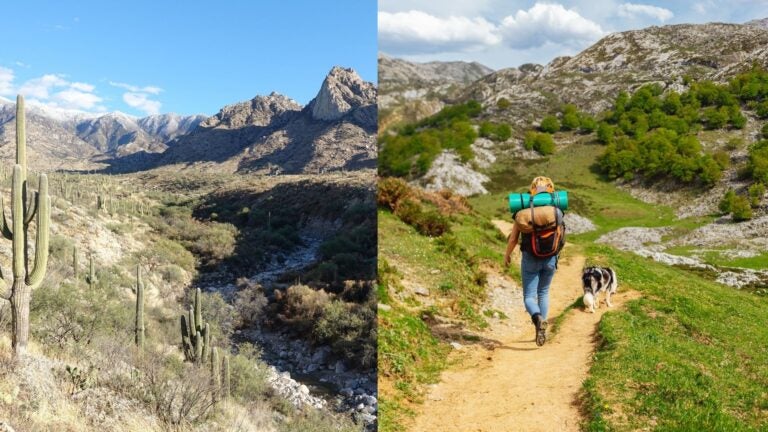
Catalina State Park lies north of Tucson at the base of the Santa Catalina Mountains. It combines classic Sonoran Desert scenery with direct access to hiking trails, making it one of the best places to camp in Arizona for seeing saguaros without traveling far from city services.
- Best time: Plan your stay from October through April, with winter offering the mildest daytime conditions.
- Facilities: Its campgrounds provide water and electric hookups, paved parking, picnic tables, grills, flush toilets, hot showers, and RV dump stations.
- Practical tip: Bring plenty of water for every hike, even in winter. Wood fires are prohibited in the campground, so check the park’s rules before packing cooking equipment.
Best high-elevation camping in Arizona
High-elevation camping in Arizona is best during summer, when desert campgrounds become dangerously hot. The forests around Flagstaff and the White Mountains offer cooler temperatures, shaded campsites, and more comfortable conditions for hiking and sleeping outdoors.
Flagstaff (Coconino National Forest)
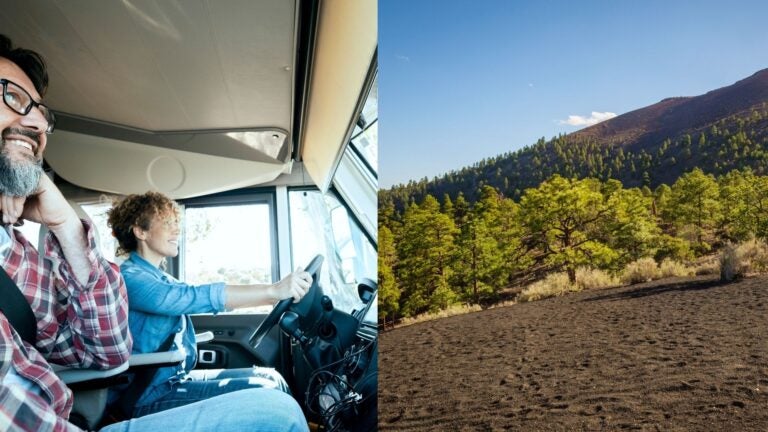
At around 2,130 meters (7,000 feet) above sea level, Flagstaff is significantly cooler than most of Arizona. Its ponderosa pine forests provide options for traditional campgrounds, lakeside stays, and tent camping in Arizona during the warmer months.
- Best time to visit: May through October, with September and October offering comfortable weather and fewer crowds.
- Popular campgrounds: Bonito, Ashurst Lake, Forked Pine, and Fort Tuthill.
- Practical tip: Check current wildfire and campfire restrictions before leaving. Pack waterproof clothing and rain protection during the summer monsoon season.
White Mountains
The White Mountains extend across eastern Arizona and offer forests, lakes, and campgrounds at elevations far above the desert floor. Summer daytime temperatures commonly remain around 21–27°C (70–80°F), making the region much cooler than Phoenix and other low-elevation destinations.
- Best time to visit: Most campers visit between May and October, with peak conditions and the widest campground availability from June through September.
- Practical tip: Pack warm layers and a suitable sleeping bag. Even during summer, nighttime temperatures at higher elevations can fall drastically.
- Reservation note: Many campgrounds operate on a first-come, first-served basis and fill quickly on summer weekends.
Best camping near water in Arizona
The best camping in Arizona near water ranges from remote shoreline sites to developed RV parks with marina access.
Lake Powell
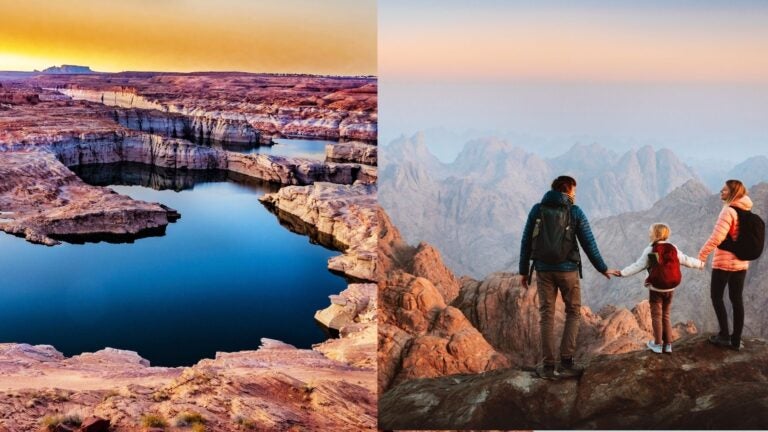
Lake Powell is surrounded by dramatic red-rock canyons and offers opportunities to combine camping with boating, fishing, and kayaking. Visitors can choose between developed campgrounds and more remote shoreline camping within Glen Canyon National Recreation Area.
- Best time to visit: Spring and fall offer the most comfortable temperatures. Summer temperatures can exceed 38°C (100°F), and dry-camping sites provide little natural shade.
- Facilities: Wahweap RV & Campground is open year-round and offers full-hookup RV sites, tent-only sites, showers, laundry facilities, restrooms, picnic tables, and fire rings. Reservations are available online.
- Practical tip: Mobile reception can be unreliable away from developed areas, with the strongest coverage generally found near Wahweap and Bullfrog marinas. Download maps and essential information before leaving.
Show Low Lake, White Mountains
Show Low Lake offers pine-shaded camping beside a 100-acre lake in Arizona’s White Mountains. At around 1,980 meters (6,500 feet), it provides cooler summer conditions and easy access to fishing, boating, and nearby hiking trails.
- Best time to visit: Summer is the most popular season, particularly from June through September, when temperatures are milder than in Arizona’s desert regions.
- Reservations: Book well in advance for summer weekends and holidays, as sites can fill quickly during the peak reservation period from May through September.
- Facilities: The campground has tent and RV sites, some electric hookups, showers, a dump station, and a small store offering boat rentals, fishing supplies, drinks, and snacks.
Free and dispersed camping in Arizona
You can camp for free on many areas of BLM and national forest land in Arizona. Wild camping in Arizona is generally called dispersed camping and is allowed unless an area is specifically closed or restricted.
Arizona contains more than 12 million acres of BLM land, plus extensive national forests. Most dispersed sites do not require reservations or nightly fees.
The typical stay limit is 14 days, although the exact counting period and relocation rule vary by agency and district. On much BLM land, campers must move at least 40 km (25 miles) after reaching 14 days within a 28-day period.
Arizona also has Long-Term Visitor Areas (LTVAs). A $180 seasonal permit allows stays of up to seven months, from September 15 through April 15. These areas are particularly useful for snowbirds spending the winter in the state. If you are considering a more permanent base, explore the best places to retire in Arizona.
Dispersed sites generally provide no water, toilets, electricity, or trash collection. Campers must be fully self-sufficient and pack out everything they bring.
Best time to camp in Arizona, by region
The best months for camping in Arizona depend on elevation. While desert areas are most comfortable during winter, high-elevation regions become better options once temperatures rise in late spring.
| Region | Best months | What to expect |
|---|---|---|
| Desert regions | October–April | Winter camping in Arizona is comfortable and popular in low-elevation areas, unlike in most of the US. Daytime temperatures are generally mild, although nights can still be cold. |
| High-elevation regions | May–October | Flagstaff and the White Mountains are best from late spring through early fall. Winter can bring freezing temperatures, snow, road closures, and seasonal campground closures. |
How to plan a camping trip in Arizona
Planning around the climate, land manager, and available facilities makes camping in Arizona safer and easier. Conditions and regulations can change quickly, particularly in remote areas.
- Carry extra water: Bring more than you think you will need, especially in desert regions. Dehydration remains a risk even during cooler months.
- Check fire restrictions: Review current alerts before your trip, particularly when visiting national forests during dry periods.
- Identify the land manager: BLM land, national forests, and Arizona State Parks have different camping rules, fees, stay limits, and reservation systems.
- Reserve summer sites early: High-elevation campgrounds around Flagstaff and the White Mountains fill quickly on weekends.
- Plan how you will stay connected: Mobile data helps with navigation, fire updates, and changing dispersed-camping regulations. In remote areas such as Lake Powell’s dry-camping sites or deep BLM land, download offline maps and consider a satellite communicator because mobile coverage may be unavailable.
Stay connected while camping in Arizona
Mobile coverage can be unreliable around Lake Powell and on remote BLM land, so download offline maps before heading into areas without signal.
For a longer Arizona stay or a wider US road trip, Holafly Plans is a practical option because one eSIM provides monthly data across more than 160 destinations and can be canceled at any time.
Choose between the Light plan with 25 GB and the Unlimited plan with unlimited data. Both include hotspot access, allowing you to connect other devices. For a shorter, single trip, choose the Arizona eSIM instead.
Always On adds 1 GB of free backup data every 30 days after your main allowance ends. It can help you access maps, fire updates, or messages if you run out of data, provided a mobile network is available.

FAQ about camping in Arizona
These quick answers cover camping costs, recommended destinations, tent camping conditions, and options near Phoenix. Always confirm current fees, weather alerts, and local restrictions before traveling.
How much does it cost to camp in Arizona?
Camping in Arizona can cost nothing for dispersed camping or around $20–50 per night at many developed campgrounds, depending on the location and facilities. BLM Long-Term Visitor Areas also offer a $180 seasonal permit for stays between September 15 and April 15.
Where is a good place to go camping in Arizona?
The right location depends on the season and type of trip. Choose Lost Dutchman or Catalina State Park for winter desert camping, Flagstaff or the White Mountains for cooler summer conditions, and Lake Powell or Show Low Lake for camping near water.
What is tent camping like in Arizona?
Tent camping in Arizona ranges from dry desert sites with minimal shade to pine-covered campgrounds at high elevations. Campers should prepare for large temperature changes, strong sun, seasonal storms, and limited facilities at dispersed sites.
Is camping in Arizona good near Phoenix?
Yes, the Phoenix area offers convenient desert camping, particularly at Lost Dutchman State Park east of the city. Camping near Phoenix is best from October through April, as summer temperatures can make tent camping and daytime activities unsafe.
Plans that may interest you

Hi! I'm a Spanish-English copywriter working with Holafly, helping bring travel content to life for curious travelers. As a digital nomad with a passion for exploring, I'm always adding new spots to my bucket list. If you love to travel like me, stick around because you're in the right place to find inspiration for your next trip! ✈️🌍