Language
Best places to go camping in Texas: 2026 guide
Where to camp across Texas, from Big Bend's stargazing to Garner State Park's river swims, with family-friendly and near-city picks.

The best places to go camping in Texas depend on the experience you want. West Texas offers remote desert campsites and exceptionally dark skies, while the Hill Country is better known for spring-fed rivers and swimming spots.
This guide compares the top campgrounds by region, including family-friendly parks and options near Houston, Dallas–Fort Worth, and Austin.
You’ll also find practical information on reservation windows, seasonal conditions, and how to plan around the intense Texas summer heat.
Quick picks: The best places to camp in Texas
The best places to camp in Texas range from remote desert landscapes to riverside sites and family-friendly state parks. Use this comparison to choose a destination based on the region, season, and reservation system.
| Campground | Region | Best time | Reservation system |
|---|---|---|---|
| Big Bend National Park | West Texas | November–April | Recreation.gov |
| Davis Mountains | West Texas | March–May and September–November | Texas State Parks |
| Garner State Park | Hill Country | May–September for swimming | Texas State Parks |
| Enchanted Rock | Hill Country | October–April | Texas State Parks |
| Dinosaur Valley State Park | North Texas | March–May and September–November | Texas State Parks |
| Palo Duro Canyon | Texas Panhandle | March–May and September–November | Texas State Parks |
Best camping in West Texas
West Texas is best for remote desert camping, mountain scenery, and some of the darkest skies in the state. The region’s two standout options are Big Bend National Park for dramatic desert landscapes and the Davis Mountains for cooler, higher-elevation campsites.
Big Bend National Park
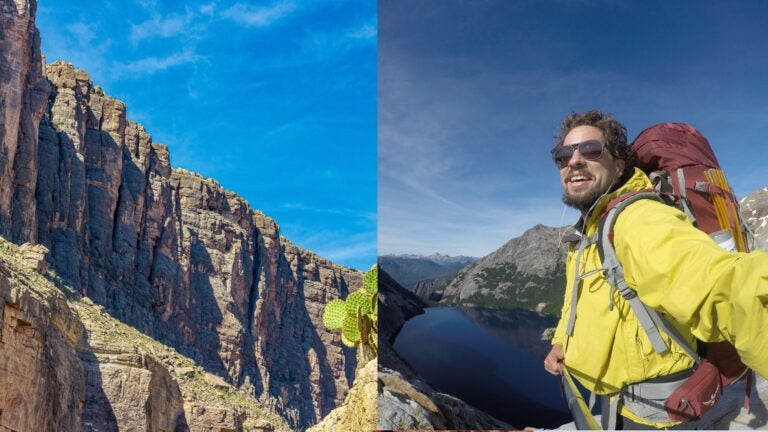
Big Bend National Park is where the Chihuahuan Desert meets the Chisos Mountains, creating one of Texas’s most dramatic camping landscapes. Its International Dark Sky status and long distances between major sights make it a genuine multi-day destination.
- Best time to visit: Fall and spring offer the most comfortable conditions, with temperatures typically ranging from 10°C to 27°C (50°F to 80°F) in October and November. Summer heat can be dangerous, while winter nights may be cold in the mountains.
- Reservations: All developed campgrounds require reservations, with no first-come, first-served sites available. Bookings open up to six months in advance.
- Practical tip: Cell service is extremely limited, so download maps, directions, and reservation details before entering the park.
Davis Mountains
The Davis Mountains rise above the surrounding West Texas desert, bringing higher elevations and cooler nights than much of the region. The scenery combines rugged peaks, high-desert vegetation, and developed camping at Davis Mountains State Park.
- Best time to visit: Spring and fall offer mild days and cool nights, although the elevation also makes summer more manageable than at lower desert campsites.
- What makes it distinct: Compared with Big Bend, the Davis Mountains provide a more compact and accessible mountain getaway, with developed campsites, scenic drives, and the nearby McDonald Observatory.
- Practical tip: Temperatures can drop sharply after sunset, even following a warm day, so pack layers and reserve your campsite through the Texas State Parks system.
Best camping in the Texas Hill Country
The Texas Hill Country is known for limestone scenery, clear rivers, and natural swimming areas, making it particularly popular in the warmer months. Garner State Park and Enchanted Rock offer two different experiences: riverside camping and swimming or hiking across a vast granite dome.
Garner State Park
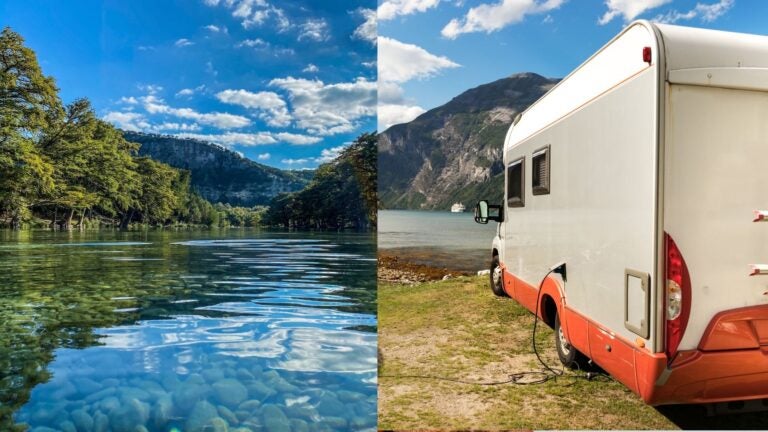
Garner State Park covers 1,774 acres, with 4.7 km (2.9 miles) of the clear Frio River running through it. Visitors have been drawn to this part of the Hill Country since the 1920s, and the park remains a Texas favorite for camping and outdoor recreation.
- Best time to visit: Summer is the most popular season for swimming, tubing, and kayaking in the Frio River.
- Facilities: Accommodation includes tent and RV campsites, cabins, and screened shelters.
- Practical tip: The park is about 1.5 hours west of San Antonio. Book well ahead if you plan to camp on a summer weekend.
Enchanted Rock
Enchanted Rock is centered around a massive pink granite dome popular for hiking, rock climbing, and stargazing. Its exposed landscape and wide-open skies create a very different Hill Country experience from riverside camping at Garner.
- Best time to visit: Fall, winter, and spring provide the most comfortable hiking conditions, as the exposed rock can become extremely hot in summer.
- Reservations: Reserve both your campsite and day entry in advance. The park often reaches capacity, especially on weekends and holidays.
- Practical tip: There is little shade on the dome, so start hikes early and carry plenty of water, even during the cooler months.
Best family camping spots in Texas
The best camping spots in Texas for families combine comfortable facilities with activities that keep children engaged beyond the campsite.
Dinosaur Valley State Park
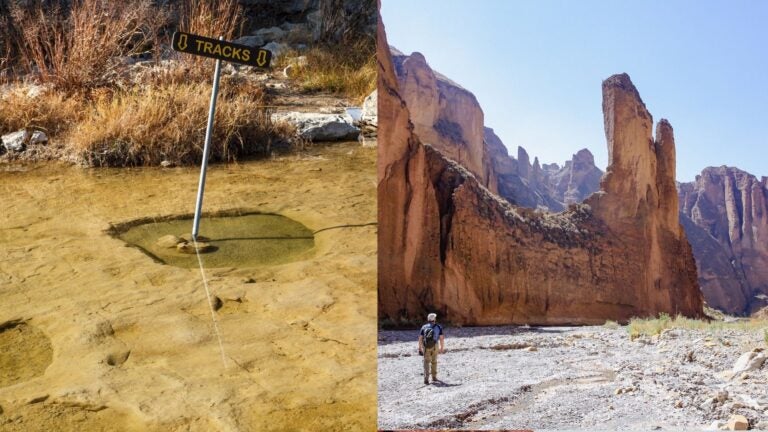
Dinosaur Valley State Park is famous for the dinosaur tracks preserved along the bed of the Paluxy River. Seeing real footprints in their natural setting gives families a genuinely kid-focused experience alongside swimming, hiking, and camping.
- Best time to visit: Spring and fall bring comfortable hiking weather, while summer is popular for swimming and paddling.
- Why families like it: Children can search for dinosaur tracks, explore riverside trails, swim, and take part in Junior Ranger activities.
- Practical tip: Track visibility depends on the river level, so check current park conditions before visiting and bring water shoes for exploring the riverbed.
Palo Duro Canyon
Known as the “Grand Canyon of Texas,” Palo Duro Canyon combines colorful rock formations with developed campsites and family-friendly hiking. A scenic road leads into the canyon, making its main viewpoints and recreation areas accessible without long backcountry hikes.
- Best time to visit: Spring and fall provide the most comfortable conditions for hiking and camping.
- Activities: Families can hike, cycle, watch wildlife, explore the scenic drive, or join a guided horseback ride.
- Practical tip: The canyon floor can become extremely hot in summer and has limited shade. Plan outdoor activities early, carry plenty of water, and never rely on cell service.
Best camping near Houston, Dallas-Fort Worth, and Austin
These campgrounds are close enough to major Texas cities for a quick weekend outdoors. Unlike remote West Texas destinations, they require less driving and can be enjoyed without planning a multi-day trip.
Near Houston: Brazos Bend State Park
Roughly an hour from central Houston, Brazos Bend State Park offers wooded campsites, fishing lakes, and trails through wetlands and coastal prairie. Wildlife viewing is a major attraction, particularly the park’s American alligators. Its developed tent and RV sites make it one of the most convenient campsites near Houston for a weekend trip.
Near Dallas-Fort Worth: Cedar Hill State Park
Cedar Hill State Park sits on Joe Pool Lake, around 30 minutes from central Dallas. Campers can swim, fish, paddle, or explore the park’s hiking and mountain-biking trails. With tent and RV sites surrounded by woodland, it is one of the best places to camp near DFW without traveling far from Dallas or Fort Worth.
Near Austin: McKinney Falls State Park
Around 20 minutes from downtown Austin, McKinney Falls State Park combines convenient camping with trails, limestone scenery, and swimming holes along Onion Creek. Campsites include water and electricity, making the park suitable for tents and RVs. Swimming depends on current water conditions, so check park alerts before your visit.
Best camping in Texas with swimming
The best camping in Texas with swimming includes river, lake, and Gulf Coast options. Garner State Park remains a favorite for cooling off in the Frio River, with opportunities for swimming, tubing, and kayaking close to the campgrounds.
For a lakeside alternative, Inks Lake State Park has a designated swimming area and access to Devil’s Waterhole, surrounded by rocky Hill Country scenery. Campers can also paddle and fish when they are not in the water.
Mustang Island State Park offers a completely different experience, with developed campsites and primitive camping near the Gulf of Mexico.
Swimming conditions can change quickly at all three destinations, so check park alerts, river levels, and beach warning flags before entering the water.
Best time to go camping in Texas
The best months to go camping in Texas are generally March, April, October, and November. However, the ideal season depends on the region and the activities you have planned.
- Fall and spring: These are the best seasons statewide, particularly for hiking and camping in West Texas and the Hill Country.
- Summer: Summer suits river and swimming destinations such as Garner State Park. However, extreme desert heat makes camping and hiking in Big Bend potentially dangerous.
- Winter: Days remain relatively mild across many lower-elevation areas, but nights can become cold in higher locations such as the Davis Mountains. Northern Texas may also experience occasional freezing conditions.
How to plan a camping trip in Texas
Camping conditions and booking rules vary considerably across Texas, so check the requirements for each park before leaving. A little preparation is especially important for remote destinations and trips during hot or dry weather.
- Reserve early: Book Big Bend and other popular parks well in advance. Some campsites become available up to six months before the arrival date and can fill quickly.
- Prepare for the heat: Carry more water than you expect to need and avoid long hikes during the hottest part of the day, particularly in West Texas and during summer.
- Check fire restrictions: Burn bans and campfire rules can change with local conditions, so review current restrictions shortly before your trip.
- Use the correct booking platform: Reserve Texas state parks through the Texas State Parks system and national park campsites through Recreation.gov.
- Plan your connectivity: Staying within Texas? A Texas eSIM gives you unlimited data for the number of days you select. If Texas is part of a longer road trip through the USA, choose the Holafly eSIM for the USA to stay connected across multiple states.
Stay connected with Holafly while camping in Texas
Cell service is limited in Big Bend and other remote Texas parks, so download maps and reservation details before leaving a connected area. Mobile data remains useful between parks for checking weather warnings, road conditions, and booking updates.
If you are planning a longer stay or expect to take more camping trips internationally, Holafly Plans let you keep one eSIM across more than 160 destinations. Choose the Light Plan with 25 GB or the Unlimited Plan with unlimited data. Both include hotspot access and can be canceled at any time. For a single camping trip, a Holafly eSIM for Texas keeps setup simple.
Both Plans also include Always On, which provides 1 GB of monthly backup data when your main allowance ends. You can use it for essential messages, directions, and travel updates.

FAQ about camping in Texas
These quick answers cover common camping rules, outdoor etiquette, and destination choices for different types of Texas trips.
What is the 200 rule for camping?
The 200 rule means camping and disposing of human waste at least 61 meters (200 feet), or around 70 adult paces, from water sources and trails. This helps protect water quality, wildlife, and other visitors, although local park rules should always take priority.
What are the 7 C’s of camping?
The commonly cited 7 C’s are care, caution, courtesy, cleanliness, cooperation, conservation, and common sense. The wording is not formally standardized, but the list serves as a reminder to camp safely, respect other visitors, and minimize your environmental impact.
What is the prettiest state park in Texas?
Palo Duro Canyon is often considered one of the prettiest state parks in Texas because of its colorful rock layers, steep canyon walls, and wide viewpoints. However, visitors who prefer rivers and wooded scenery may find Garner State Park more appealing.
What are the best places to go RV camping in Texas?
The best places to go RV camping in Texas include Garner State Park, Palo Duro Canyon State Park, Davis Mountains State Park, and Rio Grande Village in Big Bend National Park. These destinations provide developed RV camping, although hookup availability varies, so check the individual campsite details before booking.
Plans that may interest you

Hi! I'm a Spanish-English copywriter working with Holafly, helping bring travel content to life for curious travelers. As a digital nomad with a passion for exploring, I'm always adding new spots to my bucket list. If you love to travel like me, stick around because you're in the right place to find inspiration for your next trip! ✈️🌍