Language

Iceland Christmas traditions: Yule Lads, festive food and more
Discover Iceland Christmas traditions, from the 13 Yule Lads and the Yule Cat to festive food, Christmas Eve celebrations, and New Year’s Eve.
Is one Santa really enough? Jól, or Christmas in Iceland, has not one, but thirteen mischievous Yule Lads. The fun doesn’t stop there, with a Yule cat, books on Christmas Eve, shoes on windowsills, and potatoes for naughty children. Icelandic Christmas traditions are some of the most unique in the world.
This article will take you through the Icelandic Christmas traditions and calendar, starting with Advent all the way to January 6. You’ll learn everything you need to know for Christmas in Iceland.

An eSIM you can rely on
Join over 10 million Holafly customers and get connected with our trusted, global services.
TL;DR: What are Iceland’s Christmas traditions?
Alongside familiar Christmas celebrations, Iceland has traditions rooted in folklore. Here are the highlights:
- The Christmas Book Flood (Jólabókaflóð): Each holiday season, bookstores are filled with locals buying books as gifts. Exchanged on Christmas Eve, Icelanders settle in to read right away.
- The Thirteen Yule Lads: Children mind their manners as these unruly lads come down from the mountains during the Christmas season.
- The Yule Cat: One of the most famous figures in Icelandic folklore is Jólakötturinn, the Yule Cat. Hunting for people wearing old clothes, keep yourself safe by wearing something new on Christmas Eve.
- Icelandic Christmas food: Smoked lamb, fermented fish, decorative leaf bread, and more fill the table on Christmas Eve.
- Christmas holidays: Celebrations continue from Christmas Eve through the New Year and Þrettándinn on January 6.
- Lighting up the winter sky: Brilliant fireworks and bonfires welcome the New Year and Þrettándinn.
What is Christmas like in Iceland?
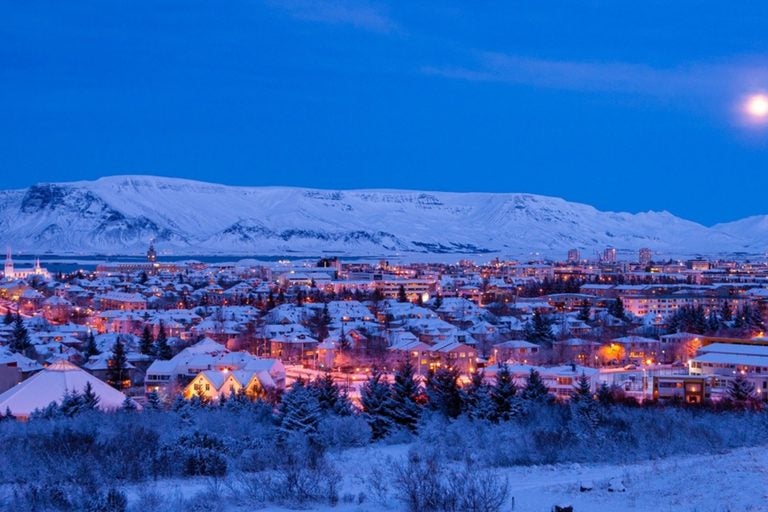
Icelandic Christmas starts on Advent and includes 13 days of Christmas. The dark winter days have only 5 hours of sunlight, a perfect setting for a festive atmosphere. Christmas lights brighten towns and cities across the island.
While many countries celebrate 12 days of Christmas, Iceland celebrates 13, and the Christmas season lasts 26 days. This longer period comes from the Yule Lads, who arrive one by one from the mountains. The 26-day Christmas season begins with the arrival of the first Yule lad. The 13 days of Christmas start on Christmas Eve and end on January 6.
Icelandic Christmas traditions during Advent
Aðventan (Advent) is the sign to start preparing for Christmas in Iceland. Beginning on the fourth Sunday before Christmas, Advent commences with lighting a candle on an evergreen wreath.
- Advent wreaths: Four candles are lit, one on each Sunday leading up to Christmas.
- Advent window lights: Seven-light candelabras brighten windows throughout the dark winter.
- Laufabrauð-making with family: Known as ‘leaf bread,’ laufabrauð dough is rolled paper-thin and decorated. If you cannot read the page of a book through your dough, it is too thick.
- Christmas markets: Like many places in Europe, Iceland is home to Christmas markets. Reykjavík has the Austurvöllur Christmas Market. You can also visit neighboring Hafnarfjörður for the Jólaþorpið Christmas Market.
- Outdoor ice skating: Opening on November 24 this year, Ingólfstorg Square is iced over to create an outdoor rink surrounded by shops and glittering lights.
- The Lighting of the Oslo tree: Each year Oslo gifts Reykjavík a Christmas tree as a sign of friendship. The tree will be lit up on November 29 in Austurvöllur square.
Here are even more things to do in Iceland.
Who are the 13 Yule Lads in Iceland?
The Jólasveinar, or Yule Lads, are 13 troll brothers who arrive one day at a time beginning December 12. Icelandic children place their shoes on the windowsill in hopes of receiving gifts, but may be disappointed with potatoes if they’ve been naughty.
The number and characteristics of the brothers vary in traditional folklore. In 1932, a popular book by Jóhannes úr Kötlum organized the folklore into the modern 13 shown below.
| Icelandic name | English translation | Arrival date |
|---|---|---|
| Stekkjastaur | Sheep-Cote Clod | December 12 |
| Giljagaur | Gully-Gawk | December 13 |
| Stúfur | Stubby | December 14 |
| Þvörusleikir | Spoon-Licker | December 15 |
| Pottaskefill | Pot-Scraper | December 16 |
| Askasleikir | Bowl-Licker | December 17 |
| Hurðaskellir | Door-Slammer | December 18 |
| Skyrgámur | Skyr-Gobbler | December 19 |
| Bjúgnakrækir | Sausage-Swiper | December 20 |
| Gluggagægir | Window-Peeper | December 21 |
| Gáttaþefur | Doorway-Sniffer | December 22 |
| Ketkrókur | Meat-Hook | December 23 |
| Kertasníkir | Candle-Beggar | December 24 |
Mostly food thieves, the Yule Lads each have a particular weakness. Sheep-Cote Clod is clumsy and harasses the sheep. Gully-Gawk tries to steal milk straight from the cow. Modern interpretations have softened these troublemakers from child-snatchers to lovable pranksters.
No matter the representation, you don’t have to fear them for long. Beginning on Christmas Day, the brothers depart in the same order they arrived.
Grýla and Leppalúði
Parents of the thirteen Jólasveinar, these trolls thankfully stay home during the Christmas season. Leppalúði is the third husband to Grýla, and together this monstrous couple has a craving for naughty children.
Grýla’s appetite for children in Icelandic folklore dates back to the 13th century. She became associated with the Yule Lads and Christmas in the 17th century. Over time, the depiction of the troll parents and their brood of troublemaking sons has softened.
The Yule Cat (Jólakötturinn)
The story of Grýla, Leppalúði, and the Yule Lads is not complete without a mention of their household pet. Jólakötturinn, the Yule Cat, comes out on Christmas to hunt for anyone without new clothes.
If you want to see the Yule Cat in person, the iconic statue in Lækjartorg Square will be lit up in November. This 5-meter-tall feline can be found in downtown Reykjavík throughout the holiday season.
How do Icelanders celebrate Christmas?
Christmas in Iceland has four major holidays starting with Saint Þorlákur Þórhallsson’s Day, Christmas Eve (the main event), Christmas Day, and Boxing Day. Here’s how Icelanders celebrate each of these Christmas holidays.
Þorláksmessa (Saint Thorlak’s Day)
December 23 honors the patron saint of Iceland, Þorlákur Þórhallsson. He was the bishop of Skálholt in the 12th century and was canonized by Jon Paul II in 1984. Locals celebrate it by eating fermented skate. In the evening, the annual Peace Walk takes place along Laugavegur, Reykjavík’s shopping street. For many, this is also the last chance to do their Christmas shopping.
Aðfangadagur (Christmas Eve)
Similar to other Nordic countries, Iceland once followed the traditional sunset-to-sunset calendar, Christmas officially begins at 6:00 p.m. on December 24.
- Church bells: At 6:00 p.m. sharp, church bells announce the arrival of Christmas.
- Radio silence: Radio broadcasts go silent for the 15 minutes before the bells ring. Iceland’s National Broadcasting Service then sends out the sound of the bells wishing everyone Gleðileg jól (Merry Christmas).
- Dinner and presents: After this official kickoff, it’s time for the roast lamb to be served.
- Book gift-giving: Bookstores release special editions and new titles ahead of the annual Christmas Book Flood.
Not all Scandinavians celebrate Christmas equally, learn more about Finnish Christmas traditions.
Christmas Day and Boxing Day
The days following Christmas Eve are national holidays in Iceland. With shops and restaurants closed, Christmas and Boxing Day are quiet holidays for families. Icelanders gather for jólaboð (Christmas parties) with their loved ones and enjoy all of the hard work they spent preparing for Christmas.
What do Icelanders eat at Christmas?
Food is important for any Icelandic holiday, and Christmas is no exception. The biggest feast comes on Christmas Eve, and includes these festive dishes and drinks:
- Smoked lamb (hangikjöt): Central to the table is this lamb dish. It is served cold and accompanied by potatoes and a hot bechamel sauce.
- Marinated herring (síld): Pickled herring is served on a slice of bread with a selection of sauces.
- Ptarmigan (rjúpa): This traditional game bird is served with potatoes, red cabbage, and gravy.
- Cured salmon (graflax): Salmon is cured with spices and served raw on dark rye bread.
- Leaf bread (laufabrauð): Prepared during Advent, this thin bread is decorated with festive patterns.
- Christmas cookies (jólasmákökur): Popular styles include chocolate chip (súkkulaðibitakökur), ginger snap (piparkökur), and licorice tops (lakkrís toppar).
- Rice pudding (möndlu grautur): This almond-topped rice pudding includes a guessing game where you try to find the hidden almond.
- Christmas soda (Malt og Appelsín): This drink is a blend of the two sodas in its name (Malt and Appelsín), and the ratio is up to the preparer’s taste.
- Mulled wine (jólaglögg): Served hot, this drink can be prepared as an alcoholic or non-alcoholic beverage.
For a chance to sample traditional Icelandic dishes before Christmas, catch a local food tour. As many restaurants close December 24-25, book your reservation in advance.
How Iceland’s Christmas season ends: New Year’s Eve and Þrettándinn
The major days of Christmas have passed, and the Yule Lads are making their way back home. Iceland isn’t quite done celebrating, as New Year’s Eve and Þrettándinn are still to come.
- New Year’s Eve bonfires (Áramótabrennur): Illuminating neighborhoods across the island and burning away the old year, these community gatherings typically start around 8:30 p.m. Times and locations may vary each year.
- Fireworks: After warming up near the bonfire, the sky is lit up with dazzling firework displays to welcome the new year.
- TV comedy show (Áramótaskaupið): The premier television program on New Year’s Eve is Áramótaskaupið. The comedy show looks back at the major events of the year.
- Þrettándinn: On January 6, Iceland says goodbye to the last Yule Lad and to the Christmas season. Icelandic folklore has legends of this being a magical day when animals speak, elf royalty appears, and hidden folk move about.
Practical tips for visiting Iceland at Christmas
Before travelling, make sure your phone will work in Iceland and arrange your Iceland SIM card. Keep these tips in mind when planning your Christmas in Iceland.
- Short daylight hours: Iceland averages 4-5 hours of daylight during the Christmas season. Plan your tours during the day and save others for the night.
- Cold weather: Always check the weather forecast before leaving for the day. Be sure to wear warm layers and winter footwear to stay cozy all day.
- Holiday opening hours: Christmas Eve sees early closures that last through Boxing Day. Get shopping done early and check business postings for holiday hours.
- Limited transport: Buses run on a reduced holiday schedule, and last routes are early in the day. Check current timetables before traveling.
- Book tours and restaurants ahead: Book tours and restaurants in advance, many services close during the holidays.
- See the Northern Lights: One of the few places that can boast frequent aurora borealis, see when the best time to see the Northern Lights in Iceland is.
Stay connected during Christmas in Iceland with Holafly
With reduced holiday bus schedules and early closures over Christmas, you’ll be checking timetables and opening hours on your phone more than usual. Install a Holafly eSIM for Iceland before you leave and connect as soon as you land, with unlimited data, speeds up to 5G, and 24/7 customer support.
When your trip ends, keep the eSIM on your phone. Holafly eSIMs are reusable, so next time you only need to add a new plan. Until then, Always On: 1 GB of monthly backup data keeps you connected at no extra cost, which helps if winter weather delays your flight home.
Travel often or stay for months at a time? Holafly Plans gives you monthly global data, and the Ultra Plan bundles extra travel perks on top of unlimited data in one plan.

Get an unlimited data eSIM
Use code MYESIMNOW5 for 5% off at checkout
Plans that may interest you


哈囉我是來自台灣的 Wen,平常最喜歡旅遊,也喜歡將旅遊的種種化成文字跟大家分享,希望大家能在我的文章中找到有用的資訊,加上 Holafly 的 eSIM,讓你的旅程更美好!✈️✈️✈️ Hi! I'm Wen, a passionate content writer and travel enthusiast from Taiwan. I transform my wanderlust adventures into engaging stories and practical guides, helping fellow travelers make the most of their journeys.Through my articles, I strive to provide travel tips while introducing how our eSIM technology can enhance your travel experience - keeping you connected wherever your adventures take you!