Language
Finland Christmas traditions: Food, celebrations, and customs
Discover authentic Finnish Christmas traditions, from celebrations and Joulupukki visits to festive foods, cozy crafts, and unique gift ideas.

Christmas in Finland is a major cultural and family-oriented holiday season. Celebrations span from early Advent through New Year, blending ancient winter solstice customs with modern traditions.
The festive peak is on Christmas Eve (December 24), when the day is dedicated entirely to family gatherings and traditional holiday foods. This guide covers everything about Christmas traditions in Finland, including Christmas Eve customs, food, gifts, decorations, family traditions, Lapland celebrations, and unique Finnish customs.
We will also help you stay connected during Christmas in Finland with Holafly eSIM, offering unlimited data, 5G speeds, and 24/7 customer support.
Peace of mind before you fly
Set up your eSIM before travel and get unlimited data on arrival.
What do Finns call Christmas?
In Finland, Christmas is called joulu. To wish someone a Merry Christmas in Finnish, you say “Hyvää joulua”, which translates to “Good Christmas” or “Merry Christmas.”
How is Christmas celebrated in Finland?
Christmas in Finland is a cozy, family-focused holiday centered around relaxation, tradition, and togetherness. While the festive season begins weeks earlier with Advent and parties, Christmas Eve (December 24) is the main day of celebration.
Key traditions include:
- Declaration of Christmas peace: A centuries-old tradition broadcast from Turku at noon on Christmas Eve, officially marking the start of a peaceful holiday.
- Christmas sauna: A relaxing afternoon ritual where families cleanse and prepare for the evening.
- Family gatherings: Loved ones come together to spend quality time at home, creating a warm and quiet atmosphere.
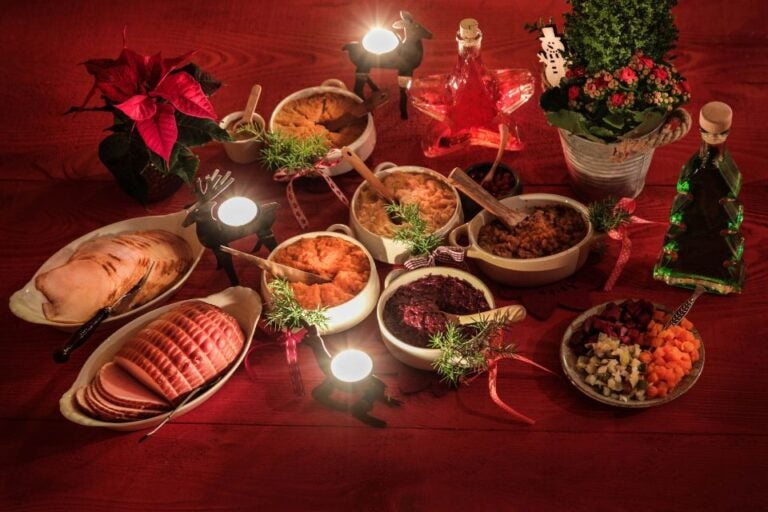
- Christmas dinner: A traditional feast featuring joulukinkku (Christmas ham), root-vegetable casseroles, and fish dishes.
- Candles on graves: As evening falls, families visit local cemeteries to light candles in memory of deceased relatives, creating a glowing sea of lights.
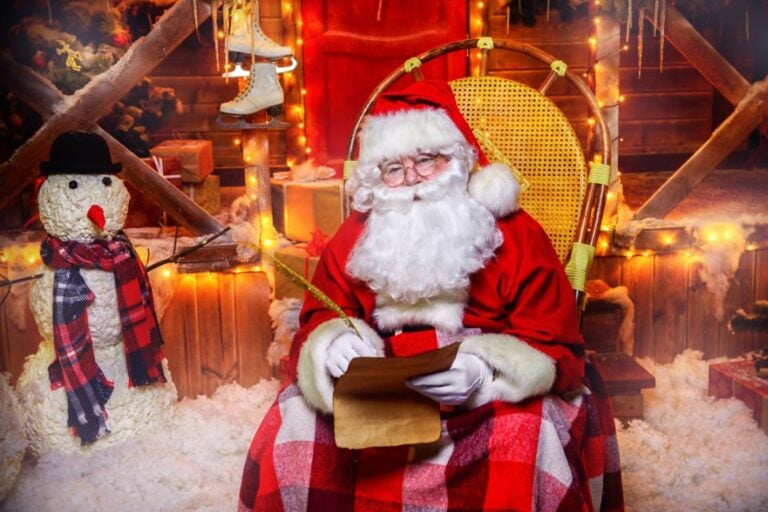
- Joulupukki (Santa Claus): In the evening, the authentic Finnish Santa Claus traditionally visits homes in person to hand out gifts to waiting families.
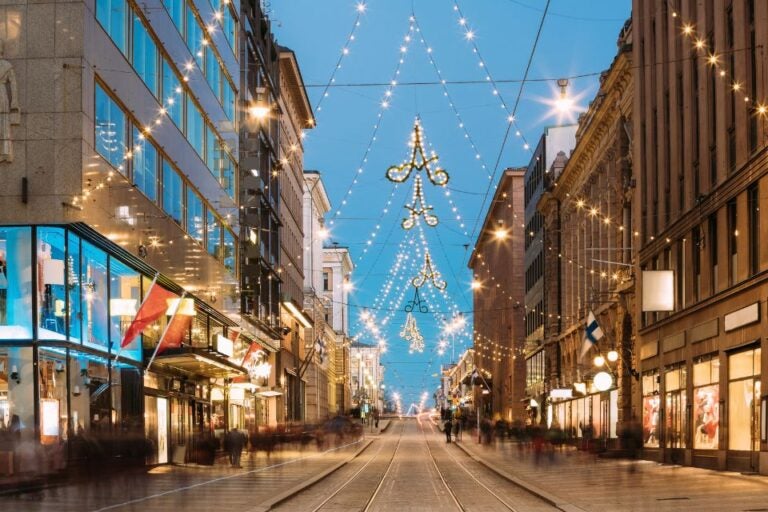
8 Finnish Christmas traditions
In Finland, Christmas is not merely a single day on the calendar. People cherish this season for its ancient folklore, heartwarming family rituals, and modern-day magic.
Christmas Eve and family celebrations
Unlike regions where Christmas Day on December 25 is the main celebration, Finnish Christmas Eve (December 24) is the day when families come together to share meals, exchange gifts, and observe core traditions.
The day is characterized by several key practices:
- Time spent at home: Families spend the day together at home in a quiet, relaxed environment, focusing entirely on one another and preparing for the evening.
- Christmas dinner (Joulupöytä): In the evening, families gather for a large traditional meal. The menu typically features a glazed Christmas ham, assorted root-vegetable casseroles, pickled fish, and other holiday specialties.
- Gift-giving: Following the holiday meal, presents are distributed to family members. In many households, this includes a visit from Joulupukki, the Finnish Santa Claus, who delivers gifts in person.
- Candles on graves: As evening falls, it is customary to visit local cemeteries to place and light candles on relatives’ graves, creating a shared community memorial across the country.
Christmas Peace in Turku
Christmas Peace in Turku is a centuries-old tradition that officially declares the beginning of the Christmas holiday in Finland. It takes place every year on Christmas Eve (December 24) at exactly noon in the Old Great Square of Turku, Finland’s former capital.
Here are the key details of the tradition:
- The origin: The tradition dates back to the 17th century during the reign of the Swedish Empire, of which Finland was then a part. Originally, it was a legal decree intended to ensure a peaceful holiday season, during which harsher punishments were imposed for any crimes committed while the peace was active.
- The declaration: A city official reads aloud the Declaration of Christmas Peace from a balcony, speaking in both Finnish and Swedish. The proclamation instructs citizens to observe the holiday with peace and respect, and extends wishes for a joyful Christmas to all.
- National broadcast: The ceremony is broadcast live on national radio and television. For millions of Finns nationwide, watching or listening to it has become a deeply ingrained Christmas Eve tradition, enjoyed just before their midday meals.
Christmas sauna
The Christmas sauna (joulusauna) is a well-known part of Finnish Christmas tradition. Traditionally, families take their Christmas sauna on the afternoon of Christmas Eve (December 24) before the main evening festivities begin.
This tradition provides a time for both physical and mental purification as a way to welcome the holiday. The tradition required complete calm and quiet in the sauna; people believed that loud behavior or cursing would bring bad luck.
The Christmas sauna is rooted in ancient folklore and winter solstice customs:
- Spiritual cleansing: Historically, the sauna was considered a sacred space. Bathing on Christmas Eve cleansed the body and mind to prepare for the holiday.
- Rule of silence: Tradition required complete calm and quiet in the sauna; loud behavior or cursing was believed to bring bad luck.
- The sauna spirits: Because daylight hours are brief, saunas were taken in the early afternoon. Folklore held that after dark, humans had to leave so ancestral spirits and the sauna elf could take their turn bathing.
Joulupukki and Christmas gifts
In Finland, Santa Claus is known as Joulupukki. The name has a unique linguistic connection to ancient Nordic folklore: joulu means Christmas, and pukki translates to “buck” or “goat,” linking modern gift-giving to the traditional Yule Goat (joulupukki) of ancient winter solstice celebrations.
Originally, this figure was a man dressed in animal skins who handed out gifts or frightened misbehaving children. Today, Joulupukki is a friendly, bearded figure dressed in red, though distinct from the commercialized global Santa.
Joulupukki traditionally knocks directly on the front door of family homes in the evening. He enters to greet the family, asks if there are well-behaved children present, and hands out presents in person before moving on to the next home.
Adults and peers also exchange presents to show appreciation and warmth during the darkest time of the year. Popular gifts exchanged among family and friends include:
- Design items and home goods: High-quality Finnish design pieces, such as iconic Marimekko textiles, Iittala glassware, Arabia ceramics, and Moomin mugs.
- Sweets and confectionery: Classic Fazer chocolate boxes, gourmet licorice, and seasonal gingerbread treats.
- Cozy winter wear: Practical and luxurious items like woolen socks, scarves, and mittens to combat the Nordic cold.
- Traditional crafts: Handcrafted items like a traditional wooden kuksa mug or artisanal holiday decorations.
These items are also among the popular Finnish souvenirs.
Traditional Finnish Christmas food
Food is central to the Finnish holiday. The main feast is served on Christmas Eve, accompanied by these staple dishes and treats:
- Christmas ham (Joulukinkku): The roasted pork ham glazed with mustard and breadcrumbs is the centerpiece of the dinner table.
- Christmas Casseroles (Laatikot): Traditional root-vegetable side dishes made from swede, carrot, and potato.
- Fish dishes: Pickled herring and cured salmon (gravlax) are common additions to the meal.
- Rice Porridge (Riisipuuro): A creamy morning porridge served with milk, sugar, and cinnamon. A single almond is hidden inside; whoever finds it gets good luck.
- Glögi: A hot, spiced berry juice or wine typically served with raisins and almonds.
- Piparkakku: Spiced gingerbread cookies enjoyed throughout the season.
- Joulutorttu: Flaky star-shaped pastries filled with sweet prune jam.
Christmas decorations and festive customs
To combat the long winter darkness, Finnish homes transform into glowing havens of light and warmth. Decorations blend classic holiday styles with unique, rustic elements deeply rooted in Nordic heritage:
- Himmeli: A distinctive geometric mobile crafted from rye straw, traditionally hung above the table to symbolize hopes for a good harvest.
- Straw decorations (Olkitähdet): Stars, angels, and figures made from leftover harvest straw.
- Ice lanterns (Jäälyhdyt): Water frozen in buckets outdoors, then lit with candles and placed along snowy pathways and porches.
- The Christmas Tree (Joulukuusi): A real evergreen brought inside and decorated just before Christmas Eve, often featuring Finnish flags and lights.
- Window candles: Finnish families place electric candle arches and star lamps in their windows throughout December, creating a steady, welcoming glow.
- Door wreaths: Pine, spruce, or twig wreaths hung on front doors to greet holiday visitors.
Pikkujoulu and the Finnish Christmas season
The holiday season in Finland begins long before December 24, kicking off with several key pre-Christmas traditions:
- Pikkujoulu (“Little Christmas”): Beginning as early as November, workplaces, friend groups, and organizations gather for festive parties. These parties have traditional food, drinks, and music, acting as a social warm-up for the main holiday.
- Advent: As November turns to December, the four weeks of Advent mark a period of quiet anticipation. Homes light Advent candles, and calendars appear in windows to count down the days.
- Saint Lucia’s Day (December 13): Celebrated nationwide, the day features a young woman chosen to represent St. Lucia, wearing a white robe and a crown of glowing candles. Wearing a crown of candles, she leads a procession, singing traditional songs to bring light during the darkest part of the winter.
Finnish Christmas traditions for kids
Finnish Christmas traditions for children are filled with cozy activities, sweet treats, and exciting holiday customs. Kid-friendly traditions include:
- Baking and decorating: Kids help bake piparkakku gingerbread cookies and fold star-shaped joulutorttu pastries.
- Decorating the tree: Families bring the evergreen tree inside just before Christmas Eve, and children love hanging ornaments and paper Finnish flags.
- The hidden almond: Kids eagerly search for the single almond hidden in the Christmas morning rice porridge.
- Christmas markets: Families visit festive open-air markets, such as Helsinki’s Tuomaan Markkinat, for holiday treats and carousels.
- Meeting Joulupukki: The ultimate highlight is Christmas Eve evening, when Joulupukki (Santa Claus) knocks on the front door to hand out presents in person.
Note: Christmas traditions in Denmark are very similar to those in Finland, notably, both countries decorate their Christmas trees with paper national flags.
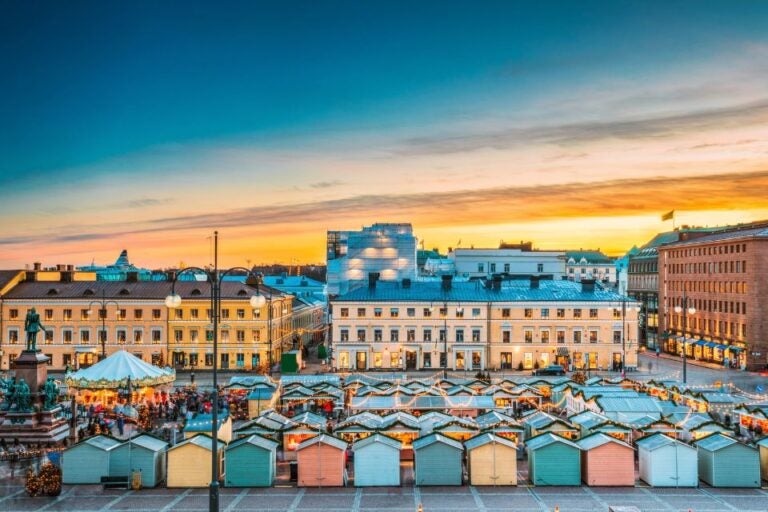
Where to spend Christmas in Finland
Across the country, from the bustling streets of Helsinki to the snowy wilderness of Lapland, Finns embrace the dark winter months. They do this by transforming their homes into glowing havens of warmth, light, and togetherness.
Here are popular destinations for experiencing Christmas in Finland:
- Rovaniemi: The official hometown of Joulupukki on the Arctic Circle. It features Santa Claus Village, snow-filled landscapes, reindeer, and husky safaris. It is also one of the best places to see the Northern Lights.
- Helsinki: The vibrant capital offering illuminated streets, ice-skating rinks, festive concerts, and the popular Tuomaan Markkinat Christmas Market at Senate Square.
- Turku: Finland’s historic former capital and the home of the live Declaration of Christmas Peace ceremony at the Old Great Square, set against medieval architecture.
- Tampere: A lively destination featuring bustling holiday markets with local treats. It is known for its sparkling city-center decorations and the artisan shops in the historic Stable Yards.
- Porvoo: Finland’s second-oldest town, known for its setting of cobblestone streets, iconic red wooden riverside warehouses, and traditional holiday markets.
- Lapland: As one of the best destinations to visit in December, Lapland offers a truly authentic, storybook winter setting that matches traditional holiday ideals.
Stay connected while experiencing Christmas in Finland
For travelers who want to experience Finnish Christmas traditions, having a reliable internet connection is essential. It will be required to use maps to find locations, stay in touch with family, use rideshare services, and share special moments on social media.
Holafly Finland eSIM is a convenient option for travelers, helping them avoid roaming charges.It offers unlimited data, 5G speeds where available, hotspot sharing, and 24/7 customer support.
Every eSIM includes the Always On feature, providing 1 GB of backup data valid for one month after your main plan expires, as long as the eSIM remains installed. This ensures Holafly users stay connected for essential communication and emergencies even after their primary data runs out.

Connect to the fastest networks
International eSIMs, local networks. Enjoy the best of both worlds with Holafly.
Plans that may interest you


Formerly a travel journalist turned marketing copywriter, I found my way back to the travel world with Holafly—my dream company that made remote work possible. My motto? “Dream big and make it happen.” I’m passionate about writing, exploring the world, and staying active through walking, running, swimming, and hiking. I also love learning, reflecting, and connecting with inspiring minds.