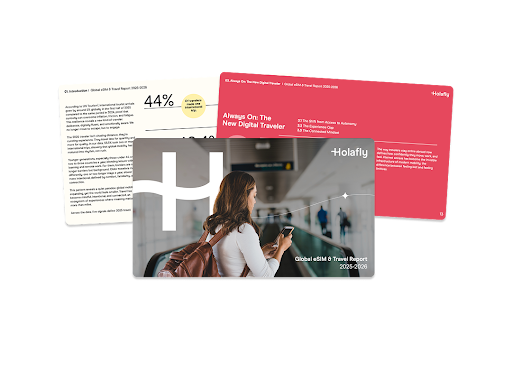



Travelers are no longer choosing destinations only for culture, price, or weather. Data from the Holafly Global eSIM & Travel Report 2025–2026 shows that 29% of travelers now actively consider digital access when choosing where to go, and 26% specifically look for destinations where they can combine work and leisure. The global travel map is being quietly redrawn around access, autonomy, and confidence.

For decades, the internet abroad was something travelers dealt with after arrival. Today, it has moved to the planning stage.
According to Holafly Global eSIM & Travel Report 2025–2026, 1 in 4 travelers now say that strong digital access influences their destination choice. This shift reflects a deeper change in how travel is perceived. Trips are no longer interruptions of daily life. They are extensions of it. People expect to navigate, work, book, share, and communicate in real time, wherever they are.
This change is especially visible among travelers under 35, who prioritize experience and flexibility over fixed routines. For them, the ability to stay online is not a technical requirement. It is what makes travel feel safe, fluid, and empowering.
The rise of the “connected traveler” mindset
The modern traveler is not simply mobile. They are digitally fluent. 91% of travelers rely on smartphones during their trips, 37% use laptops, 26% use tablets or wearables, and 16% carry additional digital devices such as translators or e-readers. Travel now unfolds across a personal digital ecosystem.
This explains why digital access has become emotional as well as functional. When it works, people feel oriented, calm, and in control. When it fails, stress rises sharply. More than half of travelers name slow or unreliable internet as their biggest frustration, 44% feel frustrated by unexpected roaming charges, and 43% lose signal when crossing borders. These are no longer minor inconveniences. They directly affect how safe and confident people feel while traveling.
Regions where digital access matters most
The importance of digital access varies by region, but the direction is consistent. In North America, travelers place a high value on digital tools and work life balance, reflecting hybrid lifestyles where trips often include professional elements.
In Latin America, affordability and digital access go hand in hand, as travelers balance aspiration with practicality. In Asia and Oceania, personal growth, exploration, and digital fluency intersect, making the region particularly attractive for younger, mobile professionals.
Across all regions, the pattern is the same. The more mobile people become, the more they value environments that reduce friction and increase autonomy.
Choosing confidence over convenience
What ultimately drives this shift is not technology. It is psychology. Travelers are choosing destinations that make them feel confident. Confidence comes from knowing that navigation will work, payments will go through, meetings will not drop, and communication will remain open.
Digital access has become part of how people evaluate safety, comfort, and freedom. It sits alongside culture, nature, and affordability as a pillar of modern travel decision making.