







 Language
What to wear to Oktoberfest 2026: the complete outfit guide
Learn what to wear to Oktoberfest 2026, from dirndls and lederhosen to shoes, weather tips, outfit costs, and where to buy or rent Tracht.
Figuring out what to wear to Oktoberfest is one of the first things to sort out once your Munich trip is booked. The traditional outfit, known as Tracht, is such a big part of the festival that dressing the part is genuinely half the fun.
This guide covers everything you need to know: what women wear (the dirndl), what men wear (lederhosen), the right shoes, how to handle the weather, and exactly where to buy or rent your outfit before the Munich Oktoberfest crowds descend.

An eSIM you can rely on
Join over 10 million Holafly customers and get connected with our trusted, global services.
Do you have to dress up for Oktoberfest?
No, dressing up isn’t compulsory. Regular clothes are completely fine, and nobody will stop you at the gate. That said, the vast majority of attendees wear Tracht, especially at the original festival in Munich. Dress standards may be more relaxed at other Oktoberfest celebrations across Europe.
If you’re deciding what to wear to Oktoberfest for the first time, it’s worth budgeting for at least a basic outfit, even a simple one, so you don’t feel out of place among a sea of dirndls and lederhosen. If you’re deciding how many days to spend in Munich, allow enough time to buy or collect your outfit before your first visit to the festival.
What is Tracht? Oktoberfest’s traditional dress
Tracht is the umbrella term for traditional Bavarian and Alpine clothing. At Oktoberfest, it specifically means the dirndl for women and lederhosen for men. Tracht remains a visible part of local culture for people living in Munich, rather than something worn solely as a festival costume. Getting your Oktoberfest attire right shows respect for that tradition rather than treating it as fancy dress.

What women wear to Oktoberfest: The dirndl
The dirndl is the classic Oktoberfest outfit for women, and getting the full look right means paying attention to three main components:
- Bodice and dress: A fitted, low-cut bodice attached to a full skirt, usually finishing at or just below the knee for everyday wear (ankle-length versions are more formal). It should sit close through the waist without restricting your breathing.
- Blouse: A fitted white or cream blouse worn underneath, usually with short or elbow-length puffed sleeves. It shows through the bodice’s neckline and sleeves.
- Apron: A matching or contrasting apron tied over the skirt, finished with a bow at the waist.
If you’re wondering what to wear to Munich Oktoberfest as a first-timer, the dirndl is the easiest way to look the part without overthinking it. A good rule of thumb: the apron should sit at your natural waist, not your hips, and the bodice should feel snug but comfortable enough to sit and dance in for hours.
Dirndl bow meaning: What the apron bow position means
One quirky detail of dirndl attire is the apron bow, which traditionally signals relationship status depending on where it’s tied:
| Bow position | Traditional meaning |
|---|---|
| Left side | Single |
| Right side | Taken or married |
| Centre front | Virgin, or not sharing your status |
| Centre back | Widowed, or working as a server |
Locals don’t take this literally anymore, but it’s a fun fact of Bavarian tradition worth knowing before you tie your own bow.

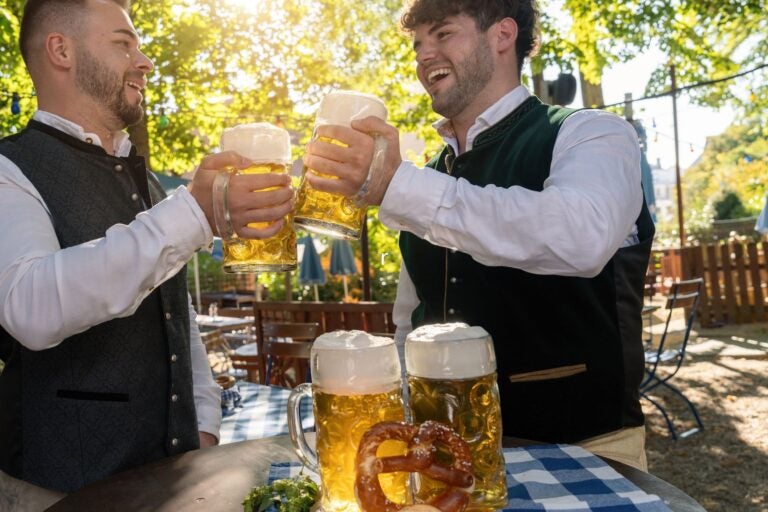
What men wear to Oktoberfest: Lederhosen
Lederhosen are the male half of Oktoberfest attire, and there’s more to picking a pair than just leather shorts. Two lengths are common: short lederhosen (Kurze), which sit above the knee and are the more casual, festival-going choice, and knee-length lederhosen (Kniebundhosen), a slightly more formal option.
A complete lederhosen outfit for Oktoberfest typically includes:
- The lederhosen themselves, ideally in cowhide, goatskin, or deerskin, worn snug but not tight since leather stretches slightly with wear.
- A checked shirt, usually in plaid or gingham, tucked in and often paired with braces (suspenders) attached to the lederhosen.
- Socks and Loferl, the traditional calf warmers worn with short lederhosen, paired with knee-high socks.
- A belt, often decorative, if the lederhosen don’t already have built-in straps.
Fit matters more than styling here: lederhosen that are too loose look sloppy, while ones that are too tight will be uncomfortable for a long day of sitting, standing, and dancing on benches.
What to wear to Oktoberfest: Shoes and accessories
Footwear is where a lot of first-timers get their Oktoberfest outfit wrong. The Wiesn (festival grounds) involves gravel paths, spilled beer, and standing for hours, so comfort and grip matter more than looks.
- For women: Haferl shoes (a traditional low leather shoe) are the classic choice, but comfortable flats, loafers, or clean ankle boots all work well too. Skip the heels, they sink into the ground and make dancing on benches genuinely risky.
- For men: Haferl shoes or sturdy leather shoes pair naturally with lederhosen. Trainers are a common, more casual substitute.
- Accessories: A felt Tracht hat (Trachtenhut) with a feather or pin is a popular finishing touch for both genders. Braided hair or a simple updo suits the dirndl look. Keep bags small and hands-free if possible, ideally a crossbody bag, since tables get crowded fast.
What not to wear at Oktoberfest
A few common mistakes stand out at every Oktoberfest, and avoiding them will help you blend in rather than stand out for the wrong reasons:
- Cheap sexy costume dirndls. Ultra-short, synthetic party-store versions read as costume, not Oktoberfest attire, and locals notice the difference immediately.
- Sportswear or gym clothes. Trainers with a football shirt might be comfortable, but they clash with the dress code most tents expect, especially in the bigger tents.
- Uncomfortable heels. Between walking, standing, and uneven ground, heels are among the most regretted Oktoberfest outfit choices year after year.
- Ignoring the weather. Late September and early October in Munich can swing from warm afternoons to cold nights, so skipping a jacket or layers is a common rookie error. If you’re packing heated accessories or other electronics, remember to check the plug type used in Germany.
- Treating Tracht as a joke costume. Wearing it with obvious irony (e.g., fake lederhosen with novelty prints) can come across as disrespectful to a tradition that locals take seriously.
Where to buy an Oktoberfest outfit and how much it costs
You can buy or rent your Oktoberfest outfit either before you travel or once you land in Munich, and prices vary a lot depending on quality. Many shops show their available styles and sizes online, so it helps to arrange your internet access in Germany before you arrive.
Most rental shops are also easy to reach using public transport in Munich, particularly those around Hauptbahnhof and the city centre.
| Option | Typical price (dirndl) | Typical price (lederhosen) | Notes |
|---|---|---|---|
| Rental | €30–€80 per day | €30–€80 per day | Good for a one-off trip, available near Munich’s main train station and in the city centre |
| Budget buy | €50–€150 | €80–€150 | Cotton or basic leather, fine for occasional wear |
| Mid-range | €150–€300 | €150–€300 | Better fabrics and stitching, the sweet spot for most first-timers |
| Premium/designer | €400–€1,500+ | €400–€1,500+ | Hand-tailored, deerskin or fine cotton, built to last decades |
An eSIM for Germany can also help you contact rental shops, access booking confirmations, and navigate to fittings after you arrive. And if you’re collecting an outfit from a shop elsewhere in the city, some tourist cards in Germany include local transport and attraction discounts that may help with the rest of your trip in Munich.
Tip: If Oktoberfest is only one stop on your longer European trip, renting is often the most practical choice since you won’t have to carry a bulky outfit between destinations. An eSIM for Europe can similarly cover the rest of your itinerary without arranging connectivity country by country.
Stay connected at Oktoberfest with Holafly
Sorting out a local SIM card is the last thing you want to be doing when you’ve got a rental fitting booked and a tent table to find. An eSIM for Germany skips that part: you install it before you leave home, and it’s working by the time you land in Munich. You get unlimited data at speeds up to 5G for browsing dirndl shops, checking rental opening hours, and finding your group in a crowded Wiesn tent, plus 24/7 customer support if you hit a snag.
Keep the eSIM on your phone after Oktoberfest and you won’t need to install a new one for your next trip. Always On: 1 GB of monthly backup data is included at no extra cost, and the 1 GB renews every month, so there’s something to fall back on once your main plan runs out!
Get an unlimited data eSIM
Use code MYESIMNOW5 for 5% off at checkout
Plans that may interest you


哈囉我是來自台灣的 Wen,平常最喜歡旅遊,也喜歡將旅遊的種種化成文字跟大家分享,希望大家能在我的文章中找到有用的資訊,加上 Holafly 的 eSIM,讓你的旅程更美好!✈️✈️✈️ Hi! I'm Wen, a passionate content writer and travel enthusiast from Taiwan. I transform my wanderlust adventures into engaging stories and practical guides, helping fellow travelers make the most of their journeys.Through my articles, I strive to provide travel tips while introducing how our eSIM technology can enhance your travel experience - keeping you connected wherever your adventures take you!

