Language
How many days do you need in Munich?
Find out how many days in Munich you need, with practical 2-, 3-, and 4–5-day itineraries, day trips, transport tips, and seasonal advice.
If you’re wondering how many days in Munich are enough, the short answer is 2 to 3 days for the city itself, and 4 to 5 days if you want to fit in day trips to places like Neuschwanstein Castle or Salzburg.
Below, you’ll find a clear breakdown of how many days in Munich suits different trip styles, plus ready-to-use itineraries for 2, 3, and 4-5 days, so you can start planning as soon as you land on a number.

An eSIM you can rely on
Join over 10 million Holafly customers and get connected with our trusted, global services.
Is Munich worth visiting?
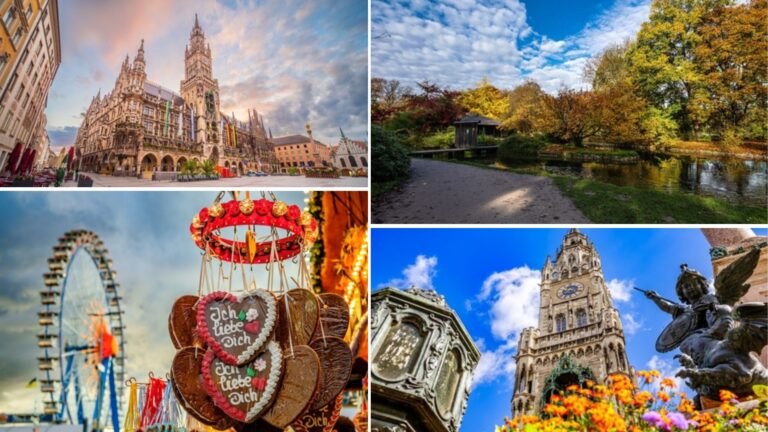
Munich earns its place on most itineraries in Germany. The Altstadt (old town) is compact and walkable, centred on Marienplatz and its famous Glockenspiel.
The city has a serious beer culture too, from the crowded Hofbräuhaus to quieter beer gardens tucked into the English Garden, one of the largest urban parks in the world.
Add world-class museums like the Deutsches Museum and the Pinakothek trio, plus its role as the easiest gateway to the Bavarian Alps and neighbouring Austria, and it’s clear why so many travellers build a Germany trip around it.
Munich’s cultural calendar is a big part of the draw, too. That culture reaches its biggest stage every year at Munich Oktoberfest, the world’s largest folk festival, when the city’s beer-hall spirit spills out across the Theresienwiese fairgrounds for over two weeks each autumn. Similar Oktoberfest celebrations across Europe take inspiration from Munich, but this is where the tradition began.
How many days do you need in Munich?
As a baseline, plan on:
- 2 days: enough to cover the core sights in the Altstadt without rushing
- 3 days: the sweet spot for most first-time visitors, with room to slow down and add a museum or a proper beer garden afternoon
- 4-5 days: ideal if you want to add one or two day trips, such as Neuschwanstein Castle or Salzburg, without cramming them into an already packed city visit
A few things push that number higher. If museums are a priority, the Deutsches Museum and the Pinakothek galleries can each easily absorb half a day on their own. If you’re down to explore Munich’s beer culture beyond the tourist-heavy Hofbräuhaus, that’s worth an extra afternoon or evening. And if day trips are on your list, each destination is a full day out.
Your budget may also influence how long you stay. Munich is one of Germany’s more expensive cities, so checking the typical cost of living in Munich can give you a useful reference point when estimating accommodation, meals, and everyday expenses.
| Trip length | Best for |
|---|---|
| 2 days | First-timers on a tight schedule, or a stopover en route elsewhere |
| 3 days | Most visitors: city sights plus breathing room |
| 4-5 days | Travellers who want the city and at least one day trip |
2 days in Munich itinerary
A two-day itinerary gives you enough time to see several landmarks connected to Bavaria’s history, beer culture, and some of the better-known fun facts about Germany.
Day 1
- Start at Marienplatz to catch the Glockenspiel show. It plays at 11 am, and again at 12 pm and 5 pm, depending on the season.
- Then wander into the Altstadt to see the Frauenkirche and Viktualienmarkt.
- In the afternoon, visit the Residenz, the former royal palace, before heading to the Hofbräuhaus for a classic Munich beer hall dinner.
Day 2
- Spend the morning in the English Garden, walking to the Eisbach wave to watch river surfers, then stop at a beer garden like the Chinese Tower for lunch.
- In the afternoon, pick one museum (the Deutsches Museum for science and tech, or one of the Pinakothek galleries for art) before an early dinner in Schwabing.
3 days in Munich itinerary
Keep Days 1 and 2 as above, then use the third day to go further afield within the city:
Day 3
- Head to Nymphenburg Palace in the morning, the Bavarian royal family’s former summer residence, set in expansive gardens.
- In the afternoon, visit Olympic Park, home to the 1972 Summer Olympics, and go up the Olympic Tower for a rooftop view over the city.
- Finish with dinner in a neighbourhood like Haidhausen or Glockenbachviertel, both a bit more local than the Altstadt.
The extra day buys you the sights that sit outside the walkable centre, without cutting your time in the old town short.
4 to 5 days in Munich itinerary
With a fourth or fifth day, you can add one or two day trips without feeling rushed in the city itself. Use Days 1-3 as above, then:
Day 4
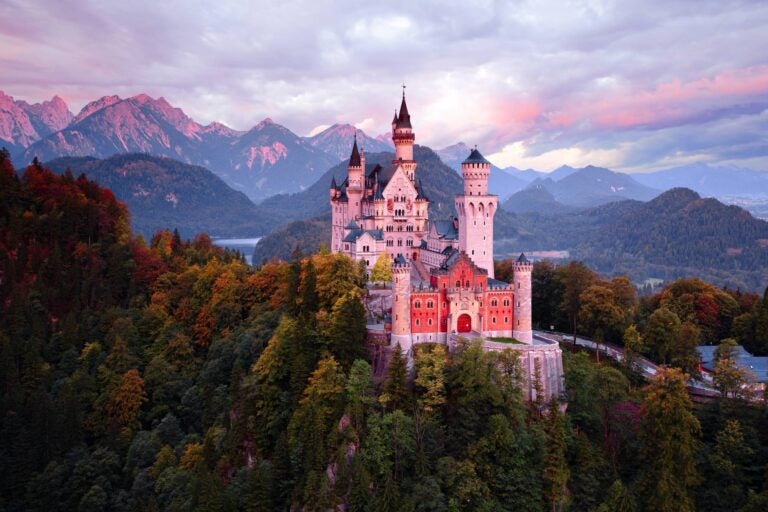
- Book a timed-entry ticket for Neuschwanstein Castle in advance. Then, take an early train from Munich Hauptbahnhof to Füssen (about two hours), followed by a short bus ride to Hohenschwangau to visit the castle.
- It’s a full day out once you factor in travel and the guided tour, so keep the evening free.
Day 5
- Take a direct train to Salzburg, Austria (as little as 1.5 hours). Spend the day exploring the old town, Mozart’s birthplace, and Hohensalzburg Fortress.
- Then catch an evening train back to Munich. It’s an easy cross-border day trip that doesn’t need an overnight stay.
If you’d rather stay closer to Munich, swap either day for Dachau Memorial (a half-day trip) or Garmisch-Partenkirchen for a day in the Alps.
Best day trips from Munich
All of these work as a single day out and are reachable by train, which pairs well with Munich’s easy public transport network.
| Day trip | Travel time from Munich | Why go |
|---|---|---|
| Neuschwanstein Castle | About 2 hours by train to Füssen, plus a bus or walk to the castle | Bavaria’s most famous fairytale castle, requires a timed-entry ticket booked in advance |
| Dachau Memorial | About 25-30 minutes by S-Bahn | A sobering, important visit to the site of the Dachau concentration camp; free entry |
| Salzburg, Austria | Roughly 1.5-2 hours by direct train | An easy cross-border trip to Mozart’s birthplace and Sound of Music filming locations |
| Garmisch-Partenkirchen and Zugspitze | About 1.5 hours by train | Germany’s highest peak and access to genuine Alpine scenery |
A note on Dachau Memorial: Because of the subject matter, it’s worth allowing at least half a day and going in with a quiet, respectful mindset rather than treating it like a typical sightseeing stop.
Best time to visit Munich
Munich works as a destination year-round, but the season you pick affects how many days you’ll want to spend there.
- Spring (April-May): Mild weather and fewer crowds than summer, good for a straightforward 2-3 day city visit.
- Summer (June-August): Peak season, with long days that suit beer garden evenings and day trips. Book Neuschwanstein tickets and hotels well ahead.
- Autumn (September-October) / Oktoberfest: If your trip lines up with Munich Oktoberfest, expect bigger crowds, higher hotel prices, and a livelier city overall. Check what to wear to Oktoberfest if it’s your first time.
- Winter (November-March): Quieter and colder, but Christmas markets make Germany in December particularly appealing. A 2-3 day trip is usually enough, and museum queues are shorter.
Getting around Munich
Munich’s public transport network, run by the MVV, covers the U-Bahn (subway), S-Bahn (regional trains), trams, and buses, all on one integrated ticket system.
- A single-day MVV ticket covers unlimited travel within the city for one person, and a group day ticket (up to 5 people) works out cheaper per person if you’re travelling with others.
- The Altstadt itself is compact enough to explore on foot, so you’ll mostly use public transport to reach sights further out, like Nymphenburg Palace or Olympic Park.
- For day trips, regional and long-distance trains leave from Munich Hauptbahnhof, the city’s main station, so most trips (to Füssen, Dachau, Salzburg, or Garmisch-Partenkirchen) start from the same place.
- If you’re travelling around Bavaria more broadly, look into a regional rail pass or a tourist card, which can bundle transport with discounts on attractions.
- An eSIM for Germany can also make it easier to check live transport updates, load mobile tickets, and navigate between the city and nearby day-trip destinations.
Stay connected in Munich with Holafly
Half of a Munich trip happens on the move — checking S-Bahn times out to Dachau, pulling up a mobile ticket at Hauptbahnhof, re-confirming your Neuschwanstein entry slot on the train to Füssen. An eSIM for Munich from Holafly keeps all of that running on unlimited data with speeds up to 5G, backed by 24/7 customer support if anything needs sorting out.
Even after your plan ends, you’re not left offline. Always On: 1 GB of monthly backup data comes with your eSIM at no extra cost — keep the eSIM installed on your phone and the 1 GB renews every month, ready whenever you need it.
Get an unlimited data eSIM
Use code MYESIMNOW5 for 5% off at checkout
Plans that may interest you


哈囉我是來自台灣的 Wen,平常最喜歡旅遊,也喜歡將旅遊的種種化成文字跟大家分享,希望大家能在我的文章中找到有用的資訊,加上 Holafly 的 eSIM,讓你的旅程更美好!✈️✈️✈️ Hi! I'm Wen, a passionate content writer and travel enthusiast from Taiwan. I transform my wanderlust adventures into engaging stories and practical guides, helping fellow travelers make the most of their journeys.Through my articles, I strive to provide travel tips while introducing how our eSIM technology can enhance your travel experience - keeping you connected wherever your adventures take you!