







 Language
Munich Oktoberfest 2026: Everything you need to know
Plan Munich Oktoberfest 2026 with confirmed dates, tent tips, costs, transport advice, what to wear, and first-timer essentials.
Munich Oktoberfest is the world’s largest folk festival, running from Saturday, 19 September to Sunday, 4 October 2026. The event draws around six million visitors to the Theresienwiese every year for two and a half weeks of beer, brass bands, and Bavarian tradition, and entry to the grounds and every tent is free.
This guide covers the confirmed dates, how the beer tents and reservations work, what to wear and eat, how to get to the Theresienwiese, what a day is likely to cost, and the tips first-timers actually need.

An eSIM you can rely on
Join over 10 million Holafly customers and get connected with our trusted, global services.
What is Oktoberfest?
Oktoberfest, known locally as the Wiesn, began in 1810 as a public celebration of a royal wedding and grew into an annual folk festival held on the Theresienwiese fairground in Munich.
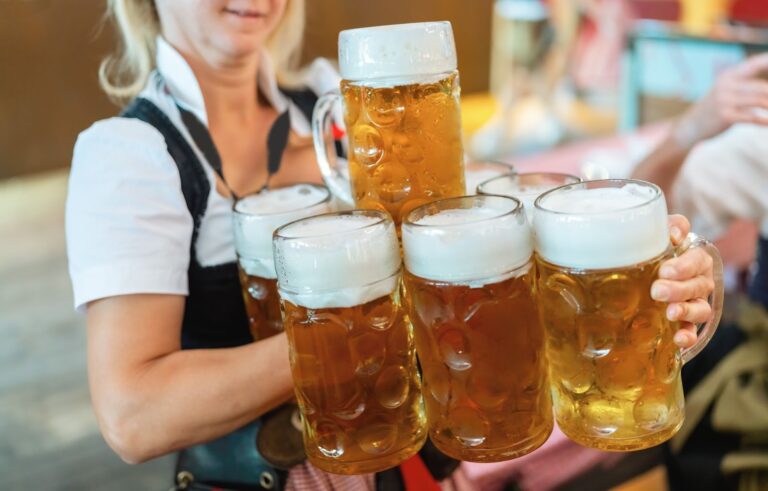
Today it’s part beer festival, part funfair, part cultural tradition: 14 large tents and around 21 smaller ones, each run by a different landlord, pour beer brewed specially for the occasion while brass bands, fairground rides, and food stalls fill the rest of the 42-hectare site.
Munich’s is the original and the biggest, though Oktoberfest-style celebrations now run across Europe if you can’t make it to Bavaria itself.
When is Munich Oktoberfest 2026?
Munich Oktoberfest 2026 runs for 16 days, from Saturday, 19 September to Sunday, 4 October, marking the 191st edition of the festival. Opening hours vary by day of the week, so here’s the breakdown:
- Monday–Thursday: 10 am – 11.30 pm
- Friday: 10 am – midnight
- Saturday: 9 am – midnight
- Sunday: 9 am – 11.30 pm
Within those hours, the large beer tents stop serving beer and music at 10.30 pm, while smaller tents (chicken roasting houses, snack bars, café tents) serve until 11 pm. Two exceptions stay open later: Käfer’s Wiesn-Schänke and Kufflers Weinzelt pour until 12.30 am, with last drinks at 12.30 am and doors closing at 1 am.
On the first Saturday, the tents open at 9 am, non-alcoholic drinks start at 10 am, and beer doesn’t flow until noon, when the Lord Mayor taps the first keg and declares “O’zapft is!”
Is Munich Oktoberfest free to enter?
Yes, getting into the Theresienwiese and into every beer tent is free. There’s no admission fee and no general ticket to buy. You only pay for what you consume: beer, food, and fairground rides. If you see a site selling “Oktoberfest tickets,” it isn’t official.
The Munich Oktoberfest beer tents
Only six Munich breweries are allowed to pour at Oktoberfest: Spaten, Augustiner, Paulaner, Hacker-Pschorr, Hofbräu, and Löwenbräu, each running one or more of the large tents alongside a mix of smaller ones. The big tents seat several thousand people, and each has its own personality, so it’s worth picking one that matches the trip you want:
| Tent | Brewery | Known for |
|---|---|---|
| Schottenhamel | Spaten | Where the festival officially opens; younger, high-energy crowd |
| Hofbräu-Festzelt | Hofbräu | Loud, international, popular with first-time visitors |
| Augustiner-Festhalle | Augustiner | Traditional feel, beer served from wooden kegs |
| Hacker-Festzelt | Hacker-Pschorr | “Heaven of Bavaria” ceiling design, lively music |
| Käfer’s Wiesn-Schänke | Paulaner | Smaller, later closing, popular with locals and celebrities |
How to reserve a table at Oktoberfest in Munich?
There’s no central booking system for Munich Oktoberfest reservations, each tent takes bookings directly through its own website, and requests open months ahead of the festival, so it pays to start early.
Reservations are free to request but usually require you to prepay for a voucher package (a set amount of beer and food per person, known as the minimum consumption), and they’re typically for a full table rather than individual seats.
If your plans change after booking, an official resale portal lets you exchange or resell your table at its original price through 21 of the tents. And if you don’t manage to reserve, don’t rule out going anyway: roughly a quarter of the seats in the big tents are kept free for walk-ins, especially earlier in the day.
How much does Oktoberfest cost?
Oktoberfest itself is free to enter, but a day at the Wiesn still adds up. Here’s a realistic budget picture for 2026:
- Beer: a Maß (one litre) runs roughly €14.80–€15.90 depending on the tent
- Food: mains like roast chicken or sausages typically cost €12–€20
- Fairground rides: usually €5–€10 per ride
- Accommodation: Munich hotel prices rise sharply during the festival, so book your stay well ahead
Most visitors find a moderate day of beer, a meal, and a ride or two lands somewhere around €60–€90 per person, before accommodation. Other costs to plan for include transport, accommodation, and internet access in Germany, especially if you’re travelling from outside the EU.
If you’re combining Oktoberfest with more sightseeing around Germany, a tourist card can trim costs on transport and attractions outside the festival grounds. And if you’re bringing gadgets to charge between tents, check Germany’s plug type before you pack.
What to wear to Oktoberfest?
What to wear to Oktoberfest? Dressing like the locals at Oktoberfest is one of the easiest ways to feel part of the tradition, even if it’s not required. Traditional Bavarian dress, or Tracht, is everywhere at Oktoberfest: dirndls for women, lederhosen for men. It isn’t compulsory, but locals and visitors alike embrace it, and wearing it is part of the fun rather than an expectation you need to meet.
If you do dress up, comfortable shoes matter more than style, since you’ll be on your feet and standing on grass or gravel for hours. September evenings in Munich can turn cool, so bring a layer even if the afternoon is warm.

What to eat and drink at Oktoberfest?
Food at Oktoberfest is as much a part of the tradition as the beer, and the six Munich breweries each produce a special Oktoberfestbier for the occasion. A few classics worth trying:
- Hendl (roast half-chicken), a Wiesn staple
- Brezn (giant soft pretzels)
- Bratwurst and other grilled sausages
- Schweinshaxe (roast pork knuckle)
- Oktoberfestbier from Spaten, Augustiner, Paulaner, Hacker-Pschorr, Hofbräu, or Löwenbräu
Not drinking beer? Every tent also serves non-alcoholic options, including Radler (beer mixed with lemonade) and standard soft drinks and water.

How to get to Munich Oktoberfest?
The festival takes place on the Theresienwiese, a fairground about a 10-minute walk south of Munich’s main train station, Hauptbahnhof. Public transport is by far the easiest way in: Munich’s public transport network runs extraU-Bahn, S-Bahn, bus, and tram services throughout the festival, and driving or parking near the grounds isn’t realistic given the crowds.
- U-Bahn: Lines U4 and U5 run directly to Theresienwiese station from Odeonsplatz, Karlsplatz/Stachus, or Hauptbahnhof in just a few minutes. If it’s too crowded, ride one stop further to Schwanthalerhöhe. Lines U3 and U6 run to Goetheplatz or Poccistraße, both a short walk from the eastern and southern entrances.
- S-Bahn: Any S-Bahn line (S1–S8) stops at Hackerbrücke, about 2 minutes from Hauptbahnhof, 5 from Marienplatz, or 10 from Ostbahnhof. From Hackerbrücke, it’s a 10-minute walk to the main entrance.
- Bus: MetroBus lines 53, 58/68, and 62, plus city bus line 134, all serve stops within walking distance of the grounds.
- Tram: Lines 18/19/29 stop at Holzapfelstraße or Hermann-Lingg-Straße, and lines 16/17 stop at Hackerbrücke.
Tip for a quieter arrival: Theresienwiese station gets packed at peak times; travelling with kids or heavy luggage is easier via Goetheplatz, Poccistraße, or Schwanthalerhöhe instead.
Tips and etiquette for first-timers
A few small habits make the difference between a smooth day at the Wiesn and a frustrating one:
- Arrive early (before 11 am on weekends) if you want a table without a reservation
- Bring cash cause many stalls and some tents still don’t take cards
- Bag size is limited to 20×15×10 cm; larger bags and backpacks aren’t allowed on site
- Pace yourself, Oktoberfest beer is stronger than standard lager
- Don’t stand on the benches unless everyone around you is doing it
- Check whether your phone will work in Germany before departure, then set up an eSIM for Germany if you need mobile data during your trip
- Listen for “O’zapft is!”, the keg-tapping cry that marks the tents’ true opening
- When planning how many days to spend in Munich, consider whether you only want to experience Oktoberfest or combine the festival with a longer trip around Europe.
Stay connected at Munich Oktoberfest with Holafly
Six million people on one fairground means you’ll be texting your group about which tent, which entrance, and which table long before you actually find each other. An eSIM for Germany gives you unlimited data and speeds up to 5G to keep those messages moving, with 24/7 customer support if anything goes wrong mid-trip.
Your Wiesn days end, but the journey home still needs a train time and a boarding pass. Keep your Holafly eSIM installed once your plan runs out and Always On: 1 GB of monthly backup data is there at no extra cost, topping back up every month, enough to check the S-Bahn back from Hackerbrücke, confirm your flight, or send the day’s photos from the airport.
Get an unlimited data eSIM
Use code MYESIMNOW5 for 5% off at checkout
Plans that may interest you


哈囉我是來自台灣的 Wen,平常最喜歡旅遊,也喜歡將旅遊的種種化成文字跟大家分享,希望大家能在我的文章中找到有用的資訊,加上 Holafly 的 eSIM,讓你的旅程更美好!✈️✈️✈️ Hi! I'm Wen, a passionate content writer and travel enthusiast from Taiwan. I transform my wanderlust adventures into engaging stories and practical guides, helping fellow travelers make the most of their journeys.Through my articles, I strive to provide travel tips while introducing how our eSIM technology can enhance your travel experience - keeping you connected wherever your adventures take you!

