


 Language

Puerto Rican Christmas traditions: Food and celebrations
Discover one of the world’s longest Christmas. Puerto Rican Christmas traditions, from parrandas and Nochebuena foods to Three Kings Day and La SanSe.

Puerto Rico has one of the world’s longest and most vibrant Christmas seasons. It starts in late November (right after Thanksgiving) and extends through mid-January (ending with Las Octavitas and the San Sebastián Street Festival).
This guide covers everything about Christmas traditions in Puerto Rico, including traditional Christmas food, Christmas Eve customs, gifts, regional celebrations, and ways travelers can experience the festivities.
Travelers to Puerto Rico can stay connected with Holafly eSIM, offering unlimited data, 5G speeds, and 24/7 customer support.

Limitless data, endless adventures
Stream, scroll, and share as you please. With Holafly, your data is always unlimited.
TL;DR: How do Puerto Ricans celebrate Christmas?
Puerto Rico’s Christmas holidays, known locally as Navidades, are packed with music, food, gatherings, and deep-rooted cultural customs. Here are the key dates for the Christmas holiday and how Puerto Ricans celebrate each day:
- Late November (Day after Thanksgiving) — The Kickoff: Christmas officially begins; decorations go up, and late-night caroling runs (parrandas) start across neighborhoods.
- December 24 — Nochebuena (Christmas Eve): The biggest family night of the season, featuring huge feasts, midnight mass (Misa de Gallo), and celebrations lasting late into the night.
- December 25 — Navidad (Christmas Day): A relaxed day to rest, open Santa’s gifts, eat leftovers, and spend low-key time with family.
- December 31 — Despedida de Año (New Year’s Eve): Countdowns, fireworks, and traditions like eating 12 grapes or tossing water outside for good luck.
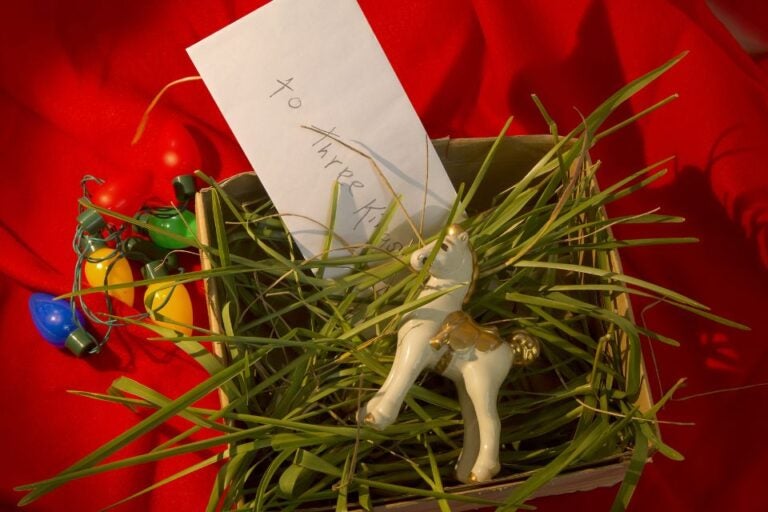
- January 6 — Día de los Reyes Magos (Three Kings Day): The main gift-giving day for kids, who collect grass in boxes overnight for the Kings’ camels.
- January 7–14 — Las Octavitas: An eight-day extension of Christmas focused on continuing the parrandas and praising the Kings.
- Mid-January — Fiestas de la Calle San Sebastián (“SanSe”): The grand finale. A 4-day festival in Old San Juan packed with live music, parades, and street parties.
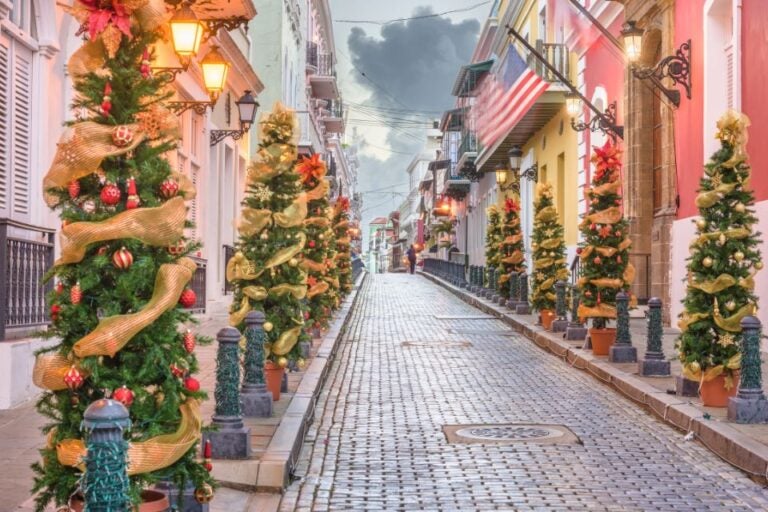
8 Puerto Rican Christmas traditions
Known as Navidades, Christmas in Puerto Rico is a vibrant, two-month celebration centered on deep-rooted family ties, lively music, Catholic heritage, and rich festive feasts. Unique traditions include:
- Las Parrandas: Surprise, late-night caroling runs where musicians wake up neighbors with lively folk songs, moving from house to house for drinks and music.
- Three Kings Day (Jan 6): The primary gift-giving holiday for kids, who leave grass in boxes under their beds for the Three Kings’ camels.
- Nochebuena and midnight mass: Christmas Eve features a massive family feast centered on slow-roasted pork (lechón), followed by midnight church services (Misa de Gallo).
- Las Octavitas: An eight-day holiday extension starting January 7th to keep the music and family gatherings going.
- SanSe festival: The mid-January grand finale in Old San Juan, packed with street parades, artisan markets, live concerts, and colorful vejigante masks.
Parrandas and aguinaldos
Music is a cornerstone of Puerto Rico’s holiday season, playing a key role in bringing families and communities closer together. During the Navidades season, people actively participate in music together, rather than just listening.
Key musical traditions for Christmas in Puerto Rico include:
- Las Parrandas: The Puerto Rican equivalent of Christmas caroling, but with a lively Caribbean spin. Family and friends come together late at night for surprise visits to homes. They play instruments and sing outside until the occupants open their doors, provide food and drinks, and join the group to visit subsequent households.
- Aguinaldos: Traditional Christmas folk songs sung during parrandas and church services. They are often lively, humorous, or religious. It is also a common Christmas tradition in the Dominican Republic.
Puerto Rican holiday music relies on specific acoustic and percussion instruments:
- El Cuatro: A ten-string instrument with five double courses, traditionally recognized as the national instrument of Puerto Rico. It provides the primary melodic accompaniment.
- El Güiro: A percussion instrument of Taíno origin, traditionally made from a hollowed gourd with parallel notches. A scraper is drawn across the surface to produce a rhythmic scratching sound.
- Las Maracas: Shakers constructed from dried gourds containing seeds or dried beans, utilized to maintain rhythm.
Nochebuena and Christmas Eve celebrations
For many Puerto Rican households, Nochebuena (Christmas Eve) holds central cultural and emotional significance. While December 25th is typically observed as a quieter day dedicated to rest, leftovers, and relaxing at home, Nochebuena (December 24th) represents the peak of the seasonal festivities. It includes:
- Family gatherings: Families gather on December 24th to celebrate kinship and community.
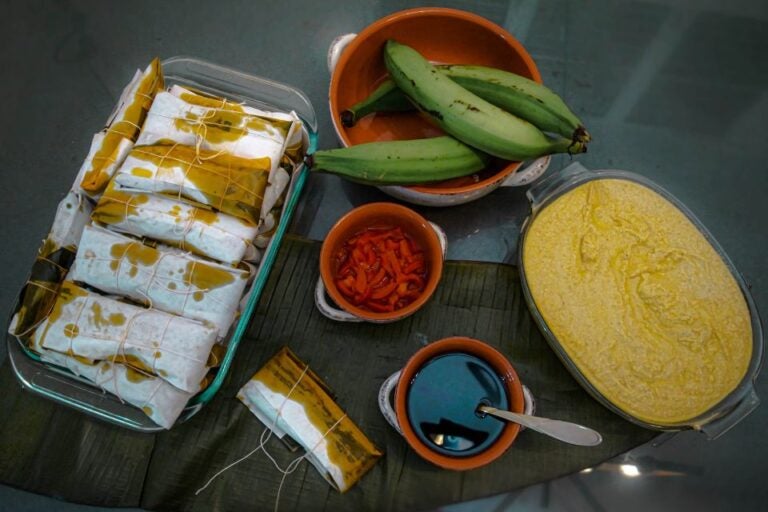
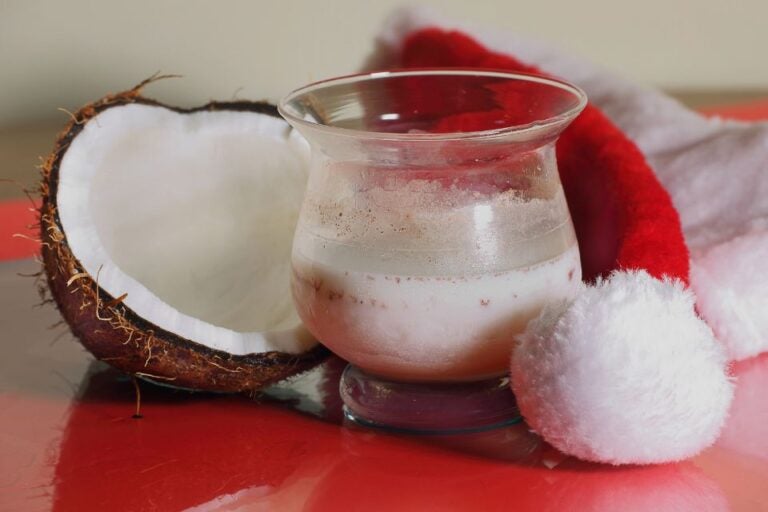
- Festive meals: Meals center on lechón asado (slow-roasted pork), pasteles (plantain dough wrapped in banana leaves), arroz con gandules (rice with pigeon peas), and coquito (a coconut-rum beverage).
- Music: Gatherings feature continuous live or recorded festive folk music (aguinaldos).
- Misa de Gallo: Many attend midnight Mass on Christmas Eve, a traditional Catholic service that marks the start of Christmas Day.
Puerto Rican Christmas food and drinks
Traditional food and drink play a central role in Puerto Rican Christmas celebrations. They are a central part of gatherings during the long Christmas season. The popular Christmas food and drinks include:
- Lechón Asado: Whole pig seasoned with garlic, adobo, and spices, then slow-roasted over charcoal or wood. It is considered a staple of festive holiday meals across the island.
- Arroz con Gandules: Yellow rice cooked with pigeon peas, pork or bacon, and sofrito (a seasoned aromatic base). It functions as the primary side dish during the holidays.
- Pasteles: A labor-intensive dish made from green banana and root vegetable dough filled with seasoned meat (typically pork), wrapped in green banana leaves, and boiled. Preparation often involves collective family participation.
- Tembleque: A coconut milk pudding dusted with ground cinnamon, served cold as a traditional holiday dessert.
- Arroz con Dulce: A sweet coconut rice pudding cooked with ginger, cloves, cinnamon, and raisins.
Christmas decorations and nativity scenes
Holiday decorations in Puerto Rico blend common Western traditions with strong Catholic customs and local cultural elements. Decorating typically begins shortly after Thanksgiving and remains displayed through mid-January.
- Nativity scenes (Nacimientos): Central to Catholic tradition, nativity displays are prominent in homes, churches, and public plazas. They frequently feature hand-carved wooden figures (santos) crafted by local artisans.
- Trees and public lighting: Homes and town plazas feature Christmas trees, string lights, and illuminated displays that serve as gathering points for local communities.
- Local cultural motifs: Holiday decorations often incorporate island symbols, including the Three Kings, traditional instruments like the cuatro, and Flor de Pascua (poinsettias).
Christmas gifts and Three Kings Day
Gift-giving is a common Christmas tradition around the world, taking place on either Christmas Day or Three Kings Day. In Puerto Rico, gift-giving incorporates both Western customs and Spanish Catholic traditions, creating a two-stage season for children.
- Santa Claus (December 25): Influenced by mainland U.S. customs, Santa Claus brings gifts to children on Christmas morning. While observed across the island, it is often viewed as a secondary gift-giving occasion compared to traditional celebrations in January.
- The Three Kings (January 6): Known as El Día de los Reyes Magos, Three Kings Day serves as the primary and historically most significant gift-giving holiday in Puerto Rico.
Three Kings Day is celebrated across many parts of the world on January 6th, though the degree and focus of the celebration vary by region. It is a recognized Christmas tradition in Guatemala. Three Kings Day has its own special traditions in Puerto Rico:
- Grass for the camels: On January 5th, children put grass in boxes under their beds as food for the Kings’ camels.
- Morning gifts: On January 6th, children wake to find gifts in place of the grass.
- Festivals: Towns across the island, like Juana Díaz, host parades and public festivals featuring actors dressed as the Three Kings.
New Year’s Eve traditions
In Puerto Rico, New Year’s Eve (Nochevieja) serves as a midpoint within the two-month Navidades calendar. It is not the conclusion of the holiday season. Celebrations continue into January, leading directly into preparations for Three Kings Day and Las Octavitas.
Puerto Rican New Year’s Eve traditions include:
- Eating 12 grapes (Las Doce Uvas): At midnight, individuals consume twelve grapes, corresponding to the twelve chimes of the clock, to represent good fortune for each month of the upcoming year.
- Throwing water: Some families toss water out the front door or window at midnight to symbolically clear away negative energy from the previous year.
- Ocean rites: In coastal areas, people sometimes walk backward into the ocean at midnight as a symbolic cleansing ritual.
- Colored apparel: Some wear specific colors, such as yellow for financial prosperity or red for love, to attract positive outcomes in the new year.
- Eating lentils: Consuming a small portion of lentils at midnight or on New Year’s Day is believed to attract abundance.
Octavitas and the extended Christmas season
Rather than concluding on December 25th or January 1st, holiday celebrations in Puerto Rico continue well into the new year. It starts with La Octavitas, which begins immediately after Three Kings Day on January 7th and continues for up to eight days.
During this period, families and neighborhood groups continue visiting homes, hosting informal gatherings, and playing music. Parrandas and community celebrations remain active.
The extended holiday season officially concludes in mid-January with the Fiestas de la Calle San Sebastián (known locally as SanSe).
La SanSe and regional celebrations
Fiestas de la Calle San Sebastián (La SanSe) is the official season finale, with major celebrations taking place in Old San Juan while other unique regional events occur across the island.
- Time: Third week of January. La SanSe serves as the traditional conclusion to the Navidades season.
- Key features: The multi-day street festival attracts hundreds of thousands of attendees. It features live musical performances on multiple stages, traditional artisan markets, public dancing, and processions featuring cabezudos (large-headed papier-mâché puppets) representing prominent historical and cultural figures.
In some regions, the season ends with the following festivals:
- Festival de las Máscaras (Hatillo): Held on December 28th to observe the Day of the Holy Innocents, featuring vibrant costumes, masks, and colorful floats.
- Local customs: Distinct festivals like Hatillo’s mask parade highlight that certain holiday traditions are regional rather than island-wide.
How to experience Christmas traditions in Puerto Rico as a traveler
Experiencing Christmas in Puerto Rico requires preparation for warm tropical weather and rich cultural heritage.
- Climate: December and January are the best times to visit Puerto Rico. This period brings pleasant temperatures, averaging 75–83°F (24–28°C) with low humidity, and mild evening breezes.
- Optimal timing: Visiting between mid-December and mid-January provides access to peak festivities, holiday decorations, and major public events.
- Public celebrations: Visit town plazas (plazas públicas) or explore Old San Juan during mid-January to experience the vibrant Fiestas de la Calle San Sebastián. These places rank among Puerto Rico’s best attractions.
- Food and drink: Sample seasonal staples like lechón asado, pasteles, arroz con gandules, and coquito at local restaurants and roadside lechoneras.
- Music: Seek out live performances featuring traditional instruments like the cuatro and güiro in public squares, venues, and cultural centers.
- Engage warmly: Locals are generally welcoming. Travelers are encouraged to join in public celebrations and support local artisans.
- Respect sacred practices: Dress modestly when attending church services, such as Misa de Gallo, and exercise courtesy when photographing local neighborhood gatherings.
- Pack for the season: Before your trip, check the Puerto Rico packing list to ensure you bring all necessary items.
Stay connected while experiencing Christmas in Puerto Rico
The Christmas season in Puerto Rico (las Navidades) lasts approximately 45 days to two months. This long duration gives travelers enough time to visit top attractions and join Christmas traditions in Puerto Rico.
To stay connected during this period to use maps, share experiences on social media, and stay connected with loved ones, a reliable internet connection is required. Holafly eSIM is the most convenient and cost-effective option for travelers.
Holafly Puerto Rico eSIM offers unlimited data, 5G speeds where available, and 24/7 customer support. All the eSIMs come with Always On features, offering 1GB of backup data for emergency use. This additional data enables users to remain connected for up to 30 days after their primary plan ends, provided the eSIM is still installed.
Holafly is supported in 200+ destinations. Check the Holafly eSIM store to find a plan for your next trip.

Count memories, not data
Never lose connection with unlimited data eSIMs from Holafly.
Plans that may interest you


Formerly a travel journalist turned marketing copywriter, I found my way back to the travel world with Holafly—my dream company that made remote work possible. My motto? “Dream big and make it happen.” I’m passionate about writing, exploring the world, and staying active through walking, running, swimming, and hiking. I also love learning, reflecting, and connecting with inspiring minds.


