Language
Guatemala Christmas traditions: Food, celebrations, and customs
Discover Guatemalan Christmas traditions, from the fiery Quema del Diablo and nightly Posadas to elaborate nacimientos and late-night Nochebuena feasts.

Guatemalan Christmas traditions form a vibrant and spiritual season that blends deeply rooted Catholic practices with indigenous Mayan culture. Celebrations run from early December through Nochebuena (December 24) and end with Día de Reyes (January 6).
The festivities include events like burning ceremonial figures, neighborhood parades, and community gatherings. This guide covers everything about Guatemala Christmas traditions, food, celebrations, gifts, fireworks, decorations, and what makes Christmas in Guatemala unique.
Travelers who would like to experience Christmas in Guatemala can consider Holafly eSIM, with unlimited data, 5G speeds, and 24/7 customer support.

Connect to the fastest networks
International eSIMs, local networks. Enjoy the best of both worlds with Holafly.
How is Christmas celebrated in Guatemala?
Christmas in Guatemala is a family-centered season that combines Catholic religious practices with local community customs. Celebrations emphasize gathering with relatives, attending religious services, sharing traditional foods, singing carols, and participating in neighborhood events.
Music, fireworks, and processions play a large role, while the main focus remains on home-based meals and shared rituals.
The Christmas period begins in early December and continues into early January. Key dates include:
- December 7: Quema del Diablo (Burning of the Devil) — families burn old items and devil figures to clear negativity and mark the start of the season.
- December 16–24: Las Posadas — nightly processions reenacting Mary and Joseph’s search for shelter. This tradition includes carols, food, and drinks shared in homes.
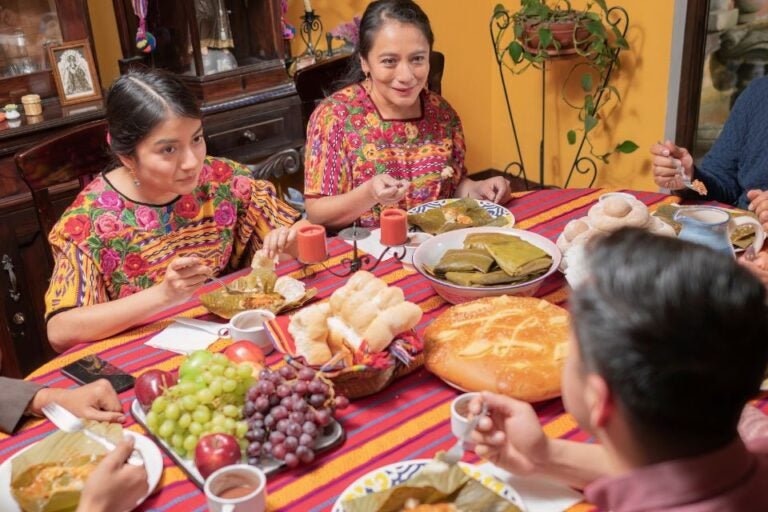
- December 24 (Nochebuena): The main celebration. Families share a large meal of tamales, turkey or pork, and ponche; many attend midnight Mass. Fireworks mark midnight, and gifts are often exchanged. This is also one of the main Christmas traditions in El Salvador.
- December 25: A quieter day of rest, family visits, and leftovers.
- January 6: Día de Reyes (Three Kings’ Day) — observed by some with gatherings marking the Magi’s visit.
7 Christmas traditions in Guatemala
Guatemalan Christmas traditions are unique because they blend Catholic heritage with indigenous Mayan culture. This blend appears in distinct local customs, such as burning ceremonial effigies and building elaborate nativity scenes with native materials.
Rather than a single day of gift-giving and a big meal, the extended schedule creates weeks of ongoing community gatherings, neighborhood processions, and religious observances. The main Guatemala Christmas traditions are:
- La Quema del Diablo: The tradition of burning the devil.
- Las Posadas Navideñas: The reenactment of Mary and Joseph’s journey while searching for lodging.
- Nochebuena: The late-night holiday gatherings.
- Christmas food: The holiday culinary tradition, featuring iconic dishes like corn tamales wrapped in banana leaves.
- Christmas decorations: The detailed home decor, featuring elaborate nativity scenes.
- Christmas fireworks: Massive midnight fireworks and vibrant community celebration.
- Día de Reyes: The official end of the Christmas season.
La Quema del Diablo
The burning of the devil (La Quema del Diablo) is Guatemala’s main Christmas tradition. Families and neighborhoods create or purchase figures of the devil, often in the form of piñatas or effigies, and then burn them outside their homes or in public spaces.
- When: December 7 at 6:00 PM
- Meaning: This tradition symbolizes the purification of homes and communities, casting out evil spirits, bad luck, and the sins of the previous year.
- History: Rooted in the colonial era, the tradition began when households cleaned their homes and burned accumulated trash to prepare for the Feast of the Immaculate Conception on December 8. Over time, this cleaning ritual evolved to include a symbolic figure of the devil.
This tradition includes:
- Devil figures: Households and neighborhoods burn handmade or store-bought piñatas and effigies shaped like the devil.
- Bonfires: At precisely 6:00 PM, streets and plazas across the country ignite their fires, filling the evening with towering flames.
- Fireworks: The burning is accompanied by a loud barrage of firecrackers and noise-makers, signaling the festive start of the holidays.
Las Posadas Navideñas
Known as Las Posadas, these nine-night processions recreate Mary and Joseph’s search for lodging. Groups carry small figures from house to house while singing traditional call-and-response carols that ask for shelter, until a host family welcomes them inside.
Unlike brief church pageants, these are everyday neighborhood events that bring people together and build a strong sense of community and hospitality.
- When: December 16 to 24.
- Meaning: It invites participants to put themselves in the shoes of Mary and Joseph, reminding communities of the importance of opening their homes and offering shelter to travelers and those in need.
- History: Introduced by Spanish missionaries in the 16th century, Las Posadas blended Catholic missionary efforts with native winter festivals. The Church timed the nine nights to match the nine months of Mary’s pregnancy, creating a communal tradition where neighborhoods recreate her journey to Bethlehem.
This tradition includes:
- Lanterns and candles: Participants carry glowing paper lanterns (farolitos) and candles, casting a warm, flickering light down the evening streets.
- Traditional songs: The procession sings specific hymns and verses, alternating between the voices outside asking for shelter and the voices inside granting entry.
- Prayers: Once everyone is welcomed inside the home, the group gathers around the household nativity scene to recite the rosary and offer evening prayers.
Nochebuena and Christmas Day family traditions
Families dress in their finest clothing to attend Misa de Gallo (Midnight Mass). Exactly at midnight, the quiet night erupts into a massive, nationwide symphony of fireworks and firecrackers.
Following the midnight prayers, families sit down for a festive late-night dinner featuring traditional dishes.
- When: December 24
- Meaning: The gathering on Nochebuena is all about family unity, gratitude, and welcoming Jesus. It brings multiple generations together to share a meal, express thankfulness for the past year, and celebrate the heart of their faith as midnight arrives.
- History: Rooted in colonial Catholic traditions, it originated from the practice of attending Midnight Mass after an Advent fast. Families returned home afterward to finally break their fast with a late-night feast.
This tradition is celebrated with:
- Gift-giving: Many families exchange presents either right at midnight on Christmas Eve or on Christmas morning.
- Family visits: People typically spend Christmas Day visiting extended family, sharing leftovers from the night before, and enjoying a relaxed, peaceful atmosphere.
- Diverse traditions: Because Guatemala is culturally diverse, encompassing various Mayan linguistic groups alongside Ladino communities, specific customs, foods, and celebration styles can vary significantly between different families and regions.
Traditional Guatemalan Christmas food
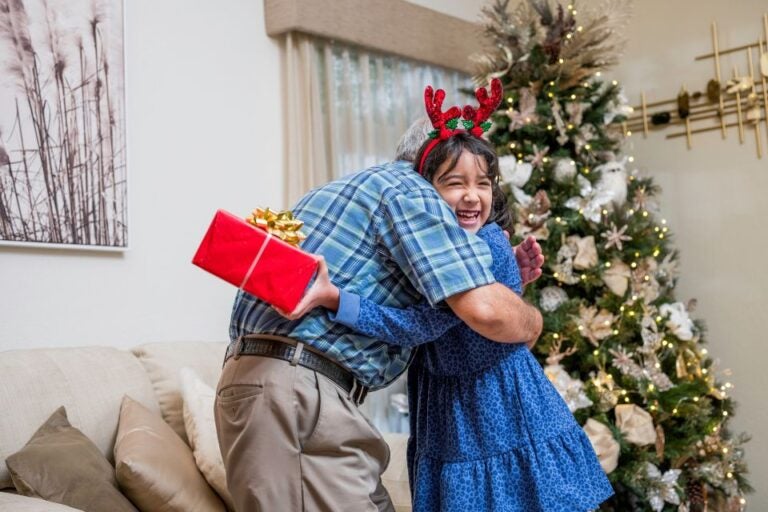
Food plays a central role in Guatemalan Christmas celebrations, especially during the late-night festivities of Nochebuena on December 24. While these dishes are enjoyed throughout the holiday season, they hold a special place at the Christmas dinner table.
Popular traditional dishes:
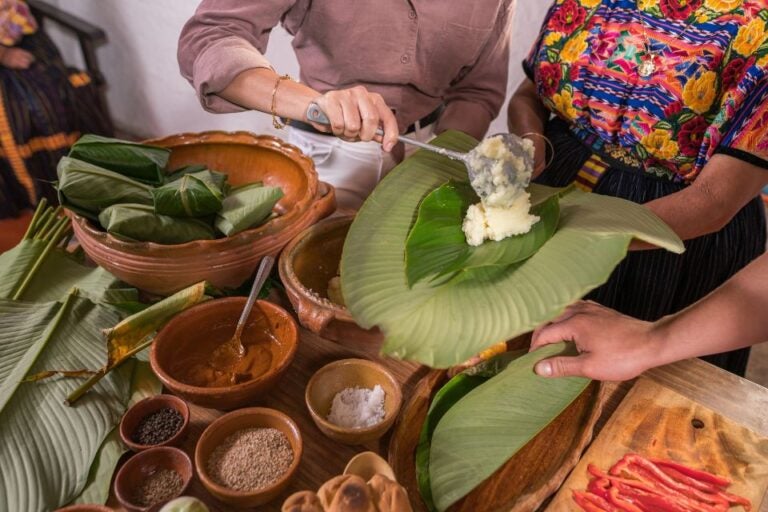
- Tamales: Corn-dough parcels filled with meat, wrapped in banana leaves, and steamed. They are the ultimate staple of Guatemalan Christmas.
- Tamales Colorados: A savory variety made with a rich red tomato-and-chile recado sauce. It is usually filled with pork or chicken, olives, capers, and bell peppers.
- Paches: A variation of the tamale that uses mashed potatoes instead of corn masa for the dough. It is typically stuffed with chicken or pork.
- Chuchitos: Smaller, firmer corn tamales wrapped in corn husks rather than banana leaves, often served with a simple tomato sauce and cheese.
- Sweet Tamales (Tamales Dulces): A dessert version flavored with raisins, prunes, cinnamon, and almonds, offering a sweet contrast to the savory dishes.
- Ponche de Frutas: A warm, fragrant fruit punch made by simmering apples, pears, plantains, pineapples, raisins, and plums with cinnamon and sugar.
Nativity scenes and Christmas decorations
In Guatemala, the holiday season centers heavily on elaborate home and public displays rather than decorated Christmas trees. Families build these scenes together weeks before Christmas, adding the figure of baby Jesus to the manger precisely at midnight on Nochebuena.
These decorations include:
- Colored sawdust: Artisans and families dye wood shavings in vibrant colors to create elaborate, carpet-like patterns around the base of the scene.
- Natural elements: Displays are traditionally layered with fresh pine needles (pino), green moss, and dried flowers to create a realistic, fragrant landscape.
- Handmade figures and miniature landscapes: The scenes feature miniature villages, hills, and rivers populated by handmade clay figures. These figures depict local animals, shepherds, and everyday Guatemalan life alongside the holy family.
Christmas fireworks, music, and processions
Guatemalan Christmas traditions are filled with vibrant sounds, bright lights, and lively neighborhood movements. Processions are a major part of the holiday, moving through towns during Las Posadas and other community gatherings.
The key elements of this day are:
- Fireworks and firecrackers: Explosive fireworks light up the sky during key moments like “La Quema del Diablo” and right at midnight on “Nochebuena” to drive away evil and celebrate joy.
- Bonfire: During La Quema del Diablo, crowds gather around bonfires and fireworks.
- Marimba music and carols: Traditional marimba tunes and festive Christmas songs play constantly during gatherings, street processions, and family dinners.
- Farolitos: Small paper lanterns (farolitos) illuminate neighborhood streets during evening events, creating a warm and welcoming glow.
For fireworks and celebrations, most people gather right outside their homes, on neighborhood streets, and in town squares. Public squares, such as the central plazas in Guatemala City or Antigua Guatemala, also draw large crowds. Visiting these places is one of the best things to do in Guatemala.
Christmas Day and Día de Reyes
After the late-night excitement of Nochebuena, the holiday shifts into a much more relaxed and family-oriented pace. Because celebrations often stretch past midnight, Christmas morning (December 25) starts slowly, with families sleeping in and children playing with any gifts received.
The day is typically spent visiting extended family and enjoying leftovers from the previous night’s feast, especially tamales and fruit punch.
Día de Reyes (Three Kings’ Day or Epiphany) is celebrated on January 6. It marks the end of the traditional Christmas season in Guatemala and many other Spanish-speaking cultures. It celebrates the story of the Three Wise Men who followed a star to Bethlehem to bring gifts to the baby Jesus.
How it is celebrated:
- Sharing the king’s cake: Families gather to eat Rosca de Reyes, a traditional ring-shaped sweet bread decorated with candied fruit.
- The hidden figurine: A small plastic baby Jesus is hidden inside the bread. Whoever finds it in their slice is traditionally tasked with hosting a future family gathering or providing tamales for Día de la Candelaria in February.
- Taking down decorations: It is the customary day for families to pack away their home nacimientos (nativity scenes) and Christmas lights until the next holiday season.
Stay connected while experiencing Christmas in Guatemala
Guatemala’s Christmas traditions are vibrant and interesting, especially to travelers who would like to experience something new. It’s essential to have reliable mobile data to find locations for gatherings, use maps and transport apps, and stay in touch with family,
Holafly Guatemala eSIM is a convenient option for travelers. It offers unlimited data, 5G speeds where available, hotspot sharing, and 24/7 customer support. So, it helps travelers avoid roaming charges while abroad.
Additionally, every eSIM includes 1GB of backup data as an Always On feature, allowing you to stay connected even after the plan expires. This backup data is available for up to one month as long as the eSIM remains installed.
Holalfy is supported in 200+ destinations, so wherever you want to spend your Christmas, you can find a plan in the eSIM store.

Peace of mind before you fly
Set up your eSIM before travel and get unlimited data on arrival.
Plans that may interest you


Formerly a travel journalist turned marketing copywriter, I found my way back to the travel world with Holafly—my dream company that made remote work possible. My motto? “Dream big and make it happen.” I’m passionate about writing, exploring the world, and staying active through walking, running, swimming, and hiking. I also love learning, reflecting, and connecting with inspiring minds.