







 Language
Madrid Pride 2026: your complete guide to Europe’s biggest celebration
Heading to Madrid Pride 2026? Get the dates, parade route, top events, and practical tips for attending Madrid Pride as a first-time visitor.
Madrid Pride 2026 runs from June 25 to July 5, making it one of the biggest LGBTQ+ celebrations in the world. Known locally as MADO or Orgullo, it draws over 2 million people to the Spanish capital each year, with the heart of the action centered on the Chueca neighborhood.
This guide covers everything you need to attend: key dates, the main events, where to celebrate, and practical tips for first-time visitors.

An eSIM you can rely on
Join over 10 million Holafly customers and get connected with our trusted, global services.
Madrid Pride 2026 at a glance
Here’s a quick overview of the essential details for Madrid Pride 2026.
| Detail | Info |
|---|---|
| Festival dates | June 25 – July 5, 2026 |
| Main location | Chueca neighborhood, central Madrid |
| Chueca Pride (opening week) | June 25–30 |
| Pride Proclamation | Wednesday, July 1 |
| High Heel Race | Thursday, July 2 |
| Mr. Gay Spain Gala | Friday, July 3 |
| Main parade (Manifestación) | Saturday, July 4, 7:00 PM |
| Parade route | Atocha to Plaza de Colón |
| Live music stages | Plaza de Pedro Zerolo, Plaza del Rey, Puerta del Sol, Plaza de España |
| Admission | Most events free; some parties ticketed |
| Best area to stay | Chueca or Gran Vía |
| Expected attendance | 2–3 million |
What is Madrid Pride?
Madrid Pride is one of Europe’s most significant LGBTQ+ events, both politically and culturally.
The first Madrid Pride march took place in 1977, just two years after the death of Franco, at a time when being openly LGBTQ+ in Spain carried serious risk. What began as a small, brave act of public visibility has grown into the largest Pride parade in Europe, drawing millions of participants and international visitors each year.
Spain’s shift from dictatorship to one of the world’s most LGBTQ+-friendly nations is part of what makes Madrid Pride so significant. The celebration carries a political weight that goes beyond the festivities. Today, Pride Madrid is as much a statement as it is a party — and one of the most anticipated events of Pride Month worldwide.
Central to the event is the Chueca neighborhood, Madrid’s LGBTQ+ hub. Chueca is known for its LGBTQ+ community and open-minded spirit, with streets filled with outdoor bars, pavement cafés, live music, and cultural activities during Pride week. It’s the undisputed center of the celebration, and where most visitors spend the majority of their time.
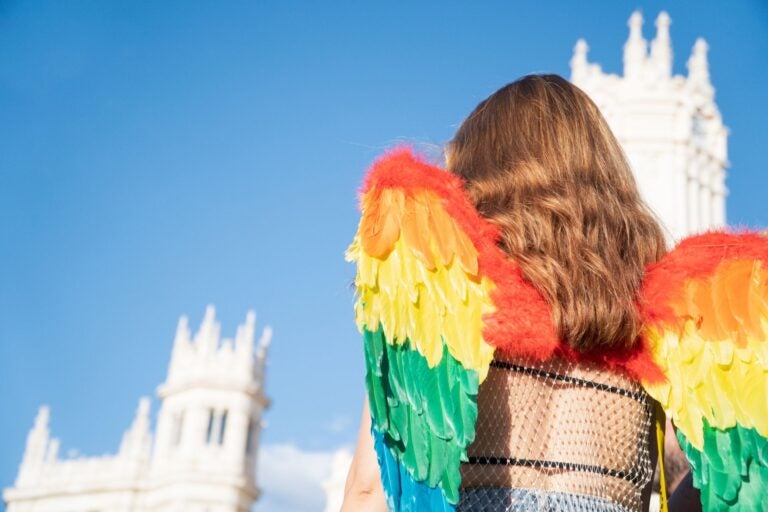
Madrid Pride 2026 dates and key events
MADO 2026 runs from June 25 to July 5, spanning ten days of programming across Chueca and central Madrid. The schedule builds from neighborhood events in the opening week to the massive main parade on July 4. Here’s what’s on.
Opening week — Chueca Pride
From June 25 to 30, the Chueca neighborhood kicks off Madrid Pride with its own local celebration, known as Neighborhood Pride (Orgullo de Barrio). Organized by local businesses and community groups, the opening week fills Chueca’s streets with activities, parties, and cultural events, setting the tone for the full festival before the main MADO program.
This is a great time to explore Chueca at a slightly more relaxed pace before the biggest crowds arrive for the parade weekend. If you’re planning day trips from Madrid around your visit, the opening days are the ideal window to fit them in.

Pride Proclamation
The Pride Proclamation takes place on July 1 in Plaza de Pedro Zerolo, featuring prominent figures from LGBTQ+ activism and entertainment. This is the official opening ceremony of the main festival week, a mix of speeches, performances, and community celebration that marks the transition from Chueca Pride into the full MADO program.
High Heel Race
The High Heel Race takes place on Thursday, July 2, on Calle Pelayo, one of the most beloved and distinctive events of Madrid Pride. Participants race down the street in heels of up to 15 centimeters, and the event draws enormous crowds of spectators. It’s free to watch and well worth building into your schedule.
Mr. Gay Spain Gala
The Mr. Gay Pride España gala takes place on Friday, July 3, at Plaza de España, where representatives from 14 autonomous communities compete for the title alongside guest DJs and pop artists. It’s one of the most entertaining ticketed events of the week and typically sells out well in advance.
The main parade (Manifestación)
The Pride Parade on Saturday, July 4, is the centerpiece of Madrid Pride and the largest LGBTQ+ mobilization in Europe. The parade departs from the Carlos V roundabout near Atocha at 7:00 PM and ends at Plaza de Colón, featuring over 50 floats, party buses, and walking groups representing sponsors, associations, charities, and bars.
The march begins with activist groups and LGBTQ+ organizations, followed by the festival floats from around 8:00 PM onwards. For a good viewing spot, the Atocha end of the route tends to be less congested than the Gran Vía stretch. The parade runs well into the night, with the final floats arriving at Plaza de Colón around midnight.
The Madrid Pride Parade is frequently listed among the biggest Pride parades in the world. If this is your first time attending, expect scale unlike most other events.
Live music stages
From Wednesday, July 1, to Saturday, July 5, stages at Plaza de Pedro Zerolo, Plaza del Rey, Puerta del Sol, and Plaza de España host live musical performances throughout the day and evening. Entry to the outdoor stages is free. The closing ceremony takes place on Sunday, July 5, with La Fiesta starting at 8:20 PM and DJs from 10:30 PM at Plaza del Rey.
Where to celebrate Madrid Pride: best areas and venues
Madrid Pride fills the entire city center, but some neighborhoods are more central to the action than others. Here’s where to focus your time.
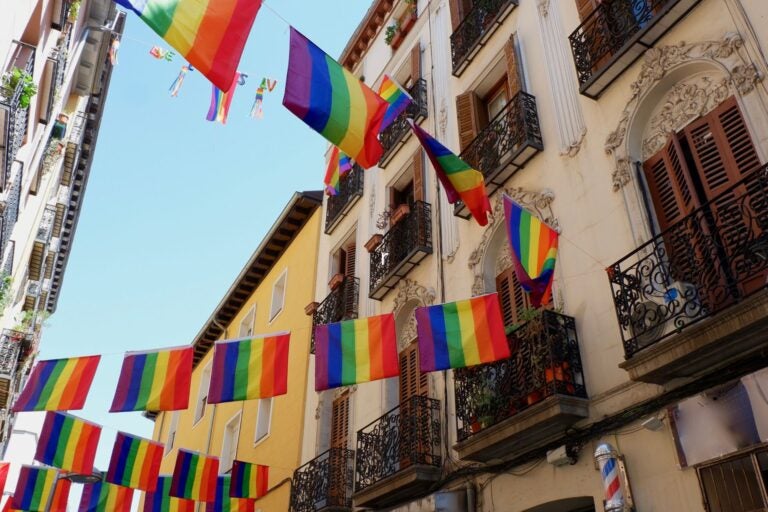
Chueca
Chueca is the beating heart of gay Pride Madrid. During the festival, rainbow flags hang from every balcony, bar terraces spill out onto the pavements, and the neighborhood becomes one continuous outdoor celebration running day and night.
Calle Pelayo and Calle Hortaleza are the main arteries of the action, lined with bars from noon into the early hours throughout the full ten days.
Plaza de Pedro Zerolo also serves as the central gathering point, with live concerts running all week. The streets around it get so packed during peak hours that they become effectively pedestrian. Walking is both easier and faster than trying to navigate by metro once things get going.
Gran Vía and the city center
Gran Vía runs parallel to Chueca and absorbs a significant amount of Pride energy throughout the week. The avenue connects several of the main stage areas and serves as a key stretch of the parade route, making it one of the busiest spots in the city on July 4.
The wider city center, including Malasaña and La Latina, also picks up Pride programs and offers a slightly more relaxed atmosphere than Chueca itself for those who want to be part of the festivities without being in the middle of the densest crowds.
For a broader look at the city beyond Pride, the things to do in Madrid guide covers the highlights worth adding to your itinerary.
Plaza de España and Puerta del Sol
Both Plaza de España and Puerta del Sol host official live music stages throughout the main festival week. Stages at these locations are organized by the LGBTQ+ Pride Organizing Committee, composed of the National Federation of Lesbians, Gays, Transsexuals and Bisexuals (FELGTB), COGAM, and the LGTBIQA+ Madrid Collective.
Puerta del Sol is also a major transit hub, making it a convenient meeting point if you’re moving between areas. Plaza de España sits at the western edge of Gran Vía and is the venue for the Mr. Gay Spain Gala on July 3.
Practical tips for attending Madrid Pride
A festival this size rewards preparation. Here’s what to know before you go.
- Book accommodation early. Hotels and short-term rentals in and around Chueca sell out months in advance, and prices rise sharply once official dates are announced. If central options are full, Gran Vía and Malasaña are both walkable to the main venues.
- Buy event tickets in advance. Circuit parties and ticketed events sell out well before the festival weekend. Check the official MADO website as soon as the program is published.
- Use the metro, but walk when you can. The nearest stations to Chueca are Chueca (Line 5), Gran Vía (Lines 1 and 5), and Sol (Lines 1, 2, and 3). The metro runs extended hours during Pride, but gets very crowded on peak nights, walking between areas is often faster. The Madrid public transportation guide has a full breakdown of your options.
- Arrive early for the parade. The parade starts at 7:00 PM on July 4. The Atocha end of the route is less crowded than the Gran Vía. Aim to be in position by 5:00 PM for a comfortable spot.
- Pack for the heat. Late June and early July in Madrid mean temperatures above 30°C (86°F). Bring water, sunscreen, and comfortable shoes.
- Know what’s free and what’s not. The parade and all outdoor music stages are free. Club nights and circuit parties typically cost between €30 and €100. Carry some cash as the card machines in busy areas can be slow during peak times.
- Look into the tourist card. If you’re using public transit heavily throughout your stay, the tourist card for Madrid can offer good value over individual fares.
- Plan your broader trip early. The Spain travel guide and best time to visit Madrid are useful starting points if Madrid is part of a wider itinerary.
Stay connected at Madrid Pride with Holafly
Ten days across multiple neighborhoods, late nights, and a parade route stretching across the city center — Madrid Pride is exactly the kind of trip where reliable data matters from the moment you land.
Holafly’s eSIM for Spain sets you up before you fly: no SIM swapping at the airport, no roaming charges, unlimited data, and 24/7 customer support throughout your stay. There’s also a dedicated eSIM for Madrid if you’re keeping your trip city-focused, and with coverage across 200 destinations, you can sort out any stops before or after Spain in the same Holafly eSIM store.
On top of that, every Holafly eSIM includes Always On: 1 GB of monthly backup data at no extra cost. Across a ten-day festival, and wherever your trip takes you after Madrid. Keeping your Holafly eSIM installed means backup data is there automatically if your plan expires mid-trip, so you’re not scrambling to top up before you’re ready to move on.
Get an unlimited data eSIM
Use code MYESIMNOW5 for 5% off at checkout
Plans that may interest you


哈囉我是來自台灣的 Wen,平常最喜歡旅遊,也喜歡將旅遊的種種化成文字跟大家分享,希望大家能在我的文章中找到有用的資訊,加上 Holafly 的 eSIM,讓你的旅程更美好!✈️✈️✈️ Hi! I'm Wen, a passionate content writer and travel enthusiast from Taiwan. I transform my wanderlust adventures into engaging stories and practical guides, helping fellow travelers make the most of their journeys.Through my articles, I strive to provide travel tips while introducing how our eSIM technology can enhance your travel experience - keeping you connected wherever your adventures take you!

