Language

Skip the passport: Why Fairbanks, Alaska is America’s overlooked northern lights base camp
Want to see the northern lights without leaving the US? Discover why Fairbanks, Alaska makes an ideal aurora destination, plus tips for planning your trip.

Most Americans assume you can only see the northern lights in Norway, Iceland, or Finland. Little do they know that one small American city sits directly under the auroral oval.
From August to April, Fairbanks, Alaska, offers frequent, vivid aurora sightings. And getting there requires no passport or long-haul flight.
So if you’ve ever dreamed of seeing the northern lights, making it a reality is easier than you think. Here’s how to get to Fairbanks, where to base yourself, and how to increase your chances of catching the spectacular light display.
| Detail | What to expect | Quick tip |
|---|---|---|
| Aurora season | Aug 21 to Apr 21 | Sept and March pair dark skies with milder temps |
| Ideal stay | 3+ nights | Stay out late; prime viewing is 10 PM to 3 AM |
| Getting there | Connect via Seattle or Anchorage | Book early for December dates |
| Winter temps | Average lows of -13 to -17°F in Dec to Jan | Pack insulated Arctic layers |
| Where to watch | Out-of-town lodges and elevated viewpoints | Ask your resort for an aurora wake-up call |
Why Fairbanks sits in the aurora sweet spot
The auroral oval is a ring-shaped zone across the globe where the northern lights appear most frequently and intensely. This zone circles the Earth’s magnetic north pole, covering northern Scandinavia but also parts of North America, including Alaska.
In Alaska, Fairbanks sits directly under the auroral oval, so activity often appears overhead, not just low on the horizon.
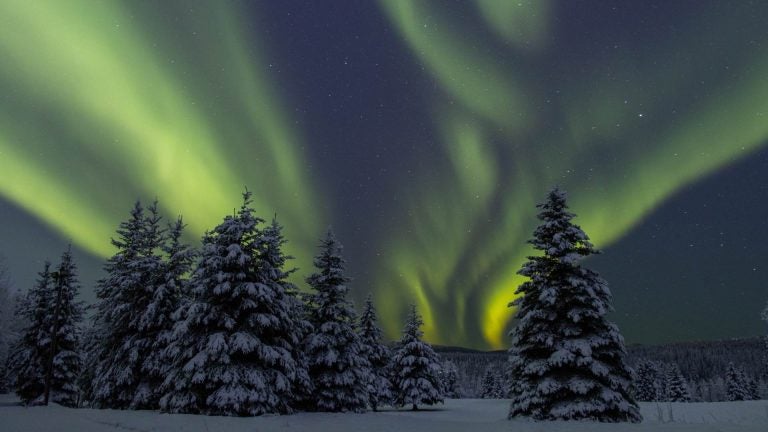
Additionally, Fairbanks’ drier, colder air produces consistently clear nights compared with the cloudier coast. This is why Fairbanks, not Anchorage, is the go-to place to see the northern lights in the USA.
According to Explore Fairbanks, during the city’s aurora season, which runs from August 21 to April 21, the northern lights are visible an average of four out of five nights when the sky is clear and dark enough. They also say that staying at least three nights and heading out in the late evening gives you more than a 90% chance of catching the aurora.
Getting there without a passport (or jet lag)
Fairbanks has its own international airport, but most flights from the Lower 48 connect through Seattle or Anchorage. Delta and United Airlines run some seasonal direct flights from other US cities, but these are in the summer, not the winter.
If you have more time and want to combine the northern lights with a US road trip, you can rent a car in Anchorage and drive north to Fairbanks. It takes about 6 to 8 hours, so most travelers make a day of it by stopping to enjoy Alaska’s spectacular winter scenery along the way.
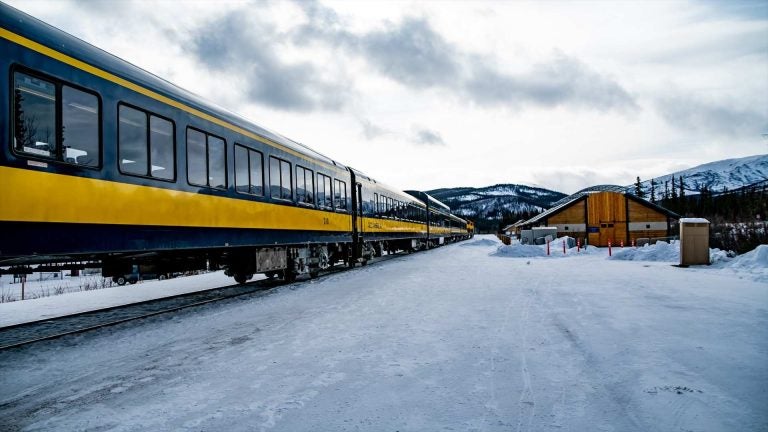
Alternatively, you can take Alaska Railroad’s Aurora Winter Train, which connects both Alaskan cities.
The train heads north on Saturdays and returns south on Sundays from mid-September to early May, with additional midweek departures on selected dates in February and March. It takes about 12 hours, but the journey is an experience in itself as you pass by hundreds of miles of Alaska’s snow-covered wilderness.
For US visitors, no matter how you get there, you can travel without a passport, pay in US dollars, and use your regular US mobile phone plan. This makes Fairbanks a super straightforward alternative to chasing the aurora in Tromsø or Reykjavik, which require long-haul international flights.
Where to base yourself: Town hotel or aurora lodge?
There are two main accommodation options for your aurora-chasing Fairbanks trip, and both offer a very different experience.
A hotel in the city center is the most convenient choice, with plenty of restaurants and shops nearby, and most tours offer city-center pick-up points. However, if you’re planning to chase the aurora independently, you’ll need to drive farther to find a viewing spot away from the city’s light pollution.
For a more immersive wilderness experience, choose a lodge or hot springs resort away from the city center.
Chena Hot Springs Resort is a good example, sitting around 60 miles northeast of Fairbanks. Its remote setting offers darker skies, natural hot springs, and aurora-viewing experiences right outside the property, making it ideal for independent aurora chasers.
Or for a warm, cozy, and truly unique northern lights experience, you could stay in a heated igloo! Borealis Basecamp has clear-roofed igloo-style rooms that let you watch the night sky from the comfort of your bed.
How to actually chase the aurora from Fairbanks
You can rent a car and drive yourself to a viewing spot like Murphy Dome, the highest point near Fairbanks, or Cleary Summit, about 20 miles north of town. Both offer elevated viewpoints away from city lights, with designated pullouts where you can safely park and watch the sky.
However, Alaska’s roads can be steep, winding, and icy, so if you choose to self-drive, opt for an all-wheel-drive or 4WD vehicle.
You’ll also need to check the aurora forecast before heading out. The University of Alaska Fairbanks aurora forecast and Explore Fairbanks’ Aurora Tracker are reliable sources local tour guides use.
Guided aurora tours are less flexible but also less stressful, and there are some pretty cool options to choose from. Some tours take you to heated viewing cabins, yurts, or lodges (sometimes called an aurorium) to see the aurora.
Operators like Northern Alaska Tour Company also offer fly-and-drive excursions above the Arctic Circle. These overnight or multi-day tours combine aurora viewing with aerial views of the vast Alaska wilderness, ideal for bucket-list travelers.
What to do while you wait for dark
There’s plenty to keep you entertained in Fairbanks while waiting for prime aurora-hunting hours:
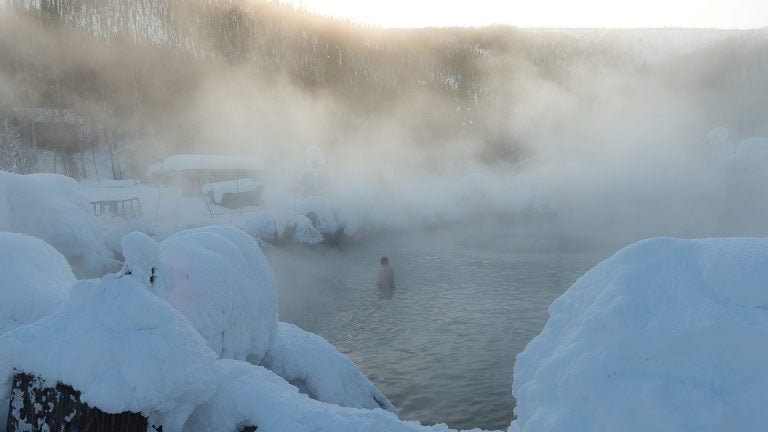
- Soak in an outdoor hot spring, such as the one at Chena Hot Springs Resort, a naturally heated outdoor pool surrounded by snowy wilderness.
- Visit the Aurora Ice Museum, a year-round attraction at Chena Hot Springs Resort featuring illuminated ice sculptures and an ice bar.
- Go dog sledding, one of Alaska’s most iconic winter activities.
Once you’ve spotted the northern lights, stop by the Morris Thompson Cultural and Visitors Center in downtown Fairbanks to collect your personalized Aurora Certificate.
Cold-weather tips for aurora nights (and your phone)
Don’t underestimate how cold winters in Fairbanks can be.
Daytime highs average just 1 to 4°F (-17 to -16°C) in December and January. Then temperatures drop further at night, averaging -13 to -17°F (-25 to -27°C). It’s also not uncommon to drop into the -30°F or -40°F range during particularly cold snaps.
To handle these extreme conditions, it’s crucial to:
- Layer up: Start with thermal base layers, add an insulating fleece or down layer, and finish with a windproof winter coat and snow pants.
- Protect your extremities: Wear properly insulated winter boots, thick wool socks, and warm mittens over thinner liner gloves. Hand and toe warmers are also worth packing.
- Keep your phone warm: Cold temperatures drain phone batteries surprisingly quickly. Keep your phone in an inside pocket close to your body, rather than leaving it exposed, and carry a fully charged power bank.
If you’re planning to photograph the aurora with your Android, adjust your camera settings before heading out to minimize the time your phone is exposed to harsh conditions.
When to plan your Fairbanks aurora trip
Fairbanks has a long aurora season, but the right time to see the northern lights depends on how much cold and darkness you’re willing to embrace.
- September to early October offers a good balance of milder temperatures, more daylight for sightseeing, and still plenty of darkness for aurora hunting.
- December to January is ideal if you want the longest nights and maximum darkness, with under four hours of daylight around the winter solstice, but temperatures can plunge well below zero Fahrenheit.
- March is another popular window, with longer daylight hours, generally milder temperatures, and typically clearer viewing conditions.
If your dates are flexible, try to plan around a new moon, as the darker skies can make fainter auroras easier to see. And book lodges early if you’re eyeing the December holidays or March spring break.
Finally, if you’re visiting from outside the US, avoid expensive USA roaming charges on your home network by getting a US eSIM before you fly.
Stay connected on your Fairbanks aurora trip with Holafly
Aurora nights in Fairbanks mean checking the forecast at midnight, texting your tour driver, and sending that first green-sky photo home before your fingers go numb. If you’re flying in from abroad, a Holafly eSIM for Alaska keeps you online from the moment you land, with unlimited data, 5G speeds where available, and 24/7 customer support. No physical SIM to hunt for and no surprise roaming bill waiting at home.
Holafly also stays with you long after this trip. Every eSIM includes Always On, 1 GB of monthly backup data at no additional cost. It stays active as long as the eSIM is installed on your phone, renews every month, and works in 150+ destinations.
So when one aurora trip turns into a spontaneous Tromsø or Reykjavik plan next winter, you’ll touch down with data already in your pocket.

Peace of mind before you fly
Set up your eSIM before travel and get unlimited data on arrival.
Plans that may interest you

Hi, I'm Michaela, a South Korean writer living in the US. I cover travel and live events, focusing on the practical stuff that makes your trip smoother, whether you're navigating a new city or heading to a major international event.I'm also the founder of Search SEOul, South Korea's leading SEO conference, bringing together search marketing experts and speakers from around the world.