Language

Best time to see the northern lights in Alaska: 2026 guide
The best time to see northern lights in Alaska is late August to April. Learn the best months, nightly hours, and viewing conditions.
The best time to see the northern lights in Alaska is fromlate August to late April, with September and March particularly strong choices around the equinoxes. For the longest hours of winter darkness, November through February is another excellent window.
Even during peak northern lights season in Alaska, a sighting is never guaranteed. You need darkness, clear skies, and enough auroral activity to line up. This guide covers the best months and nightly hours, how to use forecasts and the Kp index, and practical ways to improve your chances.

An eSIM you can rely on
Join over 10 million Holafly customers and get connected with our trusted, global services.
When is the best time to see the northern lights in Alaska?
The best time to see the northern lights in Alaska is roughly late August through late April, when nights are dark enough for the aurora to become visible. Fairbanks uses a more specific Aurora Season of August 21 to April 21, while Travel Alaska describes the statewide window as late August to late April.
| Factor | Best option |
|---|---|
| Aurora season | Late August to late April |
| Fairbanks Aurora Season | August 21 to April 21 |
| Strong equinox periods | September and March |
| Longest winter darkness | November to February |
| Best time of night | Usually 10 PM–2 AM |
| Strongest base for consistent viewing | Fairbanks and Interior Alaska |
Northern lights season in Alaska
The northern lights season in Alaska runs through autumn, winter, and early spring because these months provide the darkness needed to see auroral activity. The aurora occurs year-round, but Alaska’s bright summer nights make it difficult or impossible to see.
In Fairbanks, Explore Fairbanks defines the Aurora Season as August 21 to April 21. Outside this window, increasing daylight becomes the limiting factor rather than an absence of auroral activity.
This means you do not necessarily need deep winter conditions. Late August, September, March, and April can still provide dark-enough nights while offering more daylight for daytime activities and, depending on the month, milder temperatures.
Best months to go
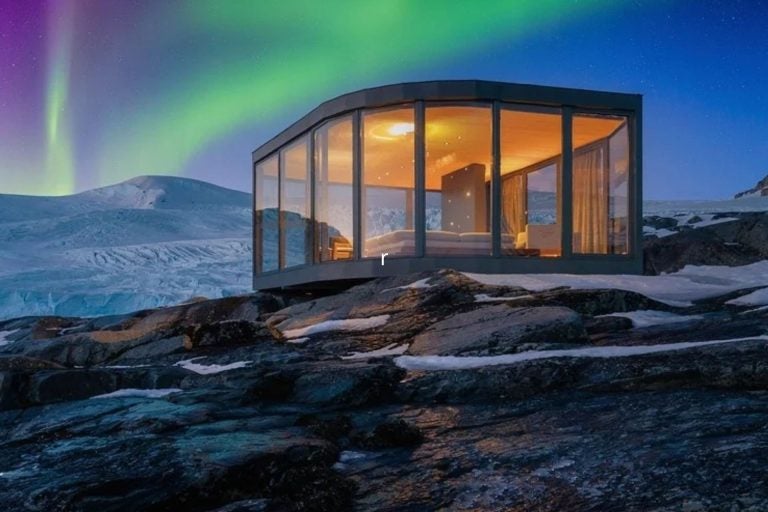
If you are choosing the best month to see the northern lights in Alaska, September and March deserve particular attention. The University of Alaska Fairbanks Geophysical Institute notes that auroral activity tends to intensify around the fall and spring equinoxes, with the statistical likelihood over Interior Alaska roughly twice as high around an equinox as around a solstice.
Each part of the season has different advantages:
- September: Dark nights have returned, but temperatures are generally less severe than in midwinter. The fall equinox also coincides with statistically stronger auroral activity.
- November–February: Alaska experiences its longest nights, giving you extended hours of darkness.
- March: The spring equinox brings another statistically favorable period for auroral activity, while increasing daylight leaves more time for daytime sightseeing.
- Early April: Viewing remains possible, particularly around Fairbanks, but usable darkness decreases rapidly as Alaska moves toward summer.
For a balanced trip, March is one of the strongest all-round options. You still have plenty of nighttime darkness and snowy winter scenery without the extremely short daylight hours of December.
September is a good alternative if you prefer autumn conditions and want to combine aurora viewing with hiking, wildlife viewing, or other activities that become less accessible during the coldest part of winter. Consider mid-August through early October for summer-style activities with a chance of seeing the northern lights after dark.
Best time of night
The best time of night to see the northern lights in Alaska is usually late evening into the early morning. The UAF Geophysical Institute recommends concentrating on the three to four hours around midnight and notes that roughly 9 PM to 3 AM has a higher chance of strong displays over Interior Alaska in winter.
These times are guidelines rather than a schedule. The aurora can appear earlier or later, and cloud cover may force you to wait several hours for a clear window. If the forecast looks promising, plan to stay out for the night rather than checking the sky once at 10 PM and heading back inside.
Where are the best places to see the northern lights in Alaska?
For consistent viewing, Alaska’s Interior and Arctic regions generally offer the strongest combination of dark skies and frequent auroral activity. Fairbanks is the main base because it sits beneath the auroral oval and has a well-developed network of tours, accommodation, and viewing facilities.
Keep the location decision simple when timing is your main priority:
| Area | What to know |
|---|---|
| Fairbanks | Located under the auroral oval, with a long viewing season and many tours |
| Denali area | Darker surroundings and less urban light, but fewer winter services |
| Coldfoot and Arctic Alaska | Very dark and remote, with strong aurora potential but more difficult access |
| Anchorage area | Possible on active, clear nights, especially away from city lights |
For a more detailed comparison of destinations, check out an in-depth guide on where to see the northern lights in Alaska rather than choosing your travel dates based on location alone. And if you’re comparing destinations beyond Alaska, this guide to the best places to see the northern lights can help you weigh different countries and regions before choosing where to go.
Can you see the northern lights in Anchorage?
Yes, you can see the northern lights in Anchorage, particularly when auroral activity is strong and skies are clear. However, city light pollution makes weaker displays harder to see, so moving to a darker location outside central Anchorage can improve visibility.
Fairbanks generally offers more consistent opportunities because of its position beneath the auroral oval, greater winter darkness, and comparatively favorable viewing conditions.
What conditions do you need to see the northern lights in Alaska?
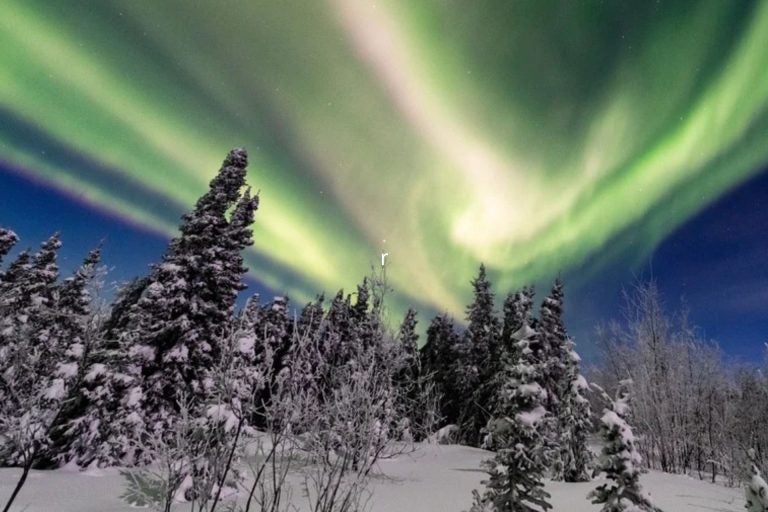
Choosing the right month is only the first step. To see the northern lights in Alaska, darkness, clear skies, and auroral activity need to overlap, so checking both weather and space-weather forecasts is more useful than relying on a single predicted Kp number.
The key factors are:
- Dark skies: Summer daylight prevents effective aurora viewing at high latitudes, which is why the main season begins in late August.
- Clear weather: Clouds can block an active aurora completely. Check local cloud cover before deciding where to spend the night.
- Geomagnetic activity: The Kp index measures planetary geomagnetic activity on a scale from 0 to 9. Higher values generally indicate greater disturbance, but you do not need an extreme Kp level to see aurora from Fairbanks because it lies close to the auroral oval.
- Moonlight: A bright moon can make faint auroral features difficult to see, although strong displays remain visible.
- Several nights: Give yourself at least three nights if possible. Generally, visitors staying a minimum of three nights and actively out during the late evening hours increase their chance to more than 90%, though this is still not a guarantee.
For a northern lights forecast in Alaska, the UAF Geophysical Institute’s Aurora Forecast is one of the most useful sources. Explore Fairbanks also combines UAF aurora data with local weather and daylight information in its Aurora Tracker, helping you judge whether conditions are favorable at specific viewing spots.
A quick reminder that aurora viewing often depends on checking live forecasts and changing plans at short notice, so it’s worth sorting out your mobile internet options in the USA before the trip.
Tips for seeing the northern lights in Alaska
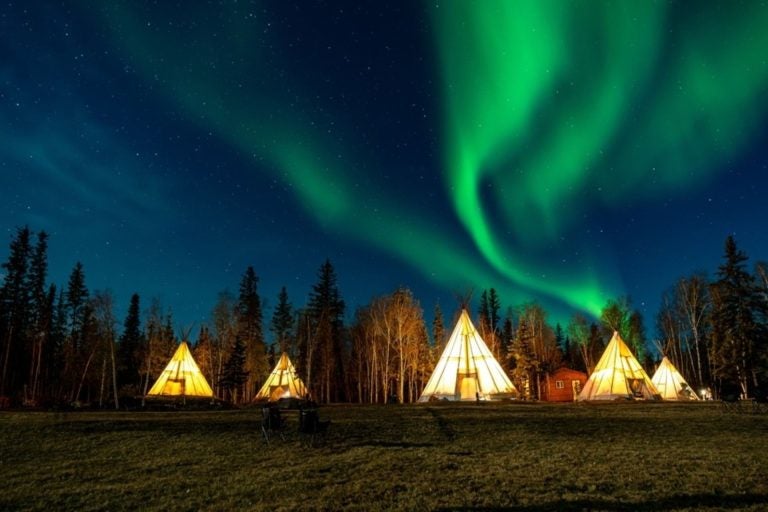
Good timing helps, but flexibility once you arrive can make an equally large difference. Build several nights into your itinerary, check forecasts each evening, and be prepared to change locations if clouds or city light interfere with viewing.
- Allow at least three nights: More nights can give you more opportunities for clear skies and active aurora to overlap.
- Check weather as well as Kp: A high Kp forecast is not useful if your viewing location is covered by clouds.
- Self-drive only if you are comfortable with winter conditions: Road surfaces, snow, darkness, and extreme cold can make night driving more demanding than expected.
- Dress for standing still: Use thermal base layers, an insulated mid-layer, a winter outer layer, warm boots, gloves or mittens, and a hat. Waiting outside for hours feels significantly colder than walking.
- Keep batteries warm: Cold weather drains phone and camera batteries quickly. Carry spares or a power bank in an inside pocket.
- Use a tripod for photos: Start with a wide aperture, a high ISO, and an exposure of a few seconds, then adjust according to the aurora’s brightness and movement.
- Stay connected: If you’re traveling from overseas, an eSIM for Alaska or a US eSIM can also help you stay connected for forecast checks, navigation, and last-minute changes while moving between viewing locations.
Stay connected in Alaska with Holafly
Aurora nights mean checking forecasts and switching viewing spots at short notice, often well outside town. Install a Holafly eSIM for Alaska before you fly and connect as soon as you land, with unlimited data, speeds up to 5G, and 24/7 customer support.
When your trip ends, keep the eSIM on your phone. Holafly eSIMs are reusable, so next time you only need to add a new plan. Until then, Always On: 1 GB of monthly backup data keeps you connected at no extra cost, which helps if a winter delay changes your plans.
Traveling often or staying for months at a time? Holafly Plans gives you monthly global data, and Holafly Ultra bundles extra travel perks on top of unlimited data in one plan.

Get an unlimited data eSIM
Use code MYESIMNOW5 for 5% off at checkout
Plans that may interest you

哈囉我是來自台灣的 Wen,平常最喜歡旅遊,也喜歡將旅遊的種種化成文字跟大家分享,希望大家能在我的文章中找到有用的資訊,加上 Holafly 的 eSIM,讓你的旅程更美好!✈️✈️✈️ Hi! I'm Wen, a passionate content writer and travel enthusiast from Taiwan. I transform my wanderlust adventures into engaging stories and practical guides, helping fellow travelers make the most of their journeys.Through my articles, I strive to provide travel tips while introducing how our eSIM technology can enhance your travel experience - keeping you connected wherever your adventures take you!