


 Language

Tromsø vs. Reykjavik for the northern lights: Which aurora city should you pick this winter?
Tromsø vs. Reykjavik for the northern lights: Compare aurora odds, cloud cover, flights from the US, tours, and costs to pick the right city this winter.

If you’re planning a European trip to chase the aurora this winter, two destinations are likely to be high on your list: Tromsø in Norway and Reykjavik in Iceland.
Both cities sell themselves as aurora capitals, but they offer very different experiences.
Tromsø in Norway sits right under the auroral oval, giving you a strong chance of catching the northern lights. Reykjavik in Iceland, on the other hand, is much easier to reach from the US, with nonstop flights from several major cities.
So, which one should you choose?
In this guide, we’ll compare Tromsø and Reykjavik across everything from aurora-viewing conditions and accessibility to excursions and costs, helping you find the right destination for your winter adventure.
| Factor | Tromsø | Reykjavik |
|---|---|---|
| Position | About 69°N, under the auroral oval | About 64°N, south of the oval’s core |
| Aurora season | Late Aug to early Apr | Late Aug to mid-Apr |
| Winter daylight | Polar night, about Nov 27 to Jan 15 | Around 4 hours at winter solstice |
| City viewing | Possible on active nights, darker outskirts nearby | Only on strong, clear nights; Grótta is the go-to spot |
| Getting there from the US | No nonstops; about 11 to 13 hrs from New York with 1 to 2 connections, often via Oslo or Copenhagen | Nonstops from many US cities, about 5 to 8 hrs |
| Winter temps (avg Jan) | Daytime 31°F (-1°C) / nighttime 22°F (-5°C) / inland gets colder | Daytime 38°F (3°C) / nighttime 28°F (-2°C) |
| How people chase | Guided chase tours, some driving toward the Finnish border | Self-drive or tours from the city |
Why Tromsø puts you right under the aurora
Tromsø sits directly beneath the auroral oval, a ring-shaped zone around the Earth’s magnetic North Pole where the northern lights occur most frequently.
This means that even when solar activity is relatively moderate, the aurora can still appear directly overhead in Tromsø rather than sitting low on the horizon.
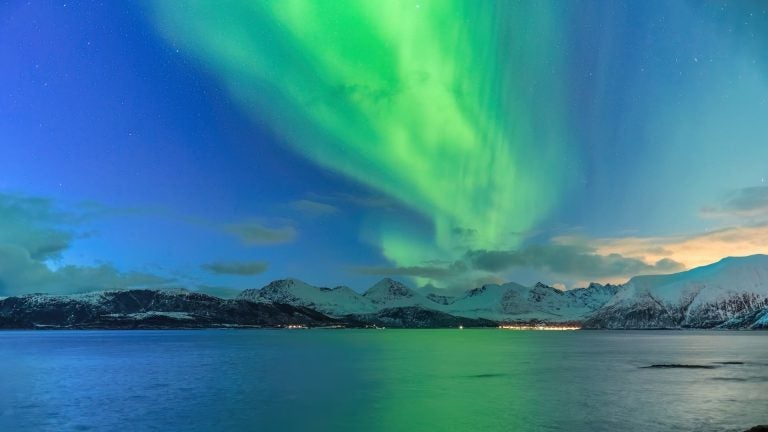
Another advantage is the amount of darkness during winter. Tromsø experiences polar night from around late November to mid-January, when the sun never rises.
As a result, you have a high statistical probability of seeing the northern lights in Tromsø; some tour operators advertise success rates above 90% across the season, though a sighting is never certain.
However, if you’re planning to self-drive to see the aurora borealis, coastal cloud cover could affect your experience. Tromsø’s coastal location means it can experience cloudy skies even when aurora activity is strong.
That is why, on guided northern lights tours in Tromsø, guides monitor weather conditions and aurora forecast apps before deciding which direction to drive for clearer skies.
Why Reykjavik wins on getting there (and getting around)
As Iceland’s capital, Reykjavik is well connected to North America, with nonstop flights from numerous major cities, including New York, Boston, Chicago, and Miami.
It’s also easy to get from the airport to the city center, with the journey taking about 45 to 75 minutes by car or transfer.
To see the northern lights, however, you’ll need to be a little more strategic. Reykjavik’s city lights can make weaker aurora displays harder to spot, so if you want to watch from the city, you’ll need a night with strong auroral activity and clear skies.
Grótta Lighthouse on the Seltjarnarnes peninsula is one of the darkest spots close to the city. But you can find several darker locations within an hour from the city center, such as Thingvellir National Park.
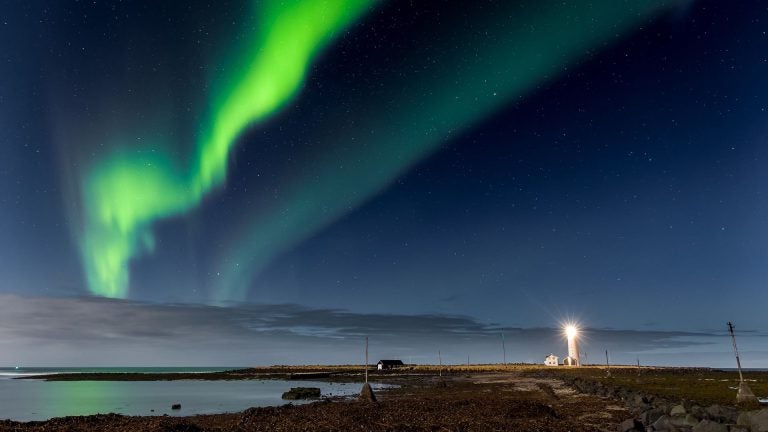
Another big selling point is how easily you can combine aurora hunting with daytime Reykjavik sightseeing, making for a varied winter vacation.
Clouds, not latitude, will decide your night
Clouds can ruin aurora viewings in both cities, as Tromsø and Reykjavik have changeable, often cloudy maritime winters.
In Tromsø, tours often head inland toward drier valleys and areas around the fjords, where the sky tends to be clearer. In Reykjavik, aurora chasers have the wider southwest of Iceland to explore, so most guided tours travel away from the city.
However, even on a tour, there is no 100% guarantee that you’ll catch an evening clear enough to see the aurora. That’s why your trip should be at least 3 or 4 nights long, so you have multiple viewing opportunities.
You can also track local weather and real-time aurora conditions, as cloud forecasts can change at the last minute. Guides and locals in Reykjavik track conditions on the Icelandic Met Office forecast, while those in Tromsø follow Norway’s yr.no.
What a night of aurora chasing looks like in each city
Northern lights hunting is an adventure in itself, but the experience can look quite different depending on whether you’re staying in Tromsø or Reykjavik.
Tromsø
A guided minibus chase is the most common way to hunt for the aurora in Tromsø. These small-group excursions typically last between five and nine hours, and a huge advantage of these tours is that much of the cold-weather preparation is taken care of for you.
Tours typically include insulated thermal suits, plus hot drinks and snacks. Imagine standing by a crackling campfire with a steaming mug of hot chocolate in your hands while watching green ribbons of light dance across the sky!
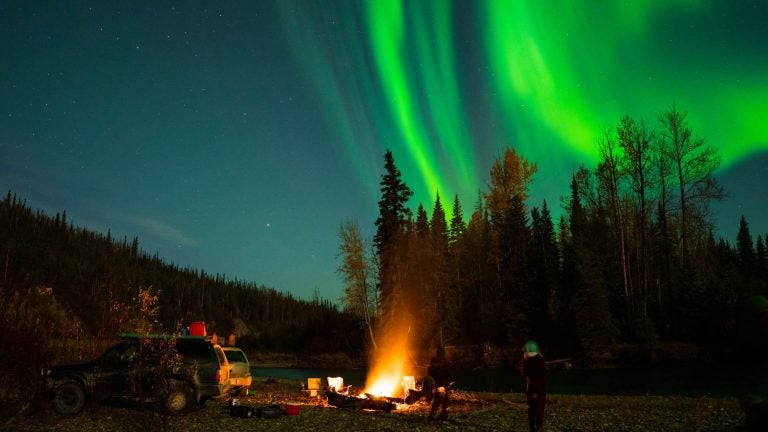
Many tours also include professional aurora photographs from the night, so you don’t have to mess around changing your iPhone camera settings for the northern lights.
While you can rent a car and explore independently, many visitors don’t, as snow, ice, limited daylight, and unfamiliar roads can make navigating the region challenging.
Reykjavik
In Reykjavik, self-driven aurora hunting is more common. You can rent a car in the city center and drive to a viewing spot just outside the city. While it gives you more freedom, it also means you’re responsible for checking the weather forecast and finding a viewing spot away from the city’s light pollution.
If you prefer, many organized northern lights bus tours depart from Reykjavik.
You can choose a large bus tour, the cheapest option, or spend a bit more for a minibus, where groups are smaller and extras such as hot chocolate or museum admission are sometimes included.
Aurora hunting tours from Reykjavik typically last three to four hours and include hotel or central pickup.
The guide chooses the route based on the day’s cloud cover, and the stops change from night to night. So, for example, you could find yourself in a vast black lava field, surrounded by Iceland’s rugged volcanic landscape, as a curtain of green light slowly spreads across the night sky.
If you can’t see the aurora, many tours let you rebook for another date at no extra cost.
How the costs compare
Both Tromsø and Reykjavik are expensive by European standards, especially during peak northern lights season.
In either destination, expect to pay:
- $80 to $200+ for a guided aurora chase tour, depending on group size and what it includes.
- $150 to $250 per night for a mid-range city center hotel room in Reykjavik, and often $250 to $400 in Tromsø in peak winter (Reykjavik also has some budget stays under $100).
- $30 to $60 per person for dinner in a restaurant.
Flights are where you could potentially see a price difference, particularly if you’re traveling from the US. Reykjavik has direct flights from numerous North American cities, so flights are often cheaper than to Tromsø, which requires at least one connection.
For example, when we checked Google Flights in mid-November 2026, nonstop round-trip flights from New York to Reykjavik for a week in February started at about $450. One-stop round trips from New York to Tromsø for the same week started at about $560, and the gap was smaller on some December dates.
Reykjavik also offers more budget-friendly travel options. On nights with clear skies and strong aurora activity, you can head to Grótta Lighthouse to watch the display without paying for a tour or renting a car.
So, Tromsø or Reykjavik? Pick based on your trip
Choose Tromsø if:
- Chasing the aurora is the main purpose of your trip
- You want high odds of seeing the aurora
- You have 4+ nights
- You’re happy to join organized tours
- You want to see or photograph dramatic Arctic foregrounds
Choose Reykjavik if:
- You’re short on time
- You prefer a shorter flight (Reykjavik is typically about half the journey time of Tromsø from the US)
- You want to add in some daytime sightseeing
- You prefer self-driving
Our verdict for first-timers: Pick Tromsø if the aurora is the whole point of your trip, and Reykjavik if you want an easier, shorter journey with plenty to do by day.
When to plan your 2026-27 aurora trip
Both Tromsø and Reykjavik have generous viewing seasons, but they differ slightly.
- Tromsø’s aurora season runs from late August to early April, with November to January bringing the longest hours of darkness, giving you more time to hunt for the aurora.
- Reykjavik’s aurora season runs from late August to mid-April. September and March are good times to visit Iceland, with a nice balance of darkness for aurora chasing and daylight for sightseeing.
For clearer photos, plan your aurora chasing around a new moon, when the darker skies make it easier to capture faint auroral details. This winter, new moons fall on December 9, January 7, February 6, and March 8.
Finally, don’t overlook connectivity. You’ll need mobile data to refresh weather and aurora forecasts, check tour updates, and share your photos from remote viewing locations.
If you choose Tromsø, Norway SIM card options are limited, but it is possible to buy one at Oslo airport. If you’re heading to Reykjavik instead, you can buy an Iceland SIM card before you travel or once you land.
Stay connected on every aurora chase with Holafly
Aurora chasing rarely goes to plan. Clouds roll in, a guide changes direction at the last minute, or you spot a gap in the forecast and decide to drive another hour. Having reliable data in the middle of nowhere is what lets you say yes to those moments.
A Holafly eSIM gets you online the moment you land, with unlimited data, 5G speeds where available, and 24/7 customer support in 200+ destinations. Pick up an eSIM for Norway for Tromsø or an eSIM for Iceland for Reykjavik, install it before you fly, and skip the hunt for a local SIM.
What’s more, every Holafly eSIM comes with Always On, 1 GB of monthly backup data at no additional cost. It stays active as long as the eSIM is installed, renews every month, and works in 150+ destinations. So when a late-night chase takes you farther than planned, Always On keeps your forecast apps, maps, and messages running until the sky does its thing.

Peace of mind before you fly
Set up your eSIM before travel and get unlimited data on arrival.
Plans that may interest you


Hi, I'm Michaela, a South Korean writer living in the US. I cover travel and live events, focusing on the practical stuff that makes your trip smoother, whether you're navigating a new city or heading to a major international event.I'm also the founder of Search SEOul, South Korea's leading SEO conference, bringing together search marketing experts and speakers from around the world.

