Language

Beyond trick-or-treating: 11 Halloween-season traditions you’ve probably never heard of
Explore Halloween traditions beyond trick-or-treating, from Lithuania’s glowing cemeteries to Bolivia’s decorated skulls and Switzerland’s turnip lanterns.

For many of us, Halloween means scary costumes, horror movies, and eating too much candy.
But while you’re deciding what to dress up as, people are celebrating Halloween around the world in ways that look nothing like spooky season as you know it.
From decorating skulls to building lanterns out of turnips, this list goes beyond Halloween’s Celtic roots and the famous trick-or-treating tradition. Here are 11 lesser-known Halloween-season traditions from South America, Europe, and Asia.
| Country | Tradition | When |
|---|---|---|
| Brazil | Dia do Saci | Oct 31 |
| Peru | Día de la Canción Criolla | Oct 31 |
| Portugal | Pão-por-Deus | Nov 1 |
| Philippines | Pangangaluluwa and Undas | Nov 1–2 |
| Lithuania | Vėlinės | Nov 1–2 |
| Ecuador | Colada morada and guaguas de pan | Nov 2 |
| India | Bhoot Chaturdashi | Nov 7 |
| Bolivia | Día de las Ñatitas | Nov 8 |
| Estonia | Mardipäev | Nov 10 |
| Switzerland | Räbechilbi | Nov 14 |
| Cambodia | Pchum Ben | Oct 10–12 (passed this year) |
1. Brazil: Dia do Saci, the folklore answer to Halloween
In 2003, a Brazilian congressman proposed Saci Day on October 31, so people could celebrate Brazilian folklore instead of an imported holiday. São Paulo state made it official the following year.
The Brazilian holiday is named after a legendary folklore character named Saci-Pererê, who has one leg, wears a magic red cap, and smokes a pipe. As a playful trickster, he hides things, swaps salt for sugar, and ties knots in horses’ manes.
On October 31, schools, libraries, and cultural centers run storytelling sessions about Saci-Pererê. Some towns also host parades, concerts, and theater performances centered on Brazilian folklore.
2. Peru: Día de la Canción Criolla
In Peru, October 31 is both Noche de Brujas (Night of Witches) and Día de la Canción Criolla, a holiday established in 1944 to honor criollo (traditional coastal) music.
Locals celebrate in neighborhood peñas or community halls, enjoying an evening of live music, dancing, and food. Meanwhile, children attend Noche de Brujas costume parties in shopping malls or schools.
Celebrations continue the next day, when Andean families bake tantawawas (bread babies) for Todos los Santos. Symbolizing life after death and connection to ancestors, they then exchange their tantawawas with other family members or use them as ceremonial offerings.
With so many holidays taking place at this time of year, you’ll want to spend several days in Peru to experience all the traditions.
3. Portugal: Pão-por-Deus
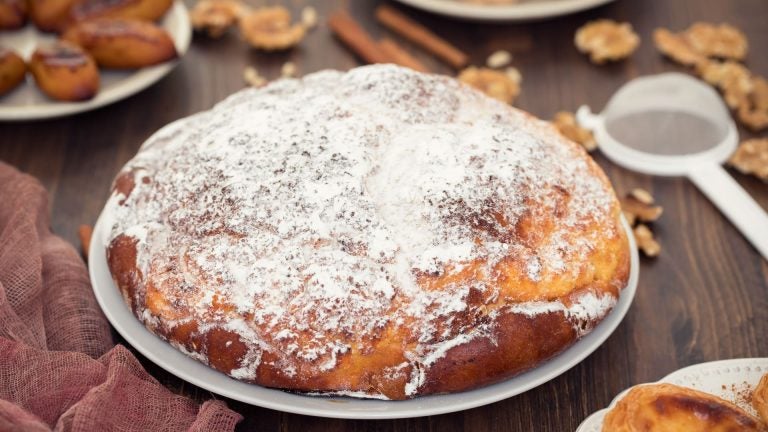
Pão-por-Deus (Bread for God) is a Portuguese celebration similar to trick-or-treating, but centuries older.
On November 1, children go door to door saying “Pão por Deus” and reciting traditional rhymes. They then receive bread, cakes, nuts, or pomegranates, linking to an ancient custom of offering certain foods to the dead.
Some accounts also link it to the Lisbon earthquake on November 1, 1755, saying survivors who lost everything went door to door asking for “Pão-por-Deus” the following year.
4. Philippines: Pangangaluluwa and Undas
In the Philippines, the traditional folk custom of pangangaluluwa saw groups go door to door on the evening of October 31. Playing the part of wandering souls from purgatory, they sing and ask for prayers and food, traditionally kakanin (sticky rice cakes).
Over the years, pangangaluluwa has gradually morphed into American-style Halloween trick-or-treating. However, some towns are bringing it back. In Sariaya, Quezon, the local cultural councils revived pangangaluluwa in 2005 as a community event.
Another tradition is Undas, which combines All Saints’ Day (November 1) and All Souls’ Day (November 2). Families gather and camp overnight at cemeteries, where they light candles, share food, and remember loved ones.
Manila North Cemetery is one of the best-known gathering places. So if you go, expect heavy traffic and large crowds. Mobile networks can get congested too, so sort out a SIM card in the Philippines before you go and download maps ahead of time.
5. Lithuania: Vėlinės, when cemeteries glow
On the nights of November 1–2, Lithuanian families visit cemeteries to remember loved ones, a tradition known as Vėlinės. As each family places candles on graves, the entire burial grounds glow after dark.
Rasos and Antakalnis cemeteries in Vilnius are particularly atmospheric places to witness this moving spectacle of flickering lights. If you choose to visit, bring a candle, walk quietly, and avoid photographing mourners.
6. Ecuador: Colada morada and guaguas de pan

In Ecuador, remembering the dead is a tradition you can taste.
On November 2, Día de los Difuntos, families across Ecuador share colada morada, a rich purple corn drink simmered with fruit, berries, and warming spices.
Colada morada is traditionally paired with guaguas de pan, sweet bread shaped like babies, decorated with colorful icing, and sometimes filled with jam or cheese. From late October, you’ll see these unique sweet treats appear in bakeries across Quito.
7. India: Bhoot Chaturdashi
On November 7 this year, West Bengal celebrates Bhoot Chaturdashi, a tradition that honors ancestors and keeps unwanted spirits away.
The custom involves lighting 14 lamps (known as choddo prodip) to guide ancestors home and eating 14 kinds of leafy greens (choddo shaak) to protect against sickness and negative energies.
Kolkata is a fascinating place to experience this tradition, as the following day is Kali Puja and Diwali, when the city lights up with celebrations.
8. Bolivia: Día de las Ñatitas
In Bolivia, the season of remembrance begins with Todos Santos on November 1–2, when families build special home altars and visit the graves of loved ones.
A week later, on November 8 (Día de las Ñatitas), La Paz residents decorate human skulls (ñatitas) with flowers, hats, and sunglasses. They then carry the skulls to the General Cemetery, where families offer them coca leaves, candles, and prayers. Many believe their ñatitas protect the household and bring good fortune.
If you visit the cemetery, remember this is a deeply personal spiritual tradition, not a Halloween spectacle, so always ask permission before taking photographs. La Paz sits around 3,600 meters above sea level, so allow time to acclimatize before exploring.
9. Estonia: Mardipäev
Estonia’s Mardipäev is a Nordic folk-style version of trick-or-treating, which marks the end of the harvest season.
On November 10, groups of disguised mardisandid go door to door in dark, ragged clothing, singing folk songs, telling riddles, and collecting treats in exchange for blessings of good fortune.
Then on November 25, the contrasting folk holiday of Kadripäev arrives. Marking the start of winter in the old folk calendar, groups go door to door in light-colored clothing, blessing household animals and livestock.
10. Switzerland: Räbechilbi in Richterswil
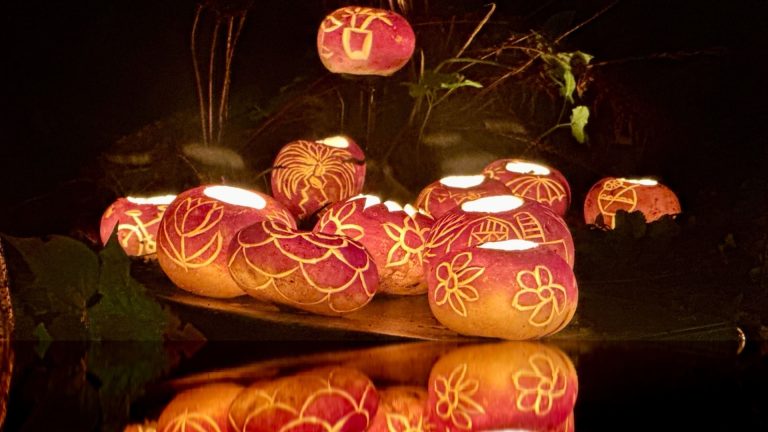
In the Swiss lakeside town of Richterswil, people carve autumn lanterns from turnips rather than pumpkins.
Why? Long before pumpkins became Halloween’s signature decoration, hollowed-out root vegetables served as practical lanterns for the darker months.
The famous annual festival of Räbechilbi sees around 30 tons of turnips transform into glowing lanterns, which illuminate the streets during a massive nighttime parade.
The tradition dates back to at least the 1860s. In 2026, this is November 14, with the parade starting near the station at 6 PM.
Richterswil is an easy day trip from Zurich on a direct S-Bahn train, so it pairs well with other places to visit in Switzerland on a fall trip.
11. Cambodia: Pchum Ben, the festival for hungry ghosts
In Cambodia, honoring the dead is a 15-day tradition called Pchum Ben, when the gates of the underworld are believed to open, and wandering spirits return to seek food and blessings.
Families visit Buddhist pagodas to offer meals to monks and scatter small rice balls called bay ben for hungry spirits who have no living relatives, making offerings on their behalf.
The main celebrations in 2026 have already taken place (October 10–12), so if you want to experience this moving tradition, it’s one to plan for next year.
Which of these traditions can you still catch this year?
There are still plenty of opportunities to experience the world’s lesser-known traditions.
- Brazil and Peru’s celebrations start this weekend, on Saturday, October 31.
- Early November is the busiest window, with Portugal, the Philippines, Lithuania, Ecuador, India, and Bolivia all celebrating between November 1 and 8.
- In mid-November, Estonia and Switzerland are the places to be.
Can’t decide where to go? Try a South America loop.
With careful planning and a travel eSIM or SIM card for South America, you could fly between Peru, Bolivia, and Ecuador, fitting three countries’ celebrations into just over a week:
- Start in Peru for Día de la Canción Criolla on October 31 and Todos los Santos on November
- Fly to Quito for colada morada on Día de los Difuntos, November 2.
- Finish in La Paz for Día de las Ñatitas on November 8.
Wherever you go, remember these are family and religious occasions. Dress modestly at cemeteries, keep your voice down, and always ask before taking photos. Cemetery vigils and small-town parades rarely come with Wi-Fi, so get your data sorted before you head out.
Stay connected wherever the spooky season takes you with Holafly
Following traditions like these means candlelit cemeteries, late-night parades, and small towns where Wi-Fi is hard to find. That’s exactly when you need your phone to just work.
A Holafly eSIM gets you online as soon as you land, with unlimited data, 5G speeds, and 24/7 customer support. Hopping between several countries? Holafly Plans covers 160+ destinations with a single eSIM on a monthly plan, so you won’t need a new SIM at every border.
What’s more, every Holafly eSIM includes Always On: 1 GB of monthly backup data at no extra cost. It activates automatically as long as your eSIM stays installed, renews every month, and works in 150+ destinations. So even if your main plan runs out mid-trip, you can still find your way back from a parade or message home from La Paz. Go see the world’s spooky season for yourself, and stay connected even when plans change.

Unlimited data. Peace of mind.
Make sure you have travel data that's there when you need it most.
Plans that may interest you


Hi, I'm Mika, a South Korean writer living in the US. I cover travel and live events, focusing on the practical stuff that makes your trip smoother, whether you're navigating a new city or heading to a major international event.I'm also the founder of Search SEOul, South Korea's leading SEO conference, bringing together search marketing experts and speakers from around the world.