Language
Visiting the US? 8 Surprising laws that could ruin your trip and the hefty fines you need to know about
Some everyday acts can get tourists fined in the US. From pumping gas to collecting rocks, discover 8 unusual laws you should know before your US trip.

You probably assume the common sense of your home country travels with you to the USA. But this is not always the case.
Something perfectly legal and routine back home can land you with a surprising fine in America. The catch is that many of these rules are local, obscure, and easy for visitors to miss.
The US is not alone in this; local rules quietly land tourists with fines all over the world. So to help you avoid an unexpected run-in with the law while in the States, we’ve rounded up eight real US rules, where they apply, and what breaking them could cost you.
| Where it applies | What’s not allowed | Possible fine |
|---|---|---|
| New Jersey | Pumping your own gas | Station fined up to $500 |
| Hawaii | Taking sand, rocks, or coral from the beach | Up to $100,000 |
| Arizona | Cutting or damaging a saguaro cactus | Felony, fines into the thousands |
| Florida | Feeding or luring wild alligators | $500 and up, rising with repeat offenses |
| Wisconsin | Serving margarine instead of butter unless asked | $100 to $500 |
| Alabama | Bear wrestling matches | Class B felony |
| Hollywood, California | Silly String on Halloween night | Up to $1,000 |
| Skamania County, Washington | Harming Bigfoot | Up to $1,000 |
New Jersey: you cannot pump your own gas
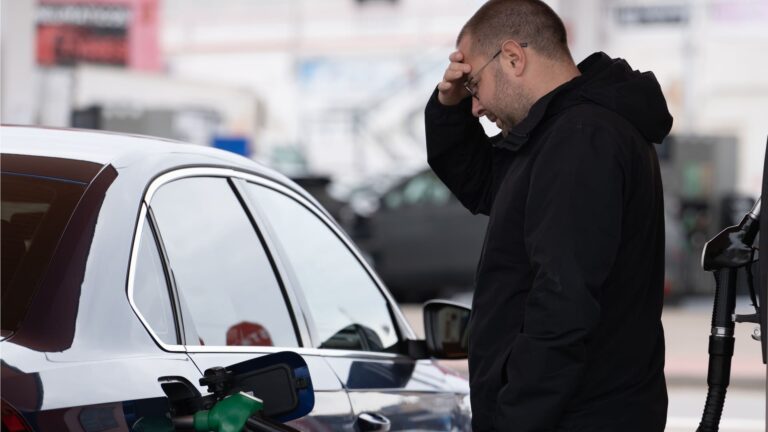
Self-service gas stations are standard in most of the world. So if you’re on a road trip in the USA, you’ll understandably assume you can pump your own gas. However, one state makes that illegal.
In New Jersey, a gas station attendant must fuel your car for you. This is largely for safety reasons, with the state citing potential fire risks, toxic fumes, and explosions.
If you grab the nozzle and do it yourself, the gas station can get fined for allowing you to do so. This is one of the only fines on this list where the consequences fall on the business, rather than you personally.
Hawaii: leave the sand and rocks on the beach
Hawaii has some of the most beautiful beaches in the world, and to protect these coastlines, it’s illegal to take sand, rocks, or coral from any beach or national park there.
This law has been in place since 2013 and carries heavy penalties, with fines reaching six figures. The reason is that beach sand and marine deposits protect Hawaii’s coastlines from erosion and support local ecosystems. In fact, it’s not just Hawaii. You will encounter this same law traveling in Asia (India) and Europe (Sardinia).
But don’t worry; you won’t get fined for any sand that ends up on your clothes or in your bag by accident. This law targets deliberate souvenir-taking, so leave coral off your packing list.
Arizona: do not cut or damage a saguaro cactus
Arizona has a different environmental protection law. Here, it’s illegal to cut down, remove, or damage a saguaro cactus.
This is because a saguaro can take over a century to grow, and it lives for around 200 years, providing essential habitat and food for desert animals. Therefore, removing one creates irreplaceable damage to the desert’s ecosystem.
So, if you’re visiting the Grand Canyon or another Arizona national park, look but don’t touch the cactus in this popular US tourist destination.
Florida: never feed a wild alligator
There are many awesome things to do in Miami, but feeding a wild alligator is not one of them. It’s incredibly dangerous, illegal, and could result in a fine starting at $500.
Feeding shy gators makes them dangerous because they lose their natural fear of humans. This causes them to move closer to human-inhabited areas and approach people directly, significantly increasing the risk of attacks.
Wisconsin: margarine only if you ask for it
This is another business-targeted fine in the US, which won’t result in you personally being fined, but could still affect you. If you’re eating in a restaurant in Wisconsin, the staff are legally not allowed to serve margarine in place of butter unless you (the customer) specifically request it. This also applies to schools, hospitals, and prisons.
So what does Wisconsin have against margarine?
In the late 1800s and early 1900s, Wisconsin heavily protected its dairy farmers by banning the sale of yellow margarine statewide. This ban was lifted in 1967, but the restaurant rule remains in place today.
Alabama: bear wrestling is a serious crime
While it’s probably not a law you’d expect to exist, its purpose is easy to guess: to prevent animal cruelty. This is because, during the 1980s and 1990s, bear wrestling was unfortunately a real practice in Alabama.
In 1996, the state introduced a law to protect bears from being held captive and used to fight. As a result, promoting, staging, or taking part in a bear wrestling match is a Class B felony.
Hollywood, California: no Silly String on Halloween
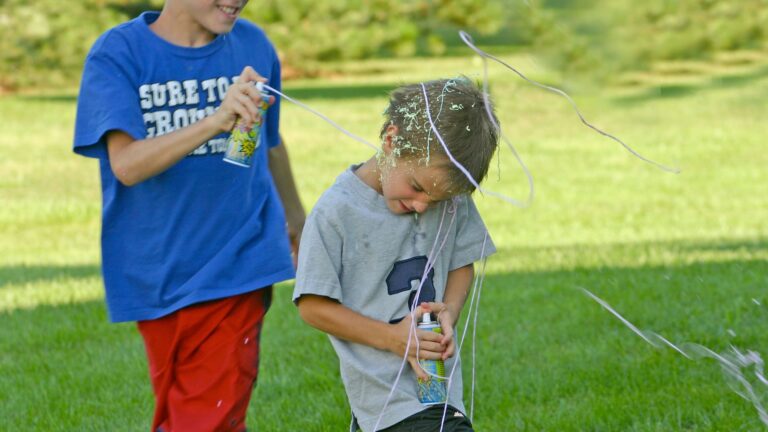
If you’re looking for fun things to do in Los Angeles during Halloween, watch out for this law that can and does catch international tourists out.
In the Hollywood district, using, selling, or even carrying Silly String on Halloween can result in a fine of up to $1,000. The rule was enforced because the municipality was having to carry out costly street cleanups every year.
So now, for 36 hours during Halloween, it’s illegal to spray Silly String in any public street, sidewalk, park, parking lot, or even on private property in public view in Hollywood. But you could also get fined just for carrying a can of it during the temporary restriction. This fine is only enforced in Hollywood, not the entire state of California.
Skamania County, Washington: do not harm Bigfoot
Perhaps the strangest law on this list, harming or killing Bigfoot (a creature that is widely believed to be folklore) is a very real law in one Washington state county.
As a famous spot for Bigfoot (Sasquatch) sightings, Skamania County became a “Sasquatch refuge”, where harming Bigfoot can result in one year of jail time and a fine of $1,000.
The reason behind it is a very real concern: to prevent hunters from accidentally mistaking hikers for Bigfoot or shooting recklessly in the woods, causing harm to people or animals. Yet the ordinance also boosts tourism and nods to regional folklore, making a trip to Skamania a fun thing to do near Seattle.
How to stay on the right side of local US laws
While some of these US laws may be surprising and unexpected, each is easy to avoid once you know it exists.
US laws differ by state and even by city. So research the rules of the areas you plan to visit during your US trip to avoid making one of these common travel mistakes.
You will find guidance on the official state or city’s website, but also look out for local signage once you arrive. Park and beach rules, such as Arizona’s cactus law and Hawaii’s sand rule, are typically visible on signs in tourist destinations, and you can discover other city ordinances with a quick Google search.
Stay connected across the US with Holafly
Landing in an unfamiliar country is the worst moment to be hunting for Wi-Fi or bracing for a roaming bill from your home carrier. A Holafly eSIM for the USA gets you online the moment you land, so you can check whether that souvenir, parking spot, or roadside stop is actually allowed before it costs you. You get unlimited data, 5G speeds, and 24/7 customer support, with no physical SIM to swap and no local shop to track down.
What’s more, every Holafly eSIM comes with Always On: 1 GB of backup data at no additional cost. It activates automatically as long as the eSIM stays installed on your device, renews every month, and works across 150+ destinations. So even if your main data runs low mid road trip, you can still pull up a map, a translation, or the local rule you need to check.
Install it before you fly, and stay connected even when your plans change.

Unlimited data. Peace of mind.
Make sure you have travel data that's there when you need it most.
Plans that may interest you

Hi, I'm Mika, a South Korean writer living in the US. I cover travel and live events, focusing on the practical stuff that makes your trip smoother, whether you're navigating a new city or heading to a major international event.I'm also the founder of Search SEOul, South Korea's leading SEO conference, bringing together search marketing experts and speakers from around the world.