Language
You could be breaking the law abroad without knowing: 8 everyday things that quietly land tourists with fines
From feeding pigeons in Venice to wearing camouflage in Barbados, discover 8 surprising things tourists can be fined for around the world.

When you travel abroad, you assume basic etiquette and respect will carry you through.
But every country has its own version of respect. And that’s exactly where things get tricky.
If something isn’t a rule in your own country, it’s natural not to expect it to be one somewhere else. Yet doing something completely normal at home could land you in legal trouble elsewhere.
From seemingly harmless habits to rules you’d never think to check before a trip, some everyday things can result in surprisingly hefty fines.
So to help you arrive prepared (and avoid any awkward and costly situations), here are eight unexpected things that tourists can get fined for abroad.
| Where | The everyday thing | Possible fine |
|---|---|---|
| Venice, Italy | Feeding pigeons in St. Mark’s Square | €25 to €500 |
| Barbados and parts of the Caribbean | Wearing camouflage clothing | Varies by island |
| Athens, Greece | Wearing high heels at ancient sites | From around €100 |
| Portofino, Italy | Lingering for selfies in no-waiting zones | €68 to €275 |
| Singapore | Chewing or importing gum | Fines apply |
| Switzerland | Noise during residential quiet hours | Local fines |
| Dubai, UAE | Public displays of affection | Fine, possible detention |
| Spain | Driving in flip-flops or barefoot | €80 to €200 |
1. Feeding the pigeons in St. Mark’s Square, Venice

Since 2008, it has been illegal to feed the pigeons in St. Mark’s Square, Venice.
Pigeon droppings cause acidic and structural damage to the historic buildings and statues in the square. So this law was enforced to keep the birds away.
Before 2008, people were not only allowed to feed the birds, but local vendors actually sold bags of corn in the square for tourists to take photos with them. This, of course, brought an influx of pigeons to the square, and officials started noticing the damage it created, and so introduced this law.
So now, anyone caught feeding pigeons here faces fines ranging from €25 to over €500. This ensures tourists continue to enjoy the city’s UNESCO-listed architecture and the iconic ways of getting around Venice.
2. Wearing camouflage in Barbados and the Caribbean
If you like wearing camo prints and are heading to Barbados, you’ll have to leave them at home.
Wearing camo clothing, swimwear, bags, or accessories (of any color) is illegal on various popular Caribbean islands, including Barbados, St. Lucia, St. Vincent, Jamaica, and Grenada.
The reason behind this mind-boggling rule?
The government doesn’t want civilians to be mistaken for the military. Camo clothing is banned to prevent any impersonation of law enforcement personnel and to avoid confusion during public safety operations.
Penalties for doing so can be very steep, with the maximum punishment being imprisonment for up to one year. So when you’re packing for your Caribbean trip, make sure you’re not accidentally bringing any camo.
3. Wearing high heels at Greece’s ancient sites
Visiting the Acropolis, the Parthenon, and the Theatre of Dionysus are among the most popular things to do in Greece. It’s natural to want to dress up and pose for photos at these incredible historic monuments, but make sure you’re not wearing high heels.
Hard-soled shoes and heels can damage the ancient stone floor of these archaeological sites by chipping, scratching, or cracking the marble. This is then very difficult to restore, so you must follow the strict footwear code. Ignoring this rule could result in fines of up to €900.
Flat shoes, sneakers, or sandals are all suitable options. Rubber soles are especially good as they provide some grip on the smooth marble but without damaging the surface.
4. Lingering for a selfie in Portofino

You can’t go to Portofino without getting that iconic selfie. However, be careful that you don’t take too long when you do so; otherwise, you might get fined.
During holiday periods and the peak summer season, the harbor gets full of tourists taking selfies. Often crowds extend out into the town’s narrow streets, creating a bottleneck. So to help keep the crowds moving along, this Italian town has designated certain areas as no-waiting zones.
In these zones, you must take a photo and move on. If caught lingering or doing a full-on photoshoot, you could get fined up to €275. These restrictions are in place during the peak hours (roughly 10:30 AM to 6 PM).
This is just one of the many helpful tips for traveling to Italy. The country has several unique quirks you should know about, such as not wearing swimwear on Italian streets and plazas.
5. Chewing gum in Singapore
Singapore is well-known for being one of the cleanest cities in the world, but to keep it that way, they enforce some pretty strict rules.
Gum has been banned in Singapore since 1992 to protect and keep public spaces clean. It’s one of the reasons why the Gardens by the Bay and Marina Bay Sands (the most popular things to do in Singapore) are so pristine and photogenic.
But it’s not just the act of chewing gum that is forbidden. Selling or bringing it into the country is also prohibited. So make sure you don’t unknowingly have any half-eaten packs of gum in your handbag or backpack, as this is where tourists usually get caught out.
Some therapeutic gums are allowed, such as dental or nicotine gum approved by a pharmacist or doctor. But getting caught with standard chewing gum carries heavy fines.
6. Making noise during quiet hours in Switzerland
A large part of Swiss culture is built on respecting those around you, and because of this, the country has some specific rules around noise.
In residential buildings, the 10 PM Rule applies. After 10 PM, you must keep noise levels to a minimum, which includes not playing loud music, not shouting, and not using loud appliances.
This doesn’t mean you can’t flush your toilet or take a shower past 10 PM, but you should keep your voice low if returning home late at night and be mindful not to slam doors. This quiet hours rule applies to all residential buildings, including short-stay apartments, but it’s also commonly practiced in hotels.
Moreover, the rule applies in all the most popular places to visit in Switzerland. Though in big cities like Zurich it typically starts one hour later on the weekend and during summer.
7. Public displays of affection in Dubai
Most travelers know about Dubai’s strict alcohol laws, but most don’t know that public displays of affection are also banned.
Kissing, hugging, and sometimes even hand-holding in public spaces can result in a fine, or worse, imprisonment. This law, which stems from Dubai’s conservative culture and religious beliefs, catches many travelers out, just like Dubai’s modest clothing rule.
Greeting someone with a kiss on the cheek is generally fine, but anything more could result in someone reporting you to the authorities. Even married couples are not allowed to kiss or hug in public.
Hotel bars, lounges, and beach clubs are generally more laidback. Still, it’s best to keep affection limited to your hotel room to avoid any problems.
8. Driving in flip-flops in Spain
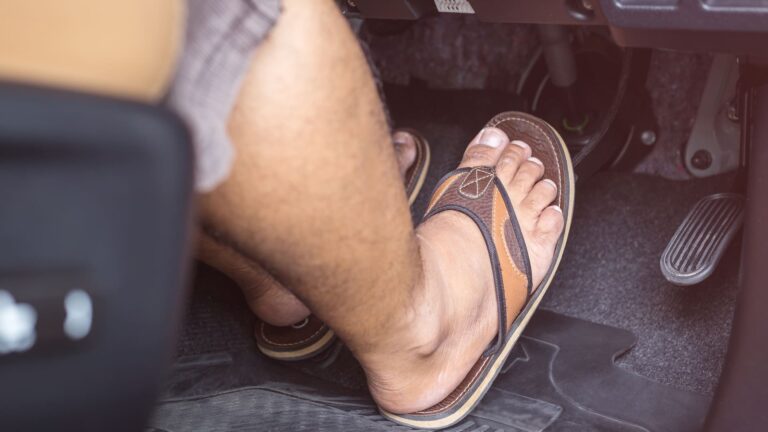
This last one isn’t a specific law, but it can and often does result in fines.
Let’s say you’re driving in Spain while wearing flip-flops, and you get pulled over. Under the safe-driving rules, traffic officers can fine you between €80 and €200 if they believe your shoes are impairing your driving. The same applies if you’re wearing loose sandals or driving barefoot.
Even though Spanish traffic regulations do not explicitly prohibit any footwear, it’s still best to avoid flip-flops. If renting a car in Spain, keep a pair of sneakers or closed shoes in the car to change into when you’re driving.
How to check the rules before you go
Because laws can differ so drastically across the world, a quick check of the rules for your destination is worth adding to your international pre-travel checklist.
For the most accurate and up-to-date information, refer to the country’s official tourism or embassy website.
It’s also worth screenshotting or saving the key rules as a note on your phone, so you can refer back to them during your trip, even when you’re without an internet connection.
Travel smarter anywhere with Holafly
Wherever your next trip takes you, a Holafly eSIM keeps you connected from the moment you arrive, with unlimited data, 5G speeds, and 24/7 customer support. Install it before you fly, activate it on landing, and skip the hassle of local SIM cards and unexpected roaming fees.
To top it off, every Holafly eSIM comes with Always On, 1 GB of monthly backup data at no additional cost. It switches on automatically while the eSIM stays installed on your device, renews each month, and works in 150+ destinations. That means you can look up a local rule, translate a sign, or check a fine before it catches you out, even when your main data runs low.
For frequent travelers hopping between countries, Holafly Plans offers pay-monthly coverage in 170+ destinations with a single eSIM. The rules may change from border to border, but your connection does not.

Unlimited data. Peace of mind.
Make sure you have travel data that's there when you need it most.
Plans that may interest you

Hi, I'm Mika, a South Korean writer living in the US. I cover travel and live events, focusing on the practical stuff that makes your trip smoother, whether you're navigating a new city or heading to a major international event.I'm also the founder of Search SEOul, South Korea's leading SEO conference, bringing together search marketing experts and speakers from around the world.