Language
You’ve probably never planned a trip to Nagoya. Here are 7 reasons you should
If you’re traveling between Tokyo and Kyoto, Nagoya makes for a natural stopover. Here’s why this overlooked city deserves a place on your itinerary.

For most people traveling in Japan, Nagoya is a grey industrial blur they pass through on the Shinkansen, or a Toyota factory town with nothing for tourists.
But despite its reputation as a boring transit stop, Nagoya is full of hidden appeal, from cuisine to architecture to heritage, and even some nearby world-class attractions.
So if you’re traveling between Tokyo and Kyoto or Osaka, here are 7 reasons why you should add a short Nagoya stopover to your itinerary.
1. It has a cuisine the rest of Japan doesn’t
If you enjoy tasting Japan’s regional specialties, Nagoya is a must-visit.
Nagoya-meshi, the regional cuisine, centers on the rich, intense savory flavor of aged Hatcho miso, which is very distinct from Tokyo’s and Osaka’s food culture.
Here are the 3 most common Nagoya-meshi dishes you must try when in town:
| Dish | What it is | Good to know |
|---|---|---|
| Miso katsu | Pork cutlet under a sweet, savory red-miso sauce | The dish most associated with the city |
| Hitsumabushi | Grilled eel over rice, eaten three ways | Nagoya’s signature splurge, try it at a long-standing specialist |
| Tebasaki | Peppery, double-fried chicken wings | The classic izakaya and beer snack |
Nagoya has several famous Hitsumabushi restaurants, such as Atsuta Hōraiken, which has specialized in the iconic eel dish since 1873.
When trying hitsumabushi, follow the traditional three-step ritual. This involves dividing the dish into three portions and eating each one differently, giving you three completely different experiences from the same dish:
- First, eat the eel and rice as it comes.
- Then add toppings and condiments such as green onions and wasabi.
- Finally, pour dashi broth over the remaining portion to turn it into a comforting rice soup.
Beyond Miso katsu, Hitsumabushi, and Tebasaki, look out for:
- Ogura toast: A surprisingly delicious combination of sweet red bean paste and butter on toast, typically eaten for breakfast.
- Miso Nikomi Udon: A hearty soup made with meat and thick wheat noodles, simmered in a red miso-based broth.
2. Ghibli Park is basically on its doorstep
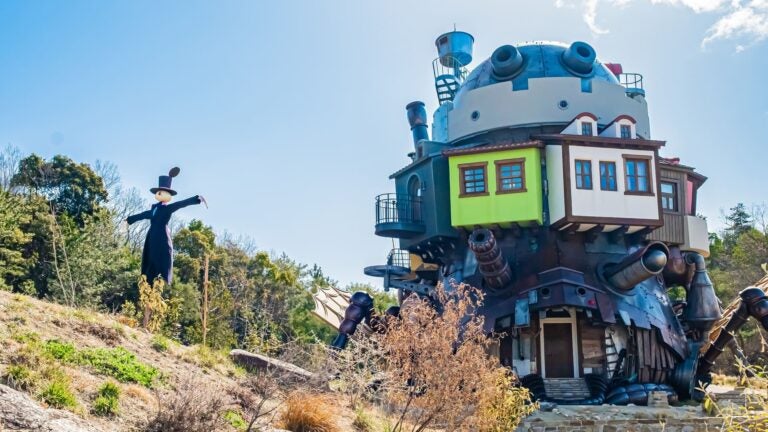
If you’re on a mission to find the best anime places in Japan, don’t skip Nagoya, as Ghibli Park is just one hour from the city center.
Ghibli Park opened in 2022 in Nagakute, Aichi Prefecture. As Nagoya is the nearest major city, most visitors stay here and take a day trip to Ghibli Park.
From Nagoya Station, take the yellow line (Higashiyama Line) to Fujigaoka, and then hop on the blue line (Linimo) to Ai-Chikyuhaku Kinen-Koen, which is a short stroll from the park.
Ghibli Park tickets are slightly cheaper on weekdays than weekends, and when booking, you must choose between a morning or afternoon timeslot. Book at least a few weeks in advance, as tickets for the upcoming 2 weeks tend to sell out.
3. Nagoya Castle and real samurai history
Nagoya Castle is one of the region’s most famous landmarks and one of the best places to visit in Japan to learn about Tokugawa History.
The Golden Kinshachi (mythical tiger-fish ornaments) that sit on the roof make the castle easy to spot from afar, but the real highlight is Hommaru Palace. The interiors’ intricate paintings, polished timber, and elaborate gold detailing give a fascinating glimpse into how Japan’s elite lived.
Located in the heart of Nagoya city center, the fortress was built in the early 1600s. It served as an important power base for the Owari Tokugawa clan. As you wander between the historic walls, it’s easy to imagine the samurai and feudal lords who once moved through the same spaces.
4. Atsuta Shrine, one of Shinto’s most sacred sites
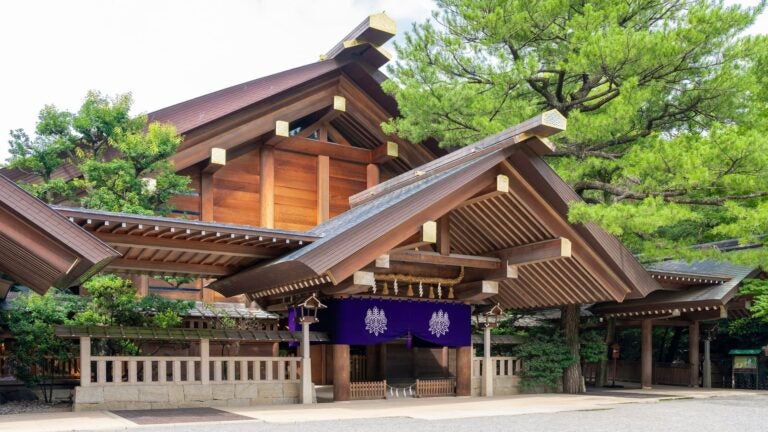
Nagoya is so much more than tall buildings and industrial sites, and a visit to the Atsuta Shrine will prove just that.
Atsuta Jingu is one of Japan’s most revered Shinto shrines, known for once housing the Kusanagi-no-Tsurugi sword, one of Japan’s Three Sacred Treasures.
Tucked away in huge, forested grounds, it feels incredibly peaceful, despite being in the city center. Because Atsuta Jingu plays an active role in modern Japanese spirituality, you’ll often see people praying and making offerings. Therefore, it feels like you’re visiting a real religious site rather than a tourist attraction.
If it’s your first time visiting a Shinto shrine, there are some Japanese cultural norms you should be aware of.
- Be quiet and respectful.
- Avoid blocking worshippers.
- Follow the local customs displayed at the entrance.
- If you want to pray, traditionally you bow twice, clap twice, make your prayer, and then bow once more.
5. Toyota country, made genuinely fun
Nagoya is associated with industry and manufacturing, but that’s actually one of the city’s biggest strengths.
Thanks to the Toyota Commemorative Museum of Industry and Technology, you can learn about Japan’s tech history in a hands-on, interactive, and surprisingly fun way.
The museum is housed in a former Toyota spinning and weaving factory and features working machinery, demonstrations, and enormous industrial exhibits. This makes it one of the best things to do in Japan for tech nerds and car lovers alike, and a great rainy-day activity for families.
Nagoya is also home to the SCMAGLEV and Railway Park. Here you can see everything from historic railway cars to futuristic magnetic-levitation technology and learn how Japan developed some of the world’s fastest trains.
6. The perfect base for central Japan
Nagoya sits on the main Shinkansen line, in the middle of the Tokyo-to-Kyoto route. Therefore, a stopover here doesn’t require any re-routing or additional travel logistics.
What’s more, Nagoya gives fast access to other popular destinations like Takayama, Shirakawa-go, Ise, and Inuyama.
So if you book a few days in Nagoya, you’re not confined to the city. Instead, you can use it as a hub to explore a whole region you would have otherwise skipped.
Many travelers use this same base-city trick to take day trips from Tokyo to places like Hakone, Nikko, and Chichibu.
7. Fewer crowds and better value than the big three
If your Japan trip centers on the big three (Tokyo, Kyoto, or Osaka), Nagoya might offer a sense of calm.
While it’s one of Japan’s three major metropolitan areas, Nagoya is far less chaotic than the tourist-heavy cities. So you can expect shorter lines at attractions, no waits at restaurants, and quieter streets.
And if you’re concerned about the cost of traveling in Japan, Nagoya is noticeably cheaper than the big three. Because the city sees far fewer international tourists, hotels and meals remain low-cost, helping to stretch your budget further.
In a nutshell, Nagoya still offers the Japanese culture, cuisine, and heritage you’re seeking, but without the overtourism crush or inflated price tag.
When to go and how to fit Nagoya into your Japan trip
You don’t have to create a whole new Japan itinerary from scratch to fit Nagoya into your trip. Simply spend one night less in both Tokyo and Kyoto, and book a two-night stop in Nagoya when traveling between the two cities.
Or if you do want to extend your trip to explore central Japan, use Nagoya as your base.
The best time to travel to Japan is spring or autumn. If possible, avoid the summer as the city can get very humid.
Reserve Ghibli Park as soon as your dates are confirmed, as its timed tickets can sell out. If you have your heart set on trying one of Nagoya’s famous Hitsumabushi restaurants, book that ahead too, particularly for dinner or weekends.
Everything else, including city center hotels, can be more spontaneous, thanks to the low tourist demand in Nagoya.
Get off the train and see more of Japan with Holafly
The best part of a city like Nagoya is that it rewards going off-script: an unplanned eel lunch, a same-day Ghibli ticket, a spur-of-the-moment day trip to Shirakawa-go. To do that without second-guessing every turn, you want to be online the whole time.
A Holafly eSIM for Japan keeps you connected from the moment you land. No physical SIM to swap, no hunting for station Wi-Fi. You get unlimited data, 5G speeds, and 24/7 customer support, so maps, translation, and bookings all just work while you explore.
What’s more, every Holafly eSIM includes Always On: 1 GB of backup data at no additional cost that stays active as long as the eSIM is installed on your device, renews every month, and works in 150+ destinations. So even if your main plan runs low mid-adventure, you can still pull up the next train time or reroute on the fly. Stay connected, even when your plans change.

Unlimited data. Peace of mind.
Make sure you have travel data that's there when you need it most.
Plans that may interest you

Hi, I'm Mika, a South Korean writer living in the US. I cover travel and live events, focusing on the practical stuff that makes your trip smoother, whether you're navigating a new city or heading to a major international event.I'm also the founder of Search SEOul, South Korea's leading SEO conference, bringing together search marketing experts and speakers from around the world.