







 Language
Midsummer in Sweden 2026: The ultimate guide to traditions, dates, and the best places to celebrate
Midsummer in Sweden 2026 falls on 19 June. Discover Midsommar traditions, maypole dancing, food, best places to celebrate, and travel tips.
Midsummer Eve in Sweden falls on Friday, 19 June 2026. Known as Midsommar, it is the country’s biggest celebration after Christmas, marked by maypole dancing, flower crowns, traditional food, and nearly endless daylight.
This guide covers what the midsummer festival in Sweden is all about, how it’s celebrated, and where to experience it as a visitor.

An eSIM you can rely on
Join over 10 million Holafly customers and get connected with our trusted, global services.
Midsummer in Sweden at a glance
Here is a quick overview of the key facts about the midsummer festival in Sweden, including dates, traditions, and what to expect as a visitor.
| Detail | Info |
|---|---|
| 2026 Date | Midsummer Eve: Friday, 19 June Midsummer Day: Saturday, 20 June |
| Official name | Midsommar |
| Where celebrated | Nationwide; most traditionally in Dalarna |
| Key traditions | Maypole raising, flower crowns, folk dancing, herring, schnapps |
| Typical June weather | 15–22°C (59–72°F); long daylight hours, occasional rain |
| Best base for tourists | Dalarna (traditional); Stockholm (accessible); Gothenburg (urban) |
What is midsummer in Sweden?
Midsummer, or Midsommar, is a celebration of the summer solstice that has roots in pre-Christian Nordic traditions. It marks the point in the year when daylight is at its longest, and for Swedes, it carries deep cultural weight, a collective exhale after the long, dark winter.
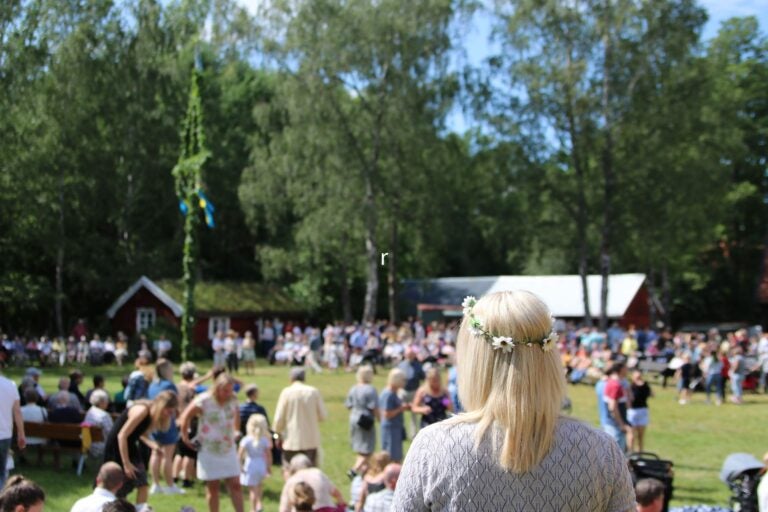
Today, it is as much a social event as a cultural one. Families and friends gather at country houses, lakesides, and village greens to spend the day outdoors together. For many Swedes, Midsummer means leaving the city, reconnecting with nature, and observing traditions that have been passed down through generations.
It is one of the few occasions when even secular Swedes participate in folk customs without irony, which says a great deal about how central this festival remains to Swedish identity.
When is midsummer in Sweden in 2026?
Midsummer Eve is always the Friday between 19 and 25 June. In 2026, that means Midsummer Eve is Friday, 19 June, and Midsummer Day is Saturday, 20 June.
The main celebrations take place on the Eve, not the Day, which can catch visitors off guard. The maypole is raised, food is eaten, and the dancing and singing happen on Friday afternoon and evening.
Many Swedes also take the following Monday off, turning it into an informal four-day weekend. Expect trains, roads, and accommodation to be under significant pressure from Thursday onwards. Book everything well in advance.
How is midsummer celebrated in Sweden?
Midsummer celebrations follow a loose but recognizable structure: gathering outdoors, raising the maypole, eating together, singing, and dancing. Here is what each tradition involves.
The maypole (midsommarstång)
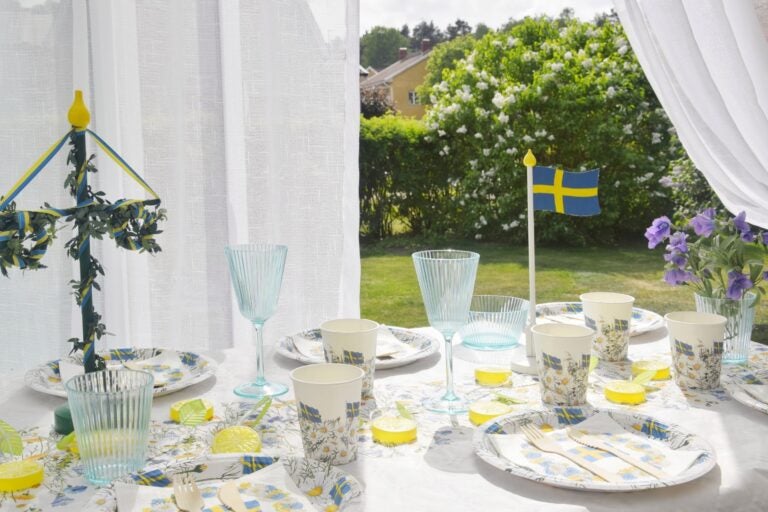
The maypole, midsommarstång in Swedish, is the visual centerpiece of any Midsummer celebration. Decorated with greenery and flowers, it is raised in an open field or village square in the hours before the communal gathering begins.
Despite its name, it has nothing to do with May. The word likely comes from a mistranslation of the German Maibaum, meaning foliage pole rather than the month. Raising the pole is a group effort, and in smaller communities, it is one of the day’s most anticipated moments.
Dancing, music, and songs
Once the maypole is up, the dancing begins. Traditional folk dances are performed around the pole, many of them simple enough for children and visitors to join in. Små grodorna (The Little Frogs) is the most recognizable, involving hopping and croaking in a circle, performed with cheerful self-awareness at every celebration across the country.
Live folk music, fiddles, accordions, and singing accompany the dancing throughout the afternoon. In smaller towns and in Dalarna especially, local folk groups perform in traditional dress.
Flower crowns and midsummer customs
Wearing a flower crown (blomsterkrans) is one of the most visible Midsummer customs. They are made from wildflowers picked on the day, such as buttercups, daisies, and clover are traditional choices, and worn by women and children in particular, though it is common to see everyone wearing them.
There is also a well-known folk tradition, more romantic legend than widespread practice today, in which young women pick seven different wildflowers in silence and place them under their pillow on Midsummer Eve to dream of their future partner.
Traditional midsummer food and drinks
The Midsummer table is built around a handful of dishes that appear reliably every year: pickled herring (sill) served several ways, new potatoes with dill, sour cream, and chives, and smörgåstårta, a layered savory sandwich cake.
Schnapps is the drink of the occasion, traditionally accompanied by drinking songs (snapsvisor). Strawberries with cream are the standard dessert, representing the first fruits of the Swedish summer.
Where to celebrate midsummer in Sweden
The midsummer festival in Sweden is celebrated nationwide, but the experience varies considerably depending on where you are. Here are the main options for visitors.
Dalarna: The heart of Swedish tradition
Dalarna, the region roughly three hours north of Stockholm by train, is widely regarded as the spiritual home of Swedish Midsummer and one of the best things to do in Sweden for visitors who want an authentic cultural experience. The towns of Leksand, Rättvik, and Mora host large public celebrations that draw visitors from across the country and abroad.
Leksand’s Midsummer festival is one of the largest in Sweden, with tens of thousands of visitors attending the maypole raising each year. If you want the full, traditional experience, such as folk costumes, communal dancing, and lake scenery, Dalarna is where to go. Book accommodation months in advance.
Stockholm: Skansen and The Archipelago
Stockholm does not empty out entirely for Midsummer, but a significant portion of the city heads to the countryside. For visitors staying in the capital, Skansen, the open-air museum on Djurgården, hosts a large public Midsummer celebration with maypole dancing, folk music, and traditional food. It is one of the most accessible options for tourists.
The Stockholm archipelago is another popular choice. Ferries run out to islands like Vaxholm and Grinda, where smaller, more intimate celebrations take place. It is a beautiful setting if you are willing to navigate the logistics of boats and accommodation during one of Sweden’s busiest weekends.
Gothenburg
Sweden’s second city is a practical base for visitors who want to experience Midsummer without traveling deep into the countryside. Liseberg amusement park typically holds Midsummer events, and several public parks host local celebrations.
Gothenburg is also well-connected by train to the west coast, which offers quieter, scenic alternatives to the large set-piece events further north.
Swedish countryside and smaller towns
For many travelers, the most memorable Midsummer experience comes not from a major event but from a smaller village gathering, a local maypole raising in a town square, an invitation to join a family celebration at a summer house, or a festival in one of Sweden’s many rural municipalities.
If you are traveling through Sweden independently, keep an eye on local event listings. Many small towns hold celebrations that welcome visitors and offer a more genuine, less crowded experience than the well-known sites.
Tips for visiting midsummer in Sweden
Midsummer is one of Sweden’s most logistically demanding travel weekends. A few things to know before you go:
- Book early. Trains, particularly to Dalarna, sell out weeks in advance. Accommodation in popular areas goes quickly, too. Do not leave this until June.
- Cities quiet down. Stockholm, Gothenburg, and Malmö lose a large portion of their residents over Midsummer weekend. Restaurants and shops may close or run reduced hours; overall, it won’t be a typical urban experience.
- Dress for the occasion. White or light linen is the unofficial dress code. A light jacket is worth packing as June evenings can be cool despite the long daylight hours.
- Plan around closures. Many shops and services close on Midsummer Eve and Day. Stock up on anything you need beforehand.
- Scandinavia timing. If Midsummer is part of a longer Scandinavian itinerary, plan carefully. It’s also worth checking how EU roaming works before you travel, as crossing between Sweden, Norway, and Denmark around this weekend can involve reduced services and elevated prices.
Stay connected during midsummer in Sweden with Holafly
Whether you’re photographing maypole dancing in Dalarna or navigating Stockholm’s archipelago ferries, reliable data keeps your trip running smoothly. Holafly’s eSIM for Sweden lets you activate before you leave home so you’re covered from the moment you land — no Sweden SIM swap needed.
If Sweden is part of a wider Scandinavian or European trip, Holafly also offers an eSIM for Europe covering multiple countries under one plan. Browse options in the Holafly eSIM store to find the right fit for your itinerary.
On top of that, every Holafly eSIM includes Always On: 1 GB of monthly backup data at no extra cost. If your plan expires between countries, simply keep your Holafly eSIM installed and backup data activates automatically.
Get an unlimited data eSIM
Use code MYESIMNOW5 for 5% off at checkout
Plans that may interest you


哈囉我是來自台灣的 Wen,平常最喜歡旅遊,也喜歡將旅遊的種種化成文字跟大家分享,希望大家能在我的文章中找到有用的資訊,加上 Holafly 的 eSIM,讓你的旅程更美好!✈️✈️✈️ Hi! I'm Wen, a passionate content writer and travel enthusiast from Taiwan. I transform my wanderlust adventures into engaging stories and practical guides, helping fellow travelers make the most of their journeys.Through my articles, I strive to provide travel tips while introducing how our eSIM technology can enhance your travel experience - keeping you connected wherever your adventures take you!

