Language
20 Best travel apps for Europe in 2026
The 20 best travel apps for Europe, from trains and transit to maps, bookings, and staying online. Free or paid, and which ones work offline.

The best travel apps for Europe are Omio for booking trains and buses across borders, Google Maps for offline navigation, Booking.com for a bed, and Holafly for data the moment you land. Most trips need four or five apps, not forty.
Below are 20 apps grouped by the job they do, with pricing and offline availability for each, so you can download what you need and skip the rest.
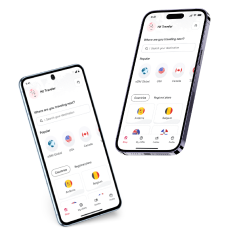
An app that gives back
Get 5% cashback when you buy an eSIM through the Holafly app.


Best travel apps for Europe at a glance
Every app below is grouped by the job it does on the road. Price refers to the app itself, not what you book through it.
| App | Best for | Price | Offline |
|---|---|---|---|
| Omio | Booking trains, buses, and flights across borders | Free | Partial |
| Trainline | Train tickets across Europe | Free | Partial |
| CityMapper | Getting around a city by public transport | Freemium | Partial |
| FlixBus | Long-distance buses | Free | No |
| BlaBlaCar | Carpooling, coaches, and trains | Free | No |
| Uber | Rides in major European cities | Free | No |
| Skyscanner | Finding cheap flights | Free | No |
| Google Maps | Navigation, transit, and finding what’s nearby | Free | Partial |
| Organic Maps | Offline maps, hiking trails, and walking routes | Free | Yes |
| Google Translate | Translating menus, signs, and conversations | Free | Partial |
| Holafly | Unlimited data across Europe | Paid | Yes |
| Booking.com | Hotels, apartments, and last-minute stays | Free | No |
| Airbnb | Apartments and homes with local hosts | Free | No |
| Hostelworld | Hostels and budget stays | Free | No |
| Viator | Tours and experiences | Free | No |
| GetYourGuide | Tours and activities | Free | No |
| Tiqets | Skip-the-line tickets for attractions | Free | Partial |
| Wise | Holding and spending multiple currencies | Freemium | No |
| XE Currency | Converting currencies on the spot | Free | No |
| Splitwise | Splitting costs with travel companions | Freemium | No |
💡 From travel tips to packing advice, explore our Europe travel guide for everything you need to know when planning a trip to Europe.
Best transport apps for Europe
Europe runs on trains, buses, and city transit. These are the apps that get you from one country to the next, and from the station to your door.
1. Omio
Best for: Booking trains, buses, and flights across borders in one place.
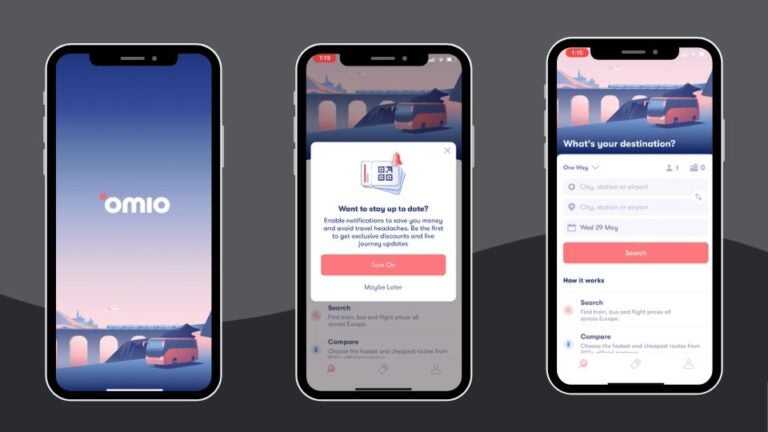
Omio compares routes and prices across more than 1,000 operators in 37 countries, so you can see a train, a bus, and a flight for the same journey side by side. Ferries and airport transfers are in there too.
It’s the app most travelers reach for first when they don’t know whether the train or the bus makes more sense.
Standout feature: One search covers rail, coach, ferry, and air across most of the continent, which no national operator app does.
Offline: Partial. Your booked tickets stay in the app without a connection, though searching and booking don’t.
Price: Free to download. Omio may add a service fee or a booking rate to a purchase, so compare the total against booking direct.
Available on: iOS, Android, and web.
Omio Group also owns Rome2Rio, the route-comparison site, so the results you see on one often route you to the other.
2. Trainline
Best for: Train tickets across Europe.
Trainline books rail across 45 countries and more than 270 operators, including Eurostar, Deutsche Bahn, SNCF, Trenitalia, and Renfe. If your trip is mostly rail, this is the app that carries your tickets.
Live departure boards and platform numbers mean you can walk into a station and know where to stand.
Standout feature: Tickets download to your phone and work with no signal, which matters more than it sounds on a platform with no reception.
Offline: Partial. Downloaded tickets work without a connection on most UK routes. Searching and booking don’t.
Price: Free to download. UK journeys carry a booking fee between 59p and £2.79, waived only when you book same-day in the app.
Available on: iOS, Android, and web.
If you’re travelling within Great Britain, Trainline’s SplitSave feature splits a single journey into cheaper combined tickets on selected routes. It doesn’t apply to mainland Europe.
3. CityMapper
Best for: Getting around a city by public transport.
CityMapper does one thing better than anything else: It tells you which exit to use, which carriage to sit in, and how long the walk is at the other end. It covers every major European city.
Real-time departures, disruption alerts, and step-free routes are all free.
Standout feature: It compares walking, transit, cycling, and ride-hailing for the same trip and ranks them by speed or price.
Offline: Partial. Starred journeys, the metro map, and scheduled departures all work without a connection.
Price: Freemium. Everything you need is free. The £1.49 monthly Club tier now buys an ad-free app and little else.
Available on: iOS, Android, and web.
4. FlixBus
Best for: Long-distance buses on a budget.
FlixBus runs intercity coaches across Europe, often for a fraction of the train fare. The app books tickets, shows schedules, and tracks your bus in real time.
FlixBus says every coach has free WiFi, plug sockets, and a toilet, though charging a laptop isn’t guaranteed.
Standout feature: Live bus tracking, so you know whether to keep waiting or go and find a coffee.
Offline: No.
Price: Free to download.
Available on: iOS and Android.
5. BlaBlaCar
Best for: Carpooling, coaches, and trains on one app.
BlaBlaCar matches drivers with passengers heading the same way, which often beats the train on price and reaches places the train doesn’t. The app also books BlaBlaCar Bus coaches and, more recently, train tickets across thousands of operators.
Drivers and passengers both carry ratings, and you can see who you’re riding with before you commit.
Standout feature: You set a chattiness preference on your profile, from chatterbox to quiet type, which is where the name comes from.
Offline: No.
Price: Free to download. A service fee applies to carpool bookings.
Available on: iOS, Android, and web.
6. Uber
Best for: Rides in major European cities.
Uber works in most large European cities across 29 countries, with card payment and a price estimate before you get in, which removes the language barrier and the meter argument.
Coverage isn’t universal. Local rivals like Bolt and FreeNow are often cheaper or more widely available, and some countries have neither.
Standout feature: An upfront price estimate in a currency you can read, though the final fare can move with route changes, added stops, or tolls.
Offline: No. Uber is also one of the apps that use the most mobile data, so it’s worth knowing what you’re spending.
Price: Free to download.
Available on: iOS and Android.
7. Skyscanner
Best for: Finding cheap flights.
Skyscanner compares fares across airlines and booking sites, including the budget carriers that make short hops across Europe worth flying rather than training. It doesn’t cover every provider, so it’s a starting point rather than the last word.
Standout feature: Explore Everywhere, which sorts destinations by what you can reach for the least money. A budget becomes a shortlist.
Offline: No.
Price: Free. Skyscanner earns a commission from providers and doesn’t pass it on to you.
Local and national transport apps in Europe
Omio and Trainline book across borders. National operator apps do something different: They sell the domestic fares, regional passes, and city tickets that resellers often can’t, and they’re usually cheaper for travel inside one country.
Download the one for wherever you’re spending the most time.
| App | Country | What it books |
|---|---|---|
| SNCF Connect | France | Rail including TGV, buses, and Île-de-France passes. Also sells cross-border tickets to Spain, Italy, Belgium, and the UK |
| DB Navigator | Germany | Long-distance and regional rail, plus underground, tram, and bus tickets |
| Trenitalia | Italy | National and regional rail, season tickets, and carnets |
| Renfe | Spain | National and high-speed rail. Renfe’s own channels carry the full discount range |
| SBB Mobile | Switzerland | Trains, buses, trams, and boats, plus tickets for journeys abroad |
| ÖBB App | Austria | Rail, regional transport association tickets, and seat selection |
| NS | Netherlands | National rail, with a separate NS International app for cross-border journeys |
| SNCB | Belgium | National rail |
| Île-de-France Mobilités | Paris | Metro, RER, bus, tram, and Navigo passes |
| Ferryhopper | Ferries | More than 220 ferry operators across 33 countries, including Greece, Italy, Spain, and Croatia |
Two things worth knowing before you rely on them.
Most of these apps are domestic. SNCF Connect and SBB Mobile are the two that sell cross-border tickets, so for a trip that crosses several countries you’re better off booking through Omio or Trainline and keeping the national app for the legs that stay put.
Ferryhopper is a booking platform rather than a ferry operator. Some ferry companies still require you to collect a paper ticket at the port, which the app will tell you at checkout. Read that line before you turn up with a phone.
Best navigation and translation apps for Europe
Three apps cover getting around and being understood. Between them they handle the moments when your signal doesn’t.
8. Google Maps
Best for: Navigation, transit, and finding what’s nearby.
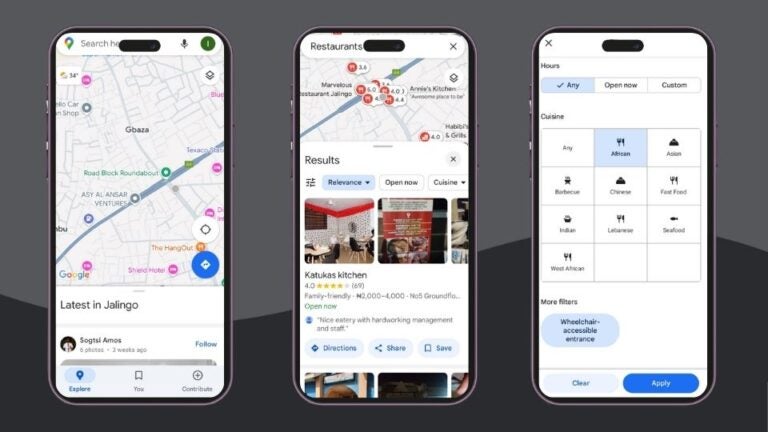
Google Maps handles walking, driving, cycling, and public transport in most European cities, with live traffic and transit updates. Search for a pharmacy, an ATM, or a late-night supermarket and it will find one.
Transit coverage depends on the local agency supplying data, so it’s stronger in Berlin than in a Croatian village.
Standout feature: Live transit departures and delays in most major European cities, which turns an unfamiliar metro into a readable one.
Offline: Partial. Downloaded maps give you driving directions only. Walking, cycling, and transit directions stop working without a connection, which is worth knowing before you rely on it.
Price: Free.
Available on: iOS, Android, and web.
9. Organic Maps
Best for: Offline maps, hiking trails, and walking routes.
Organic Maps is built on OpenStreetMap data by the original Maps.me founders, and it’s the app to download when you know your signal won’t hold. It covers footpaths, trails, and back roads that Google Maps thins out.
It runs entirely on your phone with no ads, no tracking, and no account.
Standout feature: Every feature works with no connection at all, including walking and cycling navigation, which is exactly where Google Maps stops.
Offline: Yes, by design.
Price: Free.
Available on: iOS and Android.
10. Google Translate
Best for: Translating menus, signs, and conversations.
Point the camera at a menu and Google Translate overlays the English. Live translate handles two-way speech, which covers most of what you need at a counter or a ticket window. It supports more than 200 languages, though feature support varies between them.
Download the language pack before you travel and text and camera translation keep working without a connection.
Standout feature: Camera translation, which turns an unreadable menu into a readable one in about two seconds.
Offline: Partial. Text and camera translation work with downloaded language packs. Live speech translation needs a connection.
Price: Free.
Available on: iOS, Android, and web.
💡 If Europe is just one stop on your global travels, check the best apps to travel, worldwide recommendations for navigation, booking, and more.
Best apps to stay online in Europe
Every app above needs data. Public WiFi is slow, crowded, and not always available, and roaming charges are an expensive way to solve it.
11. Holafly
Best for: Unlimited data across Europe on one eSIM.
Our eSIM for Europe installs before you fly and connects the moment you land, with unlimited data and no roaming fees. One eSIM covers 33 countries, so a trip through three of them doesn’t mean three SIM cards.
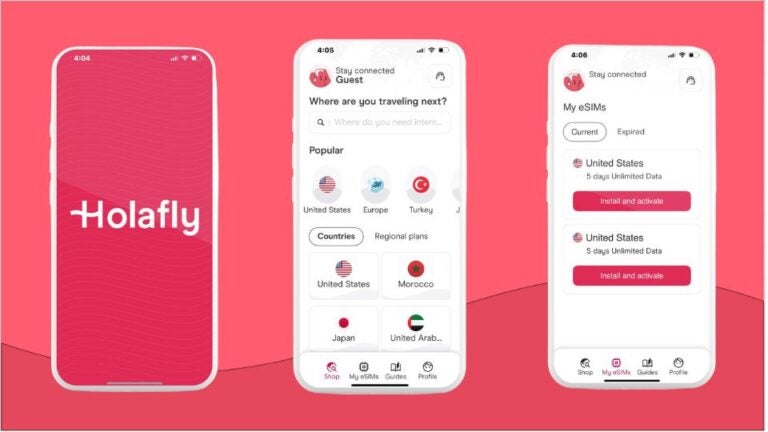
You manage everything in the app: Buy a plan, activate it, check your usage, and add days if your trip runs long.
Always On, is a perk that’s included with every Holafly eSIM with no extra cost. It’s 1 GB of backup data each month across 70+ destinations. It’s a safety net, not a streaming plan.
If you travel to Europe more than once a year, look at Holafly Plans instead. It’s our monthly subscription, with unlimited data, hotspot sharing, and coverage that follows you across borders, so you don’t buy a new eSIM every trip.
Standout feature: Your WhatsApp number stays active on your regular SIM while the eSIM handles data, so you keep your number, contacts, and conversations.
Offline: Yes. The eSIM installs before departure and works on arrival, with no WiFi and no shop.
Price: Paid. Plans run from 1 to 90 days, and we sell eSIMs in 160+ destinations. Check your handset against the eSIM compatible phones list first.
Available on: iOS and Android.
💡If eSIMs are new to you, start with what is eSIM and then read our buying guide to eSIMs for Europe. For more on getting online across the continent, see our guide to the best apps for internet in Europe.
Best booking and accommodation apps for Europe
Three apps cover almost every kind of bed in Europe, from a hostel dorm to a farmhouse.
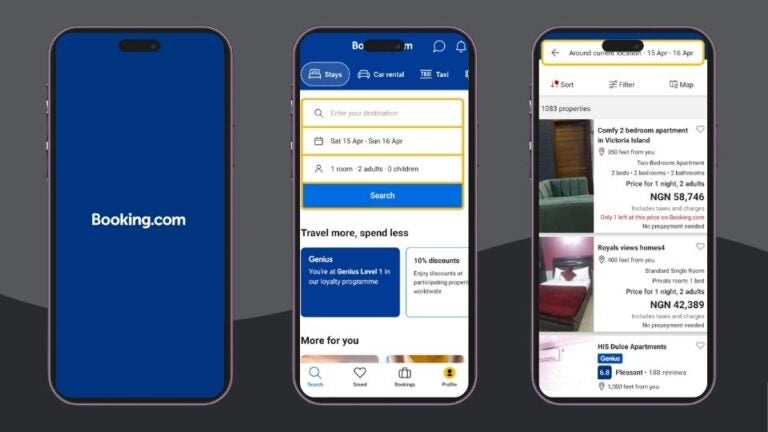
12. Booking.com
Best for: Hotels, apartments, and last-minute stays.
Booking.com has one of the largest selections of hotels, apartments, guesthouses, and hostels in Europe. Free cancellation on many properties makes it the safe default when plans are still moving, and you can filter for it.
Only people who booked through Booking.com can leave a review, which keeps the ratings closer to honest than an open review site.
Standout feature: The free-cancellation filter, which lets you lock in a bed without locking in a plan.
Offline: No.
Price: Free. Booking.com doesn’t charge travelers a booking fee.
Available on: iOS, Android, and web.
13. Airbnb
Best for: Apartments and homes with local hosts.
Airbnb works best when you want a kitchen, a neighborhood, and a few days in one place rather than a hotel lobby. Hosts often supply the kind of local detail no guidebook carries.
Hosts have to follow local short-term rental rules, and some cities require a registration or permit number, so listings vary more than they used to.
Standout feature: Host recommendations, which are usually better than the first page of search results.
Offline: No.
Price: Free to download. Airbnb charges guests a service fee of 14.1% to 16.5% of the booking subtotal, shown in the price breakdown before you pay.
Available on: iOS, Android, and web.
14. Hostelworld
Best for: Hostels and budget stays.
Hostelworld lists hostels across Europe with reviews that tell you what actually matters: Whether the showers work, whether anyone talks to anyone, and whether you’ll sleep.
Social Pass unlocks City Chat and Linkups, which connect you with other travelers at your hostel or heading to the same city. It’s included when you book through Hostelworld and sold separately if you don’t.
Standout feature: The social layer, which is the reason to pick a hostel over a cheap hotel in the first place.
Offline: No.
Price: Free to download. Hostelworld charges a non-refundable booking fee, and you pay a deposit up front with the balance due at the hostel.
Available on: iOS, Android, and web.
💡 Planning a solo trip to Europe? Discover tips on safety, packing, and staying connected in our guide to solo travel in Europe.
Best apps for tours and activities in Europe
Booking the big attractions before you arrive is the difference between walking in and standing in a queue for two hours.
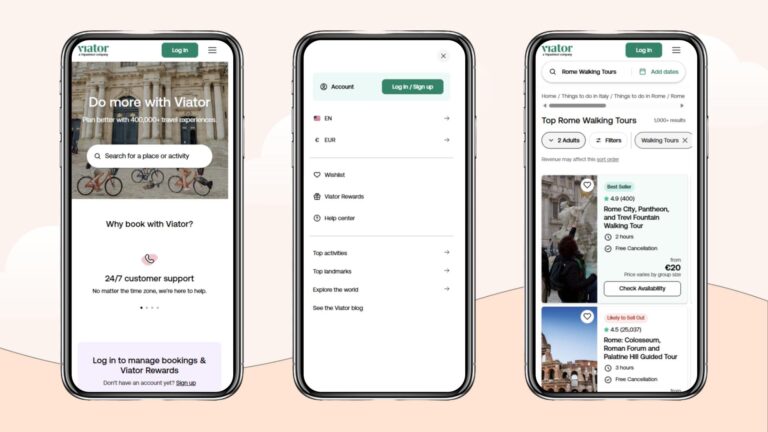
15. Viator
Best for: Tours and experiences with a wide operator network.
Viator lists more than 400,000 experiences run by local operators, from walking tours to full-day excursions. You buy directly from the operator, with Viator handling the transaction.
It overlaps heavily with GetYourGuide, so it’s worth comparing both for the same tour. Viator is a Tripadvisor company, so its reviews and Tripadvisor’s often share a source.
Standout feature: The breadth of small local operators that don’t appear on the bigger platforms.
Offline: No.
Price: Free to download. You pay the tour price at checkout, and most experiences refund in full if you cancel at least 24 hours ahead.
Available on: iOS, Android, and web.
16. GetYourGuide
Best for: Tours, day trips, and skip-the-line entry.
GetYourGuide covers guided tours, museum tickets, and day trips across every major European city, with mobile tickets you show at the door.
Reviews are detailed enough to tell a good guide from a forgettable one.
Standout feature: Free cancellation more than 24 hours before most activities, with a full refund, which suits trips that change shape.
Offline: No.
Price: Free. GetYourGuide’s commission is paid by the tour operator and baked into the price you see.
Available on: iOS, Android, and web.
17. Tiqets
Best for: Skip-the-line tickets for museums and attractions.
Tiqets is narrower than the other two and better at the one thing it does: Instant mobile tickets for museums, galleries, and landmarks, often bookable minutes before you walk up.
Useful when you decide at breakfast that today is a museum day.
Standout feature: Your tickets stay accessible in the app even without a connection, which matters at a turnstile in a basement.
Offline: Partial. Booked tickets work offline. Browsing and booking don’t.
Price: Free to download. The total price is shown before you pay. Cancellation is only available where the ticket says so, so read the listing.
Available on: iOS, Android, and web.
🎒 Backpacking through Europe soon? Get ready with our detailed Europe backpacking list, featuring must-pack items and travel tips.
Best money apps for Europe
Europe is not one currency. Even inside the eurozone, card fees and exchange rates vary by who you bank with.
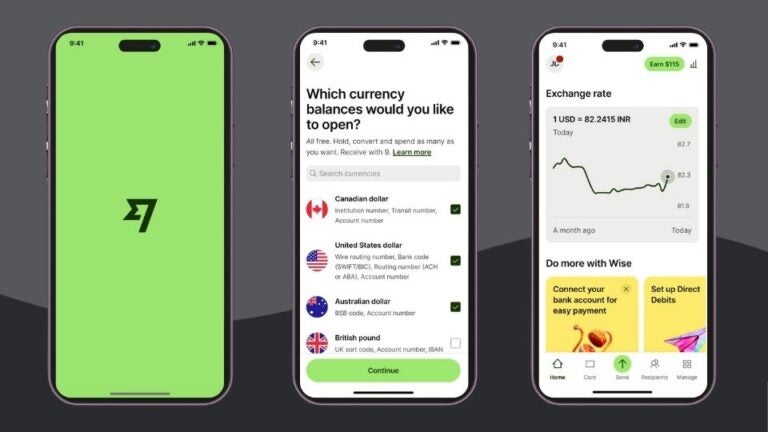
18. Wise
Best for: Holding and spending multiple currencies.
Wise gives you an account that holds euros, pounds, and other currencies at once, with a card you can spend from. Conversion happens at the mid-market rate, the one you can check on Google, with the fee shown before you commit.
Better than a home bank card on a multi-country trip, as long as you know what the card costs.
Standout feature: You see the exact fee before every conversion, which almost no bank shows you.
Offline: No.
Price: Freemium. The account is free to open and the debit card carries a one-time fee. ATM withdrawals are free up to €250 a month in the eurozone, then 2.69%.
Available on: iOS, Android, and web.
19. XE Currency
Best for: Converting currencies on the spot.
XE does one job: It tells you what something costs in your own money, using live mid-market rates across more than 170 currencies.
Worth having the moment you leave the eurozone and start dealing in koruna, zloty, or forint.
Standout feature: Live rates for 170+ currencies at the mid-market rate, which is the number your bank isn’t showing you.
Offline: No.
Price: Free. XE makes its money on transfers, not on the converter.
Available on: iOS, Android, and web.
20. Splitwise
Best for: Splitting costs with travel companions.
Splitwise tracks who paid for what and works out who owes whom at the end, which spares everyone the group-chat arithmetic.
It keeps a separate balance for each currency, so a trip across three countries stays legible even on the free tier.
Standout feature: It settles the whole trip in one figure per person instead of dozens of small transfers.
Offline: No.
Price: Freemium. The free tier has a daily limit on how many expenses you can add. Pro removes it and adds currency conversion, receipt scanning, and an ad-free app.
Available on: iOS, Android, and web.
Final thoughts on the best travel apps for Europe
You don’t need 20 apps. You need one for each job your trip actually asks of your phone, and the best apps for Europe travel are the ones that match your itinerary rather than someone else’s.
Start with how you’re moving. A rail-heavy trip wants Trainline and the national operator apps. A trip crossing borders on trains, buses, and budget flights wants Omio and Skyscanner. A week in one city wants CityMapper and little else.
Then decide what has to work when your signal doesn’t. Download Google Maps for your cities and Google Translate for the language before you leave, and add Organic Maps if you’re going anywhere rural.
Then sort your data, because everything else here is a screenshot without it. Our eSIM for Europe installs before you fly, connects the moment you land, and covers 33 countries on one plan, so crossing a border doesn’t mean finding a shop.
Everything after that is optional. One place to sleep, one place to book a tour, one way to handle money, and you’re done.

Navigate Europe with ease
Use map apps as much as you wish with unlimited data eSIMs from Holafly.
FAQs about the best apps for travel in Europe
Google Maps is the most widely used travel app in Europe, because it covers navigation, public transport, and finding what’s nearby. For booking travel between cities, Omio is the one most travelers reach for first, and it’s the app Google’s own AI results name ahead of the rest.
The top 10 travel apps for Europe are Omio, Trainline, CityMapper, Google Maps, Google Translate, Holafly, Booking.com, Hostelworld, GetYourGuide, and Wise. Between them they cover transport, navigation, data, a bed, activities, and money, which is every job a trip actually asks of your phone.
Trainline is the best app for train travel in Europe. It books rail across 45 countries and more than 270 operators, including Eurostar, Deutsche Bahn, SNCF, Trenitalia, and Renfe. For travel inside one country, the national operator’s own app is usually cheaper, since it carries fares and passes the resellers don’t.
Use Omio to book between cities and CityMapper to get around inside one. Trainline covers rail, FlixBus and BlaBlaCar cover the budget end, and Skyscanner covers short-haul flights. National apps like SNCF Connect and DB Navigator are worth downloading for the legs that stay in one country.
Google Maps, Google Translate, Organic Maps, Skyscanner, XE Currency, Booking.com, and GetYourGuide are free with no fee to you. Omio, Trainline, and Hostelworld are free to download but add a booking fee at checkout, and Airbnb charges guests a service fee on top of the nightly price.
Plans that may interest you


With a background in English literature and a focus on storytelling, I’ve turned my interests in travel and technology into a career helping others stay connected abroad. Originally from Serbia, I work remotely with my husband, experiencing local cultures firsthand and bringing that perspective to my writing for Holafly. Fun fact: before focusing on content creation, I was a professional volleyball player.