Language
How to survive an overnight flight, from boarding to a landing that doesn’t ruin your day
Dreading an overnight flight? Here’s what frequent travelers do to ensure they sleep on the plane, reduce jet lag, and feel rested on arrival.

Overnight flights aren’t called ‘red-eye flights’ for nothing.
Arriving at your destination at 6 am with tired, bloodshot eyes and a tired-but-wired feeling that lingers for days can make you feel like a cast member of a zombie movie.
Planes are not a comfortable place to sleep, and for many, the thought of being trapped in an economy seat all night is anxiety-inducing.
Yet unfortunately, overnight flights are often unavoidable, especially on long-haul routes.
After years of taking these dreaded red-eye flights, I’ve picked up many tips and tricks to make the whole thing more survivable.
Rather than simply trying to endure 8+ miserable hours, creating a game plan for each part of the experience will help you arrive feeling a little fresher and a little less groggy.
And it begins well before you board the plane.
1. Set yourself up before you board
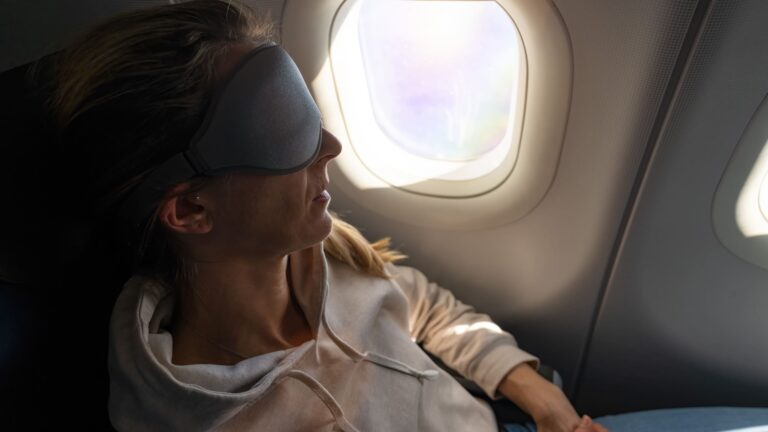
What you do BEFORE take-off will determine how much (and how well) you sleep on the plane.
Airplane seats are famously uncomfortable. While most airlines give you a pillow and blanket, this is not enough to create a quiet, comfortable environment for sleeping.
That’s why I highly recommend packing a small overnight flight kit, containing:
- A neck pillow
- An eye mask
- Compression socks
- Noise-canceling headphones or earplugs
- A fully charged power bank
This international travel packing list can prevent many common problems that come with overnight flights, such as neck stiffness and swollen feet, while helping block out cabin noise and light.
Beyond this, use the time between passing security and boarding your flight to prepare yourself for a restful experience:
- Eat a full meal so you can digest before getting on the plane. This will also allow you to skip the in-flight meal and maximize your sleep time.
- Fill your water bottle after security, so you have plenty of water on your flight and don’t need to call the cabin crew each time you wake up with a dry throat.
- Change into comfortable loungewear, such as a soft tracksuit.
2. Pick the right seat, and settle in fast
Where you sit on the plane can seriously make or break your flight experience. For most people taking an overnight flight, the window seat is the top airplane seat choice as it:
- Has more privacy
- Gives you a wall to lean on
- Eliminates the need to get up to let others pass by
- Gives you control over the shade
However, the window seat might not be the best fit if it makes you feel trapped or claustrophobic, or if you need multiple bathroom breaks throughout the flight.
The aisle seat gives you more freedom to get up and move around, but it can disturb your sleep, as you may need to get up to let others pass. You’ll also have people constantly passing through the aisle right next to you.
When choosing your seat, study the seating map on the airline’s website carefully.
Avoid the rows closest to the bathrooms, as these can be noisy, bright, and smelly. Moreover, don’t choose the last row on the plane or rows that back onto a toilet, a gallery, or an exit row, as these usually have fixed, non-reclining seats.
3. Actually sleeping (or at least resting) at altitude
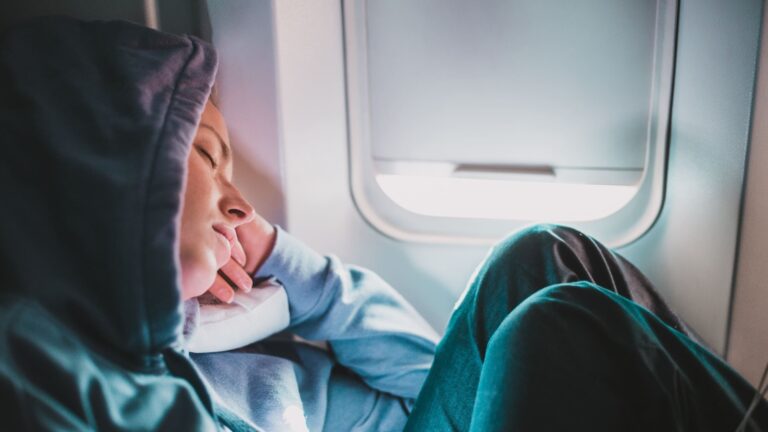
I’ll be honest with you; Getting a solid night’s sleep on an overnight flight is incredibly rare. Putting pressure on yourself to fall asleep usually backfires—you end up lying there, frustrated, watching the minutes tick by.
On the other hand, telling yourself you’ll get no sleep creates unnecessary stress and anxiety, and usually becomes a self-fulfilling prophecy.
The real goal should be to get quality rest, and there is a lot you can do to control how restful your flight is.
The following tips for long flights will help you get settled in and promote quality rest:
- Have your neck pillow within reach (not in the overhead storage).
- Have plenty of layers with you (under your seat): The temperature in the airplane cabin can swing rapidly between warm and cold. Feeling too cold or too hot will make it much harder to fall asleep, so use layers to find a comfortable temperature.
- Place everything you’ll need during the flight in the seat pocket in front of you, such as your phone, power bank, earplugs, eye mask, and water bottle.
- Take off your shoes and put on your compression socks if you’re using them.
- Dim your screen and close the window shield after take-off (if in the window seat).
- Do a relaxing activity: While it may be tempting to watch a movie, lower-stimulation activities like reading, meditating, or listening to relaxing music will help you properly wind down.
- Avoid caffeine and alcohol as these can keep you awake, dehydrate you, and increase that groggy sensation upon arrival. Instead, stay hydrated by regularly sipping water throughout the flight.
If you do struggle to fall asleep, know that simply sitting with your eyes closed and focusing on slow, deep breathing still counts as rest. It gives your mind a chance to switch off and your body an opportunity to relax, which is much more beneficial than watching movie after movie or scrolling through your phone all flight.
4. Landing, and the recovery that decides your next day
Even if you struggled to sleep on the flight, all is not lost. How long it takes to adjust to your new time zone depends on what you do in the first few hours after landing.
Whether you push through and stay awake or take a short nap will depend on how much you slept and how you feel:
| Landing feeling | Best first move | Avoid |
|---|---|---|
| Slept a little | Daylight and a walk | A long nap |
| Barely slept | Short capped rest, then daylight | Caffeine right after landing |
| Wide awake but wired | Light meal and gentle movement | Doing anything demanding |
Getting daylight is one of the best ways to avoid jet lag. However, the best time of day to get daylight depends on your direction of travel.
- If you traveled eastbound, seek daylight immediately after landing to help your body clock understand it is morning time.
- If you traveled westbound, avoid bright light in the morning and instead, spend time in the daylight in the late afternoon/early evening to help delay your circadian clock.
In addition, get some gentle movement, like a short walk, stay hydrated, and avoid excessive caffeine or alcohol on the first day. And even though it’s hard, resist the urge to take a long nap during the day, as it will keep you awake at night.
The moment you land is also the moment connectivity matters most. No one wants to deal with those annoying, long airport WiFi sign-up forms when feeling groggy and zombie-like. So save yourself this additional stress by sorting a travel eSIM before you board.
5. Land ready for anything with Holafly
An overnight flight is hard enough without stepping off the plane at dawn, groggy and disconnected, trying to find airport Wi-Fi just to order a ride or message your hotel.
A Holafly eSIM keeps you online from the moment you land. There’s no physical SIM to swap and no airport counter to find. You install it before you travel, activate it when you land, and arrive with a working connection, unlimited data, 5G speeds where available, and 24/7 customer support if anything needs sorting.
What’s more, every Holafly eSIM includes Always On: 1 GB of monthly backup data at no additional cost, automatically active as long as the eSIM stays installed on your device. It renews every month and works across 150+ destinations, so even if your main plan runs low after a long night in transit, your connection stays live for that first ride, message, or reroute the moment you touch down.
Unlimited data. Peace of mind.
Make sure you have travel data that's there when you need it most.
Plans that may interest you


Hi, I'm Mika, a South Korean writer living in the US. I cover travel and live events, focusing on the practical stuff that makes your trip smoother, whether you're navigating a new city or heading to a major international event.I'm also the founder of Search SEOul, South Korea's leading SEO conference, bringing together search marketing experts and speakers from around the world.