




 Language

7 safe places to travel in Mexico in 2026 and how to stay safe
Explore 7 safe places to travel in Mexico, from Mérida to Los Cabos, with each state’s US advisory level and practical safety tips for your trip.

From Mérida’s colonial plazas to the calm beaches of Isla Mujeres, these seven Mexican destinations pair strong tourism infrastructure with lower risk levels. Here’s how each one is rated in the latest US travel advisory.
Mexico’s reputation for danger usually comes from national headlines, but conditions vary a lot from state to state. A quiet beach town on the Yucatán Peninsula and a cartel-affected inland region can sit in the same country and still feel worlds apart.
That’s why planning region by region makes more sense than asking whether “Mexico” is safe. This guide covers seven safe places to travel in Mexico, all in states rated Level 1 or Level 2, explains what the US State Department advisory says about each one, and shares the everyday habits that help visitors stay safe on the ground.
Is Mexico safe to travel in 2026?
The US State Department rates Mexico at Level 2, Exercise increased caution, in its travel advisory issued May 29, 2026. Mexico is one of the few countries that also gets a separate rating for each state, and those state ratings are far more useful for trip planning than the national level.
- Level 1, Exercise normal precautions: Yucatán and Campeche
- Level 2, Exercise increased caution: includes Quintana Roo (home to Cancún, Playa del Carmen, Tulum, and Isla Mujeres), Baja California Sur (Los Cabos), Oaxaca, and Mexico City
- Level 3, Reconsider travel: includes Jalisco and Guanajuato
- Level 4, Do not travel: Colima, Guerrero, Michoacán, Sinaloa, Tamaulipas, and Zacatecas
Ratings can also vary inside a single state. In Oaxaca, for example, the advisory lists no restrictions for Oaxaca City, Monte Albán, Puerto Escondido, or Huatulco, while US government employees are barred from the Isthmus region. Advisories change often, so check the current version on travel.state.gov before booking. Travelers from Canada, the UK, Australia, and elsewhere should also check their own government’s guidance, since ratings can differ.
Here’s a quick look at the seven destinations in this guide and how their states are rated.
| Destination | State | US advisory level (state) |
|---|---|---|
| Mérida | Yucatán | Level 1 |
| Campeche | Campeche | Level 1 |
| Playa del Carmen | Quintana Roo | Level 2 |
| Akumal | Quintana Roo | Level 2 |
| Isla Mujeres | Quintana Roo | Level 2 |
| Los Cabos | Baja California Sur | Level 2 |
| Oaxaca City | Oaxaca | Level 2, no restrictions listed for the city |
1. Mérida, Yucatán

Mérida has a long-standing reputation as one of the safest cities in Mexico, and recent data backs it up. In INEGI’s national urban security survey (ENSU) for the second quarter of 2026, 38.2% of Mérida residents said they felt unsafe, well below the national average of 59.8%. That keeps it among the 15 Mexican cities with the lowest perception of insecurity, and Yucatán is one of only two states rated Level 1 by the US State Department.
Beyond the numbers, Mérida is a true cultural hub. Its plazas regularly host Mayan-style street performances, and the cafés around them are ideal for slowing down and watching city life unfold to the sound of music and laughter.
Visitors can explore the colonial streets, ornate churches, and bustling markets on foot with very little stress, which makes Mérida a strong first stop for anyone nervous about traveling in Mexico.
2. Campeche, Campeche
Campeche shares Yucatán’s Level 1 rating, yet it sees a fraction of the visitors that Cancún or Tulum do. The state capital, officially San Francisco de Campeche, is a compact port city on the Gulf of Mexico that’s easy and relaxed to explore on foot.
Its historic center is a UNESCO World Heritage Site, ringed by walls and bastions built in the 17th and 18th centuries to defend the city against pirate attacks. Visitors can walk sections of the walls between the Land Gate and the Sea Gate, then stroll Calle 59, a car-free street lined with outdoor restaurants. In the evening, the waterfront malecón fills with locals out walking, jogging, and watching the sunset.
Campeche also works well as a day trip or overnight stop from Mérida, and history fans can add a visit to the nearby Maya site of Edzná.
3. Playa del Carmen, Quintana Roo
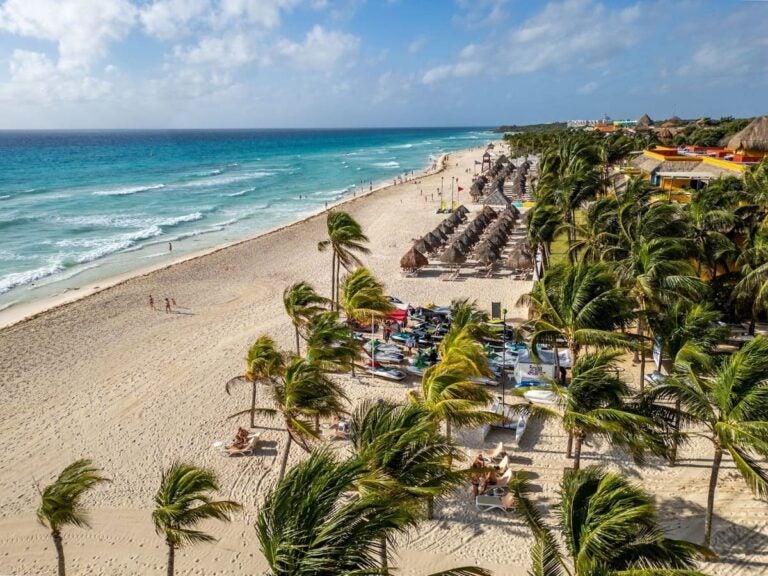
As a popular tourist destination with a large expat community, Playa del Carmen is one of the easiest places in Mexico to feel at ease. In recent years, Playa del Carmen has also become one of the most popular Mexican cities for digital nomads.
Families stroll the powdery white sands of Playacar Beach, solo travelers work from the town’s charming cafés, and groups of easygoing backpackers head out on snorkeling trips.
English is widely spoken here, so it’s easy to ask for help when needed. And while the coastal town is certainly lively, its nightlife centers on busy, well-lit streets rather than isolated areas.
Safety tip: For Quintana Roo, the State Department recommends the Guest Assist tourist assistance app and advises sticking to well-lit pedestrian streets and tourist zones after dark.
4. Akumal, Quintana Roo

On the drive from Playa del Carmen to Akumal, the density of resorts slowly thins and the lush jungle edges closer. The town feels calm from the moment you arrive, with fewer crowds, local fishermen tending their nets, and turquoise waters gently lapping at the shore.
Mornings here are made for snorkeling with sea turtles in Akumal Bay, and evenings for strolling quiet beachfront paths under soft lamplight. Touts and aggressive vendors are rare, and locals tend to be friendly but unobtrusive.
For travelers who want a quieter base than the busier Riviera Maya towns, Akumal offers a place to soak in nature and safety in equal measure.
5. Isla Mujeres, Quintana Roo

Isla Mujeres sits just off the coast of busy Cancún, but the vibe could not be more different.
This small island is a relaxed, low-key escape, ideal for lazy beach days or adrenaline-filled diving trips on its colorful coral reefs.
The island is only about 13 kilometers (8 miles) from the mainland, yet it feels a world away from the crowds. Its compact size makes it easy to explore by bicycle or golf cart, and pedaling through the local neighborhoods is something many visitors wouldn’t think twice about here.
6. Los Cabos, Baja California Sur

Because Los Cabos sits at the southern tip of the Baja California peninsula, far from most of Mexico’s other tourist hubs, some travelers skip it, assuming it’s too far off the beaten path.
That would be a mistake for anyone who puts safety first. Baja California Sur is rated Level 2, and Los Cabos is a well-developed, highly touristic area with visible police presence in the main tourist zones.
Days here revolve around snorkeling in aqua-blue waters, and evenings around fresh seafood at beachfront restaurants, all with very little to worry about.
For more of Mexico’s most popular tourist destinations (and what to do there), check out our guide to things to do in Mexico.
7. Oaxaca City, Oaxaca
For travelers who want culture, food, and colonial architecture away from the coast, Oaxaca City is a strong pick. Oaxaca state is rated Level 2, and the advisory lists no travel restrictions for Oaxaca City or the nearby archaeological site of Monte Albán.
The historic center and Monte Albán are a joint UNESCO World Heritage Site, and the walkable streets around the Zócalo and Santo Domingo are packed with markets, mezcal bars, and a food scene known across Mexico. The city is also famous for its Día de Muertos celebrations in late October and early November, and for the Guelaguetza festival every July.
The main thing to plan around is protests. Roadblocks and marches, often organized by teachers’ unions, can close highways and streets near the Zócalo for hours, especially in the summer months. They aren’t aimed at tourists, but flying into Oaxaca rather than driving and checking with your hotel before long road trips saves a lot of hassle. The city also sits at about 1,550 meters (5,085 feet), so take it easy on the first day.
Mexico travel safety tips for visitors
Even in the safest places in Mexico, it pays to stay alert. These habits, many of which mirror the State Department’s own guidance, make solo and group travel feel safer and smoother.
- Stick to well-lit tourist areas and avoid wandering too far alone at night. For more ideas, see these safety tips for traveling alone.
- Use ride-hailing apps or authorized taxi stands instead of flagging down taxis on the street when traveling around Mexico’s towns and cities, to avoid scams or overcharging.
- Use ATMs inside banks or in well-lit areas, watch for skimming devices, and check your account regularly. Here’s what to know about using your debit card in Mexico.
- Know the common tricks before you land, from inflated taxi fares to distraction thefts. This guide to common travel scams and how to avoid them covers the main ones.
- Learn a few essential Spanish words and phrases. They help in an emergency and make interactions with locals warmer and more genuine.
- Buy a Holafly eSIM online before your trip so you have a reliable connection from the moment you land. That way, you can discreetly check Google Maps or call a ride without looking lost.
- Avoid using your phone while walking, and keep it in your bag in crowded areas. Check it only once you’ve stopped somewhere safe.
- Register your trip with your government. US citizens can enroll in the Smart Traveler Enrollment Program (STEP) to receive safety alerts while abroad.
Best time to visit Mexico for a safe, smooth trip
Timing affects more than the weather. A few seasonal factors are worth planning around:
- Dry season (roughly December to April): Sunny, stable weather across the Yucatán Peninsula, Los Cabos, and Oaxaca. It’s also peak season, so book flights and hotels early.
- Hurricane season: The Atlantic season, which affects Playa del Carmen, Akumal, Isla Mujeres, and Campeche, runs from June 1 to November 30 and usually peaks from August to October. The eastern Pacific season, which affects Los Cabos, starts earlier, on May 15. If you travel then, consider flexible bookings and keep an eye on forecasts.
- Holiday crowds: Christmas, New Year’s, and Semana Santa (Holy Week before Easter) bring packed beaches, higher prices, and busier roads.
Planning a beach trip to the Caribbean coast? This guide to the best time to visit Cancún breaks down the seasons month by month.
Before you fly, sort out how you’ll stay connected. Compare a Mexico SIM card with your carrier’s roaming options in Mexico to avoid surprise charges.
Stay connected across Mexico with a Holafly eSIM
A reliable connection makes it easier to stay safe in Mexico, whether you’re booking a ride outside Mérida’s main plaza, checking for roadblocks before leaving Oaxaca City, or finding your way back to your hotel in Los Cabos. Holafly’s eSIM for Mexico gives you unlimited data, 5G speeds, and 24/7 customer support, and you can install it before your flight so you’re online the moment you land.
What’s more, every Holafly eSIM includes Always On, 1 GB of monthly backup data at no additional cost. It activates automatically as long as the eSIM stays installed on your phone, renews every month, and works in 150+ destinations. So even after your plan ends, you still have enough data for a quick map check or a message home on your next trip.
Mexico is waiting. Don’t let the headlines stop you from discovering it for yourself.
→ Shop Holafly’s eSIM for Mexico here.
For more travel safety tips and destination guides, follow Holafly on Google Discover.
Peace of mind before you fly
Set up your eSIM before travel and get unlimited data on arrival.
Plans that may interest you


Hi, I'm Mika, a South Korean writer living in the US. I cover travel and live events, focusing on the practical stuff that makes your trip smoother, whether you're navigating a new city or heading to a major international event.I'm also the founder of Search SEOul, South Korea's leading SEO conference, bringing together search marketing experts and speakers from around the world.