Language
La Tomatina uses up to 150,000 kg of tomatoes: Here’s where they come from and where they go
Spain's messiest festival leaves Buñol covered in tomatoes. Find out where they come from, how the streets are cleaned, and whether it's really food waste.

If you loved food fights as a child, you’ll love La Tomatina.
This Spanish festival is one of the most unique, colorful, and messy festivals in the world. It’s an hour-long food fight that turns the streets of Buñol red with fruit pulp, using a staggering 150,000 kg of tomatoes.
But where do all these tomatoes even come from, and where do they go afterward?
Here’s how Buñol prepares for La Tomatina, what happens after the food-throwing ends, and how you can take part in this iconic event.
150,000 kg of tomatoes in one hour: The numbers behind the chaos
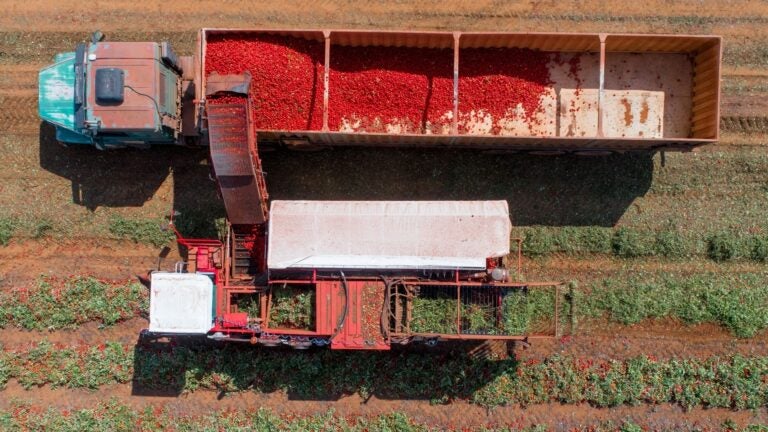
It’s not a typo. According to the festival’s official website, La Tomatina uses 150,000 kg (roughly 120 to 150 tonnes) of tomatoes each year.
Attendees hurl all these tomatoes in a single hour, with the fight capped at around 20,000 ticketed participants since 2013. This means each person gets to throw around 6 to 7.5 kg of tomatoes within 60 minutes.
It normally takes seven trucks to haul the tomatoes into the tiny town of Buñol in Valencia, which normally has under 10,000 residents.
In 2026, La Tomatina festival will mark the 80th edition of the event. It is scheduled for Wednesday, August 26, with the food fight kicking off at 11 am.
As in recent years, La Tomatina 2026 is expected to be a sold-out event, showing just how far the festival has come since it began in 1945, when just a handful of people participated.
| Detail | Figure |
|---|---|
| Tomatoes used | Up to 150,000 kg (120 to 150 tonnes) |
| Participants | 20,000 (ticketed, capped) |
| Fight duration | 1 hour |
| Trucks needed | Usually 7 |
| 2026 date | Wednesday, August 26 (80th edition) |
Where the tomatoes come from (and why you’d never eat them)
While tomatoes are well-known as one of the best foods in Spain, the ones used in La Tomatina are not the kind you would buy from a supermarket.
They are all low-grade or overripe fruit grown specifically for the festival.
La Tomatina’s tomatoes are below standard for human consumption, so they would never reach shop shelves. But because they are soft and overripe, they are ideal for squashing and throwing. They burst easily on impact and cause less injury than firmer varieties.
Most of the tomatoes are not grown in Valencia but in Extremadura and Murcia, several hours away from Buñol. Here they are grown in large quantities at low cost, with harvests timed for late August.
Where 150,000 kg of tomatoes go afterward
La Tomatina’s tomato throwing lasts for one hour, with a cannon signaling the start and end of the food fight. After the second cannon fires, everyone stops and leaves the area, and the cleanup team swoops in.
The majority of the cleanup is done by the local fire brigade and the council, who hose down the streets with powerful water jets, sending the pulp into the town’s drainage system. Eventually, the tomatoes reach the wastewater treatment facilities, where they break down pretty quickly as they are biodegradable organic waste.
Volunteers, such as local residents and shop owners, also pitch in to help clear the drains and sweep up debris.
Thanks to this combined effort, the streets of Buñol are typically back to normal just a few hours after the festival ends. By this time, most visitors have rinsed off at the temporary showers set up for the event and started heading back to Valencia, about 40 km east.
After the cleanup has finished, many locals comment on how the streets appear cleaner than before. This is believed to be because the acidity in tomatoes acts as a natural cleanser, but it’s not a verified fact.
So is La Tomatina actually a waste of food?
A fun fact about Spain is that the country grows approximately 4 to 5 million tonnes of tomatoes each year. Therefore, tomatoes are in surplus, and the ones used for La Tomatina are inedible and have no other use, so they would otherwise be discarded.
Considering this, it is far less wasteful than it looks.
That being said, the cleanup process does use a significant amount of water (both to clean the streets and the attendees). However, overall, La Tomatina is typically more environmentally friendly than other street festivals and music festivals in Europe.
The capped entry also keeps the festival under control while remaining one of Spain’s many joyfully chaotic traditions, like Las Fallas, Valencia’s most famous celebration.
Want to see it in 2026? What to know before August 26

With La Tomatina just over one week away, tickets will likely be almost sold out.
As entry is ticketed and limited, you cannot simply turn up and join in the fun. Check the official website for booking information, including transfers to and from the nearby major cities.
Because there are many things to do in Valencia, and it’s less than 1 hour away by bus or train, most festival attendees choose to base themselves here.
There are official event buses that can bring you back to Valencia after the event, where you will find the official La Tomatina after-party. However, as Buñol makes for a nice day trip from Valencia, some attendees choose to hang around the small town for the rest of the day.
There are also official event transport options from:
- Barcelona
- Madrid
- Costa Blanca
- Murcia
- Andalucia
Here are a few other things to note to ensure you have the best La Tomatina experience:
- Lockers are available to store your belongings during the food fight, though you must purchase one when booking.
- Keep your phone in a waterproof pouch around your neck to protect it from damage if you’re not using a locker.
- Wear old closed shoes that you don’t mind getting ruined. Ensure they have a good grip as the floor can get slippery; flip-flops aren’t allowed.
- Expect to get soaked and dirty. Many people wear swimwear underneath to make it easier to rinse off before changing into clean clothes and shoes.
Stay connected through the chaos with Holafly
A day at La Tomatina is gloriously messy: pulp in your hair, friends scattered across a packed plaza, and your phone sealed inside a plastic bag. A Holafly eSIM for Spain keeps you online through all of it, with unlimited data, 5G speeds, and 24/7 customer support, so you can find your group, check the train times back to Valencia, and share the mayhem as it unfolds.
To top it off, every Holafly eSIM comes with Always On, 1 GB of monthly backup data at no additional cost. It activates automatically as long as the eSIM stays installed on your device, renews every month, and works across 150+ destinations. So even if your main data runs low after a morning of photos and videos, you stay reachable when it counts.
Install it before you fly, activate it when you land, and let Holafly handle the connection while you handle the tomatoes.

Unlimited data. Peace of mind.
Make sure you have travel data that's there when you need it most.
Plans that may interest you


Hi, I'm Mika, a South Korean writer living in the US. I cover travel and live events, focusing on the practical stuff that makes your trip smoother, whether you're navigating a new city or heading to a major international event.I'm also the founder of Search SEOul, South Korea's leading SEO conference, bringing together search marketing experts and speakers from around the world.