Language
How many days in Busan? How long you really need to visit
Wondering how many days in Busan is enough? Compare 2, 3, 4, and 5-day Busan itinerary options, day trips, transport, and best time to visit.
Most first-time visitors should spend 3 days in Busan. That gives you enough time for the city’s beaches, temples, markets, coastal walks, and main neighborhoods without turning the trip into a checklist.
If you’re adding Busan to a Seoul-based South Korea trip, the real question is usually how many nights to take away from the capital. This guide breaks down how many days in Busan you need, with realistic itinerary options, Seoul-to-Busan transport, local travel tips, day-trip ideas, and the best time to visit Busan.

An eSIM you can rely on
Join over 10 million Holafly customers and get connected with our trusted, global services.
How many days in Busan do you need?
For most travellers, 3 days in Busan is the best balance. Two days is enough for the highlights, but three days give you time to see more than one side of the city: the beach areas, old downtown markets, and sea-view temples.
Here’s a simple way to decide how long your Busan itinerary should be:
| Trip length | What you can realistically cover | Best for |
|---|---|---|
| 2 days | Haeundae or Gwangalli, Gamcheon Culture Village, Jagalchi Market, BIFF Square | Fast-paced first-time visitors adding Busan to a Seoul trip |
| 3 days | A fuller mix of beaches, markets, temples, coastal walks, and viewpoints without rushing every transfer | Most first-time visitors |
| 4 to 5 days | Everything above, plus a slower beach day, spa time, or a day trip to Gyeongju | Slower travellers, repeat visitors, families, and culture-focused trips |
Quick tip: If you’re short on time but still want to shop, it helps to decide what to buy in Korea before you arrive so you can focus on the markets and shopping areas that actually match your list.
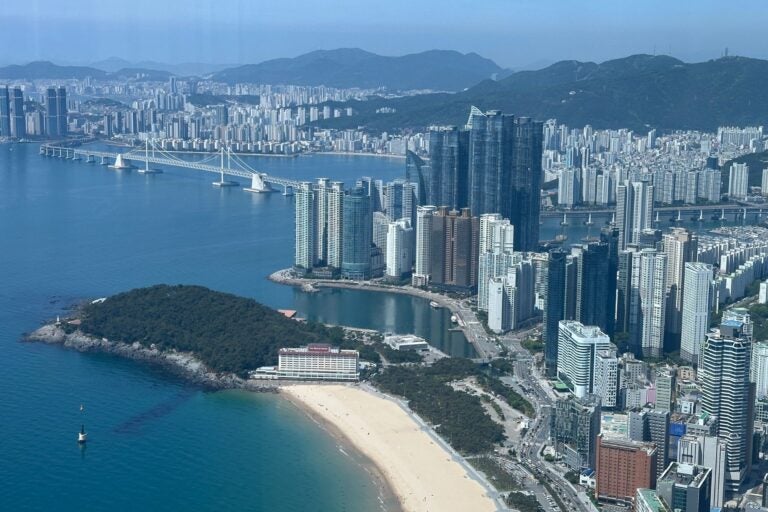
Is Busan worth visiting?
Yes, Busan is worth visiting if you want South Korea to feel broader than Seoul. It gives you a very different version of the country: coastal, slightly slower, seafood-heavy, and built around beaches, hills, bridges, ports, and markets.
The main reason to stay overnight is distance. Busan’s best areas are spread out, and the city rewards a slower pace. A good Busan itinerary needs time for transfers between Haeundae, Gwangalli, Gamcheon, and the eastern coast.
Is 2 days in Busan enough?
Two days in Busan is enough for a fast highlights trip. You can see a variety of iconic Busan attractions if you plan carefully.
A realistic 2-day Busan itinerary could look like this:
| Day | Suggested plan |
|---|---|
| Day 1 | Arrive from Seoul, visit Gamcheon Culture Village, Jagalchi Market, BIFF Square, and Nampo-dong, then finish with a viewpoint or dinner nearby |
| Day 2 | Visit Haedong Yonggungsa Temple, spend time in Haeundae, walk part of the coast, then end at Gwangalli Beach for evening views |
The downside is that you will spend a noticeable part of the trip in transit. Moving between the eastern side and the western side of the city can take 30 to 60 minutes, depending on your route.
If you only have two days, it may also be worth considering driving in Busan for attractions that are awkward to connect by public transport. A car can save some transfer time on the right routes, although traffic and parking mean it won’t always be faster in central Busan.
With 2 days, you also need to make cuts. You may skip a slower beach afternoon, Songdo, Taejongdae, a spa visit, or a Gyeongju day trip. Two days work best if you are comfortable moving quickly and choosing only your top priorities.
3 days in Busan: The recommended trip length
Three days in Busan is ideal for most first-time visitors. It gives you enough space for a complete trip to enjoy the city without constantly checking the next subway transfer.
A balanced 3-day Busan itinerary could look like this:
| Day | Suggested plan |
|---|---|
| Day 1 | Nampo-dong, Jagalchi Market, Gukje Market, BIFF Square, Gamcheon Culture Village |
| Day 2 | Haedong Yonggungsa Temple, Haeundae Beach, Dongbaekseom, The Bay 101 or nearby evening views |
| Day 3 | Gwangalli Beach, Millak waterfront, a coastal walk, spa time, café stops, or Songdo/Taejongdae, depending on your pace |
The third day matters because it gives you backup time if the weather changes, a train arrives late, or you simply want a slower afternoon by the water. Reliable internet access in South Korea is also useful for checking routes and travel times as you move between different parts of Busan.
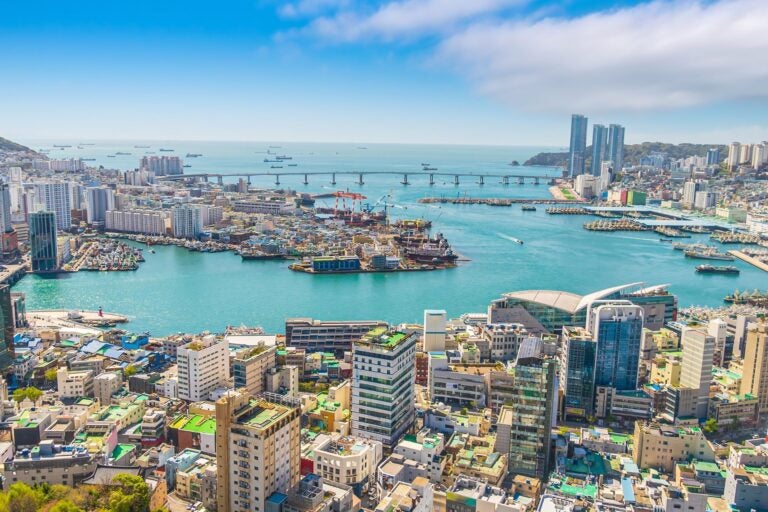
4 to 5 days in Busan: Going deeper and adding day trips
Four to five days in Busan works well if you prefer a slower pace, want to add a day trip, or plan to combine South Korea with nearby Japan. With 4 days, you can follow the 3-day itinerary and add Gyeongju, Taejongdae, and Songdo, Spa Land, or a slower beach day.
With 5 days, another option is to split your time between Busan and Fukuoka. The two cities are commonly paired because the ferry from Busan to Hakata makes the cross-border trip relatively convenient, so you could spend around 3 days in Busan and 2 days in Fukuoka.
If you are travelling in Japan first, check whether your phone will work in South Korea before crossing over, and a Japan and South Korea eSIM can cover both countries.
Extra days are also useful if your trip overlaps with the Busan International Film Festival, since screenings and fixed event times are easier to fit around a more flexible itinerary.
Can you visit Busan as a day trip from Seoul?
You can visit Busan as a day trip from Seoul, but it is not ideal for most travellers. The KTX makes the journey possible, but the round trip still takes up a large part of the day.
KTX services commonly take around 2 hours and 30 minutes each way, depending on the train. Tickets can be booked through Korail’s official channels, including the website and stations.
Once you add travel to Seoul Station, waiting time, boarding, arrival at Busan Station, and local transport within Busan, a same-day return leaves limited sightseeing time. You might manage one focused route, such as Gamcheon Culture Village and Jagalchi Market, or Haeundae and Gwangalli, but not both comfortably.

How to get to Busan from Seoul
The easiest way to get from Seoul to Busan is the KTX. It is fast, frequent, and runs city-center to city-center, which usually makes it more practical than flying once airport transfers are included.
If you’re travelling between Seoul and Busan, a South Korea eSIM or a Korea SIM card can keep your mobile data connection active throughout the trip without switching plans between cities.
Here’s how the main Seoul-to-Busan options compare:
| Option | Journey time | Rough cost | Where it drops you | Best for |
|---|---|---|---|---|
| KTX high-speed rail | Around 2 hr 30 min | Around KRW 60,000 one way for standard seats | Busan Station | Most visitors |
| Standard rail | Around 4 to 5+ hr | Around KRW 42,600 one way | Busan Station | Budget travellers with extra time |
| Express bus | Around 4 to 5+ hr, depending on traffic | KRW 26,700 – 51,600, depending on the seats | Busan Central Bus Terminal or Sasang area | Lower budgets and flexible schedules |
| Domestic flight | Around 1 hr in the air, plus airport transfers | KRW 31,500 – 100,00, depending on the seasons | Gimhae International Airport | Travellers connecting from another flight |
For most visitors, KTX is the default choice. It avoids airport check-in time, arrives at Busan Station near the older downtown districts, and gives you a predictable start to the trip.
How to get around Busan
Busan is easy to navigate, but its main districts are spread out. Use the metro for longer journeys, buses for beach or hillside areas, and taxis when transfers become awkward.
| Transport option | What to know |
|---|---|
| Metro | Adult fares start at KRW 1,600. Use it for Busan Station, Seomyeon, Centum City, Haeundae, and Nampo-dong. |
| Buses | Useful for places the metro does not reach directly. The fare starts at 1,550 KRW with a transit card or 1,700 KRW with cash. |
| Taxis | Best for late nights, luggage, airport transfers, or routes with too many metro and bus changes. |
| From Gimhae Airport (PUS) | Reach Busan by light rail, metro transfer, taxi, or airport limousine bus. Airport limousine fares are KRW 9,500 to Haeundae/Gijang and KRW 6,000 to Seomyeon/Bujeon. |
For most visitors, a prepaid IC card is the easiest way to pay for local transport. Cards such as Hanaro, mybi, and cashbee can be used on public transport in Busan, and transfer discounts are generally available within 30 minutes when you switch between eligible routes.
The main tip to get around Busan is to group your itinerary by area: Nampo-dong, markets, and Gamcheon together; Haeundae, Gwangalli, and eastern coastal stops together. An eSIM for Busan can make it easier to check live maps, transfers, translation apps, and mobile tickets while you move between them.
Best time to visit Busan
The best time to visit Busan is spring or autumn if you want comfortable weather for sightseeing. Summer is better for beach trips, while winter is quieter and still manageable for a short city break.
| Season | Month | What to expect | Best for |
|---|---|---|---|
| Spring | March to May | Mild weather, flowers, and good walking conditions | First-time sightseeing, temples, coastal walks |
| Summer | June to August | Hot, humid, and busier around the beaches | Swimming, nightlife, sea views |
| Autumn | September to November | Comfortable weather, clearer walking days, and festival season | Most first-time trips, food, city exploring |
| Winter | December to February | Colder, quieter, and less beach-focused | Lower crowds, markets, cafés, short stays |
Stay connected in Busan with Holafly
Busan’s highlights are spread across the city, and roaming charges add up fast when you’re checking maps and transfers all day. A Holafly eSIM for South Korea skips that with unlimited data at speeds up to 5G. Set it up before you fly and it activates as soon as you land — no local SIM to track down. And if you hit a snag along the way, 24/7 customer support is there whenever you need it.
Your trip may end, but your connection doesn’t have to. With Always On: 1 GB of monthly backup data, you just keep your Holafly eSIM installed and 1 GB refreshes every month at no extra cost. It’s handy for that final morning in Busan when you need to confirm a KTX booking, load a map back to the station, or message where to meet.
Get an unlimited data eSIM
Use code MYESIMNOW5 for 5% off at checkout
Plans that may interest you

哈囉我是來自台灣的 Wen,平常最喜歡旅遊,也喜歡將旅遊的種種化成文字跟大家分享,希望大家能在我的文章中找到有用的資訊,加上 Holafly 的 eSIM,讓你的旅程更美好!✈️✈️✈️ Hi! I'm Wen, a passionate content writer and travel enthusiast from Taiwan. I transform my wanderlust adventures into engaging stories and practical guides, helping fellow travelers make the most of their journeys.Through my articles, I strive to provide travel tips while introducing how our eSIM technology can enhance your travel experience - keeping you connected wherever your adventures take you!