Language
You may no longer be able to enter Europe as easily as before. If you’re traveling from the US, the UK, or any other non-EU country, take note—you could face unexpected issues at border crossings.
Europe's border rules are changing. Discover how EES and ETIAS work, who needs them, and what to do differently on your next European trip.

If you’re planning a trip to Europe soon, you’ve probably heard talk about new border rules. Maybe you’ve seen headlines about long immigration queues or travelers missing flights due to a new system at the airport.
These aren’t fabricated stories. Europe has recently rolled out a major change to its border controls: the Entry/Exit System (EES), with another change, the European Travel Information and Authorization System (ETIAS), expected to follow later this year.
So what exactly are EES and ETIAS?
In this guide, we’ll break everything down in plain English. By the end, you’ll understand the difference between EES and ETIAS, who they apply to, and what to expect the next time you travel to Europe.
Important: When traveling within the Schengen zone during developing situations, border entry requirements can shift on short notice. An example is Italy’s temporary border checks on flights from Spain. It’s best practice to stay thoroughly updated on local entry requirements before you fly.
What is EES and how does it work at the border?
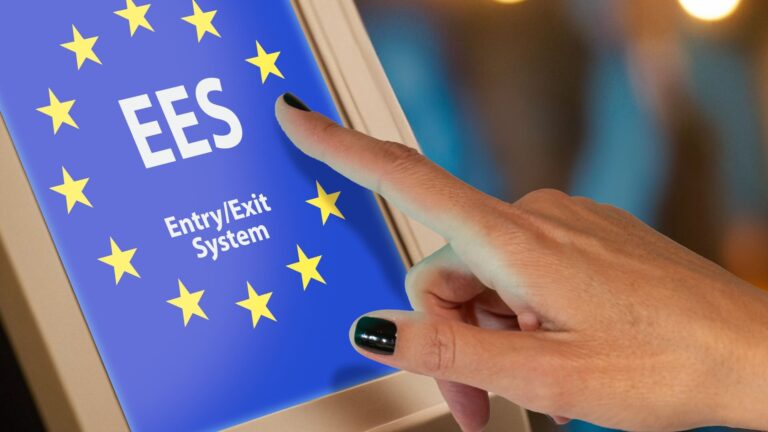
The Entry/Exit System (EES) is a current change you need to be aware of if you’re a non-EU national planning a trip to Europe this summer. As of April 10, 2026, it is fully operational across the Schengen Area.
In simple terms, EES replaces the traditional passport stamp with a digital record. Instead of an immigration officer manually stamping your passport when you enter or leave the Schengen Area, your travel information is stored electronically.
This change applies only to non-EU nationals and non-Schengen visitors entering for short stays. That means travelers from countries such as the UK, the United States, Canada, Australia, New Zealand, and many others are all included in the system.
The good news is that there is nothing you need to do before traveling. The new system doesn’t require any registration and costs nothing.
The difference is purely what happens once you arrive in an EU country.
Instead of going through the automated immigration gates (eGates) and then getting your passport stamped, you’ll go to a new biometric kiosk, where:
- You scan your passport
- Your biometric data is collected
- A facial image is taken through the kiosk’s camera
- You give your fingerprints by putting your hand on the designated reader
- Your entry is automatically recorded
You’ll then repeat the same process when you leave the country.
So, what is the purpose of this change?
It’s essentially a more modern and efficient way to monitor compliance by non-EU travelers with the Schengen Area’s 90/180-day rule. Your biometric data creates an accurate record of when you entered and exited the region.
With this new system, overstaying is much harder to do accidentally and much easier for authorities to detect.
What is ETIAS and do you need it yet?
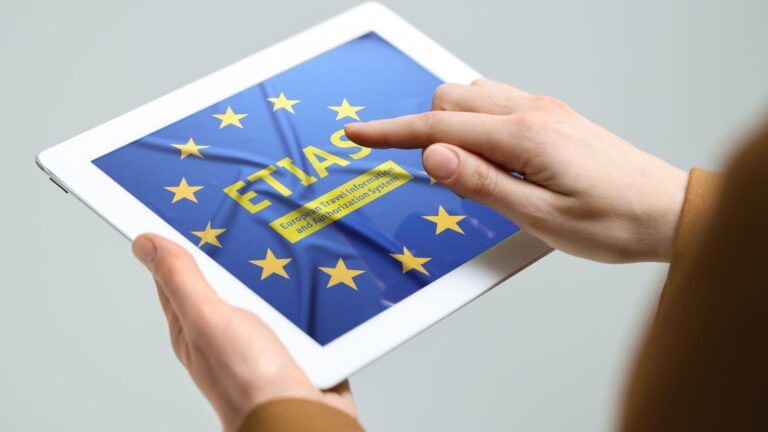
You may have heard about another new system called ETIAS. Despite recent headlines, ETIAS is not yet operational. It is due to launch in the last quarter of 2026 (October to December 2026).
ETIAS (European Travel Information and Authorization System) is a pre-travel authorization that eligible non-EU nationals visiting Europe for a short stay must obtain before travel.
It’s similar to the US ESTA and the UK’s ETA scheme, and like these systems, it will be a simple online process you do before travel that’s then linked electronically to your passport.
The application fee will be EUR €20, and your ETIAS will be valid for 3 years or until passport expiry, covering multiple trips.
While EES is required for all non-EU nationals, including those who require a Schengen visa, ETIAS is only for non-EU nationals from 59 visa-exempt countries. This includes UK, US, Canadian, and Australian passport holders.
As ETIAS is not expected to launch until the final quarter of 2026, if you’re traveling to Europe this summer, there is nothing you need to do differently.
What’s more, even after the system goes live, there will be a six-month transition period during which each participating country slowly begins to adopt the new process. As a result, you might find that ETIAS authorization is not required for the EU country you’re visiting until early 2027 at the earliest.
EES vs ETIAS: what is the difference?
| EES | ETIAS | |
|---|---|---|
| What it is | Automated border registration system | Pre-travel authorization (like an ESTA) |
| Status | Fully operational since April 10, 2026 | Expected Q4 2026, not yet open |
| What you do | Nothing in advance, registered at the border | Apply online before your trip |
| Who it applies to | All non-EU/Schengen travelers on short stays | Non-EU travelers from visa-exempt countries only |
| Cost | No cost to the traveler | €20 per application |
As you can see from the table above, the main difference is:
- EES is something that happens at the border without any action needed from you in advance
- ETIAS is something you will need to apply for before you travel, once it launches later this year.
Which countries are covered?
EES and ETIAS both apply to the Schengen Area. As of June 2026, EES applies to 29 EU countries, while ETIAS will apply to 30 countries (including Cyprus).
This means that not all European countries are participating. The UK and Ireland are outside Schengen and are not included in either system.
So, if you’re planning a multi-country Europe trip that combines Schengen and non-Schengen destinations, different rules may apply for each leg. For example, if you are going to the UK and France, you’ll need to apply for a UK ETA (required for all non-British nationals), along with an ETIAS for France (once it’s launched).
What travelers should do before their next Europe trip
EES: Whether you’re solo traveling in Europe or taking a family vacation, there is nothing you need to do in advance for the EES. Simply follow the staff’s instructions at border control when you arrive.
ETIAS: As of now, there is nothing you need to do. Once the European Union announces a specific ETIAS start date, applications will be available only through the official EU government channels, so be aware of any scam ETIAS application sites.
Here are some other pre-departure steps to add to your international travel checklist:
- Check your passport validity: Most Schengen countries require at least 3 months’ validity beyond your planned departure date from Europe.
- Get insurance: Travel insurance isn’t always mandatory, but it’s highly recommended. In addition to trip cancellations and lost baggage, choose a policy that includes emergency medical treatment.
- Keep copies of travel documents: Store digital copies of key travel documents in a secure cloud account and on your phone, and have printed copies in your carry-on bag.
- Monitor Your Schengen Days: If you’re backpacking in Europe, remember that the Schengen 90-day rule applies to the entire region, not per country. A week in France and a week in Spain both count toward the same 90-day total. Meanwhile, a week in the UK or Ireland won’t count as they are not a Schengen country.
- Plan how you’ll stay connected: Check whether your phone plan includes international roaming or if you’ll need a European eSIM to get mobile data.
Stay connected across Europe with Holafly
Navigating new border systems, tracking your 90-day allowance, and moving between countries all become easier when you have reliable data from the moment you land.
A Holafly eSIM gives you fast, unlimited data across Europe with no physical SIM swap at every border. Install it before you leave home, activate on arrival, and stay connected through immigration queues, train journeys between countries, and everything in between. Holafly covers 170+ destinations worldwide, with 5G speeds and 24/7 customer support on every plan.
What’s more, every Holafly eSIM includes Always On: 1 GB of monthly backup data at no additional cost, automatically active as long as your eSIM stays installed. It renews every month and works in 70+ destinations, so even when your main plan runs out mid-trip, you stay connected for maps, border crossing apps, and rebooking. Get the eSIM for Europe and travel with one less thing to worry about.

Unlimited data. Peace of mind.
Make sure you have travel data that's there when you need it most.
Plans that may interest you


Hi, I'm Mika, a South Korean writer living in the US. I cover travel and live events, focusing on the practical stuff that makes your trip smoother, whether you're navigating a new city or heading to a major international event.I'm also the founder of Search SEOul, South Korea's leading SEO conference, bringing together search marketing experts and speakers from around the world.