




 Language
Day of the Dead 2026: Parade dates, traditions and where to celebrate
Day of the Dead 2026 falls on November 1 and 2, with Mexico City's big parade on October 31. See the key dates, traditions, and where to celebrate.

Day of the Dead (Día de los Muertos) is a vibrant, deeply meaningful Mexican holiday where families honor the souls of their deceased loved ones. It is primarily observed on November 1 and 2.
This year, the biggest public moment comes a little early: Mexico City’s Gran Desfile de Día de Muertos is set for Saturday, October 31, right on Halloween. Don’t let the timing fool you, though. The two holidays have very different roots, and knowing the difference will make your visit far more meaningful.
This guide explains everything about Day of the Dead 2026, including its dates, traditions, how to celebrate, and the best places to experience it.
International travelers who want to join this celebration in Mexico City can consider Holafly eSIM to stay connected seamlessly. It offers unlimited data, 5G speeds, and 24/7 customer support.

Connect to the fastest networks
International eSIMs, local networks. Enjoy the best of both worlds with Holafly.
When is the Day of the Dead 2026?
Day of the Dead 2026 will take place on Sunday and Monday, November 1 and November 2. It’s always fixed to the same calendar days every year.
The two core days carry specific cultural and spiritual meanings:
- November 1 (Día de los Inocentes / Día de los Angelitos): Dedicated to honoring deceased infants and children. It is believed their souls arrive first to reunite with their families.
- November 2 (Día de los Muertos): Dedicated to honoring deceased adults. Families gather at cemeteries and home altars (ofrendas) to celebrate the lives of departed ancestors.
In some places, festivals and public events are held a few days earlier. Mexico City kicks things off weeks in advance, with giant alebrijes, a catrina procession, and its famous parade all lined up before November even starts. Here’s what’s on the calendar for 2026:
| Event | Date | Where |
|---|---|---|
| Desfile de Alebrijes Monumentales | Sat, Oct 17, 12pm | Zócalo to Ángel de la Independencia |
| Mega Procesión de Catrinas | Sun, Oct 25, late afternoon | Ángel de la Independencia to Zócalo |
| Ofrenda Monumental | Oct 29 to Nov 2 | Zócalo |
| Gran Desfile de Día de Muertos | Sat, Oct 31, 2pm | Paseo de la Reforma to Zócalo |
| Megaofrenda UNAM | Oct 31 to Nov 2, 11am to 9pm | Ciudad Universitaria |
| Día de los Inocentes | Sun, Nov 1 | Across Mexico |
| Día de los Muertos | Mon, Nov 2 | Across Mexico |
| La Alumbrada | Night of Nov 2 | San Andrés Mixquic |
Parade times and routes can still shift, so check the Mexico City Secretaría de Cultura’s channels a few days before you go. If you’re arriving late, you haven’t missed everything: the alebrijes stay on display along Reforma until November 8.
What is the Day of the Dead?
Día de los Muertos (Day of the Dead) is a Mexican holiday celebrated to honor deceased loved ones. Far from a scary holiday like Halloween, Día de los Muertos is a joyful Mexican celebration where families honor and welcome back the souls of departed ancestors.
The tradition blends pre-Hispanic Mexican ancestral rituals with 16th-century European Catholic observances of All Saints’ and All Souls’ Days.
What is the Mexican Day of the Dead called?
It is called Día de los Muertos or Día de Muertos. The “Day of the Dead” is the common English translation.
Is the Day of the Dead Aztec or Mayan?
The origins of Día de los Muertos trace back thousands of years to pre-Hispanic indigenous cultures, including the Aztecs, Maya, and Nahua. The Aztecs believed that death was simply a life phase and spirits returned to visit during specific times of the year.
But the celebration is a blend of practices from multiple Indigenous cultures across central and southern Mexico.
- Aztec/Nahua (Central Mexico): Provided iconic elements like marigold flowers, tiered altars, and the Queen of the Dead.
- Maya (Southern Mexico): Brought regional traditions like Hanal Pixán (“Food for the Souls”), featuring underground-baked food and special family altars.
- Other groups: Purépecha and Zapotec cultures added candlelit vigils and grave decorating to the celebration.
Is the Day of the Dead the same as Halloween?
No, even though they land just days apart and share a few skulls and costumes. Halloween grew out of the Celtic festival of Samhain and is mostly about scares, costumes and candy. Day of the Dead blends Indigenous and Catholic traditions, and it’s about welcoming loved ones home, not keeping spirits away.
The mood is different too. Families build altars, share their loved ones’ favorite foods, and spend the night at cemeteries telling stories. It’s colorful and joyful, but it’s also deeply personal. That’s why a sugar skull face makes sense at the parade and may feel out of place at a family’s grave.
Day of the Dead traditions and symbols
During the holiday, streets, homes, and cemeteries across Mexico City fill with vibrant colors and scents. Key elements of the celebration include:
Ofrendas and altars
An ofrenda (Spanish for “offering”) is a traditional home or community altar created primarily during Mexico’s Day of the Dead celebrations. Families build private altars in homes and public installations in central plazas. Common elements include:
- Photographs of the deceased are placed prominently so their faces are the focus of the altar.
- Candles (often white or yellow) light the way for the spirits and symbolize hope and faith.
- Food and drink the person loved in life, such as pan de muerto (bread of the dead), fruit, chocolate, or their favorite beverages, to nourish the returning souls.
- Flowers, especially bright orange-yellow cempasúchil (marigolds), whose color and strong scent are believed to attract and guide the spirits; other flowers may also be used.
- Personal belongings such as clothing, tools, or other meaningful objects that reflect the person’s personality, hobbies, or daily life.
On the nights of November 1st and 2nd, families gather at gravesites to clean, decorate tombs, light candles, play music, tell stories, and share meals alongside their ancestors.
Marigolds, sugar skulls, and other symbols
Marigolds (cempasúchil), sugar skulls (calaveras), papel picado, and pan de muerto are among the most meaningful symbols of Día de los Muertos and the ofrenda.
- Pan de muerto is a sweet, orange-blossom-scented bread topped with bone-shaped dough.
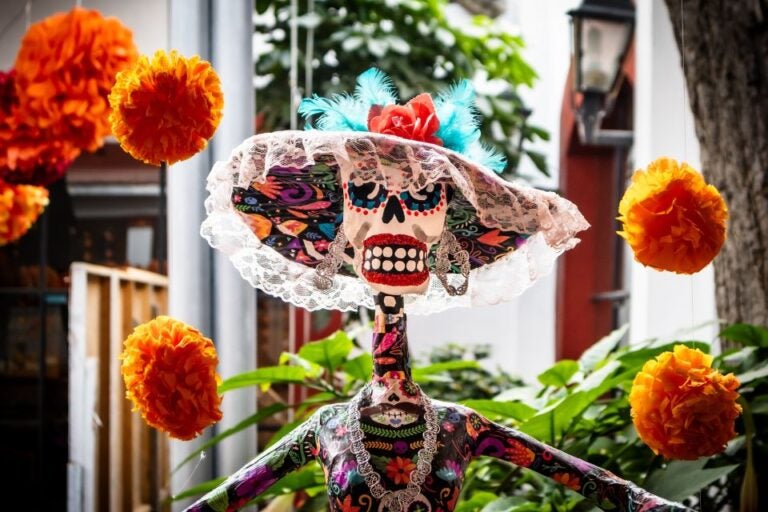
- Decorative sugar skulls (calaveras) represent the sweetness of life and individual spirits.
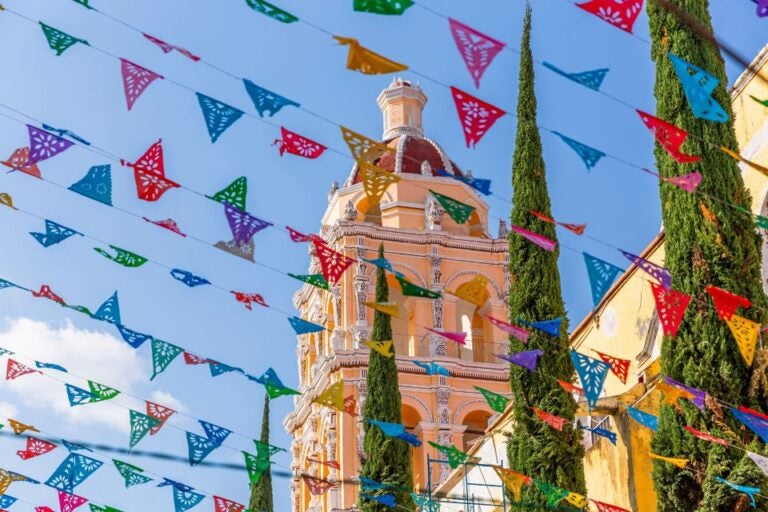
- Papel picado consists of colorful cut-paper banners that represent the wind and the fragility of life, while adding festive color and movement.
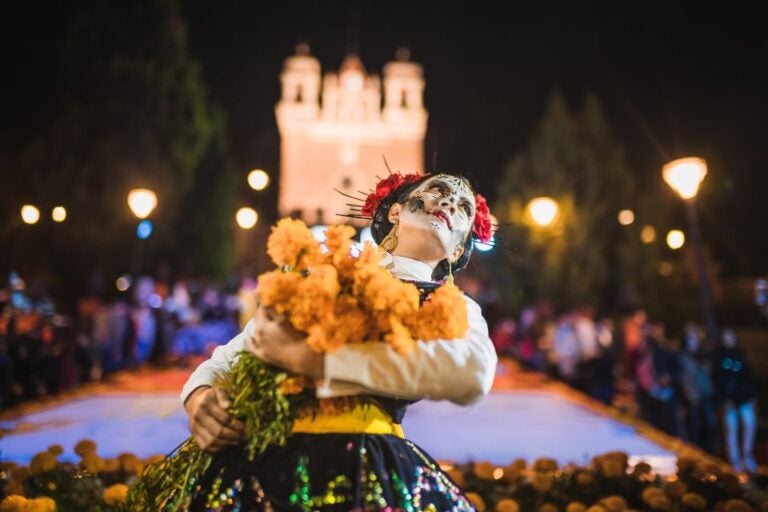
- Mexican marigold, known as cempasúchil, is the signature flower of the holiday. The bright orange-yellow color and strong scent guide spirits to the altar. Petals often form a path for the returning souls.
What color do you wear on the Day of the Dead?
There is no single required color to wear on the Day of the Dead. People often choose colors linked to the celebration depending on tradition, region, or personal preference:
- Orange and yellow: marigolds, the sun, and guiding spirits.
- Purple: mourning, spirituality, and grief.
- Red: blood, life force, and the warriors or women who died in childbirth.
- Pink: celebration and joy.
- Black: the underworld and the dead.
Many simply wear bright or everyday clothes, adding flowers, face paint, or accessories in these hues.
Where to celebrate the Day of the Dead in Mexico in 2026
Mexico is the heart of Día de los Muertos, offering the most authentic and widespread celebrations of this tradition each year. Attending this event is one of the best things to do in Mexico, especially if you are interested in culture and history.
The following destinations are known for deep cultural roots rather than tourist spectacles alone.
Mexico City
Mexico City hosts some of the country’s largest and most visible Día de los Muertos public celebrations. Visitors can enjoy monumental ofrendas (including the Ofrenda Monumental in the Zócalo), neighborhood altars, cultural activities, music, and processions.
- Cultural activities: The city transforms into a vibrant hub of street performances, art installations, concerts, and theatrical plays.
- Public altar displays: Neighborhoods, museums, and public plazas build elaborate altars (ofrendas) across the capital.
- Gran Desfile de Día de Muertos (Grand Parade): A world-famous procession showcasing floats, dancers, costumes, and giant skull puppets.
- Ofrenda monumental: A themed mega-altar installed in the city’s main square, the Zócalo, serving as a focal point for the festivities.
In 2026, the Gran Desfile takes over Paseo de la Reforma on Saturday, October 31, from 2pm, ending at the Zócalo, where the Ofrenda Monumental stands from October 29 to November 2. The Megaofrenda at UNAM’s university campus is another free highlight, open from October 31 to November 2.
Mexico City deserves more than a paragraph, so we’ve put together a full guide to Day of the Dead in Mexico City, with the best viewing spots, Xochimilco’s night boat rides, and how to get to Mixquic.
Oaxaca
Oaxaca is world-renowned for its deeply authentic and vibrant Día de los Muertos celebrations, rooted in centuries-old Zapotec and Mixtec heritage:
- Community-focused celebrations: Neighborhoods feature costumed street processions (comparsas) with brass bands and sand tapestries (tapetes de arena).
- Cemeteries and night vigils: Families hold nighttime vigils at historic graveyards, sharing meals and stories at candlelit graves.
- Markets and food traditions: Traditional markets sell marigolds, copal, sugar skulls, moles, and the best Mexico souvenirs.
- Ornate decorations: Oaxaca’s streets are decorated with sand tapestries, marigold arches, and altars.
While the official core days are fixed, visitors should expect local Oaxacan events to run for over a week surrounding those dates.
Other places to experience the Day of the Dead
Beyond Mexico City and Oaxaca, several other destinations offer distinct regional traditions:
- Michoacán (Pátzcuaro): It features Indigenous Purépecha traditions, lake processions, and candlelit cemetery vigils.
- Yucatán Peninsula (Merida): It observes Hanal Pixán (“Food for the Souls”), a Maya celebration with regional altars and underground-cooked dishes like mucbipollo.
- San Andrés Mixquic: This location is an excellent choice for a day trip from Mexico City, situated on the city’s southeastern outskirts. San Andrés Mixquic is famous for its November 2 “La Alumbrada” graveyard vigil, lit by thousands of candles.
Day of the Dead parades and events in 2026
The headline event is the Gran Desfile de Día de Muertos, which runs along Paseo de la Reforma to the Zócalo on Saturday, October 31, starting at 2pm. Expect huge floats, monumental catrinas, dancers and music, plus tributes to Mexican icons. Get to Reforma early if you want a spot near the front.
Two smaller parades are just as worth catching. The Desfile de Alebrijes Monumentales fills the streets with towering, brightly painted creatures on October 17. Then on October 25, thousands of people dressed as catrinas walk from the Ángel de la Independencia to the Zócalo in the Mega Procesión de Catrinas. Both are free to watch from the sidewalk.
- Public events: Large, festive spectacles on city streets designed for crowds and tourists, featuring floats, music, and costumes.
- Family observances: Reverent gatherings in private homes and local cemeteries centered on prayer, altars, and candlelit grave vigils.
Note: San Antonio, USA, hosts major Day of the Dead events, such as the River Parade and Muertos Fest.
How to experience the Day of the Dead respectfully
Visitors are welcome to participate in public celebrations, but it is essential to honor the holiday’s deep spiritual significance.
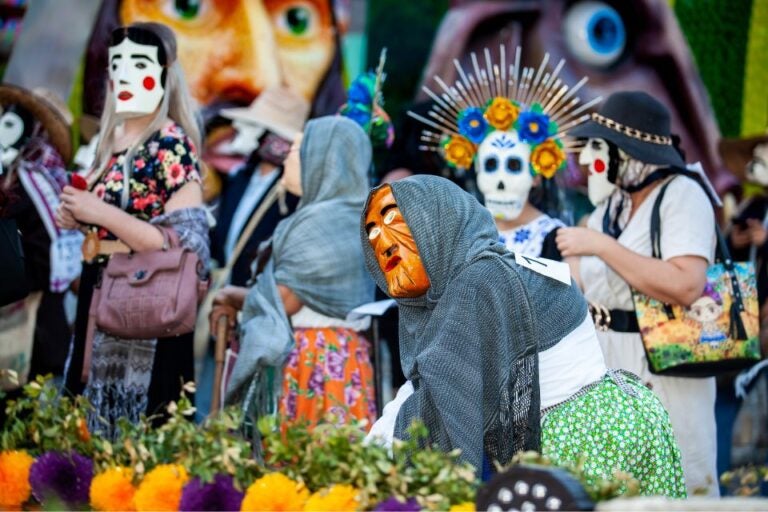
- Treat symbols like calaveras and Catrinas as meaningful traditions of remembrance, not Halloween costumes.
- Always request permission before photographing people, private family altars (ofrendas), or grave vigils.
- Do not enter non-tourist cemeteries, step on graves, or disrupt family gatherings without explicit permission.
- Practices, foods, and ceremonial attire vary significantly by region and community across Mexico.
Day of the Dead 2026 travel tips
Practical travel logistics for visiting Mexico City and Oaxaca during Día de los Muertos 2026:
- Book early: Book your hotel as soon as you can. Central Oaxaca and the streets near Reforma fill up fast, and this year the parade falls on Halloween weekend, which means even more visitors in Mexico City.
- Prepare for crowds: Expect heavy traffic, filled restaurants, and closed streets; build extra travel time into your day. Mastering transport in Mexico frees up more of your time.
- Plan for Mixquic: Planning to visit Mixquic on the night of November 2? Leave in the afternoon. Traffic out of the city gets slow, and many visitors book an organized tour to avoid the return trip in the dark.
- Stay central: Choose accommodations near key neighborhoods so you can walk to events.
- Pack smart: Bring comfortable walking shoes, light layers for cool nights, small cash, and a portable battery pack. Check the Mexico packing list for guidance on what you should bring.
- Sort out your data: Get mobile data set up before you land. With street closures and huge crowds, you’ll rely on maps and ride-hailing apps more than you expect. Compare your options, from buying a local SIM card in Mexico to roaming in Mexico with your home carrier, before you choose.
Stay connected during the Day of the Dead 2026
Day of the Dead means long nights in candlelit cemeteries, parade crowds along Reforma and late rides back to your hotel. That’s when a reliable connection matters most.
A Holafly eSIM for Mexico gets you online the moment you land, with unlimited data, 5G speeds, and 24/7 customer support. No hunting for a local SIM, no roaming surprises.
What’s more, every Holafly eSIM includes Always On: 1 GB of monthly backup data at no additional cost. It activates automatically as long as your eSIM stays installed, renews every month, and works in 150+ destinations. So if your main plan runs out on parade day, you can still find your way back through the crowds or share the ofrendas with family at home.

Peace of mind before you fly
Set up your eSIM before travel and get unlimited data on arrival.
Plans that may interest you

Formerly a travel journalist turned marketing copywriter, I found my way back to the travel world with Holafly—my dream company that made remote work possible. My motto? “Dream big and make it happen.” I’m passionate about writing, exploring the world, and staying active through walking, running, swimming, and hiking. I also love learning, reflecting, and connecting with inspiring minds.