







 Language
Brazilian food: what to eat in Brazil, according to a local
Explore the Brazilian food with recommendations from Pedro Guedes, a local who also explains how Brazilian food culture works.

Brazilian food is a must try, shaped by indigenous, African, and European influences, resulting in flavorful dishes such as brigadeiro, coxinha, churrasco, and feijoada.
Rio de Janeiro local and Holaflyer Pedro Correia Guedes shares his recommendations for eating like a local throughout this guide, from national staples to regional finds, along with where to eat them and how to find the best restaurants using a Holafly eSIM for Brazil.

One plan is all you need
Explore Brazilian cuisine with unlimited data that travels with you.
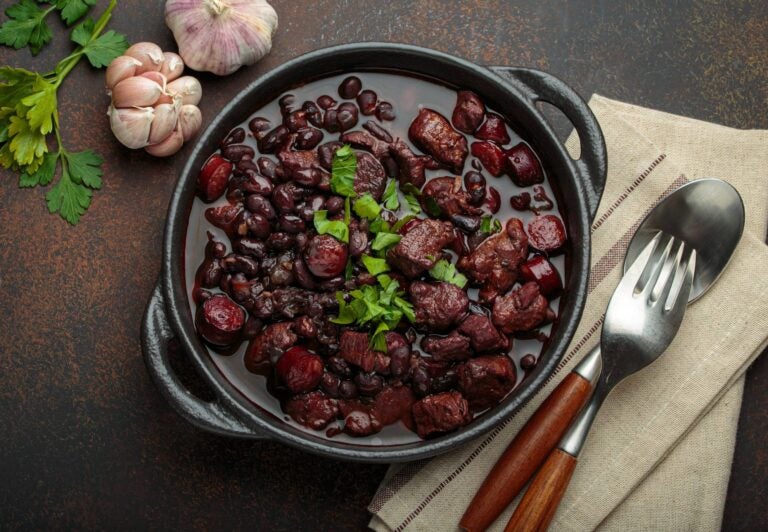
Feijoada
Feijoada is one of the most popular dishes in Rio, and it’s typically eaten on Saturday lunches, with Casa da feijoada and Academia de Cachaça being two go-to spots.
Here’s what Pedro tells us about this dish: “Feijoada is one of the most traditional dishes in Rio’s cuisine, made with assorted meats, rice, collard greens, farofa, and black beans.”
Feijoada is usually best eaten in local markets and family-owned restaurants, as this is a recipe passed down through generations to keep its original flavor.
Plus, there’s something important that Pedro tells us about feijoada: “Feijoada represents unity and tradition, often enjoyed during social gatherings.”
Churrasco (Brazilian barbecue)
For meat lovers visiting southern Brazil, eating at a churrascaria is an authentic experience.
This dish features skewered and grilled meats over an open flame, with picanha, linguiça, and frango as must-try cuts in Brazil, including beef, pork, and chicken.
Local churrascarias are the best option to try these, as the all-you-can-eat rodízio format is pretty popular and you usually spend less than when trying each cut on its own.
Caipirinha
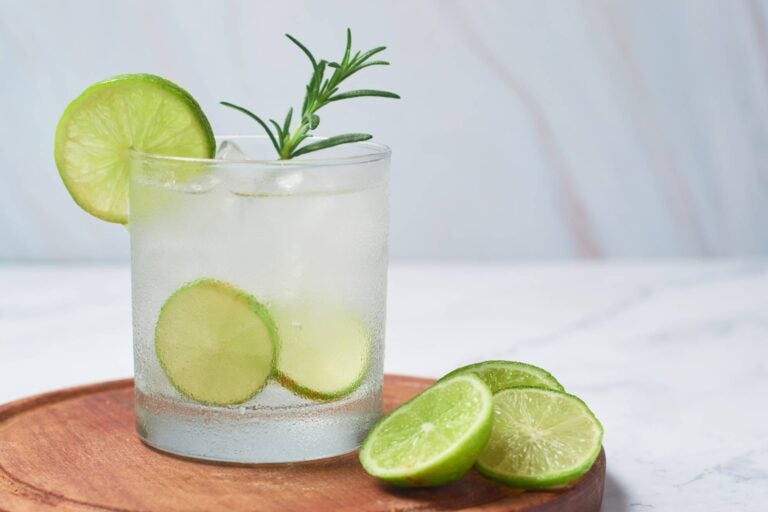
Caipirinha is one of the most popular cocktails worldwide, and the best thing about visiting Brazil is getting one that’s made with authentic local ingredients.
Here’s what Pedro tells us about it: “The caipirinha, made with cachaça, sugar, lime, and ice, is a must. It perfectly represents the local flavors, personality, and laid-back Brazilian lifestyle.”
Plus, a tip from Pedro is to get a Caipirinha with locally made cachaça, so flavors are more authentic for this non-negotiable drink to try when visiting Brazil.
Coxinha
Coxinha is one of Brazil’s most iconic street foods, and it’s hard to miss while wandering the streets of São Paulo.
These are teardrop-shaped, usually filled with shredded chicken, coated in breadcrumbs, and deep-fried.
But don’t worry, as coxinha is widely available across the country, and sometimes travelers will find variations in the ingredients, including potatoes and requeijão in some regions.
Moqueca
If you’re a seafood lover, moqueca is worth seeking out, and which version you get depends on where in Brazil you order it.
Both versions start the same way, with fish or shellfish stewed slowly alongside tomatoes, onions, garlic, cilantro, and lime, traditionally in a clay pot. The split comes down to the fat and the liquid.
Moqueca baiana, from Bahia, is the richer of the two. It’s built on dendê (palm oil) and coconut milk, which give it a deep orange color and a heavier body, and it usually includes bell peppers. This version carries a clear African influence.
Moqueca capixaba, from Espírito Santo, uses urucum (annatto) and olive oil instead, with no dendê and no coconut milk. The result is lighter and more broth-forward, and the color comes from the annatto rather than the palm oil. Its roots lean indigenous and Portuguese, right down to the handmade black clay pots from Goiabeiras.
Which one is better is a long-running argument between the two states, and both sides will tell you theirs came first.
Pão de queijo
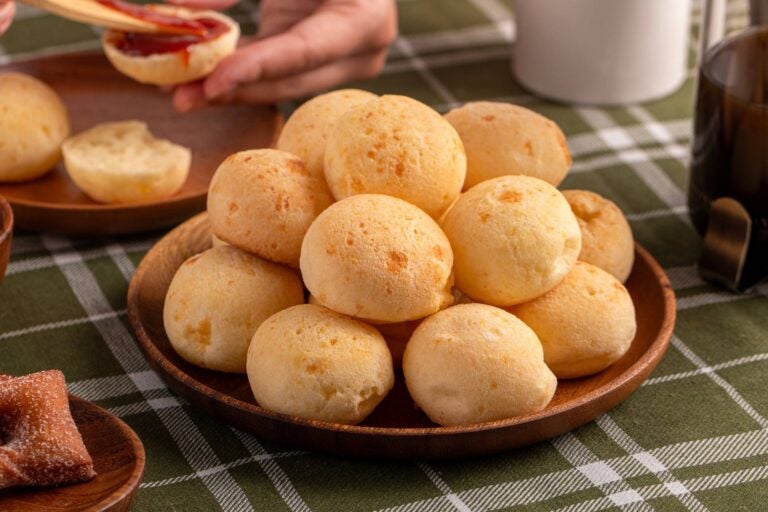
Visiting Minas Gerais and looking for a gluten-free Brazilian dish? Then it’s time to give pão de queijo a try.
These are chewy cheese rolls made with cassava starch, so there is no need to worry about gluten. They are eaten throughout the day as a snack or for breakfast, but you’ll surely end up craving more.
Brigadeiro
If you have a sweet tooth, Pedro points to brigadeiro as the local dessert to try first.
These are small balls made from condensed milk, cocoa powder, and butter, cooked slowly until the mixture pulls away from the pan, then chilled and rolled by hand. They turn up at nearly every Brazilian birthday party and wedding.
The chocolate sprinkles go on last, after the balls are rolled, and they keep the mixture from sticking to your hands as you shape it. Each one is then set in a small paper cup, which is how you’ll always be served them.
The name traces to the 1940s and Brigadier Eduardo Gomes, an Air Force officer who ran for president. His supporters sold the sweets at campaign rallies, and condensed milk was one of the few dessert ingredients easy to get in postwar Brazil. Gomes lost, but the name stuck.
In some places you’ll also find brigadeiro de colher, the same mixture served in a pot and eaten with a spoon.
Açaí
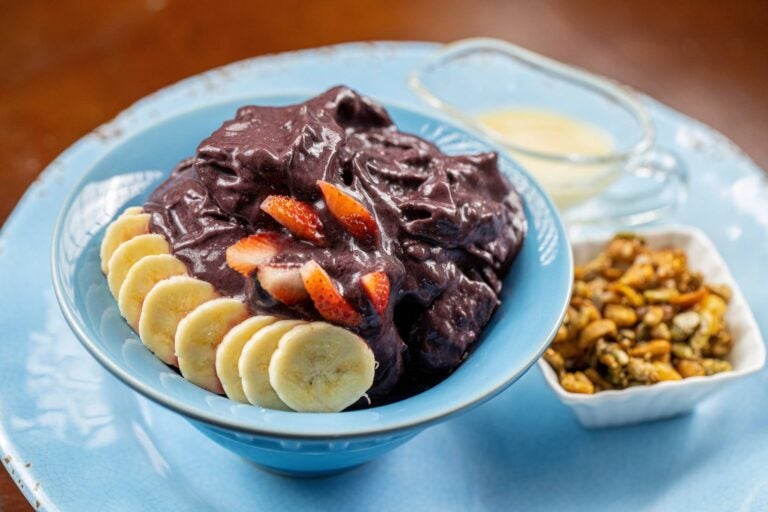
Açaí is a popular snack nowadays, and it’s pretty easy to find throughout Brazil, even though it comes in two varieties.
Pedro tells us this: “Açaí bowls actually originate from the Northern region of Brazil, although they became very popular in Rio.”
This is because in northern Brazil, in Pará and Amazonas, these are eaten in the traditional way, as savory, thick purple paste with tapioca, farinha, and shrimp, with little to no additional sugar.
In the southern and coastal regions, açai was adapted into a cold energy snack or cold dessert. This one is usually served with frozen pulp with guaraná syrup or sugar and includes fresh fruits and granola.
Quindim
Another sweet staple Pedro mentions is quindim, a baked custard you’ll find in bakeries across the country.
This dish made from just sugar, ground coconut, and egg yolks, and it’s served as an upturned cup with an intensely yellow, glossy surface. The coconut settles during baking, so you get two textures in one bite: a dense base and a smooth custard top.
The recipe descends from Portuguese convent sweets, where nuns used up the egg yolks left over after egg whites were used to starch their habits. The original version relied on almonds, which were scarce in colonial Brazil, so coconut took their place in the Northeast, where both coconut and sugarcane were abundant.
The name is thought to come from dikende, a word in the Kikongo language, reflecting the African hands that shaped the dish into what it is now.
Look for the ring-mold version too, called quindão, which is served in slices.
Prato feito (PF)
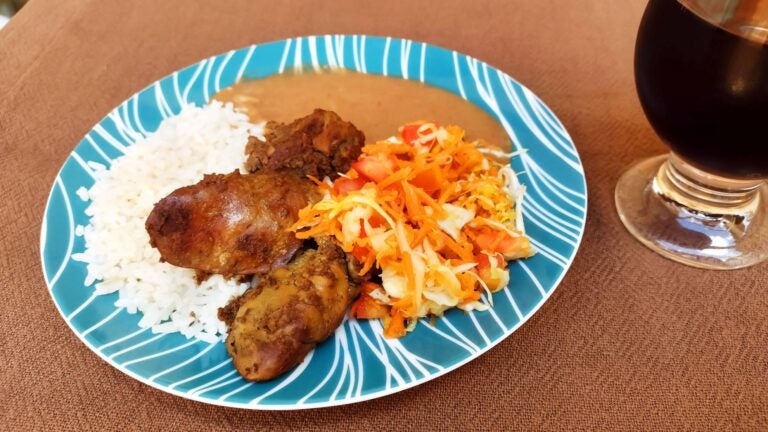
The prato feito, or just PF for locals, is the quintessential daily lunch plate across Brazil, with light variations depending on which region you’re visiting.
The traditional dish comes with rice, beans, protein, and salad, and Pedro mentions that this is the day-to-day food for many Brazilians, as it’s cheap, filling, and widely available.
As for variations, southeast prato feito is served with beef steak or breaded chicken, along with French fries and farofa. In the northeast, it’s served with sun-dried meat or goat with boiled cassava. Lastly, in the south, it’s usually served with grilled meats or sausages paired with potato salad.
So, if you’re traveling in Brazil from top to bottom, you can easily find different flavors of the same dish for an authentic culinary experience.
Honorable mentions
Still on the hunt for what to eat while traveling to Brazil? Here are additional recommendations, including insights from Pedro.
- Tapioca: A gluten-free crepe made from cassava starch, usually filled with savory or sweet ingredients, and perfect for breakfast or a street snack.
- Cachaça: A highlight from Pedro, with cachaça from small producers being a fan favorite as a drink or a souvenir from Brazil. It’s a distilled spirit made with fermented sugarcane juice.
- Coconut water and tropical fruit juices: Another key Brazilian food from Pedro, with graviola, caju, maracujá, and coconut being local favorites.
- Acarajé: A traditional Afro-Brazilian dish from Bahia. A deep-fried black-eyed pea dough filled with spicy vatapá. It has a religious and cultural significance in Candomblé traditions.
- Brazilian coffee: Another great, popular local product that’s worth trying when traveling and as a gift to take back home for coffee lovers.
Brazilian food culture: mealtimes, tipping, and dining out
Want to enjoy Brazilian food like a local? Here are some tips from Pedro that every traveler should add to their Brazilian travel guide.
- On mealtimes, Pedro recommends eating lunch between 12 and 2 PM, with dinner served from 7 to 10 PM. Lunch is the main meal of the day for locals.
- Regarding tipping, Pedro tells us that it is usually included in the 10% service charge. Extra tipping isn’t mandatory, but it’s welcomed when given good service.
- For an authentic dining experience in Rio, Pedro recommends Botecos, local bars in the Lapa and south zone that serve draft beer, bar snacks, and pork or mortadella sandwiches.
- As a recommendation for where to eat, Pedro recommends Lapa, plus Botafogo and Copacabana in Zona Sul for traditional Brazilian food.
- Holidays have their own special dishes. Pedro tells us that during Christmas, dishes such as roast turkey and rabanada (Brazilian-style French toast) are popular. During the June festivals, food changes to pamonha, canjica, and boiled corn.
Stay connected while eating your way through Brazil with Holafly
When visiting Brazil and looking for the ideal dish to eat, internet is a must as you’ll need to explore local botecos to find where to eat, check market opening hours for a traditional meal, or find the nearest açaí vendor for a refreshing snack.
Plus, Brazil is huge, so using an eSIM to get mobile internet will help you out on your food-hunting experience across the different cities.
That’s where the Holafly eSIM for Brazil becomes a great travel companion, offering unlimited data, 5G speeds, and flexible plans to explore every region of Brazil and its food.
Plus, you get the Always On perk, which gives 1 GB of backup data at no extra cost in case you’re hopping to Argentina, Uruguay, or Paraguay during your trip.
One plan is all you need
Explore Brazilian cuisine with unlimited data that travels with you.
Plans that may interest you

I first started my content creation journey as a freelancer in 2019, before connecting with Holafly in 2021. At Holafly, my travel and tech interests come together in one place as I craft high-quality articles about the eSIM and related markets. My content aims to help travelers stay connected, wherever they are.

