



In 2025, business travel looks very different from the world we left behind. Trips are fewer, but smarter. Teams are leaner, but better connected. And companies that once measured mobility in miles are now measuring it in moments: how fast, how safe, and how simple each one feels.
For years, corporate travel was treated as logistics: book a flight, approve a budget, file an expense report. Today, it’s strategy. Mobility has become a reflection of company culture, of how an organization supports its people beyond the office walls.
According to Holafly’s Global eSIM & Travel Report 2025–2026, eight in ten professionals now expect their employers to provide seamless connectivity before they travel. Connectivity isn’t a perk anymore. It’s the new infrastructure of work.
Speed, security, simplicity: the three pillars of a seamless experience
The report highlights a clear hierarchy of needs among business travelers: speed of connection, security of data, and simplicity of use.
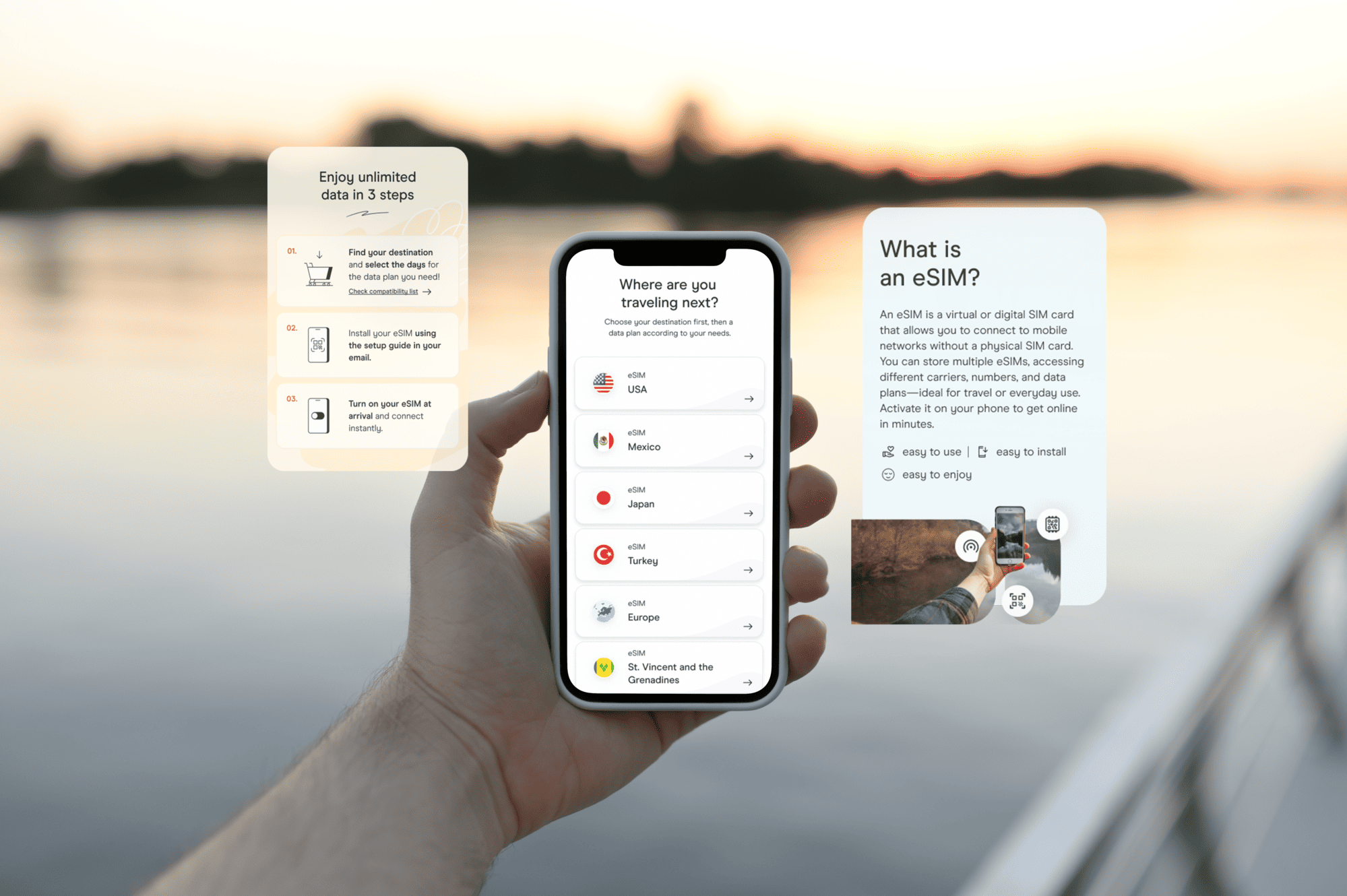
Price has slipped down the list. Travelers care less about saving a few euros on roaming and more about avoiding friction altogether. They want to land, switch on, and start working. No QR confusion, no SIM swap, no stress.
The lesson is straightforward: a frictionless experience isn’t about adding tools, it’s about removing effort. When technology works quietly, people work confidently.
The digital backbone of modern mobility
Every company today is, by definition, a digital company. Yet many still manage travel like it’s 2010. Employees find themselves chasing Wi-Fi passwords in airports, tethering devices, or juggling receipts for data reimbursements.
The report shows that 79% of business travelers already receive some form of connectivity support from their company, be it roaming packages, corporate SIMs, or eSIMs. But the gap between large and small organizations remains stark. Among enterprises with more than 500 employees, 83% provide digital connectivity; for smaller firms, that figure drops to 68%.
That difference isn’t just technical, it’s cultural. When a company invests in seamless travel, it’s making a statement: we trust you to move freely, and we’ve built the systems to support it.
Why empathy outperforms efficiency
The companies leading the next wave of mobility aren’t the ones with the biggest travel budgets. They’re the ones designing with empathy.
A true frictionless experience anticipates needs before they appear. It means pre-installing digital profiles so employees never worry about access. It means replacing complex approvals with clear, transparent processes. And above all, it means respecting people’s time as much as their productivity.
Business travel has always been a test of culture. In 2025, that test begins the moment an employee opens their phone abroad.
The future of corporate travel is invisible
The most advanced systems are the ones people barely notice. In the best-designed travel programs, connectivity simply works, it fades into the background, letting people focus on what they came to do.
That’s the heart of a frictionless digital experience: technology that feels human. Because when travel runs smoothly, work flows naturally. And that, more than any dashboard or metric, is how teams know they’re supported.