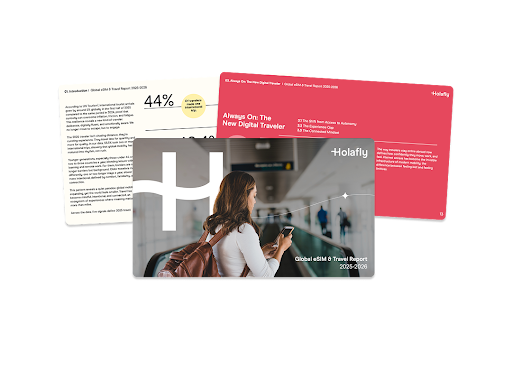



When it comes to innovation, true revolutions rarely happen overnight. Yet the latest Travel eSIM Report – Summer 2025 from Holafly suggests that mobile connectivity may be one of those exceptions.
Nearly one in five travellers (18%) used an eSIM for the first time this summer, and an extraordinary 95% said they would use it again. In an industry where repeat-use rates for first-time customers typically range between 15% and 45%, that level of satisfaction is almost unheard of.
“We see that many of our customers travel across borders, and nearly a quarter of eSIM users were on multi-country trips,” says Lidia (Yingyan) Hu, Co-founder of Holafly. “Because we know these travellers and their needs, we’ve created regional products like Europe or Asia packs, so they can move freely across the continent without changing their eSIM.”
From experiment to essential
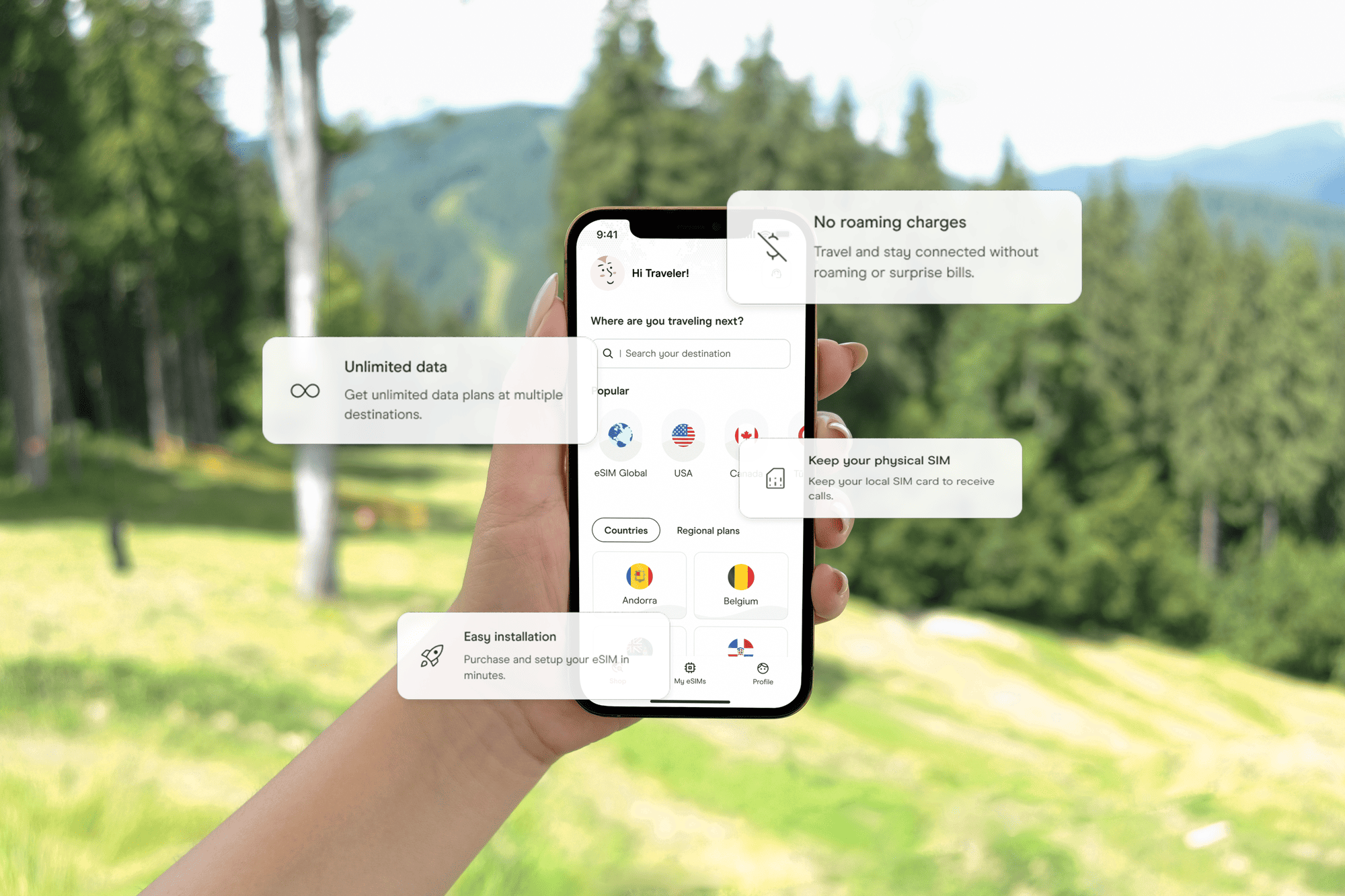
The report paints a clear picture of how rapidly behaviour is changing. Travellers praised the ease of activation, transparent pricing, and the peace of mind that comes from avoiding unexpected roaming fees. Most were online within minutes of scanning a QR code, confirming that simplicity is now the defining expectation for digital access abroad.
For those crossing multiple borders, eSIMs have quickly become indispensable. Among multi-destination travellers, 26% chose eSIMs, well above the global average. The reason is clear: flexibility. Switching networks mid-trip (impossible with a physical SIM) is a game-changer for those hopping between countries.
Loyalty from the very first click
In e-commerce, loyalty is hard-won. According to benchmarks cited in the report, first-purchase repeat rates rarely exceed 30%. By contrast, the eSIM’s first-time effect — with 95% of new users pledging to return — signals not only product satisfaction, but a deeper emotional connection built on trust, clarity, and control.
The data also reveal a strong generational skew: over half of eSIM users are under 35, underscoring how younger travellers see digital access as second nature. Older groups lag behind, mainly due to lower awareness and limited device compatibility, but even here attitudes are shifting fast as the technology becomes standard in new smartphones.
More than technology, a mindset shift
What makes the eSIM revolution remarkable isn’t just the tech, but what it represents. Travellers are no longer willing to choose between affordability and reliability; they expect both. And they value connection not only as a utility, but as an extension of freedom, a psychological safety net while exploring the unknown.
Holafly’s report concludes that eSIMs have moved from experiment to mainstream, redefining what “being connected” means for a global generation that refuses to compromise on simplicity or transparency.
As Lidia Hu puts it, “Travel today isn’t just about where we go, but how easily we can stay connected along the way.”