Language
Best places to retire in Thailand 2026: Honest guide for all budget
An honest, city-by-city comparison of the best places to retire in Thailand, covering cost, safety, healthcare, and lifestyle fit.

The best places to retire in Thailand depend on whether you prioritize healthcare, beach living, cultural experiences, or keeping monthly expenses manageable.
The country mostly appeals to retirees who want warm weather, affordable everyday living, excellent food, and access to established international communities. However, rising costs, air pollution in northern cities, and private healthcare expenses deserve attention before you commit.
This guide compares 8 retirement destinations by cost, safety, healthcare access, and lifestyle, helping US and international retirees narrow their options.
Best places to retire in Thailand at a glance
| City | Best for | Cost level | Risk factor | Amenity access |
|---|---|---|---|---|
| Chiang Mai | Culture and budget-conscious retirees | Low-Moderate | Seasonal air pollution | Strong city services and private hospitals |
| Bangkok | Specialist healthcare and convenience | High | Heat, traffic and air pollution | Thailand’s broadest hospital and transport network |
| Hua Hin | Quieter coastal retirement | Moderate | Heat and humidity during summers | Local hospitals, golf, markets and Bangkok access |
| Pattaya | Established international community | Moderate | Traffic and neighborhood differences | Private hospitals, shopping and entertainment |
| Phuket | Island living and international connections | High | Heat, monsoon and higher housing costs | Private healthcare, airport and international services |
| Koh Samui | Slower-paced island life | High | Rip currents, and tropical storms | Local services, markets |
| Chiang Rai | Lower-cost, quieter living | Low | Border vulnerability, and climate | Local services, markets, private hospitals |
| Udon Thani | Affordable provincial retirement | Low | Seasonal heat | Everyday services and regional healthcare |
Each place offers a different way to enjoy retirement. Here’s a closer look at the benefits, trade-offs, and costs of some of the best places to retire in Thailand for foreigners.
Best places to retire in Thailand: Top picks by lifestyle
The best places to live in Thailand for Americans, and foreigners in general, depend on what you want your everyday life to look like. Healthcare access, housing costs, social circles, and climate can sway your preferences.
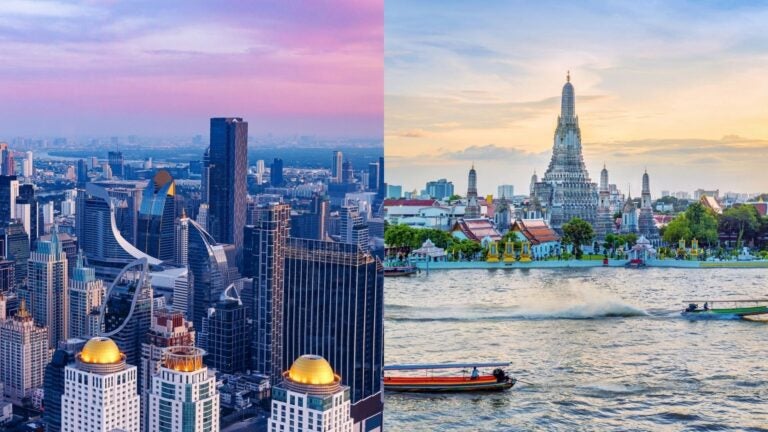
Chiang Mai: Best for culture and value
Chiang Mai will suit you if you want a cultural city with mountains, restaurants, markets, and an established international community. It’s a beautiful lower-cost alternative to Thailand’s larger urban and island destinations. A median condo listing price in Chiang Mai, should you choose to buy a house in Thailand, is ฿60,452 ($1,814) per sm. m. So, a standard 45 sq. m. condo in Chaing Mai will cost you approximately ฿2.72 million ($81,625).
Honest note: The trade-off is seasonal air pollution. Burning-season, where farmers use traditional slash-and-burn methods to clear crop residue for the next planting season, combined with seasonal wildfires sparked by dry weather, fill the region’s air basin with heavy smoke.
Bangkok: Best for healthcare and urban convenience
Bangkok’s a practical option for retirees who want access to major hospitals, international services, shopping, public transport, and frequent flights. It’s particularly relevant for people who anticipate needing specialist care.
Property prices are higher compared to smaller Thai retirement destinations. Apartments cost a median price of ฿167,000 ($5,010) per sq. m. But the city’s housing market varies substantially by location. For example, the median asking prices per square meter range from ฿134,035 ($4,021) in On Nut-Udomsuk to ฿209,090 ($6,273) in Silom.
Honest note: The trade-off is a more expensive and hectic daily routine. Traffic, heat, and air quality may also affect how comfortable the city feels to you.
Hua Hin: Best for a quieter coastal retirement
Hua Hin is known for its beach, golf courses, markets, and an established foreign-resident community. The city is also within driving distance of Bangkok, which can be useful for specialist medical treatment or international travel. The median price is of ฿86,710 ($2,601) per sq. mt. So, a standard 45 sq. m. condo in Hua Hin will cost you approximately ฿3.9 million ($117,036).
Honest note: Hua Hin experiences its hottest weather from March to May, with average daytime highs reaching 33-34°C (91-93°F). Plus humidity can make outdoor activities uncomfortable. So, retirees who are sensitive to heat should consider air-conditioning costs, and maybe spend time in the city during the hotter months before deciding to settle there.
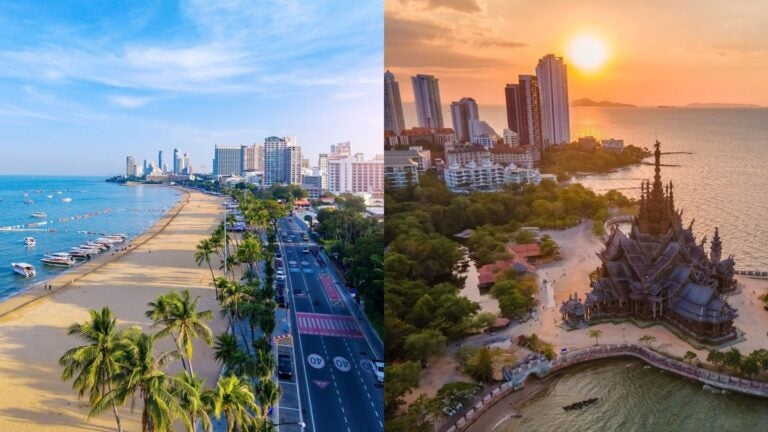
Pattaya: Established expat infrastructure
You’ll like Pattaya if you want access to restaurants, shopping, entertainment, and services catering to international residents. The city also benefits from its location in Chonburi, with access to healthcare and transport connections in the wider region. Golf enthusiasts can choose from several courses in the surrounding area, while local markets, cafés, and Thai cooking classes offer ways to stay active and meet people.
Pattaya has a range of apartment options for retirees, from more affordable properties in Jomtien to higher-priced homes near the beach. The median listing price is ฿70,623 ($2,119) per sq. m.
Honest note: Pattaya’s character and vibe changes drastically between neighborhoods. We recommend renting a place first to check the pulse of the neighborhood you intend to live in. Also, traffic, nightlife, and the level of tourism may not suit everyone.
Phuket: Best for island living with extensive amenities
Phuket’s the country’s biggest island and has wonderful beaches, international flight connections, private healthcare, and a wide choice of residential areas. Plus you can take a morning walk along Kata or Nai Harn Beach, play golf, enjoy cooking classes, local markets, cafés, and wellness centers, or even take boat trips to nearby islands. Or simply enjoy seafood by the coast.
The median listing price for buying property in Phuket is ฿96,310 ($2,889) per sq. m. Prices vary by area, with beachfront and popular west-coast locations commanding higher prices.
Honest note: The trade-off is the island premium, meaning some everyday costs are higher because goods and supplies have to be transported to the island. Some imported products, and certain services can therefore cost more. Consider the overall cost of living in Thailand before you make the move. Seasonal traffic and monsoon conditions in Phuket also deserve consideration
Koh Samui: Best for a slower life
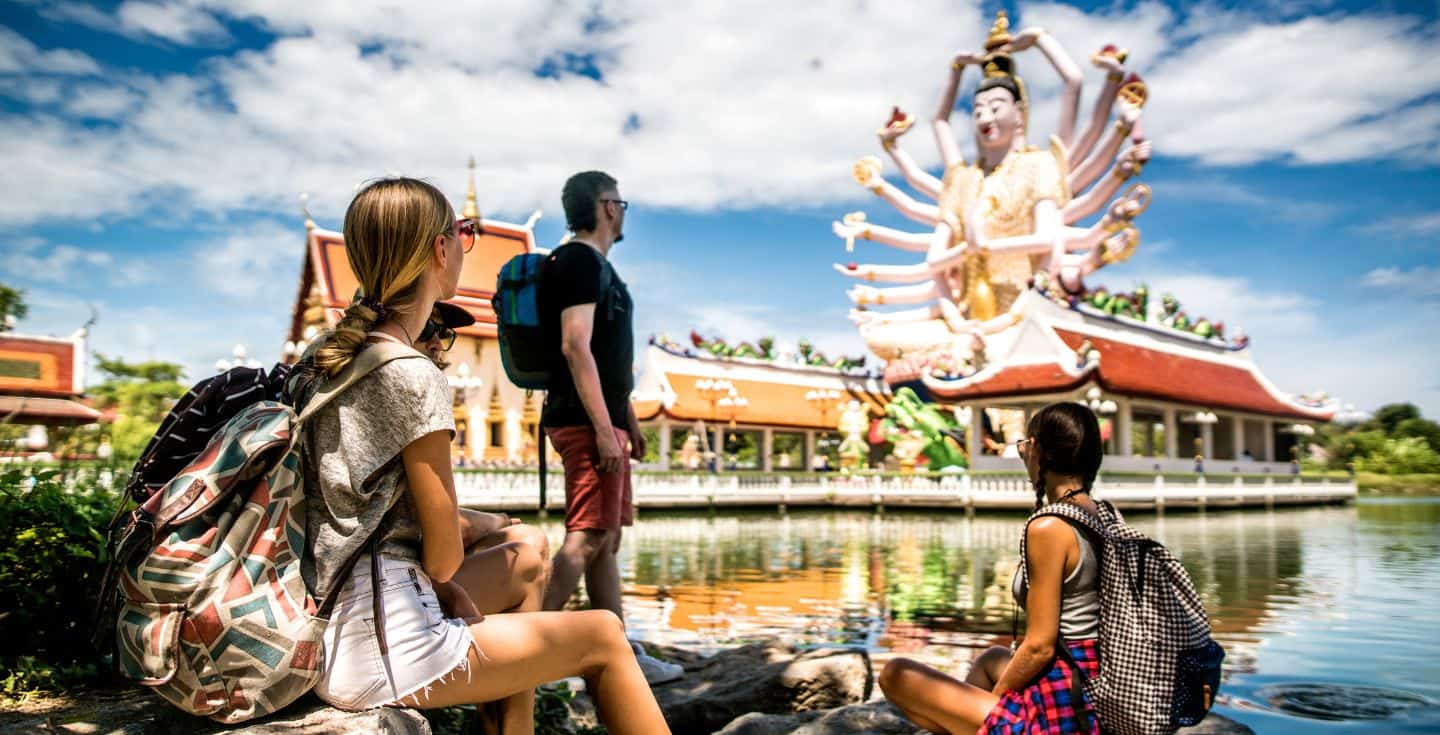
Koh Samui offers a lively tropical island environment without the pace of a major city. You can spend slow mornings at beaches such as Chaweng or Lamai, visit the Big Buddha and Wat Plai Laem, explore local markets, or take boat trips to Ang Thong National Marine Park. There are also plenty of opportunities for golf, yoga, snorkeling, and relaxed meals. The island’s slower pace appeals to retirees who prefer a more laid-back daily routine than life in Bangkok or Pattaya. And the median condo listing price is ฿61,884 ($1,857) per sq. m. in Koh Samui.
Honest note: Rip currents can make swimming dangerous at certain beaches in Koh Samui. And tropical storms bring heavy rain, strong winds, rough seas, and temporary travel disruptions. And while these risks are seasonal, they are worth considering before you retire in Thailand.
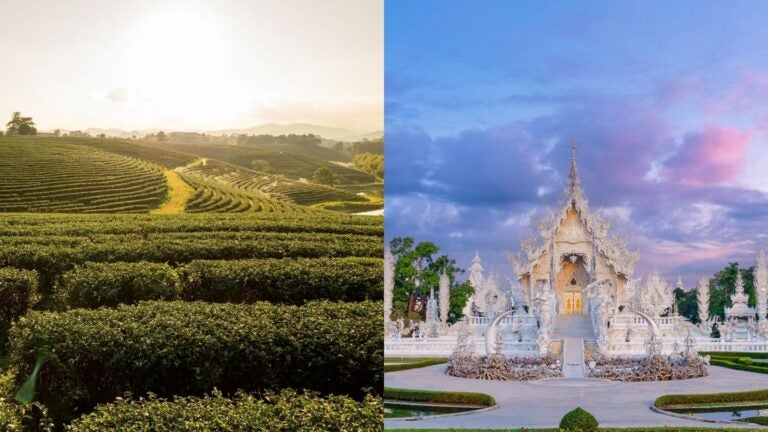
Chiang Rai: Best for a quieter, lower-cost lifestyle
Chiang Rai is worth considering if you prefer a smaller city with good basic infrastructure and services, and want lower living costs. The median condo listing price per square meter in Chiang Rai is ฿39,545 ($1,186), the lowest in this list so far. Daily life here is slower than in Bangkok or Chiang Mai, and you still have access to private hospitals, shopping centers, cafés, markets, and an airport.
Honest note: Chiang Rai’s location in northern Thailand means you should be aware of border-related disruptions. The province sits close to Myanmar and Laos, so developments across the borders can occasionally affect travel routes or create localized security concerns. For residents living in Chiang Rai city, this is not part of everyday life, but it’s still important to understand the geography before choosing a home.
Udon Thani: Best for provincial affordability
Udon Thani has a good setup with shopping, restaurants, markets, hospitals, an airport, and an established foreign-resident community. Plus the housing and daily expenses are lower than in Thailand’s major retirement hubs. You can keep active with an evening walk or bike ride around Nong Prajak Park, join the locals exercising around the lake, explore the Thai-Chinese Cultural Center, or take day trips into the surrounding countryside. History buffs can visit the UNESCO-listed Ban Chiang archaeological site, while nature lovers can head to Phu Phra Bat Historical Park or Wat Pa Phu Kon.
Udon Thani’s median condo listing price per square meter is ฿58,021 ($1,741).
Honest note: Udon Thani gets hot from March through May. Average daytime highs reach around 35°C (95°F). That may be manageable for retirees already accustomed to hot or humid climates, but someone moving from a cooler part of the US or Canada may need more time to adjust.
Can you retire in Thailand on a fixed income?
Yes, but where you live matters almost as much as how much you receive. A single retiree can live comfortably on a modest budget in Chiang Mai, Chiang Rai, or Udon Thani, while the same income can feel much tighter in Bangkok, Phuket, or Koh Samui. Housing is one of the biggest variables, and choosing local neighborhoods, eating mostly Thai food, and limiting imported goods can make a significant difference.
- A modest single retiree’s budget in Thailand can be around ฿35,000-45,000 per month ($1,050-1,350). A budget of ฿50,000-80,000 ($1,500-2,400) gives you more room for a modern apartment, regular dining out, transportation, healthcare, and leisure. A couple living outside Bangkok need roughly ฿60,000-100,000 ($1,800-3,000) per month for a comfortable lifestyle.
- If you own your home outright, a fixed pension can stretch further than it would while paying rent. You should also keep a separate reserve for international flights, unexpected expenses, visa-related funds, and healthcare. Thailand’s retirement visa requirements involve at least ฿800,000 ($24,007) deposited in a Thai bank account held for at least 2 months prior to applying, and 3 months prior to annual renewals. So that money should not be treated as part of your normal monthly spending budget.
- Private healthcare is widely used by foreign retirees, but insurance costs rise considerably with age. Current estimates put comprehensive international coverage for a healthy 65-year-old at roughly ฿165,000-231,000 ($4,950-6,930) per year.
Why Thailand is still worth considering for retirement
Thailand offers a range of lifestyles within one country. You can choose a large city with major hospitals, a quieter coastal town, a cultural hub, or an island community.
- Healthcare is also an important part of the decision. Major cities such as Bangkok, Chiang Mai, and Phuket have established private healthcare options with access to advanced treatments and procedures.
- Thailand has several long-stay options for retirees, although the requirements differ by visa category and can change.
- Transportation in Thailand is great depending on where you live. Bangkok has an extensive public transportation network, including the BTS Skytrain, MRT, buses, and taxis. In smaller cities and coastal destinations, you’ll have to rely on motorbike taxis, songthaews, ride-hailing apps, or private cars.
- Finally, Thailand gives you plenty of ways to stay active and socially engaged. Depending on the destination, that could mean joining a golf club, taking Thai cooking classes, attending cultural events, exploring temples, or spending time at the beach. If you want to drive around Thailand, there are several amazing road trips you can take around the country.
What to consider before retiring in Thailand
- Healthcare facilities and costs should influence your city choice from the beginning, not as an afterthought. Private hospitals in major cities provide international services, but treatment costs and insurance coverage vary. If you want to choose a smaller city or island, you should identify where you would go for complex treatments and how you would travel there.
- Thailand’s climate is not identical everywhere. Northern cities offer a different seasonal experience from the southern islands, while coastal areas can be hot and humid for much of the year. Spend time in your intended city during the season you find most difficult before shifting there.
- Consider how you will access groceries, pharmacies, banking, and transport. If you do not speak Thai, identify where language assistance is available and learn essential phrases for appointments and emergencies.
Stay connected wherever you go with Holafly
Before committing to retirement in Thailand, you may want to spend a week exploring potential destinations, comparing neighborhoods, viewing properties, and getting a feel for everyday life. An eSIM for Thailand will help you stay connected during this time, whether that’s for using maps, contacting accommodation providers, checking transport options, or staying in touch with family.
If Thailand feels like the right fit and you decide to stay for several months, Holafly Plans offers connectivity across 160+ destinations.
You can choose between the Unlimited and Light plans, depending on how much data you need for everyday activities, communication, and travel. Unlimited also includes a local US, UK, or Canada number, which can help you stay reachable and manage services back home. Both Holafly eSIMs and Plans include Always On, providing 1GB of free backup data every 30 days for essential tasks when your main data plan is no longer active.

FAQ: Best places to retire in Thailand
What is the official website for Thailand retirement visas?
The official source for Thailand retirement visa information is the Thai e-Visa website, operated by Thailand’s Ministry of Foreign Affairs. It provides information on retirement visa requirements, eligibility, and the application process.
What is the best place to live in Thailand with a family?
Bangkok, Chiang Mai, and Hua Hin are the places families can consider. Bangkok has the widest selection of international schools, hospitals, shopping, and family activities. Chiang Mai offers good schools and lower living costs, while Hua Hin has a smaller-city lifestyle with beaches, everyday amenities, healthcare and good schools.
What are the best places to live in Thailand for Black families?
Bangkok, Chiang Mai, Phuket, and Hua Hin all have established international and expat communities that Black families can explore. Bangkok offers the largest and most diverse urban environment, while the other cities provide different combinations of schools, healthcare, housing, and community life. Because experiences can vary by neighborhood and individual circumstances, you can spend time in a prospective location and connect with local Black and international communities before relocating.
What are 21 reasons not to retire in Thailand?
Thailand may not suit everyone because of its hot and humid climate, seasonal air pollution, language barriers, healthcare and insurance costs, traffic, distance from family in the US, and travel logistics in more remote or island locations. Imported goods can also cost more, and some may find adjusting to local systems and cultural differences challenging.
Plans that may interest you

With an MBA degree I used to put to good use in another life, I now write for both passion and profession! When not writing, I'm exploring the world, collecting stories and souvenirs along the way.