







 Language
How to retire in Thailand: Complete guide for expats
Fulfil your dream and find out how to retire in Thailand! We explain the requirements, visas and the best areas to live in.

After a lifetime of work, it’s time to choose the right place for endless holidays. Therefore, more foreigners retire in Thailand every year and enjoy a high quality of life at affordable prices. However, before making this decision, you should understand several key aspects that will help you plan everything more safely.
Throughout this article, we’ll explain the main advantages this destination can offer. In addition, we’ll cover the legal requirements, the visa type required and the best areas to settle down. So, if you’d like to enjoy retirement in an exotic destination with great weather and food, keep reading because Thailand could suit you perfectly.
Benefits of Retiring in Thailand
One of the main reasons why retiring in Thailand makes an excellent decision is its combination of highly valued lifestyle factors. In this Southeast Asian country, you can enjoy paradise beaches, historic temples and a welcoming culture with a slower pace of life. Below, we’ll show the main benefits that make Thailand the perfect place to enjoy retirement.
1. Affordable cost of living
One major reason is the low cost of living in Thailand compared with most European countries. As a result, many retirees maintain a high standard of living with average income levels. Here, you can live comfortably from €1,000 ($1,176) monthly, covering rent, food, transport and leisure expenses. For example, you can find apartments in central Bangkok from €391 ($460) and from €213 ($250) in less touristy areas.
2. Warm weather all year
If you live in a country with frequent grey and cold days, retiring in Thailand means enjoying a tropical climate all year, with temperatures between 25 °C and 35 °C. Imagine spending time outdoors during every season while walking and staying active. Furthermore, if you live in Phuket or Krabi, you’ll enjoy ideal weather for swimming and maintaining a healthy lifestyle.
3. Leisure and nature options
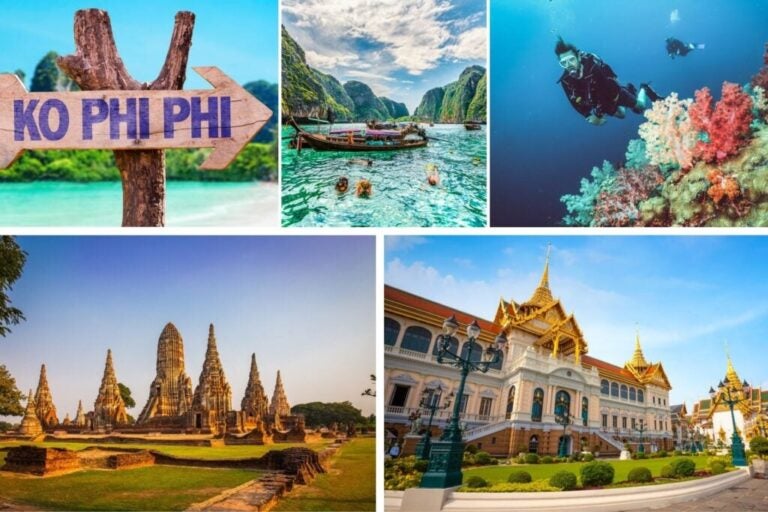
When living in Thailand, you can explore the country slowly, enjoy nature and join many leisure activities. We already mentioned Phuket and Krabi’s paradise beaches, including Patong Beach, where you can dive, sail or snorkel. Meanwhile, if you prefer cultural experiences, Chiang Mai offers historic temples like Wat Phra That Doi Suthep, located on the mountain. You can also shop and dine in Bangkok’s best restaurants.
4. Outstanding cuisine
Retiring in Thailand also means discovering a different culture and cuisine. Some globally famous dishes include Pad Thai rice noodles, green curry and mango sticky rice, a popular dessert with rice, coconut milk and fresh mango. You’ll taste intense and varied flavours in one dish, including sweet, salty, sour and spicy notes. Best of all, a meal costs between €2.00-5.00 ($2.35-5.88) in a local market.
5. Large expatriate community
Cities like Chiang Mai, Bangkok and Pattaya have large international retirement communities. Therefore, you can make friends, communicate in English and adapt much faster. These communities often organise meetings, group activities, workshops and excursions.
6. High-quality healthcare system
Finally, healthcare remains an important factor when considering retirement in Thailand. Having a trusted hospital nearby matters greatly in a foreign country. In this case, Bangkok and Phuket offer high-level private hospitals prepared for international patients, with lower prices than Europe or the US, including Bumrungrad International and Bangkok Hospital.
What Are the Requirements For Retiring in Thailand?
To retire in Thailand, you must meet several legal conditions. Some requirements relate to entry permits, your financial situation and private health insurance. Below, we’ll explain everything in more detail so you can understand whether you qualify for a long stay in this country.
1. Visas for retiring in Thailand
The main requirement for retiring in Thailand involves obtaining a retirement or long-stay visa. In addition, you must be at least 50 years old, hold a passport valid for one year and provide a clean criminal record certificate. You should respect immigration rules, keep documents updated and renew them when necessary. These visas are currently available:
- Non-Immigrant O Visa: Allows stays of up to 90 days for people over 50 with monthly income of €1,716 ($2,013).
- Non-Immigrant O-A Visa: This standard retirement visa suits people over 50 and allows one-year renewable residence. You must show monthly income of €1,716 ($2,013) or a bank deposit of at least €21,131 ($24,798).
- Non-Immigrant O-X Visa: This long-term visa allows you to live in Thailand between five and ten years. This permit requires a fixed-term deposit of €31,697 ($37,198).
- Elite Visa: This paid visa costs between €21,728-63,907 ($25,500-75,000) and allows residence for up to 15 years. In addition, you’ll receive benefits like hotel discounts, VIP lounge access and relocation assistance.
2. Mandatory health insurance
To apply for a retirement visa, you must purchase health insurance in Thailand with minimum coverage of €10,565 ($12,398). This insurance covers consultations, tests, emergencies and hospital stays more efficiently through the private system. Foreigners without local contributions can’t access public healthcare and, moreover, private healthcare works far better.
3. Bank account and residency
After establishing residency in Thailand, you must register your local address, report any changes and open a bank account to manage administrative procedures. For example, you’ll need it for apartment rentals and essential utilities like water, electricity and internet services.
4. Economic solvency
The Thai government grants retirement visas to foreign citizens who can prove monthly pension income of around €1,716 ($2,013) or a bank deposit of at least €21,131 ($24,798) in a Thai account. However, these amounts may vary according to visa type and current regulations.
What Are The Best Areas for Retiring in Thailand?
Retiring in Thailand also means choosing the best area to live according to your lifestyle. Some cities offer peaceful seaside living, others provide cultural experiences surrounded by nature, while urban areas keep services nearby. Ideally, spend time in each location first so you can experience daily life directly. Here are some favourite cities among foreign retirees:
- Chiang Mai: Popular for its peaceful atmosphere, lower living costs, cultural activities and less touristy lifestyle.
- Phuket: Perfect if you want seaside living near famous beaches like Kata or Karon Beach. However, living costs remain higher because of tourism.
- Hua Hin: Preferred by British, Scandinavian and European retirees because it’s quieter, safer, close to Bangkok and well developed.
- Pattaya: Offers easy Bangkok access, affordable prices, modern apartments and an active social life.
- Bangkok: Ideal for urban lifestyles with shopping centres, international restaurants, transport links, hospitals and airports.
Tips Before Deciding To Retire in Thailand
Before making such an important decision about retiring in Thailand, you should analyse several aspects carefully. These factors will help you avoid mistakes and adapt better to life in a foreign destination. Therefore, we’ve prepared several useful tips that you can apply months before relocating.
1. Visit the country before relocating
If you believe retiring in Thailand sounds appealing, you’ve probably already visited as a tourist and loved it. Otherwise, we recommend spending between one and three months there first to understand the culture, adapt to the climate, food and explore different cities. This experience will show whether the lifestyle suits you.
2. Learn about expatriate communities
You can search social media groups or expatriate forums in Thailand, where you’ll meet other retirees who can guide you, answer questions and help you build new contacts. These connections will help you integrate much faster. After all, nothing beats advice from someone who already completed the entire relocation process.
3. Travel with global internet connectivity
Arrive in Thailand and activate your eSIM within minutes, without relying on unstable public WiFi networks.
Holafly Plans provides coverage in more than 160 destinations through a flexible monthly subscription. You can choose the Unlimited Plan for unlimited data or the Light Plan with 25 GB, with hotspot access included in both. There is no long-term contract, so you can cancel whenever your travel plans change. The Unlimited Plan also includes a local US, UK, or Canadian number for receiving bank confirmations and verification codes abroad.
Every plan also includes the Always On benefit, with 1 GB free forever across more than 70 countries, which activates after subscription cancelation or during emergencies. For a single trip, a Thailand eSIM offers a simple way to stay connected from the moment you arrive.

4. Analyse your long-term financial situation
Choose the right visa according to your long-term financial situation. Earlier sections explained the financial requirements for retirement visas. Make sure the conditions you currently meet will remain stable for at least another year, so you won’t face problems renewing your visa or paying rent.
5. Use tools that simplify your adaptation
You don’t need to manage everything alone. In fact, working with a company or specialised agent that helps expatriates settle abroad often makes relocation easier. Some well-known local agencies include Thai Visa Centre and The Visa Expert. They can advise you about housing, recommended areas, visas and opening bank accounts.
Frequently Asked Questions About Retiring in Thailand
To qualify for one of the Thai government retirement visas, you must be at least 50 years old.
No, it’s much cheaper than most European countries. You can live comfortably with monthly pension income between €1,000-2,000 ($1,176-2,353), depending on your city and lifestyle.
No, retirement visas don’t allow employment. If you want to work legally in Thailand, you must apply for a work visa.
Thailand is generally safe, although you should choose good areas like Phuket, Chiang Mai, Hua Hin, Bangkok or Pattaya, where established international communities already exist.
You can buy a property in Thailand, although restrictions apply because foreigners can purchase condominiums, but not houses with land.


