







 Language
Where not to stay in Madrid: The best tips to travel safe!
To ensure that your visit to Madrid is a relaxing and well-planned experience, here are the areas of the city where you should avoid staying.

When planning a trip to Madrid, choosing the right neighborhood can make a big difference. While most areas are perfectly fine for visitors, some are less convenient for sightseeing, transport connections, or overall atmosphere. In this guide, we’ll look at the areas that are generally less suitable for tourists and explain why.
We’ll also share some alternative neighborhoods that may offer better public transport connections, be closer to major attractions, or provide amenities that better suit your travel style. Read on, and by the end, you’ll be much closer to deciding where to stay in Madrid.
What should you consider before choosing a place to stay in Madrid?
We’ll guide you through the most important things to keep in mind when looking for accommodation in Madrid, so you can choose the area that best fits your travel style, needs, and budget.
1. Safety
Madrid is widely regarded as a safe destination, but the level of comfort can vary from one neighborhood to another. In tourist hotspots like Sol, Gran Vía, and the La Latina market area, pickpocketing is the main issue visitors should be aware of. While petty theft does occur, violent crime against tourists is uncommon.
Some streets in Lavapiés and around Plaza de Topete may feel less welcoming because of visible homelessness and occasional drug-related activity. Although these factors can make the area seem unsafe, serious crime is relatively rare.
2. Actual distance and topography of Madrid
When planning your stay in Madrid, don’t judge locations by Google Maps distances alone. Madrid has more hills than many visitors expect, especially around areas such as La Latina and Lavapiés, so walking times can be longer than they appear on a map.
3. Public transport and connectivity
Madrid’s public transport network is extensive and reliable, providing easy access to the city center, surrounding neighborhoods, and nearby towns. When choosing where to stay, it’s worth checking what transport links are available nearby so you can easily reach different parts of the city.
Staying near major transport hubs such as Sol, Atocha, Nuevos Ministerios, or Chamartín can save you a lot of time, especially if you plan to explore different parts of the city or take day trips.
4. Impact of ZPAEs on the daytime and nighttime environment
Madrid is known for its active nightlife, which means some areas can be noisy late into the night. Because of this, the city has marked certain neighborhoods as Special Acoustic Protection Zones (ZPAE), including the city center, Chueca, Malasaña, and Trafalgar.
In these areas, it can be harder to get a good night’s rest, especially if your accommodation doesn’t have properly soundproofed windows. You may be better off looking for a place to stay in quieter, more residential neighborhoods.
5. Local services
There’s a clear difference between staying in a busy tourist area and staying in a more local Madrid neighborhood. In the latter, you’ll find everyday shops and generally much cheaper prices.
Check whether the area has a traditional food market, like the ones in Chamberí, Antón Martín, or Maravillas. You’ll also find better prices on a wide range of products at local supermarkets such as Mercadona, Alcampo, or Carrefour.
6. Mobility restrictions (Madrid Central / Central District)
If you’re planning to rent a car to get around Madrid or nearby areas, the main thing to check is whether your accommodation has parking or if there’s a parking lot nearby.
Also, make sure your vehicle has a zero-emissions environmental sticker, since the entire Central District of Madrid is a Low Emission Zone (ZBEDEP), and you could be fined. If that’s the case, it’s better to choose accommodation in neighborhoods outside this restricted area.
Areas to avoid in Madrid
Madrid is a safe city with a well-developed transport system. That said, some neighborhoods are quite far from the main tourist areas, which makes them less convenient for many visitors to stay in. Here are those areas:
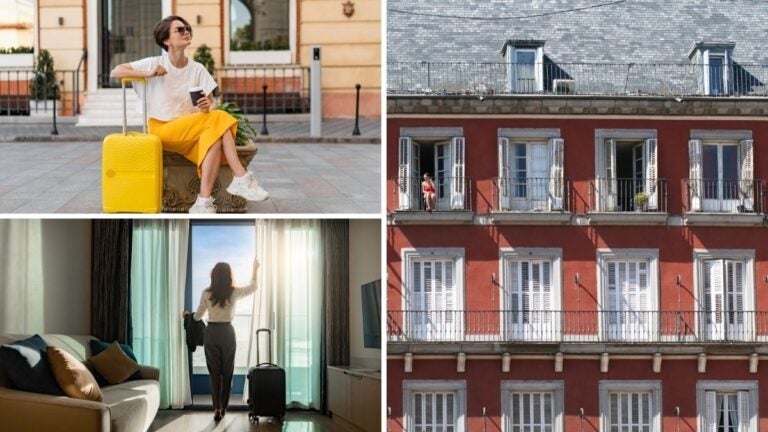
1. Lavapiés
In some areas near the main square and on certain side streets, some visitors may feel less safe, especially at night.
It’s not a high-crime area, but you’ll often see groups of people on the streets late at night, which some travelers may find uncomfortable.
In terms of location, it’s a great base for tourists, since it’s just a 10-minute walk from places like Puerta del Sol or the Reina Sofía Museum. However, some of its narrow streets can feel crowded throughout the day due to the high number of people passing through.
It’s also worth keeping the neighborhood’s nightlife in mind, as bars, terraces, and cultural venues often stay busy until late at night.
2. Puente de Vallecas
Puente de Vallecas is located southeast of central Madrid and tends to offer more affordable accommodation than the tourist areas. However, its main drawback is that it’s a mostly residential neighborhood, with few services geared toward visitors.
Even though it’s connected by metro stations like Nueva Numancia, Portazgo, and Buenos Aires, getting to major spots such as Sol, Gran Vía, or the Royal Palace can take around 20 to 35 minutes.
Depending on where exactly you’re staying, you may also need to combine the metro and bus to reach certain places you want to visit.
During the day, some areas are quite busy and commercial, but at night there aren’t many tourists around. This doesn’t mean it’s unsafe. It’s just not very popular with younger visitors or people staying for a short trip.
3. Usera
It’s quite far from Madrid’s main tourist spots. From Usera, it takes about 25 to 40 minutes to get to Sol or Gran Vía by public transport. Getting around from here every day can feel tiring if you plan to visit a lot of sights in one day.
The area is mostly residential and commercial, so it’s busy during the day but very quiet at night. If you already know the city and are staying for a longer period, it can be a good place to stay.
Best neighborhoods to stay in Madrid
Now that you know which areas are less ideal to stay in Madrid, here are some better options that suit different types of trips to the Spanish capital.
1. Sol and the Historic Center
Sol is the very heart of Madrid and one of the most convenient places to stay if you’re visiting the city for the first time. From here, you can walk to many of the main landmarks, squares, and shopping streets, making it a very central and practical base.
The city centre offers a wide range of restaurants, shops, museums, and nightlife. It also has excellent metro links and a commuter train network (Cercanías), making it easy to get anywhere in the city.
This area is especially suitable if you want to be close to everything and make the most of your time, especially if you’re staying for a short visit and don’t mind a busy, fairly lively (and sometimes noisy) area.
2. Gran Vía
Gran Vía is one of Madrid’s main streets, with theatres, shops, and plenty of places to stay. It’s a great area for sightseeing, shopping, and going out, with historic buildings, stores, and bars for tapas with friends.
It’s especially good for younger travelers or anyone who wants a lively atmosphere, even at night. It can also save you time and money since you won’t need transport to reach the main tourist sights.
3. Malasaña
It’s one of the most modern and creative neighborhoods in Madrid, with streets full of cafés, alternative bars, independent shops, and cultural spaces that showcase the city’s local art scene.
Its location makes it a strategic area to stay in, as it not only offers things to see and do, but is also well connected to central Madrid. In just a few minutes, you can reach places like the Templo de Debod, Plaza de España, or the Royal Palace and the Almudena Cathedral.
It’s also a great option because the area is safe, and you can enjoy Madrid’s nightlife, go to cultural events, or simply walk around its streets at a relaxed pace.
As for noise, it’s worth keeping in mind that the area is popular with both locals and tourists, so bars, cafés, and restaurants often stay open late. If you’re planning to rest early, the noise might be a factor to consider.
4. Retiro
If you’re looking for a quieter stay in Madrid, Retiro is a great choice, as it has several advantages. One of the main ones is its close access to El Retiro Park, where you can go for walks, relax, exercise, row on the lake, and even enjoy cultural activities.
It also has a location that allows for a peaceful night’s rest, as it’s away from the busiest shopping and entertainment areas. During the day, you’re just a few minutes from some of Madrid’s most important spots, such as the Prado Museum, the Thyssen-Bornemisza Museum, and Atocha station.
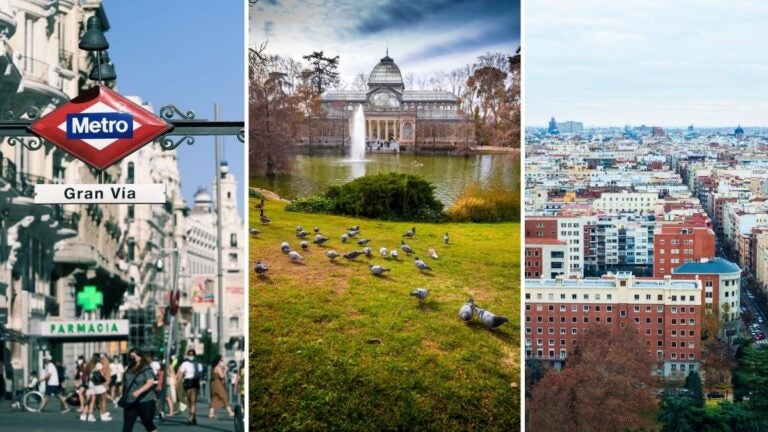
How can you get internet access during your stay in Madrid?
To stay in touch with your host or hotel in Madrid, it’s essential to have a reliable internet connection. It will also help you get around the city, book transport, or simply keep yourself entertained while traveling.
Holafly offers monthly subscription plans with 25 GB or unlimited data that you can set up to stay connected in over 160 destinations. You can also use your phone as a hotspot to connect your laptop or tablet.
Another benefit is access to Always On, which gives you 1 GB of free data every month so you can stay connected in over 70 countries. It also helps you handle emergencies even if you’ve run out of data or canceled your plan.

Frequently asked questions about where not to stay in Madrid
Most neighborhoods in Madrid are safe. However, areas like Villaverde, Usera, Puente de Vallecas, and the outskirts of Carabanchel tend to be further away, which can be inconvenient if you’re only staying in the city for a few days.
It’s a good option if you’re in Madrid for a long layover or business, but for tourism it’s more convenient to stay in areas better connected to the main sights, such as Gran Vía, Malasaña, or Retiro.
It mostly depends on how long you’re staying in the city. For short visits, it’s best to stay in the centre (like Gran Vía or Retiro) so you’re just minutes away from many of the main landmarks and attractions. If you’re staying longer, though, it can be worth looking a bit further out to find better accommodation deals.
Retiro and Chamberí are among the best areas for families to stay in. They offer a calmer atmosphere, good transport links, and are still close to Madrid’s main tourist attractions.
Plans that may interest you


Hi! I'm a Spanish-English copywriter working with Holafly, helping bring travel content to life for curious travelers. As a digital nomad with a passion for exploring, I'm always adding new spots to my bucket list. If you love to travel like me, stick around because you're in the right place to find inspiration for your next trip! ✈️🌍
