







 Language
Where not to stay in Istanbul: The best tips to travel safe!
These are the areas in Istanbul where you should avoid staying due to safety concerns, noise, scams, or poor transport links.

Few cities are as difficult to define as Istanbul. Stretching across two continents, it blends centuries of history with the pace and energy of a modern megacity, drawing nearly 19 million international visitors in 2025 alone. With so many travelers searching for the perfect place to stay, the city’s hotels play a major role in shaping the experience. Unfortunately, not every guest leaves with memories worth keeping.
Knowing where not to stay in Istanbul is just as important as knowing the best areas to book. Like Paris, Rome, or Barcelona, Istanbul is generally a safe city for tourists. The bigger issue is its size. With such a vast layout and neighborhoods that vary greatly from one another, choosing the wrong location can mean spending an extra 30 minutes or more getting to the places you want to visit.
Choosing the wrong neighborhood doesn’t necessarily mean ending up somewhere unsafe. More often, it means getting poor sleep, wasting time on long commutes, or finding yourself in an area that feels completely different from what you had in mind when planning your trip.
Below, we’ll look at the Istanbul neighborhoods that tend to disappoint visitors, explain why they cause problems, and suggest better alternatives for different types of travelers.
What should you consider before choosing a place to stay in Istanbul?
Istanbul is unlike most cities, and that can make choosing the right place to stay more challenging. Before booking a hotel or apartment, it’s worth checking a few important details that could make a big difference to your experience.
1- Safety
Istanbul is a safe city for tourists. Popular areas such as Sultanahmet, Karaköy, Eminönü, Kadıköy, and Üsküdar are well-frequented and generally comfortable to explore, both during the day and in the evening.
Most problems tourists encounter are fairly minor. These include pickpocketing in busy areas, taxi drivers who overcharge, and common tourist scams. One of the best-known scams in Beyoğlu starts with friendly locals inviting visitors for a drink, only for them to be presented with a hugely inflated bill at the end.
That said, there are a few areas that most tourists are better off avoiding. They’re not especially dangerous, but they can feel uncomfortable, particularly at night. Tarlabaşı is the best-known example. It sits right next to Taksim Square and Istiklal Street, making it easy to end up there without realizing it. Nearby Dolapdere has a similar reputation.
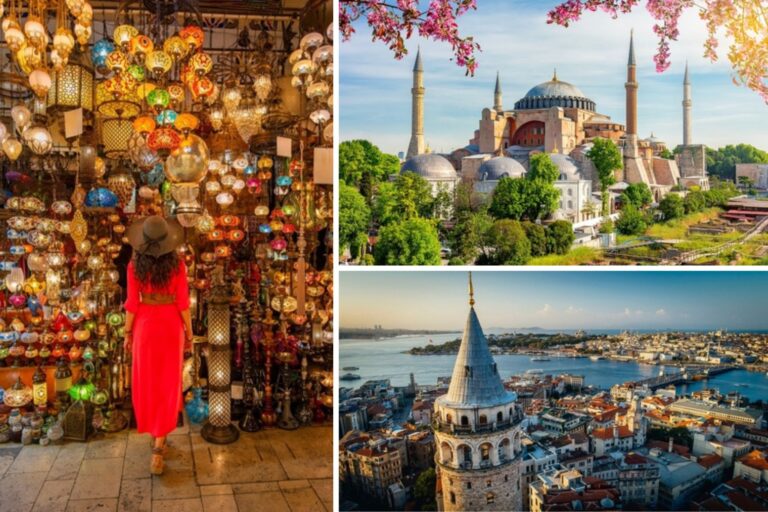
2- Distance to major attractions
Istanbul is a very large city, and getting around can take longer than you might expect. A hotel that looks close on the map could still be 45 minutes or more from the main attractions by public transport. Before booking, check how long it actually takes to reach the places you plan to visit.
Istanbul is split by the Bosphorus into two sides. The European side has most of the main sights like palaces and historic mosques, and is usually the best choice for first-time visitors. The Asian side is quieter, more residential, and feels more local. If it’s your first visit, stay on the European side. If you want a more local experience, the Asian side is a good option.
3- Public transportation and mobility
Istanbul has a good public transport system with metro, trams, ferries, and buses. It works well in the city center, but gets slower and more complicated in outer areas. The Istanbulkart is a prepaid card you can use on all transport, and it’s best to get one on your first day.
For tourists, the T1 tram is the most useful line, connecting Sultanahmet with Karaköy and Beyoğlu. The M2 metro links Taksim with Sabiha Gökçen Airport on the Asian side. If you arrive at Istanbul Airport, there’s also a direct metro to the city center in about 40 minutes.
Staying somewhere without a nearby metro or tram stop means you’ll end up relying on buses or taxis, which quickly eats into both your time and your travel budget every time you go out.
4- Daytime and nightlife
Istanbul is a mix of very different neighborhoods, each with its own pace that changes from day to night. Istiklal Street and Beyoğlu are always busy, but they really come alive after dark.
Sultanahmet, on the other hand, is all about daytime tourism and gets very quiet once the monuments close. Kadıköy, on the Asian side, keeps a steady, authentic buzz throughout the day and into the night.
It’s also important to consider culture. Some parts of Istanbul are more conservative and religious than others, and you can see this in the streets and in how people dress. For some travelers, especially women traveling alone, this can affect how comfortable they feel.
5- Services available in the area
The number of restaurants, cafés, supermarkets, pharmacies, and ATMs varies wildly from one neighborhood to another.
In tourist areas, everything is open late or 24/7, but prices are higher. In more residential districts, you’ll often find better-value restaurants and a more authentic atmosphere, though English is less widely spoken than in tourist hotspots.
6- Relationship between price and location
The value of the Turkish lira means Istanbul can offer excellent accommodation for travelers paying in euros or dollars. That exchange rate often tempts people into booking hotels in very remote areas simply because the prices look unbelievably cheap.
But the savings usually aren’t worth it. You’ll lose time, get more tired, and spend more on transport. A hotel in Sultanahmet or Karaköy may cost more, but the difference is often small once you convert the price.
Areas to avoid in Istanbul
While Istanbul is generally a safe and rewarding city to visit, some neighborhoods leave travelers far less satisfied than others. It’s worth noting these areas when choosing a hotel so you can avoid ending up in the wrong spot.
Tarlabaşı
Tarlabaşı is the classic “cheap, central, too good to be true” area. On the map it looks perfect, just a few minutes from Taksim Square and Istiklal Street. But in reality, it’s very close to areas with drug and crime problems, right next to one of Istanbul’s busiest districts.
The area has serious social problems, and even though there have been renovation projects and some new buildings, it’s still a difficult neighborhood. At night, it’s easy to end up in its side streets and feel uncomfortable. The contrast with the bright, busy Istiklal nearby can be shocking for visitors.
It’s best to avoid it altogether if you’re traveling alone, with young children, arriving on a late-night flight, or if you’re looking for a quiet place to rest.
Dolapdere
Right next to Tarlabaşı is Dolapdere, which has a very similar profile. It’s an area marked by severe poverty and occasional crime, and it offers little of interest to visitors. No tourist routes go through it, and in fact some taxi drivers are reluctant to enter certain parts of the neighborhood, especially late at night.
The problem is that, because it’s so close to Taksim, many very cheap rentals are advertised as being in the “Taksim area” without mentioning they’re actually in Dolapdere. It’s essential to double-check the exact street on Google Street View before booking anything here.
Aksaray and Laleli
Aksaray and Laleli are two neighboring districts near the historic center that cater to mass budget tourism, mainly serving traders and visitors from Eastern Europe, Central Asia, and the Middle East.
The main downside here isn’t safety, but the overall experience. These are busy commercial districts packed with wholesale clothing stores, heavy traffic, fast-food places with little character.
Bağcılar and the outlying districts of Western Europe
It is one of the most densely populated residential districts in the city and has a reputation among locals for higher levels of petty crime than the city’s main tourist districts.
Bağcılar and nearby districts like Esenler, Güngören, and Bayrampaşa are far from the main tourist areas. Staying there means long rides on crowded buses or metro trains just to reach the city, which wastes time and energy. The cheaper hotels are not worth the distance.
Sultanbeyli and the far Asian side
On the other side, in the far reaches of the Asian side, lies Sultanbeyli. It’s a working-class, outlying district that tends to get quite noisy and hectic after dark.
Like the far western districts on the European side, staying here for a normal trip doesn’t make much sense. You’ll be more than an hour away from the main sights by public transport.
Best places to stay in Istanbul
Avoiding the trickier areas is much easier when you have good, well-located alternatives to choose from. These are the neighborhoods that work best depending on what you’re looking for in your trip.
Sultanahmet: The historic center for first-time visitors
A UNESCO World Heritage site, Sultanahmet is the historic heart of Ottoman Istanbul. It puts the city’s most iconic landmarks within walking distance, including Hagia Sophia, the Blue Mosque, Topkapi Palace, the Basilica Cistern, and the Grand Bazaar.
If it’s your first time in Istanbul, this is the easiest area to stay in. You can walk to most places or hop on the tram that runs through the neighborhood. As the city’s main tourist hub, it also has a strong police presence, making it one of the safest parts of Istanbul.
The only downside is that it’s very tourist-focused. Restaurants are more expensive, staff can be quite pushy about getting you inside, and at night the area feels a bit too quiet.
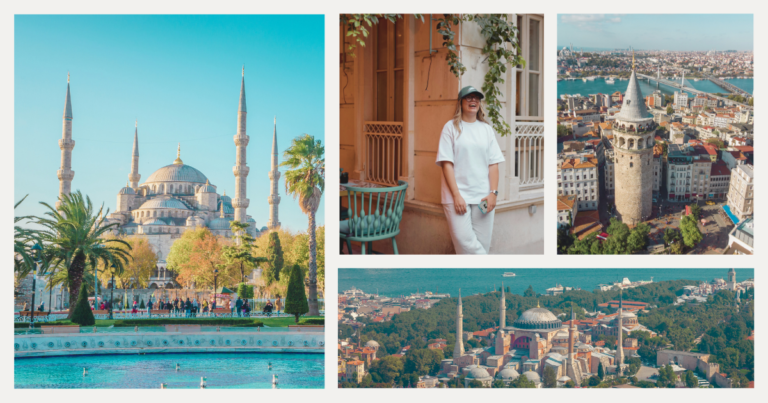
Karaköy and Beyoğlu: Urban vibrancy and great transportation links
If you want a feel for modern, bohemian Istanbul, head across the Galata Bridge into Karaköy and Beyoğlu. This part of the European side is trendy and full of life around the clock. Around Galata Tower and Istiklal Avenue, you’ll find art galleries, local designer shops, cosy cafés, and a lively nightlife scene.
These are safe, well-connected areas: you can hop on a ferry from Karaköy and be on the Asian side in about ten minutes, or take the tram straight to the mosques in Sultanahmet. Just make sure your hotel isn’t up toward the hills of Tarlabaşı, which sits just behind the main avenue.
Kadıköy: Authentic Istanbul on the Asian side
Located on the Asian side, Kadıköy is a favourite among young people, students, and Istanbul’s more modern crowd. It has a relaxed, open-minded feel and a strong local character, with traditional fish markets, vinyl shops, specialty coffee cafés, and bars with outdoor terraces.
It’s one of the safest areas in Istanbul and a great choice if you want to escape the tourist crowds and see what everyday life in the city is really like.
Beşiktaş and Ortaköy: Elegance along the Bosphorus
Beşiktaş and Ortaköy are upscale residential neighborhoods right on the Bosphorus. They’re very pleasant and safe, with a relaxed, elegant feel, known for their seafood restaurants, lively student squares, and beautiful waterfront promenade.
They are a bit further from Sultanahmet’s main sights, but they offer more peace and quiet, good hotels, and easy ferry and bus links. They’re a good choice if you want a relaxed trip or have already seen the main attractions and want a calmer, nicer area.
Galata and Cihangir: Bohemian and well-connected
Galata, with its iconic medieval tower, and Cihangir, the artists’ neighborhood climbing the hill from Karaköy, are two of the European side’s real gems.
They offer a great selection of boutique hotels and stylish apartments, along with cobbled streets lined with charming bookshops, antique stores, and terraces where you can just watch life go by. You get the best of Beyoğlu’s cultural heart without the noise of the main avenue or the heavy tourist crowds of Sultanahmet.
How can you get internet access during your stay in Istanbul?
In a city as large as Istanbul, mobile data quickly becomes essential. You’ll need it for maps, ferry schedules, and finding your way around neighborhoods like Karaköy and Kadıköy. Having a data connection from the moment you arrive will save you time and frustration.
For a few days in Istanbul, Holafly’s Turkey eSIM is a convenient option. It gives you unlimited data as soon as your plane lands, so you don’t need to look for a SIM card shop at the airport or swap out your physical SIM.
If you travel often or plan to combine Istanbul with other destinations in Europe or the region, their monthly plans offer coverage in over 160 countries through a single global eSIM. It also includes hotspot sharing and automatic renewal.
You also get the Always On feature, which keeps a 1 GB monthly backup of data in case your main plan runs out or is deactivated, so you’re never left without connection in the middle of the city.

Frequently asked questions about where not to stay in Istanbul
Tarlabaşı is one of the areas most often seen as risky for travelers. It’s very close to Taksim Square, but feels quite different from the nearby tourist center because of safety issues. Dolapdere is similar. It’s best to avoid both, even if hotels are cheap.
Along with Tarlabaşı and Dolapdere, Aksaray and Laleli aren’t ideal for most tourists because they don’t offer a very appealing environment. The outer western districts on the European side (Bağcılar, Esenler) and the far Asian side (Sultanbeyli) are best avoided due to their distance from the center and lack of tourist attractions.
Sultanahmet is the safest and most convenient choice for a first visit: all the main historic sights are within walking distance, security is excellent, and there’s a direct tram link to the rest of the city. Karaköy and Beyoğlu are a great alternative if you want a more lively urban vibe without giving up a central location.
Yes. Istanbul is as safe for tourists as cities like Paris, Rome, or Barcelona. The most common issues are pickpocketing in crowded areas, “bar scams” in Beyoğlu, and taxis with tampered meters. For most situations, basic common-sense precautions like in any big city are enough.
Sultanahmet is on the T1 tram line. Taksim and Beyoğlu are on the M2 metro. Karaköy has ferries to the Asian side and a funicular to Taksim. Overall, central areas on the European side are very well connected and easy to get around on foot.
Karaköy offers a great location, a lively atmosphere, and a wide range of accommodation at slightly better prices than Sultanahmet. On the Asian side, Kadıköy probably gives you the best mix of price, safety, and local character in the whole city, with the only drawback being that it’s across the water from the historic center.
Plans that may interest you


Hi! I'm a Spanish-English copywriter working with Holafly, helping bring travel content to life for curious travelers. As a digital nomad with a passion for exploring, I'm always adding new spots to my bucket list. If you love to travel like me, stick around because you're in the right place to find inspiration for your next trip! ✈️🌍
