Language
Where not to stay in Budapest: The best tips to travel safe!
Are you traveling to Budapest? Find out where not to stay due to safety concerns, noise, or poor transportation links.

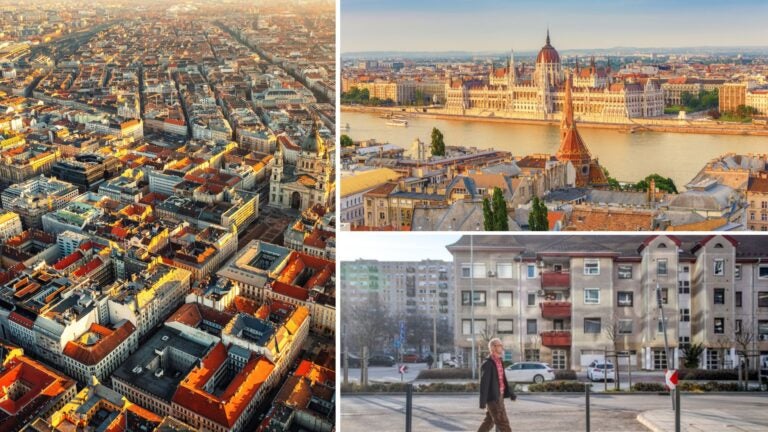
Where you stay in Budapest can make or break your trip. The city is divided into 23 numbered districts, and the area you pick can have a big impact on your trip. For example, staying in District V instead of the inner part of District VIII could mean the difference between a good night’s sleep and a noisy, restless one.
In this guide, you’ll learn which areas are best avoided, why they can be problematic, and where to stay instead depending on the type of trip you’re planning.
What should you consider before choosing a place to stay in Budapest?
Budapest has a few unique features that can make choosing where to stay a little different from other European capitals. Before booking your accommodation, it’s worth keeping these local factors in mind.
1- Safety
Budapest is generally a safe city for visitors. The most common issues are petty theft and pickpocketing, particularly at night or in quieter areas. While there are no neighborhoods that tourists need to avoid altogether, some parts of the city do require a bit more awareness and caution.
The main risk for travelers in Budapest is petty theft rather than violent crime. Pickpocketing is most likely to occur in busy tourist areas, on public transport, and around the nightlife hub of District VII, particularly near the city’s famous ruin bars.
How safe a place feels in Budapest can change a lot depending on the time of day. Some areas that are nice and busy during the day can feel very different late at night.
2- Distance to major attractions
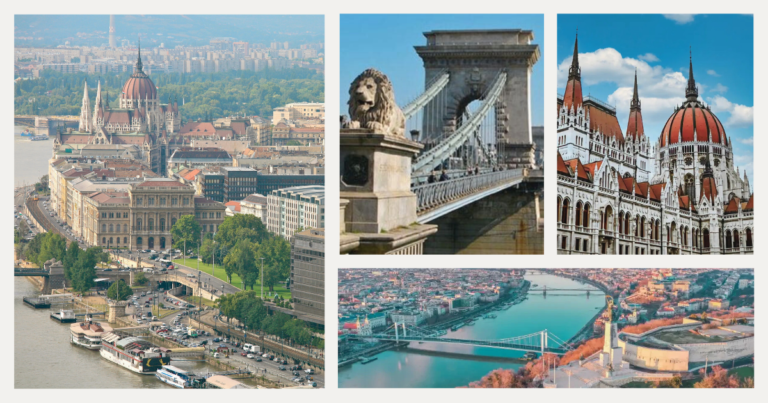
Budapest is split in two by the Danube: Buda, with its hills, the Castle, and the Fisherman’s Bastion, and Pest, where you’ll find the Parliament, the Great Synagogue, Andrássy Avenue, Széchenyi Baths, and most of the nightlife. The two sides are connected by several bridges, including the Chain Bridge, Elizabeth Bridge, and Liberty Bridge.
Staying in Buda might look close on the map, but it usually means crossing the river every time you want to go to most restaurants and attractions in Pest, and the other way around. It’s worth checking which side your hotel is on and how long it really takes to walk to the places you want to visit.
3- Public transportation and mobility
Budapest has an efficient public transport system, including metro, trams, and buses. For travelers, the main issues are being far from a metro station and having to rely on trams or night buses in areas without direct metro access.
The M1 line, the oldest metro in continental Europe, runs along Andrássy Avenue. The M2 crosses the Danube and links Buda with Pest. The M3 is the longest line and runs north to south on the Pest side. The M4 connects the south with the city center. In areas without metro access, trams are the easiest option, especially tram 2, which runs along the Danube on the Pest side.
A good rule of thumb is to avoid staying more than a 15-minute walk from a metro line in an area without direct tram access. Otherwise, you’ll likely end up relying on taxis or ride-hailing apps, which adds extra cost and time to every trip.
4- Daytime and nighttime atmosphere
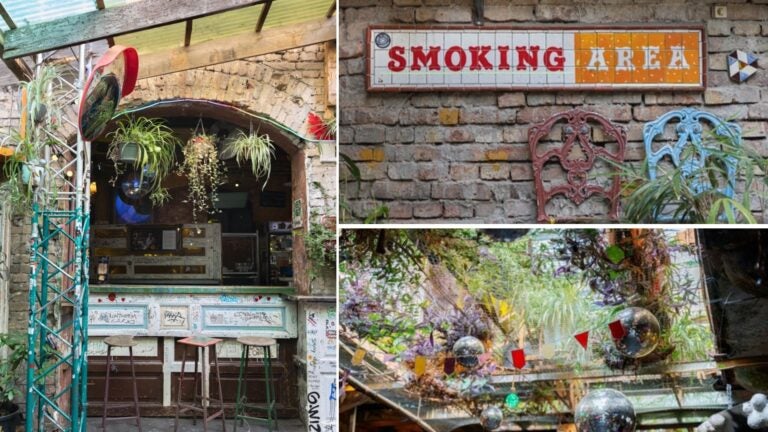
Some areas of Budapest change a lot after dark. District VII is home to the city’s famous ruin bars and nightlife, but it’s also one of the noisiest parts of the city. Crowds, late-night parties, litter, and groups celebrating bachelor and bachelorette weekends can make the area less pleasant, especially for those looking for a quiet stay.
In these areas, the noise often lasts well into the night. Even after the bars close, people tend to stay out on the streets. If you’re a light sleeper or prefer quiet nights, make sure to check exactly where your accommodation is and how close it is to the busiest bars.
5- Services available in the area
Supermarkets, pharmacies, and other basic services are much easier to find in some parts of Budapest than others. In central Pest, especially District V, everything is close by. In areas farther from the center, you may need to travel to reach services that would be just a short walk away downtown.
6- Balance between price and location
Budapest is still one of Europe’s best-value capitals, but where you stay really matters. A cheap place in inner District VIII might look like a great deal, but if it means long metro rides and an area that feels uncomfortable at night, the savings may not be worth it.
The price difference between District V and more remote areas rarely justifies the cost in terms of time and quality of experience.
Where not to stay in Budapest
Budapest doesn’t really have any seriously dangerous neighborhoods. That said, some areas can make for a much worse stay than others. These are the ones that tend to get the most negative feedback and are worth looking into before booking.
1- District VIII (Józsefváros)
District VIII is one of the most misunderstood parts of Budapest. The key thing to understand is that not all parts of the district are the same.
- The part of District VIII closest to central Budapest, known as the Palace District, is full of beautiful neoclassical buildings. It’s home to the Szabó Ervin Central Library and has a great student vibe. This area is safe, attractive, and a solid place to stay.
- The issues are mainly in the inner parts of the district, especially the Magdolna area and the sections farther from the ring road. In these parts, petty crime, theft, and physical assaults are more common than in other areas of the city.
For travelers, the real risk is booking in District VIII without knowing exactly where the apartment is. Staying in areas like Corvin or the Palace District is perfectly reasonable. But an apartment in the Magdolna area or near the Blaha Lujza Square underpass is a completely different story.
2- District VII (Erzsébetváros): Great for going out, but hard to sleep there
The Jewish Quarter, now famous for its ruin bars, is one of the most visited areas in Budapest. These bars are known for their artistic vibe, quirky interiors, and unique atmosphere. However, District VII also has strict local rules, and organized pub crawls are considered illegal or disruptive by the authorities.
The result of decades of party tourism is a district where noise, litter, drugs, and bachelor party groups have become part of everyday life. That’s why, after a vote by local residents, organized pub crawls have been banned and noise regulations have been tightened after 10 p.m.
If you want to stay right in the middle of the nightlife, this area can work well. But for families, couples looking for quiet, business travelers, or anyone who needs to sleep well, District VII can be very noisy, and earplugs often aren’t enough.
Neighboring District VI has approved a ban on most short-term rentals, a move that could reduce the number of Airbnb-style accommodations available in the city center.
3- Areas outside the ring and outlying districts without a subway
Most neighborhoods inside Budapest’s inner ring are safe. It’s generally better to avoid staying in areas outside that ring, especially in the more distant parts of Districts VIII and IX, where modern developments sit alongside more socially disadvantaged areas.
Beyond safety, the real drawback of staying in poorly connected outer areas is practical. Getting in and out takes time, and those extra journeys quickly add up to hours you could have spent actually seeing the city.
Areas like Kőbánya (District X), Csepel, or the more distant parts of Ferencváros (District IX) aren’t necessarily unsafe, but they don’t offer much reason for a tourist to stay there when there are far better-located options in the city center.
4- Margaret Island at night during the off-season
Margaret Island is one of the nicest parks in Budapest, perfect for a picnic or an afternoon walk. It also has some good-quality spa hotels. The issue isn’t the accommodation itself, but the atmosphere at night during the off-season.
In winter, Margaret Island gets very quiet at night, even for locals, which can feel uncomfortable for tourists coming back late. In peak season it’s a different story, but in autumn and winter the contrast between its lively daytime atmosphere and its empty nights can catch people off guard.
What are the best places to stay in Budapest?
We also have a detailed guide on where to stay in Budapest for a longer visit that you can check out. Here, we’ll focus on the areas that offer the best overall experience for most visitors. In the end, knowing which areas to avoid is useful, but what really matters is knowing where it’s worth booking.
1- District V (Belváros-Lipótváros): The bustling city center
District V is the historic center of Budapest. The Parliament, the Danube, Chain Bridge, St. Stephen’s Basilica, and Váci Street are all nearby. It’s one of the safest and most convenient areas to stay, very central and busy with tourists day and night.
It’s the most convenient choice for a first visit. Everything is easy to reach on foot, transport is simple, and it feels safe at all times. The only downside is the price, since it’s the most expensive area in Budapest. But for short stays, the extra cost is often balanced out by saving money and time on transport.
2- District VI (Terézváros): Culture, accessibility, and a great atmosphere
District VI includes Andrássy Avenue, the Hungarian State Opera, City Park, and Széchenyi Baths. It’s one of the most elegant areas of Pest, offering good-quality hotels and apartments, with a mix of active cultural life and a quieter residential feel.
District VI has a strong selection of high-quality accommodation and plays an important role in Budapest’s tourism economy. Its proximity to the M1 metro line, which runs the full length of Andrássy Avenue, makes getting around very easy.
It’s a popular choice for business travelers and for those looking for a balance between a central location and a quiet night’s sleep. Even though it’s just a short walk from District VII, it’s noticeably calmer at night.
3- District XIII (Újlipótváros): Residential, safe, and full of character
North of District V, District XIII is one of Budapest’s best-kept secrets for accommodation. It’s more residential and laid-back, with independent cafés, authentic local restaurants, and a feel that’s very different from the more tourist-heavy parts of the city centre.
It’s well connected by the M3 metro and trams along the Danube, so it’s easy to get around the city. Accommodation is also a bit cheaper than in District V. Many long-stay visitors like it for the quieter, more relaxed feel compared to the busy city centre.
It’s a great option for digital nomads, people staying more than a few days, and anyone who wants to see the side of Budapest that locals actually live in.
4- Castle District (District I in Buda): History and tranquility
For those who prefer the Buda side, District I in the Castle area is the best choice. It’s away from the noise of Pest’s ruin bars, with stunning views of the Danube and the Parliament from Fisherman’s Bastion, and a quiet atmosphere that feels completely different from the lively opposite bank.
The downside is transport. There’s no metro station within the Castle District itself, so reaching other parts of Budapest usually involves a bus, tram, or a longer walk. Still, it’s a great choice for a quiet stay focused on history and Buda’s thermal baths.
How can you get internet access during your stay in Budapest?
Getting around Budapest is easy once you’re familiar with the city, but the districts are quite spread out. The BKK Futár app is useful for checking real-time metro and tram arrivals, although you’ll need mobile data to use it.
For a trip to Budapest, a Holafly Hungary eSIM is the simplest option. You get unlimited data from the moment you land, with no need to buy a local SIM and no surprise charges later.
If Budapest is just one stop on a longer trip through Central Europe, or you’re staying for a while, Holafly’s monthly plans are a better fit. With one subscription, you get internet in over 160 countries. It’s ideal if you’re crossing multiple borders or just don’t want to deal with SIMs, paperwork, or renewals.
On top of that, the plans include Always On, which gives you 1 GB of automatic backup data each month in over 70 countries. It kicks in if you use up your 25 GB monthly allowance or cancel your plan. It’s about as close as you can get to a digital safety net.

Frequently asked questions about where not to stay in Budapest
The inner parts of District VIII, especially Magdolna and areas farther from the ring road, are the ones travelers tend to find most problematic. But it’s important to separate the renovated areas like the Palace District and Corvin, which are fine, from the inner parts, which are not.
For a quiet stay, avoid the streets right next to the main ruin bars in District VII. Be careful in the inner parts of District VIII. And for convenience, it’s better to avoid outer areas without direct metro access, like far parts of Districts IX and X.
District V is the safest choice for a first visit. It’s central, very walkable, and has a wide range of accommodation options at different price levels. District VI is a great alternative, usually a bit more affordable, with direct access to Andrássy Avenue and Széchenyi Baths.
Districts V, VI, and VII have the best transport links on the Pest side, with several metro lines (M1, M2, M3, M4), plus frequent trams and buses. These areas stay lively well into the night, with restaurants, cafés, and steady foot traffic creating a busy but generally safe atmosphere.
Budapest is generally a safe city. The most common issues for tourists are petty theft, especially at night or in quieter areas. There are no completely off-limits neighborhoods for visitors, but some areas do require a bit more caution. Violent crime against tourists is rare.
District XIII (Újlipótváros) offers one of the best balances of price, safety, and convenience in Budapest. It’s a bit cheaper than District V, has a genuine residential feel, and is well connected by metro and the Danube tram lines. It’s especially a great choice for stays longer than three nights.
Plans that may interest you


Hi! I'm a Spanish-English copywriter working with Holafly, helping bring travel content to life for curious travelers. As a digital nomad with a passion for exploring, I'm always adding new spots to my bucket list. If you love to travel like me, stick around because you're in the right place to find inspiration for your next trip! ✈️🌍