







 Language
Where not to stay in Brussels: The best tips to travel safe!
Find out which areas in Brussels are not a good place to stay as of 2026. Read this guide to know more and tips to help you choose!

Choosing where to stay in Brussels is about more than just price or hotel photos. The location can make your trip easy and comfortable, or it can lead to transport problems, noise, feeling unsafe, or long walks to attractions. Brussels is a beautiful city with great culture, food, and architecture, but some areas are not convenient for most travelers, especially if it’s your first visit.
This article will help you identify which areas are worth looking at carefully before confirming your booking, and which alternatives can offer you a calmer and more practical experience during your visit.
What should you consider before choosing a place to stay in Brussels?
Brussels is divided into 19 municipalities, each with very different characteristics. Before booking, it’s worth considering a few factors that directly affect the quality of your stay.
Safety and perceived safety
Brussels is generally a safe city, but like any big European city, some areas are safer than others. As in many large cities, it’s worth keeping an eye on your belongings around Brussels-North, Brussels-Central, and Brussels-South stations, where pickpocketing can occur. It can also feel safer during the day than at night, so it’s important to think about the time you’ll be moving around.
Distance to major attractions
The Grand Place, Manneken Pis, the Atomium, and the European Quarter are the most visited spots in the city. Staying outside the city center isn’t necessarily a disadvantage, provided you have good public transport links. However, some areas can add significant travel time to your day.
Public transportation and mobility
Brussels has a metro, tram, and bus system, but coverage isn’t evenly distributed across all neighborhoods. Some outlying municipalities have limited connections to the city center, which means you may need to rely on taxis or ride-hailing services, increasing travel costs.
Daytime and nighttime atmosphere
Some parts of Brussels are perfectly fine during the day but feel very different at night. Areas around Rue d’Aerschot and parts of Place Fontainas have an adult-oriented nightlife scene that may not appeal to every traveler, particularly late at night.
The relationship between price and location
In Brussels, very cheap accommodation often comes with a catch. It’s usually farther from the center, in less convenient areas, or with fewer services. If you focus only on price and ignore location, you might save on the room but end up paying more in transport or dealing with more hassle during your stay.
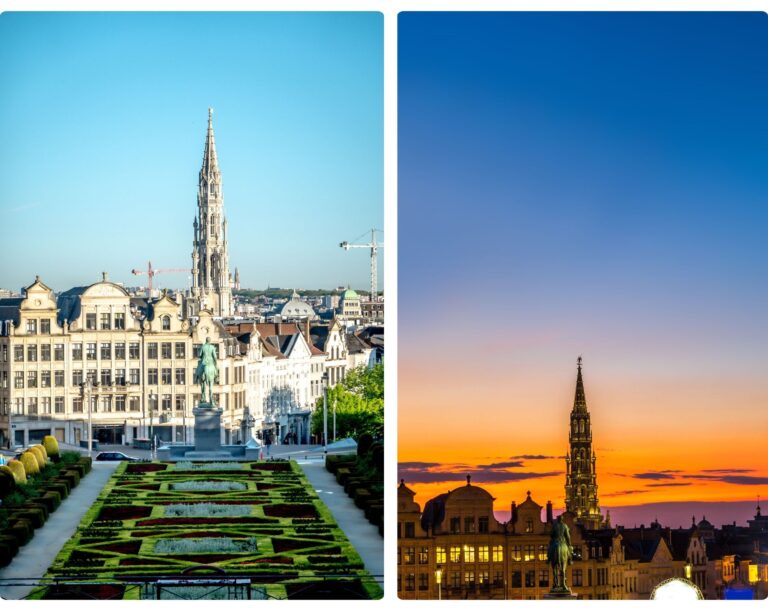
Areas to avoid staying in Brussels
These are the main areas to avoid when looking for a place to stay in Brussels.
Molenbeek
Molenbeek has long had a reputation for higher crime rates and social challenges than some other parts of Brussels. It’s a large district with around 100,000 people, and part of it is actually quite close to the Grand Place. That’s why some listings can be misleading and describe it as “close to the center.” Even though safety has improved in recent years, it still has a negative reputation. For visitors who don’t know the city, it can feel uncomfortable, especially at night.
Gare du Nord (Brussels North) area
The area between Yser, Place Rogier, and Gare du Nord is a fairly problematic part of the city, where theft is common. It’s best to avoid it at night, as it’s next to the red-light district, where prostitution and drug activity are visible. The area around Gare du Nord is also somewhat rundown and includes Brussels’ small red-light district. It’s not a good area for families, solo travelers, or anyone looking for a quiet stay.
Schaerbeek
Schaerbeek is a neighborhood with big contrasts. It has nice Art Nouveau buildings and interesting markets, but some parts have a bad reputation because of crime and social problems. At night, it’s one of the areas in Brussels where you should be more careful. There are also quiet and safe parts during the day, but visitors who don’t know the city may have trouble telling them apart.
Anderlecht
People visiting Anderlecht usually focus on specific sights and avoid going into less busy areas. As in many outer districts of large cities, some parts of Anderlecht feel less comfortable after dark, particularly around a few transport hubs and quieter residential areas. It’s a large municipality where conditions vary significantly between neighborhoods, which makes it a less convenient option for first-time visitors to Brussels.
The area around the Gare du Midi
The area around Midi Station has a reputation for theft, illegal activity, and trouble at night. It’s especially rough after dark, while things are more manageable during the day. Even so, if you don’t know Brussels well, it may not feel like a comfortable place to stay, even though accommodation is often cheaper than in the city centre.
Best places to stay in Brussels
These are the best neighborhoods to stay in Brussels:
Historic Center (Grand Place)
If it’s your first time in Brussels, staying in the city centre is usually the easiest choice. Most of the main attractions, such as the Royal Palace, Manneken Pis, and the Galeries St. Hubert, are just a short walk away, so you can spend less time commuting and more time exploring. Hotels tend to be more expensive, but the central location and convenience are often worth it.
Ixelles
Ixelles is one of the best areas to stay in Brussels. It has good transport links, lots of restaurants and cafés, and a lively atmosphere both during the day and at night. The mix of locals and international residents gives it a cosmopolitan feel. It’s especially popular with younger travelers and people who want to stay in a vibrant neighborhood.
Sablon
Sablon is one of Brussels’ most elegant neighborhoods. Known for its art galleries, chocolate shops, and antique market, it offers a quiet atmosphere and a great location close to the city’s main attractions. It’s an excellent choice for couples and travelers looking for a more refined place to stay.
Saint-Gilles
Saint-Gilles is one of the best budget-friendly areas to stay in Brussels. It offers good public transport, plenty of affordable bars and restaurants, and easy access to the city centre. It’s a great choice for travelers who want to save money without giving up comfort or convenience.
European Quarter
The European Quarter is located just east of Brussels’ city centre and is home to many EU institutions. It’s a modern area with lots of restaurants, cafés, and international shops, and it’s considered one of the safest parts of the city. It’s a good choice for business travelers and anyone looking for a quiet and comfortable place to stay.
How can you get internet access during your stay in Brussels?
Getting around Brussels is much easier with an internet connection. You’ll likely need it to check metro and tram routes, look up museum opening hours, book restaurants, or find your accommodation when you arrive. Relying only on hotel Wi‑Fi or public networks can be limiting, especially during your first few hours in the city.
If you’re only going to Brussels for a short trip, Holafly’s daily eSIM plans are a simple option. You can set it up before you travel and have data as soon as you arrive, with no physical SIM or complicated setup. If Brussels is just one stop on a longer European trip, or if you travel around Europe regularly, Holafly’s monthly plans may be a better fit thanks to their multi-country coverage.

Frequently asked questions about where not to stay in Brussels
Molenbeek and the area around Gare du Nord are the places most consistently flagged as problematic in safety guides and reports, especially for travelers who don’t know the city well.
The areas to avoid include western Molenbeek, Schaerbeek, Anderlecht, and Brussels-North, as well as the surroundings of Chaussée de Wavre in the Matongué area.
The historic city centre near the Grand Place is the best option for a first visit: safe, well connected, and within walking distance of the main tourist attractions.
The city centre and the European Quarter have excellent metro, tram, and bus connections. Ixelles also has good tram links to the rest of the city.
Saint-Gilles is the most well-rounded option for those looking to save money without moving too far from downtown or sacrificing safety and basic services.
In general, Brussels is considered a safe city. The main risks for tourists are petty crimes like pickpocketing, especially in busy areas. With basic precautions and by staying in the right neighborhoods, visitors usually have a very positive experience in the city.
Plans that may interest you

Hi! I'm a Spanish-English copywriter working with Holafly, helping bring travel content to life for curious travelers. As a digital nomad with a passion for exploring, I'm always adding new spots to my bucket list. If you love to travel like me, stick around because you're in the right place to find inspiration for your next trip! ✈️🌍
