




 Language
Utah national parks road trip: The ultimate 7-day itinerary
This Utah national parks road trip itinerary covers all 5 parks in 7 days, plus driving tips and the best time to go.

Utah’s 5 national parks boast red rock landscapes that somehow look fake even when you’re standing amidst them, and roads that make you pull over every twenty minutes because the scenery is just that enthralling. These famous“Mighty 5” parks include Zion, Bryce Canyon, Capitol Reef, Arches, and Canyonlands. Each park feels wildly different from the next. One gives you towering canyon walls, another looks like you drove onto another planet.
And while you could spend months exploring these parks, not everyone has that much time to spend. So, here’s how we’d do it.
Suggested 7-day itinerary
This route assumes you’ll fly into Las Vegas and make a loop through Utah’s Mighty 5 before heading back.
Day 1: Las Vegas to Zion National Park
Drive time: Around 2.5-3 hours.
Located in the southwestern part of the state, Zion National Park is known for its towering sandstone cliffs, narrow slot canyons, scenic drives, and challenging hiking trails. Popular experiences include hiking through The Narrows, taking on the Angels Landing trail, or enjoying easier trails like Emerald Pools and Canyon Overlook Trail.
Must-visit places:
- Canyon Overlook Trail.
- Riverside Walk.
- Emerald Pools.
- Zion Canyon Scenic Drive.
Stay overnight in Springdale.
Pro tip: If you’re an experienced hiker, consider Angels Landing. Just remember permits are required.
Day 2: Zion to Bryce Canyon National Park
Drive time: About 2 hours.
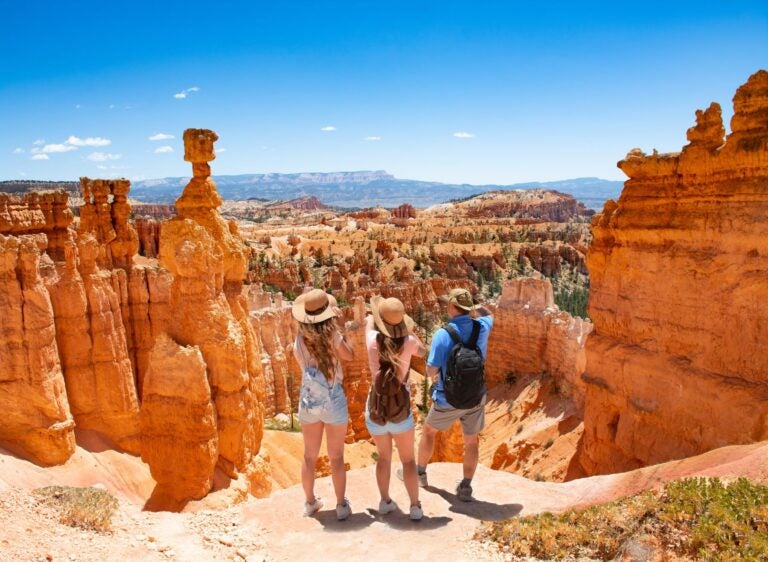
Bryce Canyon National Park feels a lot different from the other parks in Utah’s Mighty 5. Despite its name, it is not actually a canyon but a series of natural amphitheaters filled with thousands of hoodoos shaped by years of erosion. The park sits at a higher elevation which means cooler temperatures; perfect for hiking and exploring. Popular hikes such as the Navajo Loop and Queen’s Garden Trail let visitors walk down among the hoodoos. Bryce is especially famous at sunrise, when the first light hits the rock formations and completely changes the colors of the landscape.
Must-see places:
- Sunrise Point.
- Sunset Point.
- Bryce Amphitheater.
- Navajo Loop Trail.
- Queen’s Garden Trail.
Stay in or near Bryce Canyon City.
Day 3: Bryce Canyon to Capitol Reef National Park
Drive time: Around 2.5 hours.
Located in south-central Utah, this park is known for the Waterpocket Fold, a nearly 100-mile-long wrinkle in the Earth’s crust that creates dramatic cliffs, canyons, domes, and colorful rock formations. Unlike some of the busier parks, Capitol Reef has a more relaxed pace. And you can enjoy Scenic Drive (a 12.7 km. paved road), hike trails like Hickman Bridge, and stop at the historic Fruita district. Fruita is especially loved for its orchards, where seasonal fruit picking and freshly baked pies have become a Utah national parks road trip tradition.
Must-see places:
- Hickman Bridge Trail.
- Scenic Drive.
- Panorama Point.
- Fruita Historic District.
Stay overnight in Torrey.
Pro tip: Don’t skip the pie at the Fruita orchards. Trust us on this one.
Day 4: Capitol Reef to Moab
Drive time: Around 3 hours.
This day is intentionally lighter because every road trip needs a little breathing room. Instead of rushing from one attraction to the next, take time to enjoy the drive along Utah Scenic Byway 24, one of the most beautiful stretches of road in the state. Slow down, stop at scenic overlooks, and enjoy the freedom that makes road trips so memorable.
Arrive in Moab and spend the evening exploring:
- Downtown Moab.
- Local cafés.
- Sunset viewpoints nearby.
Stay in Moab.
Day 5: Arches National Park
Drive time from Moab: 10-15 minutes.
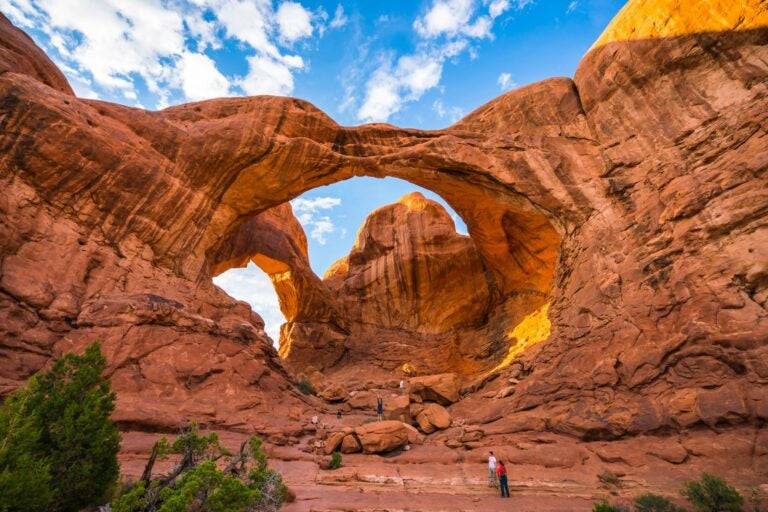
Arches National Park is home to more than 2,000 natural stone arches, making it one of the most recognizable and photographed parks in the American Southwest. Located near Moab, the park is known for its dramatic red rock landscapes, towering fins, balanced rocks, and formations that feel unreal. Its most famous landmark, Delicate Arch, has become an iconic symbol of Utah. But there is much more to see beyond it.
Must-see places:
- Double Arch.
- Landscape Arch.
- Windows Section.
- Devil’s Garden.
Stay in Moab.
Pro tip: Parking fills fast, and temperatures rise quickly, so start early.
Day 6: Canyonlands National Park
Drive time from Moab: About 35-45 minutes.
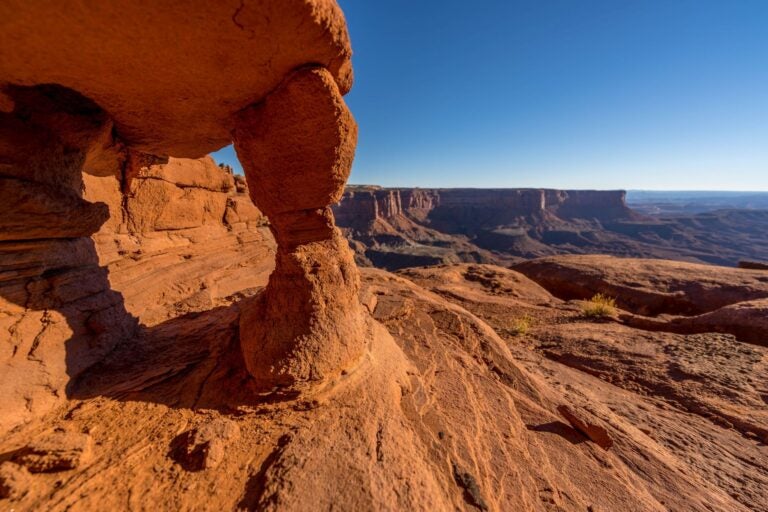
Canyonlands National Park is the largest of Utah’s Mighty 5. And it feels like an enormous collection of dramatic landscapes carved by time. It’s home to massive canyons, towering mesas, rugged cliffs, and panoramic views that stretch for miles in every direction. This park is divided into districts, with Island in the Sky being the most popular and easiest to explore on a Utah national parks road trip.
Must-see places:
- Mesa Arch.
- Grand View Point.
- Green River Overlook.
- Shafer Canyon Viewpoint.
Day 7: Return drive
Depending on your flight, you can:
- Drive back toward Las Vegas.
- Continue toward Salt Lake City.
- Add stops like Goblin Valley or Valley of Fire.
Keep this day flexible for roadside cafes and diners, quirky attractions, and little-known viewpoints.
Best time for Utah road trip
Spring and fall are generally considered the best time for a Utah’s Mighty 5 road trip because temperatures are comfortable and crowds are easier to manage.
Spring: March-May
Pros:
- Comfortable hiking weather.
- Wildflowers.
- Longer daylight.
- Cooler temperatures.
Watch for:
- Spring break crowds.
- Occasional trail closures.
Fall: September-October
Pros:
- Mild weather.
- Cooler hikes.
- Smaller crowds than summer.
This is one of the easiest times for first-time visitors.
Summer: June-August
Summer brings long daylight hours, but temperatures regularly push past 90°F in several parks. So, starting early is super important during the summers.
Winter: November-February
Beautiful? Absolutely. Easy? Not always. Bryce national park, especially, can see snow and icy trails. Some services may operate on reduced schedules.
What to know about driving for Utah national parks
Here are a few important tips for your Utah national parks road trip.
Fuel stations can be spread out
Once you leave larger towns, gas stations become less frequent, so it’s a good idea to keep your tank at least half full.
Major refueling towns include:
- Springdale.
- Torrey.
- Moab.
Speed limits vary
Expect:
- 5-25 mph inside park areas.
- 65-80 mph on highways.
Watch for wildlife crossing the roads, especially around sunrise and sunset.
Additional expenses
Budget for:
- National park entrance fees.
- America the Beautiful Pass.
- Parking.
- Hotels.
- Fuel.
- Shuttle services.
- Optional tours.
Where to stay in Utah national parks
Some travelers want a campsite under star-filled skies. Others want a cozy hotel and a hot shower after 20,000 steps. And some are fully committed to luxury, with the need for spa treatments and resort pools. The good news? Utah gives you plenty of options to choose from.
Hotels
Ideal for travelers wanting convenience and comfortable beds after hiking all day.
Campgrounds
Perfect if waking up surrounded by red rock landscapes sounds like part of the adventure.
RV parks
Popular throughout the route and easy to find near the parks.
Luxury resorts
For travelers who want spa days and a little extra comfort between canyon hikes.
Vacation rentals
Great for families or groups looking for more space and shared costs.
Pro tip: Book early, especially if you’re traveling in spring or fall. The best locations near the parks tend to get booked quickly.
Before you hit the road
No two road trips look the same, and that’s part of the fun. Some travelers want hikes and adventures, others prefer scenic drives, coffee stops, and enough free time to slow down and enjoy the journey. Before mapping out your route, think about the season you’re traveling in, how comfortable you are with long stretches of driving, and how much you realistically want to fit into each day.
Also remember, a little preparation goes a long way. Download offline maps before entering remote areas, and build a playlist for those long drives between parks. Cell service can become limited once you’re farther from towns, so it’s worth checking your options ahead of time.

Plans that may interest you


With an MBA degree I used to put to good use in another life, I now write for both passion and profession! When not writing, I'm exploring the world, collecting stories and souvenirs along the way.