




 Language
Areas to avoid in Paris: Where not to stay and why
Are you traveling to the French capital? We'll tell you what areas to avoid in Paris and what the best alternatives are.

Choosing the right place to stay can have a bigger impact on your trip than many travelers expect. Even a comfortable hotel can become frustrating if it’s poorly connected or located in a neighborhood that doesn’t match your travel style. That’s why it’s worth knowing the main areas to avoid in Paris before booking your accommodation.
This city has very different neighborhoods, some with lots of culture and easy transport, and others that can be noisy, too touristy, or not well connected. In this guide, you’ll learn which parts of Paris are less convenient for visitors and which neighborhoods are usually a better choice.
What should you consider before choosing a place to stay in Paris?
To understand where not to stay in Paris, it helps to know how the city is organized. Paris is divided into 20 arrondissements, each with its own character, atmosphere, and accommodation options. Before booking your accommodation, it’s worth keeping a few key factors in mind that can really shape your experience in Paris.
1. Sense of safety
As in any large European city, some areas feel safer and more comfortable than others, especially at night. It’s a good idea to look at things like tourist crowds, street lighting, and nearby busy train stations, where pickpockets and Paris scams are more common.
2. Distance to major attractions
Paris is a big city, and not all places to stay are well connected to major sights like the Eiffel Tower, the Louvre, Montmartre, or Notre-Dame. Sometimes a cheaper price isn’t worth the extra time and transport costs.
3. Public transportation and mobility
Being close to a metro or train station like Gare du Nord or Gare de l’Est is very convenient for taking trips to other French or European cities. However, neighborhoods around these stations can also be noisier and much busier, with a lot more foot traffic.
4. Daytime and nightlife
The atmosphere of a neighborhood can change dramatically between day and night. For example, areas around Pigalle or in the 10th and 11th arrondissements are great if you want nightlife, but they’re less suitable for families or travelers looking for a peaceful stay.
5. Services available in the area
If you’re staying in the city for a few days or weeks, having supermarkets, restaurants, pharmacies, cafés, or coworking spaces nearby can make everyday life far more convenient. Otherwise, even simple errands can end up taking more time than you’d expect.
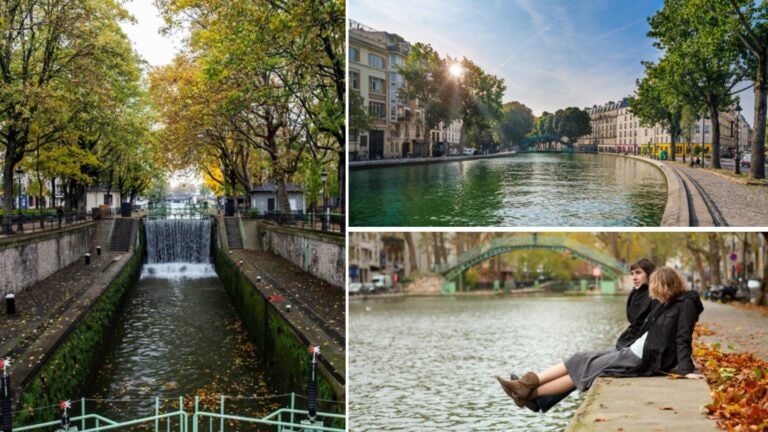
Areas to avoid in Paris
Whether you’re planning to live in Paris for a while, visit as a tourist, or work remotely as a digital nomad, we’ll walk you through where not to stay in Paris and why. While it’s generally a safe city, some areas do come with drawbacks like noise, heavy crowds, or being far from the main attractions.
1. The area around Gare du Nord
In Paris’s 10th arrondissement, Gare du Nord is one of Europe’s busiest train stations and a key hub for international travel. It’s a practical area for getting around the city and reaching other destinations, but the surrounding streets are often crowded, noisy, and can attract pickpockets. If you’re traveling with family, visiting for the first time, or looking for a peaceful stay, this isn’t an ideal area.
2. The area around Gare de l’Est
Also in the 10th arrondissement and very close to Gare du Nord, this area shares many of the same characteristics mentioned above. The main advantage is its excellent transport connections, but the urban feel, traffic, and constant activity throughout the day can be overwhelming if you’re looking for a quiet place to relax.
3. Porte de la Chapelle
Located in northern Paris, near Seine-Saint-Denis, this is mostly a residential and industrial area. It’s still being developed and doesn’t have many tourist services. If you want to walk around the city and stay in a classic Paris setting, this isn’t the best choice.
4. Barbès-Rochechouart
Between the 18th and 10th arrondissements, this area is known for its busy shopping streets and cultural diversity. However, it’s also very crowded, with heavy traffic and a somewhat chaotic atmosphere. It’s also one of the areas where you need to be more careful with petty theft, especially in metro stations and busy streets.
5. Certain areas of Pigalle
Pigalle, just south of Montmartre, is known for its nightlife, theaters, and the Moulin Rouge. It’s a busy tourist area with lots of bars and night noise. It can be a good choice if you want nightlife, but it’s not ideal for remote workers, families, or anyone looking for a quiet stay.
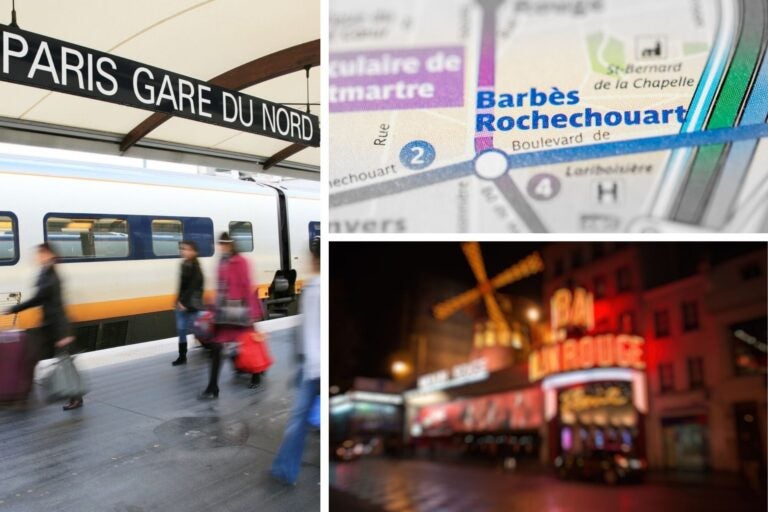
The 5 best places to stay in Paris
Now that we’ve gone over where not to stay in Paris, let’s take a look at some better options that offer a good balance of services, safety, and a pleasant atmosphere for most travelers. Here are five of the best areas to stay in Paris.
1. Le Marais (3rd and 4th arrondissements)
Le Marais is one of the best neighborhoods to stay in Paris, combining a central location with historic charm, excellent dining, and plenty of local character. It’s a safe area to explore on foot and offers easy access to many of the city’s main attractions.
For example, Notre-Dame is about a 15-minute walk away and the Louvre around 20 minutes. There are also nearby metro stations, so it’s easy to get to places like the Eiffel Tower, Montmartre, or the Arc de Triomphe.
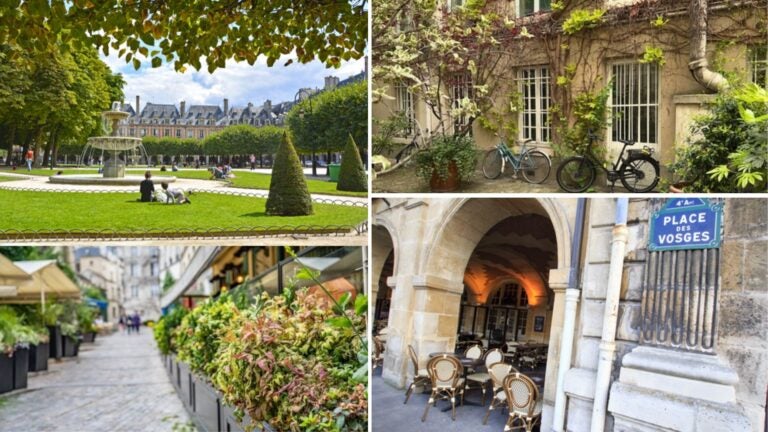
2. Saint-Germain-des-Prés (6th arrondissement)
Located on the Left Bank of the Seine, this is one of the most elegant and well-known areas in Paris. It’s a great choice for couples or anyone wanting a classic Paris experience. It’s peaceful, full of history, and close to places like the Luxembourg Gardens, the Musée d’Orsay, and the Louvre, all about a 15-minute walk away.
3. Latin Quarter (5th arrondissement)
If you’re studying in Paris, the Latin Quarter is close to the Sorbonne University and makes an excellent base for exploring the city. You’ll find plenty of restaurants, bookshops, cafés, and great transport links. Accommodation is also more affordable than in more upscale neighborhoods.
4. Montmartre (18th arrondissement)
If you stay in the upper part of Montmartre, the atmosphere is quite different from Pigalle. With its cobbled streets, panoramic views, and artistic vibe, it attracts many travelers looking for a more bohemian setting. It’s also generally quieter than other areas with a busy nightlife.
5. Opera and Madeleine (8th and 9th arrondissements)
The Opéra and Madeleine areas are very central in Paris, with Galeries Lafayette and the Palais Garnier just a five-minute walk away. You can also take the metro and reach the Eiffel Tower in about 20 minutes. For first-time visitors, few areas offer better transport connections and easier access to the city’s main attractions.
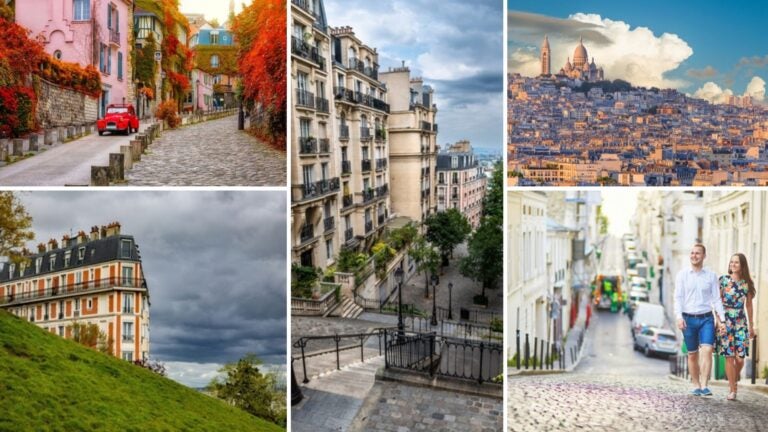
How can you get internet access during your stay in Paris?
It’s also important to have a stable internet connection during your trip instead of relying on public Wi-Fi. This helps you use GPS, find restaurants, book tickets, translate, and get around more easily.
If you’re planning a long stay of more than a month in the capital, Holafly’s monthly plans are a great option. You’ll get 5G coverage anywhere in the city, with plans offering either 25 GB or unlimited data, and you can connect multiple devices at the same time. Plus, if you travel to other European cities, you can use the same eSIM in over 160 destinations at no extra cost.
On the other hand, if you’re only visiting Paris for a few days, we recommend Holafly’s Paris eSIM, which gives you unlimited data for just the days you need, starting from $3.90 per day.

Frequently asked questions about areas to avoid in Paris
The least recommended areas due to noise and crowds are around Gare du Nord and Porte de la Chapelle.
Depending on your trip and preferences, it’s worth checking the areas around major train stations like Gare du Nord and Gare de l’Est, as well as parts of Barbès and Porte de la Chapelle.
For a first trip to Paris, we recommend staying in areas like Le Marais, Saint-Germain-des-Prés, the Latin Quarter, or around Opéra and Madeleine, thanks to their central location and excellent transport links.
The Latin Quarter offers an excellent combination of location, atmosphere, and lower prices compared to other, more exclusive areas.
Saint-Germain-des-Prés and the Latin Quarter are residential neighborhoods that are well-connected and offer a range of nearby amenities.
Plans that may interest you

Hi! I'm a Spanish-English copywriter working with Holafly, helping bring travel content to life for curious travelers. As a digital nomad with a passion for exploring, I'm always adding new spots to my bucket list. If you love to travel like me, stick around because you're in the right place to find inspiration for your next trip! ✈️🌍