







 Language
Areas to avoid in Milan: Where not to stay and why
Plan your trip to Italy carefully and find out what areas to avoid in Milan: key points and recommended alternatives.

This northern Italian city is one of the most visited destinations in Europe thanks to its rich history, cultural attractions, fashion scene, and excellent connections to other European cities. However, choosing the right area to stay in can make a big difference to your trip. That’s why this guide looks at the main areas to avoid in Milan and recommends better alternatives for a more enjoyable stay.
Factors such as location, noise levels, nightlife, and safety can all affect your overall experience in the city. The best way to choose where to stay is to understand what each neighborhood has to offer before booking your accommodation. Keep reading to find out which areas of Milan are the best match for your travel style and needs.
What should you consider before choosing a place to stay in Milan?
Milan is smaller and easier to get around than many other European capitals. Some areas are close to the city’s main sights, while others are farther away and require more time on public transport. Here are the key factors to consider when choosing the right area for your stay in Milan.
1. Sense of safety
Overall, Milan is a safe city, but as in many major European destinations, safety levels can vary depending on the neighborhood and time of day. Areas around major transport hubs tend to be especially busy with commuters and visitors, which can make them more attractive to pickpockets and petty thieves.
2. Distance to the Duomo and the historic center
Milan’s metro works well, but if you only stay a few days and are far from the center, you may spend a lot of time traveling around. It’s usually more convenient to stay in areas with easy access to the Duomo, Galleria Vittorio Emanuele II, Castello Sforzesco, and the Brera district.
3. Public transportation and airport connections
Not all areas are equally well connected, so before booking, check how close your place is to a metro station, especially if you’re flying into Malpensa, Linate, or Bergamo Orio al Serio. Good connections will save you time, money, and extra transfers.
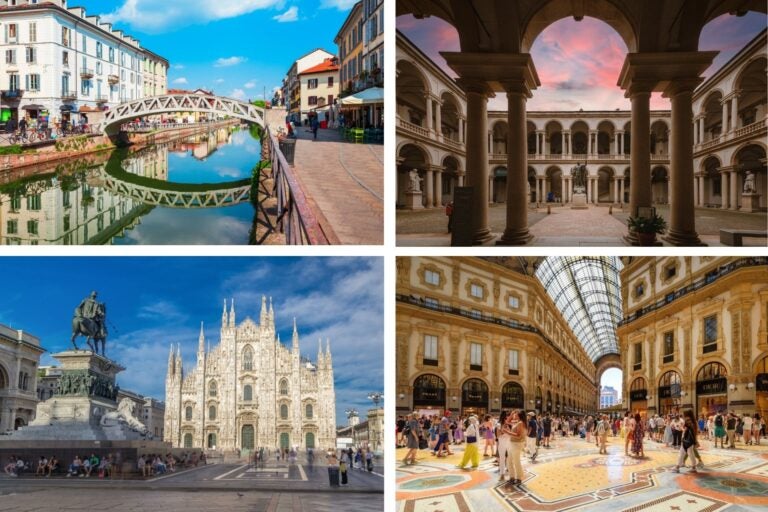
4. Daytime and nighttime atmosphere
If you prefer peaceful evenings, avoid staying in Milan’s busiest nightlife districts. Each neighborhood in Milan has its own feel, with some focused on culture and food, and others on shopping, students, or entertainment.
5. Services available in the area
Having cafés, restaurants, supermarkets, and pharmacies within walking distance can make your stay much more convenient. Some cheaper residential areas have fewer services, so you may need to travel elsewhere for everyday needs.
6. Balance between price and location
Milan is one of the most expensive cities in Italy for accommodation. Central areas cost more because of their location and services. Staying just one or two metro stops away can save you money without adding much travel time.
Areas to avoid in Milan
Milan is a safe city with many areas suitable for tourists, but some neighborhoods may be less convenient depending on your needs. If you’re wondering where not to stay in Milan, the neighborhoods below may not suit every traveler, so it’s worth understanding their advantages and drawbacks before booking.
1. Via Padova
Located northeast of the city center, Via Padova is often mentioned in travel forums when talking about where not to stay in Milan. It’s a multicultural area with many shops and international restaurants, but some parts are poorly maintained. Because of this, prices are usually lower. If you’re visiting Milan for the first time or traveling with children, it’s not the best place to stay.
2. Quarto Oggiaro
This residential area in northwestern Milan is far from the main tourist spots. Reaching attractions such as the Duomo, Brera, and Navigli takes longer and may require multiple public transport connections.
3. Milano Centrale
The area around Milan’s Central Station has good transport links, but it’s also very busy and noisy, with a higher risk of pickpocketing. It’s not the best choice if you’re traveling with family or often coming back late at night.

4. Corvetto
Located southeast of the city center, Corvetto is a neighborhood that may not suit every traveler. It has metro stations that connect it to the center, but some parts are seen as less safe at night. It’s not ideal if you want to walk to the main sights.
5. Lorenteggio
The main downside of Lorenteggio is the travel time. Accommodation is cheaper, but it takes about 30 minutes by metro to reach the center, or around an hour on foot. It can work for budget travelers, but it’s not ideal for a short weekend stay.
6. Industrial areas on the outskirts
Similar considerations apply to the outskirts around Bicocca and Greco. Prices are much lower, but there are fewer tourist services and less activity, which can make things less convenient if you’re visiting Milan for the first time, want to get around on foot, or are only staying for a few days.
Best places to stay in Milan
Now that you know which areas to avoid in Milan, here are some better places to stay. We’ve picked them for their location, transport connections, services, and overall safety for most travelers. Check out what each area is like and choose the one that suits you best.
1. Brera: The best choice for a first visit to Milan
Brera is a central, elegant area between the Duomo and Castello Sforzesco. It has historic streets, art galleries, cafés, and restaurants, with a calmer feel than other tourist spots. You can easily walk to the main sights, day or night. It’s a good choice for couples, culture lovers, and first-time visitors.
2. Porta Venezia: Great location and a local vibe
Close to the city center, Porta Venezia is a lively, multicultural area with good transport, shops, and restaurants. You can reach the Duomo in about five minutes by metro or 20 minutes on foot. It also has many accommodation options, making it a good choice if you want to stay central but spend less.
3. Navigli: For those who want to enjoy the nightlife
If nightlife is a priority, Navigli is one of the best areas to stay in Milan. It’s very popular with tourists thanks to its canals, outdoor terraces, bars, and restaurants. Compared to areas around Central Station, it feels safer and offers a good mix of sightseeing and nightlife. It’s especially ideal for young travelers and groups of friends.
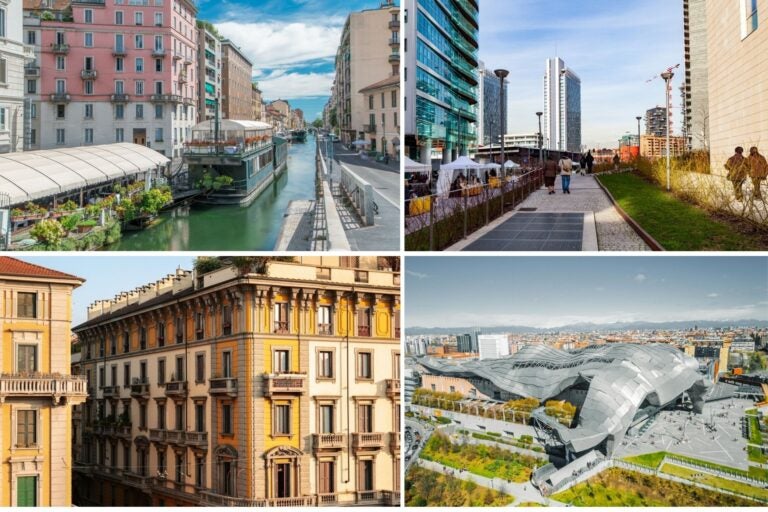
4. Porta Nuova and Isola: A modern neighborhood with great connections
If you want to see a more modern side of Milan, this area has some of the city’s newest buildings, including Bosco Verticale, plus restaurants, coworking spaces, and modern hotels. It’s a good choice for business travelers, digital nomads, and longer stays. It also has great metro, train, and tram connections.
5. The Duomo and the historic center: The perfect base for sightseeing
For short trips, it’s best to stay near the Duomo so you can walk to most of the city’s main sights, museums, and shopping areas. Prices are higher than in other neighborhoods, but you’ll save time on transport. It’s a good option if you have limited time and want to stay central.
6. CityLife: A peaceful setting without being too far from the city center
Finally, if you’re traveling with family or looking for a quieter place for a longer stay, CityLife is a modern residential area with plenty of green spaces, shopping centers, and a peaceful atmosphere. It’s well connected by public transport, more affordable than the city center, and offers a more relaxed pace of life.
How can you get internet access during your stay in Milan?
Along with knowing where not to stay in Milan and the best alternatives, having a good internet connection is important to make your trip easier. It helps you use maps, get around, manage bookings, book tours, and buy tickets for attractions.
If you’re visiting Milan for just a few days, we recommend Holafly’s Milan eSIM, which offers unlimited data for only the days you need, starting from $4.50 per day. For longer stays, Holafly’s monthly plans are a better option. You can choose between a 25 GB plan or unlimited data, with no contracts, and use it in over 160 destinations. You also won’t need to switch eSIMs or plans, which is ideal if you plan to visit nearby European cities like Lugano in Switzerland.

Frequently asked questions about areas to avoid in Milan
There isn’t a single area to avoid in Milan, but many travelers find places like Quarto Oggiaro, Via Padova, and Corvetto less convenient because they’re far from the city center.
One advantage is that Central Station is very close, so it’s easy to get to the airport or travel to other cities by train. However, the area can feel less safe because of pickpockets due to the large number of travelers.
Porta Venezia, Porta Nuova, and Milano Centrale stand out for their excellent connections via subway, train, and tram.
Navigli and Porta Venezia are two areas where you can enjoy Milanese cuisine, cafés, outdoor seating, and a livelier atmosphere.
Porta Venezia is a good option if you’re looking for a balance between affordability and proximity to the city center.
Plans that may interest you


Hi! I'm a Spanish-English copywriter working with Holafly, helping bring travel content to life for curious travelers. As a digital nomad with a passion for exploring, I'm always adding new spots to my bucket list. If you love to travel like me, stick around because you're in the right place to find inspiration for your next trip! ✈️🌍
