







 Language
Travelling to the US from Australia in 2026: ESTA, flights, and entry requirements
Everything Australians need to know before travelling to the US: visa requirements, ESTA steps, flight routes, and practical tips to arrive prepared.
The US is one of the most popular long-haul destinations for Australians, and for good reason: 50 states, countless cities, and a trip that calls for solid preparation.
This guide covers everything you need before you go: ESTA and visa requirements, the main flight routes from Australia, what happens when you land, and practical tips on money, data, and travel essentials.

An eSIM you can rely on
Join over 10 million Holafly customers and get connected with our trusted, global services.
Do Australians need a visa to travel to the US?
Australian citizens don’t need a traditional visa for short trips to the US. Under the Visa Waiver Program (VWP), you can visit for tourism or business for up to 90 days, but you must obtain an ESTA (Electronic System for Travel Authorisation) before you fly.
If you’re planning a longer stay or travelling for a specific purpose, different rules apply. A B-1/B-2 visitor visa covers extended tourism or business trips beyond 90 days. Australians working in the US on a sponsored role may be eligible for the E-3 visa, which is available exclusively to Australian citizens under the Australia–United States Free Trade Agreement.
Students heading to a US institution will need an F-1 or J-1 student visa, arranged through the relevant embassy before departure.
For most Australians taking a holiday or short business trip, the ESTA is all you need.
What is an ESTA and how to apply?
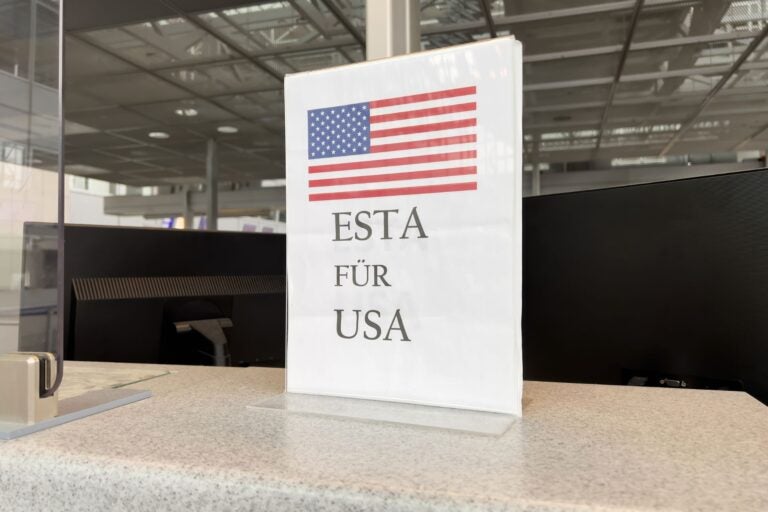
An ESTA is a pre-travel authorisation required for all Australians entering the US under the Visa Waiver Program. It is not a visa, but you cannot board a flight to the US without one.
Apply directly through the official US Customs and Border Protection website. Be cautious of third-party websites that offer to process your ESTA for a higher fee. The official site is the only authorised channel.
Here’s what the application involves:
- Create an account on the official CBP ESTA portal
- Enter your passport details, personal information, and travel plans
- Answer a series of eligibility questions (criminal history, health, prior visa refusals)
- Upload a passport photo and selfie as required
- Pay the application fee, currently USD 40.27 (as of 2026)
- Submit and wait for a decision
Most applications are approved within minutes, though the CBP recommends applying at least 72 hours before travel. Once approved, your ESTA is valid for two years or until your passport expires, whichever comes first, so you can use it for multiple trips without reapplying.
Flights from Australia to the US
Direct flights from Australia to the US are available from Sydney and Melbourne, with the most common route being Sydney (SYD) to Los Angeles (LAX). Qantas, United Airlines, Delta, and American Airlines all operate on this corridor. Sydney to LA runs at approximately 14 hours non-stop, one of the longer transpacific hauls you’ll find in economy.
Travellers flying to the US East Coast, such as New York, Miami, or Washington DC, will typically transit through LA, San Francisco, or occasionally Singapore or Auckland, depending on the airline.
A few practical booking tips:
- Flying midweek typically costs less than on weekends
- Booking 2–3 months ahead tends to offer better fares
- Setting fare alerts through Google Flights or Skyscanner can help you catch price drops.
- For popular travel periods, like the US summer (June to August) and December holidays, book well in advance.
On a 14+ hour flight, comfort is worth thinking about. Consider a neck pillow and noise-cancelling headphones, download content offline before boarding, and stay hydrated throughout.
The time difference between eastern Australia and the US East Coast is significant, up to 15 hours depending on daylight saving, so planning your sleep schedule around your arrival time helps with jet lag.
If you’re planning to explore beyond one city, check out USA weekend trips and the most popular tourist destinations in the US to help plan your itinerary.
Arriving in the US: customs and immigration
Once you land, all international arrivals go through US Customs and Border Protection (CBP). The process involves presenting your passport and ESTA authorisation, a biometric screening (fingerprints and photo), and a brief interview with a CBP officer. Be prepared to answer questions about the purpose of your visit, how long you’re staying, where you’ll be staying, and whether you’re carrying any restricted items.
Before landing, you’ll be asked to complete a customs declaration form. The CBP One mobile app and the Mobile Passport Control (MPC) app can speed up this process at eligible airports. It’s worth downloading before you fly, though MPC availability varies by airport and terminal.
The US has strict biosecurity rules. You cannot bring in fresh or dried fruits, vegetables, meats, dairy products, or soil. Bringing in undeclared food items can result in fines. A full list of restricted and prohibited items is available on the CBP official website.
When it comes to what to pack, see the guide on what to pack for the USA for a full checklist before you travel to the US from Australia.
Practical tips for Australians travelling to the US
A few key differences catch Australian travellers off guard in the US. Here’s a checklist of what to know before you arrive.
Money and exchange rates
The AUD to USD exchange rate is generally unfavourable for Australians, one Australian dollar buys roughly 70 US cents, though this fluctuates. Low-fee travel cards are worth looking at to avoid the marked-up rates charged by Australian banks on overseas transactions.
For exchanging currency, you’ll generally get better rates by converting before you leave Australia rather than at airport currency exchange counters, which typically charge higher fees and offer less competitive rates. Withdrawing USD from an ATM after you land is another practical option, just check your card’s overseas ATM fees beforehand.
Tipping
Tipping is not optional in the US, it is built into the service economy. Expect to tip 18–25% at sit-down restaurants, $1–2 per drink at bars, and a few dollars for hotel housekeeping, taxis, and other services. Many point-of-sale terminals now prompt you for a tip even at coffee shops and takeaway counters.
Carry a small amount of USD cash on arrival for transport, tips, and any smaller vendors that don’t accept cards.
Mobile data, eSIMs, and payments
Most businesses across the US accept contactless payments, and Apple Pay and Google Pay are widely supported in major cities and retail chains. Credit card/debit card is generally preferred, but cash remains useful in smaller towns or markets.
For mobile connectivity, roaming on an Australian plan can be expensive. Telstra, Optus, and Vodafone all offer US roaming add-ons, but the daily costs can add up quickly on a longer trip. Before committing to Telstra roaming in the USA, Optus roaming in the USA, or Vodafone AU roaming in the USA, it’s worth comparing the total cost for your trip duration.
Free public Wi-Fi is available at airports, hotels, and most cafes, but it’s not always reliable enough for navigation, maps, or travel bookings on the go, especially if you’re moving between cities or driving.
Power adapters, jet lag, and travel essentials
The US plug type uses Type A and Type B power outlets running at 110V, Australian devices run on 230V, so you’ll need a travel adapter and, in some cases, a voltage converter for devices that aren’t dual-voltage. A universal adapter with USB ports covers most situations.
Jet lag is a real consideration on a long-haul flight to the US from Australia. The time difference between Sydney and New York is around 14–15 hours (depending on daylight saving), and the crossing often involves an overnight flight. Try to adjust to local time as soon as you land, get outside in daylight, stay awake until a reasonable local bedtime, and avoid heavy napping on arrival day.
Travel insurance and medication rules
Travel insurance is essential when travelling to the US from Australia. Healthcare costs in the US are among the highest in the world. A single night in the hospital can run into tens of thousands of dollars without coverage. Make sure your policy covers emergency medical treatment, evacuation, and, at a minimum, trip cancellation.
If you take prescription medication, carry it in the original packaging with the pharmacy label intact. Bring enough for your entire trip plus a few extra days, and carry a copy of the prescription or a letter from your doctor in case it’s requested at the border or by a pharmacist.
Stay connected in the US with Holafly
An eSIM for the USA from Holafly gives you unlimited data from the moment you land, no SIM swapping, no roaming surprises, and no hunting for a local SIM at the airport. Plans run from 1 day to 90 days, and you can set it up on your phone before you leave Australia.
Holafly covers 200 destinations worldwide, and if you’re combining a US trip with travel to Canada or Mexico, a Holafly eSIM for North America keeps you connected across the region on a single plan. You can browse all available options in the Holafly eSIM store or check the buying guide for eSIMs in the USA if you want to compare your options before purchasing.
Every Holafly eSIM also includes Always On — 1 GB of monthly backup data at no extra cost. If your plan runs out mid-trip, Always On kicks in automatically so you stay connected when it matters.
Get an unlimited data eSIM
Use code MYESIMNOW5 for 5% off at checkout
Plans that may interest you

哈囉我是來自台灣的 Wen,平常最喜歡旅遊,也喜歡將旅遊的種種化成文字跟大家分享,希望大家能在我的文章中找到有用的資訊,加上 Holafly 的 eSIM,讓你的旅程更美好!✈️✈️✈️ Hi! I'm Wen, a passionate content writer and travel enthusiast from Taiwan. I transform my wanderlust adventures into engaging stories and practical guides, helping fellow travelers make the most of their journeys.Through my articles, I strive to provide travel tips while introducing how our eSIM technology can enhance your travel experience - keeping you connected wherever your adventures take you!

