







 Language
Do you really need a car in Switzerland? These trains go where cars can’t
Skip the rental car in Switzerland. From spectacular mountain transport to car-free alpine villages, here’s how to plan a car-free Switzerland itinerary.

You dream of exploring Switzerland’s picture-perfect alpine villages and dreamy mountain towns, but there’s one question holding you back: do you need to rent a car?
With winding mountain roads and remote destinations, driving seems like the only practical option. But after seeing the eye-watering cost of Swiss car rentals, you’re wondering if your dream trip is even possible.
Well, you might be surprised to learn that a car is not only unnecessary in parts of Switzerland, but in some mountain villages, it’s banned.
That’s right. Switzerland’s intricate public transport system can take you to dozens of places a car cannot. Here’s what your car-free Switzerland itinerary could look like.
So, do you actually need a car in Switzerland?
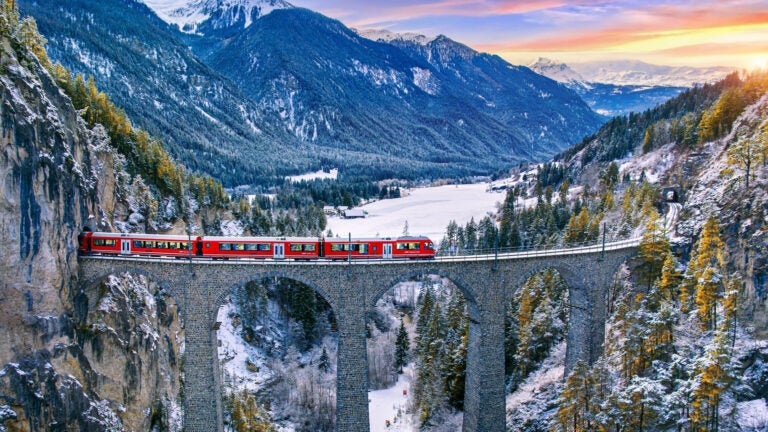
For the classic Swiss Alps itinerary, a car is not necessary at all.
Switzerland has some of the most extensive train travel in Europe, connecting major cities with small mountain towns. What’s more, Swiss rail is impressively integrated with postbus, funiculars, and cable cars. Hence, connections line up perfectly rather than leave you waiting for hours between each leg of the journey.
While there are a few rural areas only a car can bring you, there are more than a dozen Swiss villages only accessible by public transport.
Some of these villages are closed to vehicles by local rule, and others are inaccessible due to geographical isolation. Entering these villages is only possible by rail or mountain transportation, like a cogwheel train or cable car, both for tourists and residents.
So for travelers who opt to rent a car and drive, they will have to park and catch public transport for the final leg. And as these last sections are well connected to nearby larger towns, using 100% public transport is not just possible, but often a more efficient way to travel around Switzerland.
Here are some of Switzerland’s top car-free villages:
| Village | How to arrive there | Where to start from |
|---|---|---|
| Zermatt | Shuttle train from Täsch | Visp |
| Wengen | Wengernalp mountain railway | Lauterbrunnen |
| Mürren | Cable car plus mountain railway | Lauterbrunnen or Stechelberg |
| Bettmeralp | Cable car from Betten | Brig |
| Stoos | Stoosbahn funicular | Schwyz |
| Braunwald | Braunwaldbahn funicular | Linthal |
The Lauterbrunnen valley: Where one line serves three car-free villages
The Lauterbrunnen valley is one of the best places to visit in Switzerland if you’re after alpine beauty and surreal landscapes. This glacial valley has waterfalls streaming down the mountains and charming villages perched between them.
The Wengernalp Railway, which is the longest cog railway in the world, connects Lauterbrunnen with three other villages in the valley:
- Wengen is both a working village and a tourist resort serving as the base for the Jungfrau region. From here, you can take the Jungfraujoch railway to the Sphinx observation deck, famously known as the “top of Europe.” The Jungfrau summit gives panoramic views of the Aletsch Glacier, the largest glacier in the Alps.
- Mürren sits at the foot of the Schilthorn peak. Here you’ll find the Piz Gloria revolving restaurant, which was featured in a James Bond film. You can reach Mürren from Lauterbrunnen or Stechelberg. From Lauterbrunnen, you take a scenic cable car to Grütschalp and then a mountain train to Mürren.
- Gimmelwald is much smaller and quieter than the other Lauterbrunnen valley villages. It’s a 50-minute cable car ride from Mürren, but I recommend walking there instead. It’s a gentle downhill trail that takes around 30 minutes, and along the way you get unobstructed views of the Eiger, Mönch, and Jungfrau peaks.
Valais: Car-free access to the Matterhorn and a UNESCO glacier
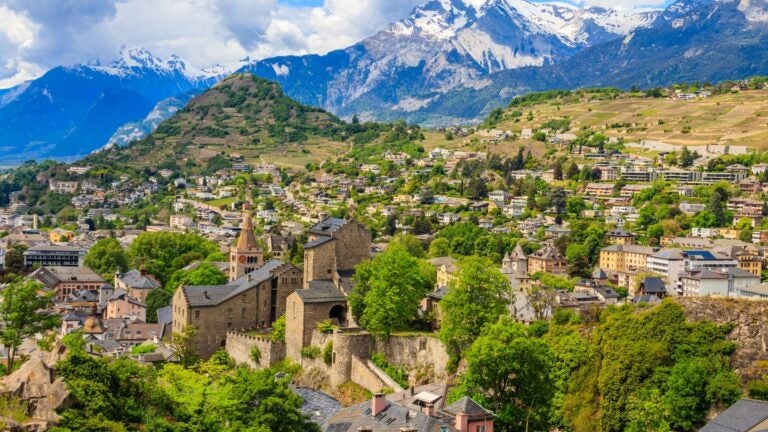
Most people have heard of Valais because it’s the home to Switzerland’s most famous resort town and one of the most popular European winter destinations: Zermatt.
Zermatt attracts around 2 million visitors a year, many of whom do not realize the town is car-free until they arrive. Drivers have to park 5 kilometers away in Täsch, then take a shuttle train into Zermatt.
As a bustling resort town, Zermatt proves that towns and villages of all sizes can run fine without cars. In fact, Zermatt has a number of strictly regulated electric vehicles that handle things like emergencies, deliveries, trash collection, and luggage handling within the town.
From Zermatt, you can take a gondola then a cable car up to Matterhorn Glacier Paradise, Europe’s highest mountain station. Sitting 3,883 meters above sea level, you’ll have incredible views of the Eiger, Mönch, and Jungfrau peaks.
Other cable car villages worth visiting in Valais are Bettmeralp and Riederalp. They give direct access to the Aletsch Glacier, with awesome hiking trails taking you around this 23-kilometer UNESCO World Heritage glacier site.
Central and eastern Switzerland: The funicular villages almost no tourists experience
You don’t have to travel all the way to Southern Switzerland for mountainous landscapes. There are several lesser-known car-free villages within easy reach of Switzerland’s major cities, which make for accessible day trips as part of a Zurich trip
- Stoos is just over an hour from Zurich or Lucerne, and to get there, you get to ride on the steepest funicular in the world, which is an experience in itself. Once you reach the top, you can hike the panoramic ridge trail, then enjoy some Swiss mountain food in Stoos village.
- Braunwald is a resort-style funicular village in Glarus. It’s largely unknown to international travelers but loved by locals. This enchanted village offers plenty of family-friendly activities, like pony rides, forest ropes courses, and scavenger hunts. Take a train from Zurich to Linthal, and then switch to the Braunwaldbahn Funicular.
- Rigi Kaltbad is ideal for spa days and wellness experiences. The village sits above Lake Lucerne and is full of spa hotels with outdoor mineral baths accompanied by panoramic vistas. To reach Rigi Kaltbad, take the train from Zurich to Arth-Goldau, or a scenic boat ride from Lucerne. Then transfer to the Arth-Rigi cogwheel railway for the final leg.
What to know before you book the train
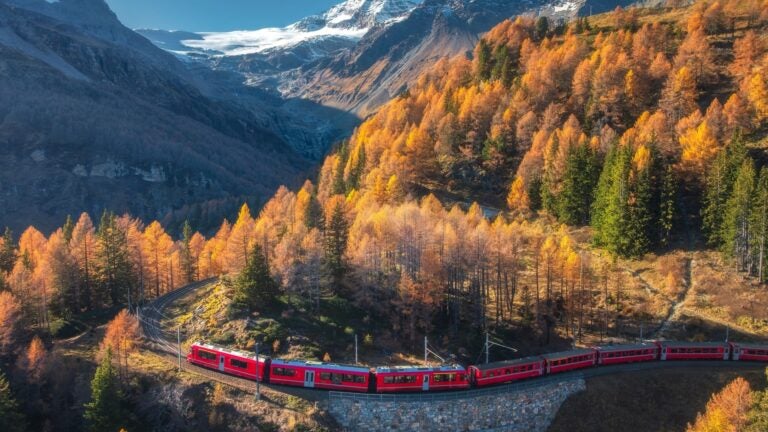
If you’re planning to travel to multiple places in Switzerland, you might be considering getting the Swiss Rail Pass.
While this is a fantastic way to travel between the cities, most mountain transport routes like cable cars and funiculars are not included in the pass. Instead, the pass gives you 50% off most mountain transport. So it’s worth checking the point-to-point ticket costs for the routes you plan to take to see if the pass is good value for money.
When planning your routes, also consider timing.
Last departures on mountain lines are much earlier than on mainline rail, so if you miss the last cable car back down from a car-free village, you’ll be stuck there for the night. Therefore, start your day trips early or plan overnight stays to avoid rushing.
Switzerland’s cable cars and mountain rails typically operate on different schedules during the winter and summer. They can also close for maintenance periods in spring and late autumn. So if you’re considering shoulder season travel, check operating calendars for the routes you plan to take before locking in your dates.
Seasons don’t just impact how you access these alpine towns; the experience you have will be totally different too. The same village can serve as a ski base in February and a hiking hub in July. Because of this, packing for Switzerland will differ drastically depending on the time of year you visit.
Stay connected across Switzerland with Holafly
Swiss rail runs on tight connections, and almost all of your planning happens on your phone: live departure boards, cable car timetables, the walking route from a mountain station to your hotel. A Holafly eSIM keeps you online from the moment you land. Every travel eSIM includes unlimited data, 5G speeds, and 24/7 customer support, so you can check whether the last funicular is still running without hunting for a Wi-Fi signal.
What’s more, every Holafly eSIM includes 1 GB of Always On backup data at no additional cost. It activates as soon as the eSIM is installed on your device, renews every month, and works in 150+ destinations. If your main data runs out halfway up a valley, you can still pull up the next connection and get where you are going.
Set up your eSIM for Switzerland before you travel, and let the trains handle the rest.

Unlimited data. Peace of mind.
Make sure you have travel data that's there when you need it most.
Plans that may interest you


A senior SEO writer from Lithuania, combining my passion for writing and travel at Holafly. With years of experience in technical fields, I'm here to answer all of your questions about staying connected. I specialize in turning even the most complicated topics into something everyone can understand.

