Language

Mardi Gras New Orleans 2027: Dates, parade schedule, and travel guide
Discover the ultimate Mardi Gras 2027 guide to New Orleans: 2027 dates, parade schedules, cost breakdowns, best viewing spots, and top travel planning tips.

Mardi Gras in New Orleans is a weeks-long cultural celebration, known for its parades, music, masquerade balls, and street parties. It officially begins every year on Twelfth Night (January 6) and ends sharply at midnight on Mardi Gras Day (Fat Tuesday).
Because Mardi Gras depends on the date of Easter, Fat Tuesday moves every year. This guide covers everything about Mardi Gras New Orleans 2027, including its dates, parade schedules, the best parades, ticket information, traditions, and practical travel tips.
To join this vibrant carnival, consider Holafly eSIM for hassle-free connectivity with unlimited data, 5G speeds, and 24/7 customer support.

Limitless data, endless adventures
Stream, scroll, and share as you please. With Holafly, your data is always unlimited.
TL;DR: Mardi Gras New Orleans 2027 dates and location
“Mardi Gras” is French for “Fat Tuesday.” While Mardi Gras Day itself falls on a single Tuesday, the overall Carnival season spans weeks, with major parades on Fridays, Saturdays, and Sundays leading up to Fat Tuesday.
- Mardi Gras Day 2027: Tuesday, February 9, 2027
- Celebration starts: Twelfth Night, January 6. (Twelfth Night marks the official start of the Carnival season every year. It falls exactly 12 days after Christmas.)
- Festival progression: The season launches weeks of balls, king cakes, and neighborhood events that build toward the final peak parade weekend and Mardi Gras Day.
- Locations: Parades and festivities happen all over New Orleans, primarily along St. Charles Avenue, through Mid-City, and throughout the French Quarter and Marigny, with specific routes varying by krewe and date.
How long does Mardi Gras last in New Orleans in 2027?s
In 2027, the Carnival season in New Orleans lasts 35 days (roughly five weeks). The full Carnival season runs from January 6 (Twelfth Night) through February 9 (Mardi Gras Day).
The busiest period occurs during the final two weeks of the season, specifically starting around Friday, January 29 through Fat Tuesday, February 9. The absolute peak happens over the final 5–6 days.
Mardi Gras New Orleans 2027 parade schedule
Individual parades and street festivities do not run every day; instead, they are spread across distinct dates, times, and routes throughout the city. Here are the major parades on each day:
- Wed, Jan 6 (Twelfth Night): Joan of Arc, Phunny Phorty Phellows, Funky Uptown Krewes
- Fri, Jan 22: Krewe of Bohème
- Sat, Jan 23: Chewbacchus
- Fri, Jan 29: Oshun, Cleopatra
- Sat, Jan 30: Krewe du Vieux, ‘tit Rex, Pontchartrain
- Sun, Jan 31: King Arthur, Carrollton, Barkus
- Wed, Feb 3: Druids, Alla
- Thu, Feb 4: Muses, Babylon, Chaos
- Fri, Feb 5: d’Etat, Hermes, Morpheus
- Sat, Feb 6: Endymion, Iris, Tucks
- Sun, Feb 7: Bacchus, Thoth, Okeanos
- Mon, Feb 8 (Lundi Gras): Orpheus, Proteus
- Tue, Feb 9 (Fat Tuesday): Zulu, Rex, Elks Orleanians
Major parades before Mardi Gras Day
The stretch of Carnival leading up to Mardi Gras Day features New Orleans’ largest and most famous parade spectacles. Below are the key major krewes that roll during the final days, ranked by overall crowd size, cultural impact, and popularity:
- Krewe of Endymion (Saturday, Feb 6)
The largest parade of Carnival. A massive super-krewe in Mid-City. Its giant LED tandem floats attract over 100,000 spectators, creating the largest crowd and block party of the season. - Krewe of Bacchus (Sunday, Feb 7)
The original Sunday night super-krewe. Famous for its celebrity monarchs and iconic giant-signature floats like the Bacchagator. It is the undisputed main event of Carnival Sunday. - Krewe of Orpheus (Monday, Feb 8)
Lundi Gras’ premier night super-krewe. This music-centric spectacle draws massive crowds on the eve of Fat Tuesday to see the multi-unit Smokey Mary steam train float and Leviathan. - Krewe of Muses (Thursday, Feb 4)
The premier all-female super-krewe. Famous for its razor-sharp satirical floats, marching groups, and the most coveted catch in Mardi Gras (the hand-decorated shoe). Muses completely owns Thursday night and draws crowds equal to weekend parades. - Le Krewe d’Etat (Friday, Feb 5)
The top satirical parade of Mardi Gras. Renowned for its hilarious, political float themes and local following. d’Etat consistently outperforms typical Friday night parades in fan enthusiasm and crowd turnout.

Mardi Gras Day parades
Mardi Gras Day (Fat Tuesday) is the grand finale of the Carnival season. While neighborhood celebrations and walking krewes happen all day across the city, the official major parade lineup rolls down Uptown Route A, starting bright and early on Mardi Gras morning.
- Krewe of Zulu: Starts around 8:00 AM. It’s a historic African American krewe famous for traditional characters and its legendary, highly coveted hand-decorated Zulu Coconuts.
- Krewe of Rex: Starts immediately following Zulu (~10:00 AM). Rex set the official colors of Mardi Gras (Purple, Green, and Gold) and traditional royalty structures. The official “King of Carnival” features classical papier-mâché floats, magnificent costumes, and elite marching bands,
- Truck Parades: Start immediately following Rex (~12:00 PM). A local tradition immediately following Rex, where hundreds of festive flatbed trucks carrying costumed families and groups roll down the route.
What are the best Mardi Gras parades in New Orleans?
Selecting the right parades depends on the experience you want:
- For massive spectacle and high energy: Head to Endymion or Bacchus. These “super-krewes” feature lighted multi-part tandem floats, celebrity monarchs, massive crowds, and abundant throws.
- For deep history and cultural traditions: Catch Zulu and Rex on Mardi Gras Day. They represent the heart of New Orleans’ Carnival heritage with iconic costuming, royalty, and historical significance.
- For families and daytime fun: Choose daytime Uptown parades like Rex or Iris, or position yourself along the upper stretches of St. Charles Avenue (near Napoleon Avenue) where families set up ladders and tailgating spots.
- For satire and walking parades: Seek out French Quarter and Marigny processions like Krewe du Vieux or Chewbacchus for smaller, creative, foot-based parades.
Here we compare the four big parades:
| Parade | 2027 date/ time | Route | Highlights |
|---|---|---|---|
| Endymion | Sat, Feb 6 (~4:00 PM) | Mid-City | Mega super-krewe with lit tandem floats; ends inside Superdome. |
| Bacchus | Sun, Feb 7 (~5:15 PM) | Uptown Route A | Pioneering super-krewe with giant floats (Bacchagator) and celebrity monarchs. |
| Zulu | Tue, Feb 9 (~8:00 AM) | Central City/ Uptown | Historic African American krewe; throws hand-decorated coconuts. |
| Rex | Tue, Feb 9 (~10:30 AM) | Uptown Route A | “King of Carnival”; traditional papier-mâché floats and official colors. |
What does Mardi Gras celebrate in New Orleans?
Mardi Gras (French for “Fat Tuesday”) is the final day of feasting and revelry before Ash Wednesday and the 40 days of Lenten fasting before Easter.
Brought to Louisiana by French explorers in 1699, New Orleans transformed this European tradition into a uniquely American celebration, blending French, Spanish, African, Caribbean, and Indigenous cultures.
Key traditions:
- Krewes and parades: Private social clubs called krewes host massive parades featuring themed floats, marching bands, and costumed maskers throwing trinkets (“throws”) to the crowds.
- Throws: Spectators catch purple, green, and gold beads, plastic doubloons, toys, stuffed animals, and hand-decorated signature items.
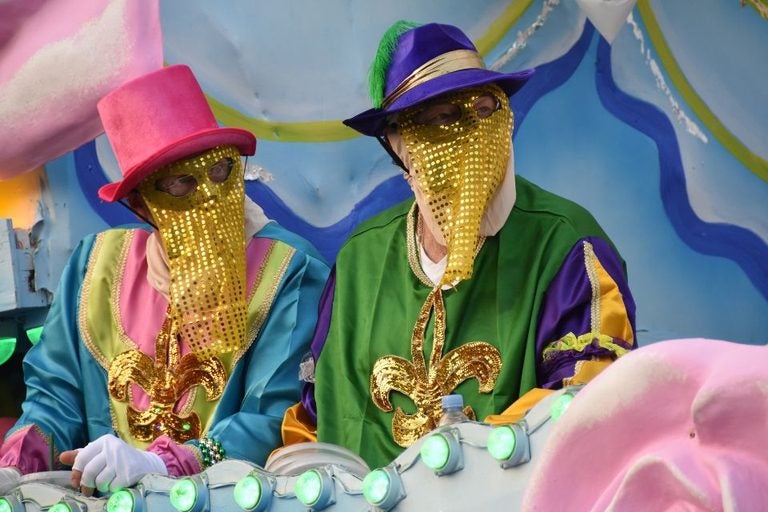
- Costumes and masking: On Fat Tuesday, city law requires float riders to wear masks, and locals take to the streets in elaborate handmade costumes.
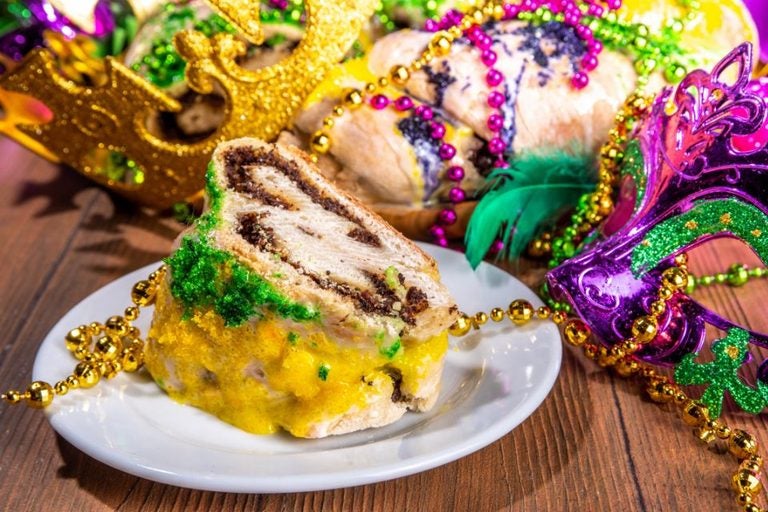
- Food and King Cakes: King Cake is a cinnamon-braided pastry topped with iced sugar in carnival colors. It contains a hidden tiny plastic baby. Finding the baby marks you as “king for the day” and requires you to bring the next cake.
- Official colors: Established by the Krewe of Rex in 1872, the official colors are purple (Justice), green (Faith), and gold (Power).
How much does it cost to attend Mardi Gras in New Orleans?
Attending Mardi Gras can range from budget-friendly to luxury, with core parade viewing always 100% free.
- Street parades: Free along public routes.
- Grandstand Seats: $20 – $95 per person. Grandstands are temporary elevated bleacher structures set up along major parade routes.
- Balcony and ball tickets: $150 – $500+ for open bars, buffets, or black-tie extravaganzas. Balcony packages grant access to private, second-floor historic balconies overlooking the streets.
If you want to plan a visit to New Orleans during Mardi Gras, the expected costs can be as follows:
| Expense | Estimated daily cost | Notes |
|---|---|---|
| Hotels/Airbnbs | $350 – $700+/night | Prices double or triple; expect 3- to 5-night minimums. |
| Food | $30 – $90/day | Street food (po’boys, king cake) costs $10-$18; sit-down meals cost more. |
| Drinks | $20 – $60/day | BYOB is legal on streets in plastic cups; store-bought drinks save money. |
| Transport | $1.25 – $50/day | Streetcars cost $1.25; rideshares suffer heavy surge pricing and closures. |
| Bathroom wristbands | $10 – $30/day | Local businesses and churches sell them along routes. |
An average of 4 days is what most travelers spend on Mardi Gras. Excluding the flight costs, your trip can cost:
- Budget: $600 – $900 (Outer neighborhood stay, street food, free parades)
- Mid-range: $1,200 – $2,000 (Hotel near parade route, sit-down meals, grandstand pass)
- Luxury: $2,500 – $4,500+ (French Quarter hotel, VIP balcony passes, Krewe ball ticket)
Best places to watch Mardi Gras in New Orleans
The best location to watch Mardi Gras depends heavily on whether you want a family-friendly vibe, proximity to hotels, or wild street celebrations.
- St. Charles Avenue and Uptown: Offers a classic, family-friendly experience along the grassy median (neutral ground), ideal for setting up lawn chairs, parade ladders, and picnics for major float parades.
- Canal Street and CBD: Offers a loud, high-energy downtown setting steps from major hotels, ideal for dense crowd energy, grandstand seating, and catching parades near their terminus.
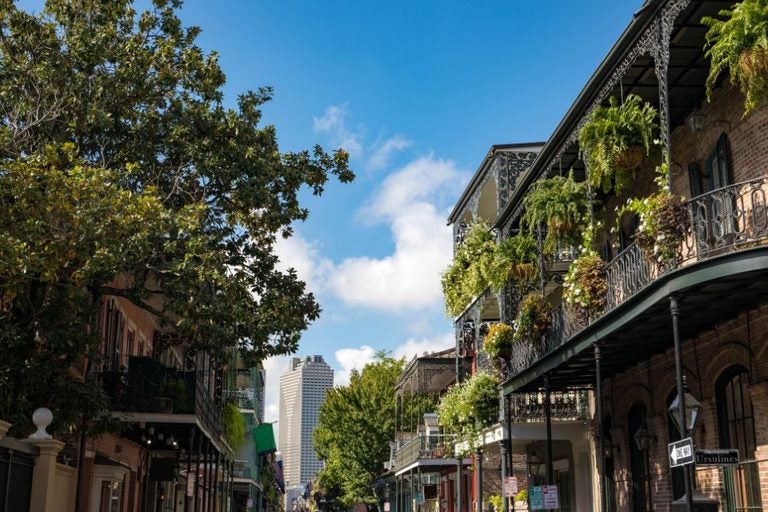
- French Quarter and Marigny: Offers an unfiltered, foot-traffic-only street party, ideal for elaborate handmade costumes, walking krewes, brass bands, and historic balcony views.
How to plan your Mardi Gras trip
Navigating Fat Tuesday requires strategy because the entire city is packed, streets are closed, and public transit is rerouted. Use these planning tips to make the most of the day:
- Book hotels early: Lock in rates for peak dates (Fri–Tue). Expect 3- to 5-night minimum stays and high seasonal rates.
- Plan for road closures: Streets close hours before floats roll. Rideshares face heavy surge pricing and detours; rely on walking or streetcars instead.
- Track live parades: Download the WDSU Parade Tracker app and sign up for NOLA Ready text updates for real-time parade positions and weather alerts.
- Arrive early and pack supplies: Secure curb or neutral-ground spots 2–4 hours before big parades. Bring water, snacks, hand sanitizer, portable chargers, and rain gear.
- Set a physical meeting point: Cell service often drops in dense crowds. Pick a clear landmark, like a hotel lobby or street corner, to reconnect if separated.
Stay connected during Mardi Gras in New Orleans
Mardi Gras is a crowded festival, with parades across the city. To find locations, take rideshares, and stay in touch with friends, you need a reliable internet connection.
Holafly New Orleans eSIM is a convenient option for travelers, with:
- Unlimited data
- 5G speeds where available
- 24/7 customer support
- Holafly Reusable eSIM, which eliminates the need to install a new one each time.
- Always On, with 1 GB of backup data available up to 30 days after the main data allowance is exhausted.
For frequent travelers who may visit several destinations in one month, Holafly Plans, a monthly connectivity plan, and Ultra Plan, with additional travel services like travel protection and health support, are ideal options.

Peace of mind before you fly
Set up your eSIM before travel and get unlimited data on arrival.
Plans that may interest you

Formerly a travel journalist turned marketing copywriter, I found my way back to the travel world with Holafly—my dream company that made remote work possible. My motto? “Dream big and make it happen.” I’m passionate about writing, exploring the world, and staying active through walking, running, swimming, and hiking. I also love learning, reflecting, and connecting with inspiring minds.