







 Language
Lisbon food: The iconic dishes, drinks, and desserts you must try
From pastel de nata to the homemade caldo verde, learn which ones are the best foods from Lisbon, where to eat them, and local insights from Rita.

Lisbon cuisine is strongly influenced by its coastal location, with popular iconic dishes such as the pastel de nata, bifana, and bacalhau à brás.
But those aren’t the only dishes worth trying when visiting Lisbon, and to discover all about Lisbon food, our local Holaflyer, Rita Sequeira, gave us some recommendations so travelers can actually eat like locals.
This guide also covers where to eat, food culture, and popular drinks every traveler has to try when visiting Lisbon, and explains how to get internet via an eSIM for Portugal from Holafly so you can make your way to the best restaurants in the city.

Unlimited data. Peace of mind.
Make sure you have travel data that's there when you need it most.
Top 10 Lisbon foods
Food in Lisbon offers a mix of seafood dishes, such as bacalhau à brás and sardinhas assadas, and traditional desserts like pastel de nata.
Let’s dive into what each one offers, with additional tips and insights given by Rita.
1. Pastel de nata
For Rita, the pastel de nata is one of the must-try dishes for every traveler visiting Lisbon. It is a custard tart with a caramelized top, and it’s best eaten straight from the oven.
Her recommendation is to head over to Belém, like the Pastéis de Belém store, and get one there, as this is the region where this recipe became internationally famous.
In some cases, a pastel de nata can be dusted with cinnamon or sugar, adding an extra layer of flavor to this dessert.

2. Bacalhau à brás
Bacalhau à brás is Rita’s favorite Lisbon dish. It’s a rather simple dish made with shredded codfish, onions, thin fries, parsley, eggs, and olives.
According to Rita, this dish represents the simplicity and flavor of Portuguese home cooking, and a fun fact is that this is Cristiano Ronaldo’s favorite dish, too.
If you want to give it a try, Laurentina and O Rei do Bacalhau are two great restaurants to visit in Lisbon.
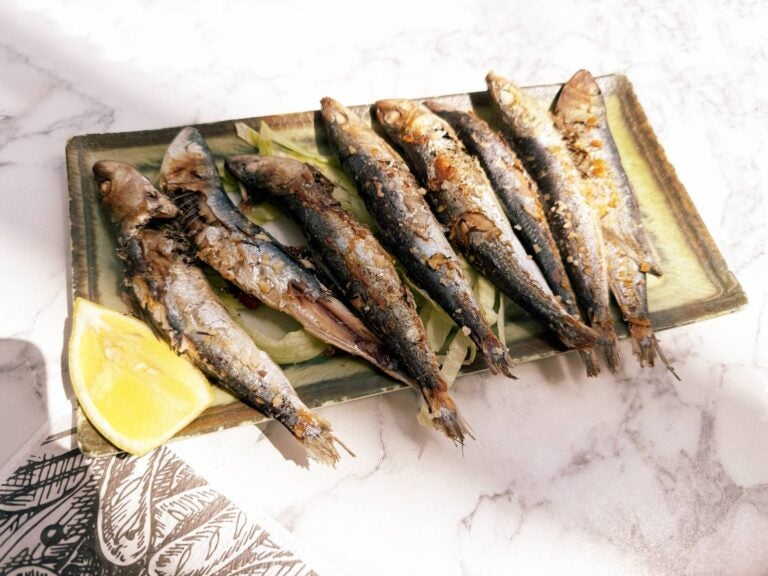
3. Sardinhas assadas (grilled sardines)
Sardinhas assadas, or grilled sardines, are a seasonal highlight that travelers can’t miss when visiting Lisbon in June.
During the Santos Populares festival in Lisbon, this is one of the most iconic seasonal foods, making it the go-to option for most attendees and travelers.
Still, sardinhas assadas are still available year-round in traditional tascas around Lisbon, but eating them at the Santos Populares is basically a must.
4. Bifana
One traditional Lisbon dish most locals love is the bifana, a marinated pork sandwich on a soft roll.
It’s rather a simple, cheap, but still beloved dish that travelers have to try, especially when stopping at tascas or snack bars around the city.
Also, bifana might come with an extra sauce, such as mustard or piri-piri sauce.
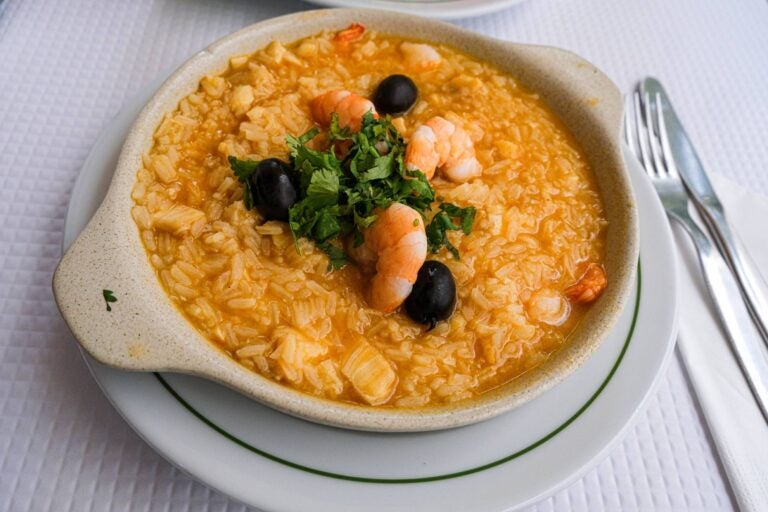
5. Arroz de marisco (seafood rice)
Another favorite from Rita comes with arroz de marisco, which is basically seafood rice made with prawns, clams, and mussels.
The rice texture is creamy and loose, and it’s usually cooked with wine or seafood broth.
The best places to try a delicious arroz de marisco are in the Alfama neighborhood or at riverside restaurants.
6. Caldo verde
For travelers looking for a traditional, homemade recipe in Lisbon, Rita recommends trying caldo verde.
This is a comforting potato-and-kale soup with chourico (chorizo). Rita also tells us this soup is mostly cooked for family gatherings and celebrations, but it’s widely found at places like A Merendeira or Taberna Carolina.
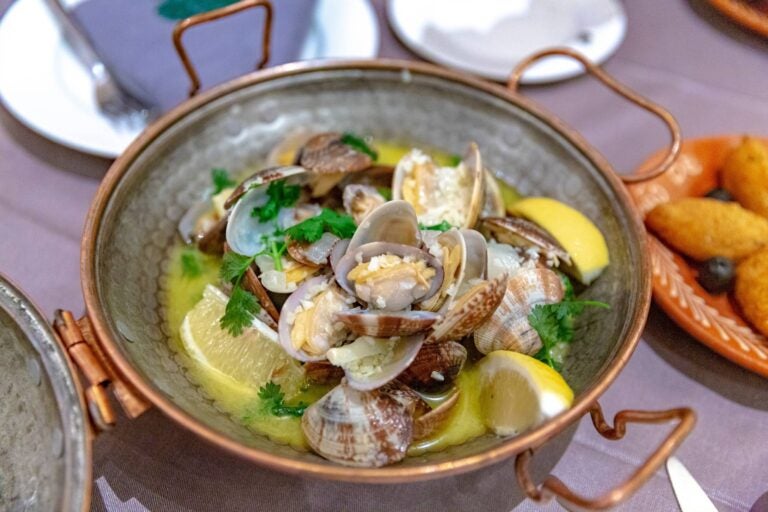
7. Amêijoas à bulhão pato
Even though amêijoas à bulhão pato are originally from the Estremadura region, they quickly became a staple of Portuguese cuisine.
Amêijoas à bulhão pato are clams cooked in white wine, olive oil, lemon, fresh coriander, and some garlic. Some restaurants might put a side of bread to eat with this dish, but it’s not always the case.
Even though it sounds like a simple dish, it’s actually hard to get elsewhere. Plus, no traveler can miss trying one of the final candidates from the Seven Wonders of Portuguese Gastronomy.
8. Polvo à lagareiro (octopus with olive oil)
Another must-include, according to Rita’s what-to-eat-in-Lisbon list, is polvo à lagareiro.
This dish comes with either baked or grilled octopus, dressed generously with Portuguese olive oil and garlic, and served with potatoes.
This is a popular dish that really showcases Portugal’s obsession with quality olive oil, which is a great souvenir from Lisbon to buy during your trip.
9. Prego no pão
While you’re in a rush exploring the best things to do in Lisbon, prego no pão will be your best ally.
This is a simple steak sandwich made with garlic and mustard. It’s a quick dish, yet delicious, satisfying, and widely found throughout Lisbon, making it the go-to fast food for locals and travelers alike.
10. Pastel de Belém (vs. pastel de nata)
While pastel de nata is a traditional dessert in Lisbon, the original version is the Pastel de Belém.
It’s only made at Manteigaira dos Jerónimos in Belém, using a secret 19th-century recipe, so you won’t find something similar when eating a pastel de nata.
Honorable mentions
If you feel like you haven’t had enough Lisbon food, you can add some additional dishes to your what-to-eat list.
- Cataplana de marisco: A traditional stew originated in the south of Portugal. It’s made in a cataplana that opens and shuts like a clam and includes mussels, clams, shrimps, squid, onions, garlic, olive oil, smoked paprika, and fresh parsley.
- Cozido à portuguesa: Another popular stew prepared with lots of vegetables like cabbage, potatoes, and carrots, with some rice, and different types of meat. It’s more popular in the Azores, but it’s still found in Lisbon.
- Leitão da Bairrada: An iconic Portuguese dish made with roasted suckling pig with garlic, salt, and pig fat, and occasionally with fresh herbs, slowly roasted with eucalyptus or gravepines cuttings.
- Açorda alentejana: Originated in Alentejo, it’s a traditional soup made with garlic, olive oil, lots of parsley, and bread. Locals might add codfish, sardines, or eggs when the soup is almost done.
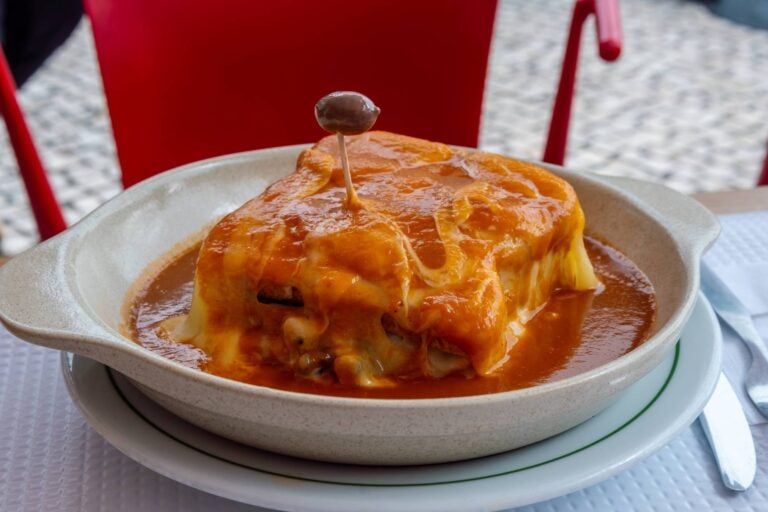
- Francesinha: It’s a popular sandwich filled with various meats, including ham. It’s covered with grated cheese and served with a hot sauce made with tomatoes, spices, and meat broth.
Lisbon drinks: wine, ginjinha, and café culture
If you’re thinking about what’s best to drink when trying the different Lisbon dishes, here are some drinks all travelers should try:
- Ginjinha: A ginja cherry liquor served in a tiny cup, sometimes including a cherry in it. Popular around Rossio bars, Rita’s a must-try drink for travelers and a great Lisbon souvenir.
- Vinho Verde: A lightly sparkling young wine, which is ideal for warm evenings before dinner.
- Port wine: Taken from the Douro Valley, one of the best places to visit from Porto, it’s one of the most popular drinks, according to Rita. Best to try at port wine bars rather than restaurants.
- Sagres and Super Bock: The most popular Portuguese beers. A cold Super Bovk with a bifana is a pretty traditional Lisboan lunch and a great option for travelers in a rush.
- Galão: Similar to a latte, but made with Portuguese milk. Alongside fresh orange juice, these are two common items in café culture, according to Rita.
Lisbon food markets and where to eat
Finding where to eat can be challenging for travelers, and the idea is to avoid tourist traps that won’t let you enjoy the authentic flavors of Lisbon’s cuisine.
Here are some recommendations for all travelers to consider, with some suggestions from Rita:
- Time Out Market: One of the most famous food markets in Europe, and a local recommendation from Rita. Great to find sweets and seafood.
- Campo de Ourique Market: Rita’s pick for those looking for a more local atmosphere. It’s less touristy than Time Out, and it’s fair to say you’ll find more traditional flavors here.
- Alfama, Mouraria, and Príncipe Real: Rita’s recommendation for local neighborhoods with traditional taverns, seafood, and overall authentic Portuguese cuisine.
- Feira da Ladra: Lisbon’s most popular flea market. Worth trying local food and finding some Lisbon souvenirs while on it.
Lisbon food culture: mealtimes, tipping, and dining out
Want to feel like a real local when eating in Lisbon? Here are some tips from Rita that every traveler should keep in mind:
- Mealtimes: Lunch is served from 1 to 2 PM, with dinner from 8 to 10 PM. Don’t expect restaurants to be busy before or after those hours.
- Slow dining: For Rita, “Food culture in Portugal is strongly connected to sharing meals slowly with family and friends. Visitors should not rush.” So, take your time to enjoy your meal.
- Tipping: Rita mentions this isn’t mandatory. Locals usually round up the bill or leave 5% to 10% for really good service, but it’s ok not to do it.
- Couvert: When served bread and olives, these aren’t free. You have to pay for everything you eat, and you can politely decline these entries.
Stay connected while eating your way through Lisbon with Holafly
To easily find the best restaurants around Alfama, Mouraria, or make your way with Lisbon public transport to Bélem to try a century-old pastel recipe, you should always have mobile internet.
A great option for travelers is the Holafly eSIM for Portugal, which offers unlimited data, 5G speeds, and customizable plans for up to 90 days.
Plus, you get the Always On perk, which gives you 1 GB of backup data when you need it most, and you only need to keep your eSIM installed.
Unlimited data. Peace of mind.
Make sure you have travel data that's there when you need it most.
Plans that may interest you


I first started my content creation journey as a freelancer in 2019, before connecting with Holafly in 2021. At Holafly, my travel and tech interests come together in one place as I craft high-quality articles about the eSIM and related markets. My content aims to help travelers stay connected, wherever they are.

