







 Language
How many days in Nagoya is enough? A trip planning guide for 2026
Discover how many days you need in Nagoya, with 1–5 day itineraries, Ghibli Park, day trip options, transport tips, and seasonal advice.
Three days is enough for most travelers to see Nagoya properly: two days to cover the city itself, plus one full day trip. If you’re short on time, one to two days will still cover the highlights, and four to five days works well if you want to add Ghibli Park or a second day trip without rushing.
Nagoya usually isn’t the headline of a Japan trip. It’s the stop you’re deciding how many nights to peel off from Tokyo, Kyoto, or Osaka, and that’s exactly the question this guide answers.
Below, you’ll find what fits into each day count, the best day trips from the city, how to get in and around, and when to visit, so you can lock in your itinerary and move on to booking.

An eSIM you can rely on
Join over 10 million Holafly customers and get connected with our trusted, global services.
How many days in Nagoya is enough?
Nagoya usually slots into a longer Japan trip rather than being the main event, so it rarely needs a huge share of your itinerary. Three days is the ideal amount to cover the city and its surrounding day trips comfortably, but that’s a starting point rather than a fixed rule.
| Days in Nagoya | What you’ll cover | Best for |
|---|---|---|
| 1–2 days | Nagoya Castle, Osu Shopping District, one or two more sights | Short stopovers between other cities |
| 3 days | The city highlights, plus one day trip | Most first-time visitors |
| 4–5 days | The city, two day trips, or a full day at Ghibli Park | Slower trips or Ghibli Park fans |
If your trip lines up with the 2026 Asian Games, which runs from September 19 to October 4 in Nagoya and Aichi Prefecture, factor in extra days beyond the numbers above for time spent at the venues themselves.
If you couldn’t get Asian Games tickets, that’s not a dealbreaker: there are also multiple ways to watch Asian Games events from your hotel room, a sports bar, or a big screen elsewhere in the city, so you don’t need a ticket to feel part of it.
Once you’ve decided how many nights to give Nagoya, the next step is working out how to plan your Japan trip around the rest of your route, transport, accommodation, and any advance-booking attractions.
Is Nagoya worth visiting?
Yes, but it’s worth knowing what kind of trip you’re signing up for. Nagoya doesn’t have the postcard temples of Kyoto or the sheer scale of Tokyo, and that’s precisely why the “how many days in Nagoya” question comes up so often, it’s rarely anyone’s sole reason for visiting Japan.
But, Nagoya still has a lot to offer: Nagoya Castle and its samurai-era history, a genuinely distinct food scene (miso katsu, hitsumabushi, tebasaki chicken wings), the Toyota and manufacturing heritage that shaped the city, and easy access to Ghibli Park, which doesn’t exist anywhere else. It’s also less touristy than Kyoto or Osaka, so sights tend to be calmer.
Here’s an honest opinion: if your time in Japan is tight and Ghibli Park isn’t a priority, Nagoya is easy to skip or treat purely as a transit stop. If you have the days to spare, or Ghibli Park is on your list, it earns a place on the itinerary.
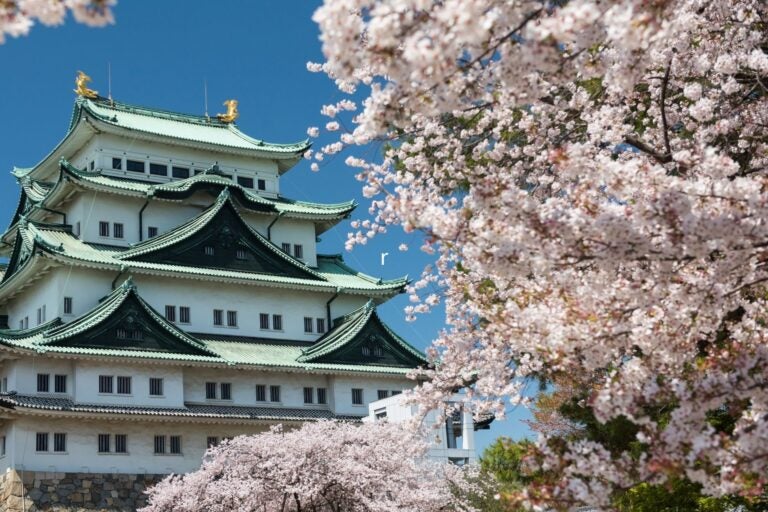
1 to 2 days in Nagoya: The city highlights
A short stop covers the essentials without feeling rushed. Here’s roughly how long each sight needs:
| Sight | Time needed |
|---|---|
| Nagoya Castle | 1.5–2 hours |
| Osu Shopping District | 1.5–2 hours |
| Atsuta Shrine | 1 hour |
| Toyota Commemorative Museum of Industry and Technology | 2 hours |
On one day, pair Nagoya Castle with the Osu Shopping District, since they’re a short subway ride apart. With two days, add Atsuta Shrine and the Toyota museum, or slow the pace and build in a proper lunch stop for hitsumabushi or miso katsu.
3 days in Nagoya: The sweet spot
Three days is where most travelers land, and the logic is simple: two days to properly cover the city, and one full day free for a day trip. It gives you enough time to see Nagoya Castle, Osu, Atsuta Shrine, and the Toyota museum at a relaxed pace across the first two days, without cutting corners.
It also leaves a full day to head out to somewhere like Inuyama, and it’s also enough time to fit in a Ghibli Park visit in place of the day trip, if that’s the priority.
If Nagoya is one stop on a longer route, a broader Japan travel guide can help you work out how it fits alongside Tokyo, Kyoto, Osaka, and other destinations.

4 to 5 days in Nagoya: Day trips and Ghibli Park
A fourth or fifth day buys you options rather than more city sightseeing, since two days are usually enough for Nagoya itself. Whether those extra nights are worth adding may also depend on your overall cost of traveling to Japan, especially if Nagoya is only one stop on a longer itinerary.
With extra time, you could add:
- A second day trip, on top of the one you’d take with three days
- A full, unhurried day at Ghibli Park rather than squeezing it into a half day
- A theme park day at Nagashima Spa Land, or a motorsport day trip to Suzuka Circuit for racing fans
Best day trips from Nagoya
Nagoya’s location makes it a convenient base for day trips. Here’s how the main options compare:
| Destination | Travel time (one way) | Half day or full day |
|---|---|---|
| Inuyama | ~25–35 min by Meitetsu | Half day |
| Ghibli Park (Nagakute) | ~45–60 min by subway + Linimo | Full day |
| Gifu | ~20 min by JR | Half day |
Inuyama is the easiest and most popular option: a short Meitetsu train ride to Japan’s oldest surviving original castle keep, plus a preserved Edo-period castle town and the Meiji-Mura open-air museum if you want to extend the day.
Ghibli Park needs a full day, once you factor in travel time and the fact that entry to its five areas is timed and spread out, especially if you’re going for the Grand Warehouse. Since it requires advanced booking, treat it as a planned full-day trip rather than a spontaneous one.
Gujo Hachiman, just north of Gifu, is a quick option if you want a genuine wooden castle keep: it’s Japan’s oldest surviving wooden reconstructed castle, set above a well-preserved castle town, and makes for a comfortable half day.
Tip: Reliable mobile internet and train-planning apps for travel in Japan are especially useful in Nagoya, where day trips may involve switching between the subway, Meitetsu, JR, and Linimo.
How to get to Nagoya and get around
By Shinkansen: Nagoya sits directly on the Tokaido Shinkansen line, which makes it an easy stop between Japan’s other major cities. From Tokyo, the fastest Nozomi trains take around 100 minutes. From Kyoto, it’s about 35–40 minutes, and from Shin-Osaka, roughly 47–55 minutes. That makes Nagoya a natural add-on rather than a detour, whichever direction you’re traveling.
By air: If you’re flying into Chubu Centrair Airport, the Meitetsu μ-Sky Limited Express gets you into Nagoya Station in around 28–30 minutes. Regular Meitetsu express trains take a bit longer, around 35–40 minutes, for a lower fare.
Getting around locally: Nagoya’s subway network covers the main city sights, as for day trips, you’ll switch to Meitetsu lines or JR lines depending on the destination. An IC card covers most transport, so it’s worth picking one up on arrival rather than buying individual tickets each time. You can also compare tourist cards to see which transport options make sense for your route.
Best time to visit Nagoya
Spring (March to May) and autumn (September to November) are generally among the best times to travel to Japan, and Nagoya follows the same pattern, with comfortable weather and seasonal scenery. Cherry blossoms typically peak in late March to early April, and autumn foliage runs from around mid-October into early December, depending on the spot.
Summer (June to August) is hot and humid with a rainy season and occasional typhoons, while winter (December to February) is cold but generally dry.
Spring and autumn are also the busiest, particularly around the Nagoya Castle cherry blossom festival, so expect fuller sights and higher accommodation prices. Also, during the peak seasons, the same itinerary takes a little longer, since sights are busier and photo stops take more time.
Stay connected in Nagoya with Holafly
Nagoya’s day trips mean hopping between the subway, Meitetsu, JR, and Linimo, so you’ll want live train times and maps working the whole way. With an eSIM for Japan from Holafly, you get unlimited data at speeds up to 5G, and if anything comes up along the way, 24/7 customer support is a message away.
Even after your main plan runs out, Holafly keeps you covered. Always On: 1 GB of monthly backup data lets you keep your eSIM installed, with 1 GB refreshing every month at no extra cost — enough to pull up a train map, book a last-minute Ghibli Park slot, or message your hotel when a day trip runs long.

Get an unlimited data eSIM
Use code MYESIMNOW5 for 5% off at checkout
Plans that may interest you

哈囉我是來自台灣的 Wen,平常最喜歡旅遊,也喜歡將旅遊的種種化成文字跟大家分享,希望大家能在我的文章中找到有用的資訊,加上 Holafly 的 eSIM,讓你的旅程更美好!✈️✈️✈️ Hi! I'm Wen, a passionate content writer and travel enthusiast from Taiwan. I transform my wanderlust adventures into engaging stories and practical guides, helping fellow travelers make the most of their journeys.Through my articles, I strive to provide travel tips while introducing how our eSIM technology can enhance your travel experience - keeping you connected wherever your adventures take you!

