Language
Getting married in Italy: What foreigners need to know
Getting married in Italy means a Nulla Osta, two witnesses, and a licensed venue. Here are the documents, costs, and steps for foreigners.

Getting married in Italy is open to foreigners, and there’s no minimum residency period, so you don’t need to live in the country to marry there. You will need a Nulla Osta (a certificate of no impediment) from your embassy, an Atto Notorio signed by two witnesses, and a ceremony booked at a venue licensed by the local comune. Foreign documents have to be legally translated into Italian.

Count memories, not data
Never lose connection with unlimited data eSIMs from Holafly.
Types of weddings in Italy
Several different types of weddings take place in Italy, so you can choose the one that suits your needs and expectations.
Civil wedding
A civil wedding is a non-religious, legally recognized marriage. The civil ceremony has to be held in a place approved by the local town hall, and there are typically dedicated places for such ceremonies in most towns and cities. The ceremony is performed by the town’s Mayor or a civil official dedicated by the state.
If one or both of the newlyweds don’t speak Italian, you’ll need an interpreter to take part in the ceremony. The ceremony can include personalized vows but needs to follow the legal requirements in order to be declared official. Civil ceremonies typically take under an hour from start to finish.
Catholic wedding
Italy is a primarily Catholic country, and Catholic weddings are very popular here. The wedding is usually recognized both religiously and legally, but you need to make sure to include the civil element in the wedding. Weddings of other faiths are also allowed in Italy, but a separate civil ceremony is needed for the wedding to be legally recognized.
The religious ceremony is officiated by a priest and includes Catholic traditions such as reading the vows, reading from the Bible, and the nuptial blessing.
At least one of the partners needs to be Catholic for the religious wedding ceremony to take place. You’ll also need to coordinate your wedding with the Italian church and a pre-marital course, which means the preparation takes longer compared to a civil marriage.
Civil unions
A civil union is nearly identical to a civil marriage, with the main difference being that it’s meant for same-sex couples. Civil unions were legalized in Italy in 2016, providing a legally recognized form of union for partners of the same sex. Just like civil marriages, civil unions are held in town halls or dedicated wedding venues and are conducted by civil officials.
Symbolic ceremonies
Symbolic marriage ceremonies are celebrations of love that are not legally or religiously binding in any way. It’s completely up to you how you want to plan it. You can choose the wedding destination, who conducts the ceremony, and plan every little detail yourself.
Legal requirements for getting married in Italy
Different types of weddings have different legal requirements, and getting married in Italy as a foreigner adds an extra layer of paperwork. Most couples looking for help getting legally married in Italy get stuck on the same two documents. Here’s what Italian law requires and how to get married in Italy as a foreigner without having your file rejected.
- You must be 18 or older to get married. People under 18 but over 16 can also get married but require parental consent.
- A valid passport or international ID.
- A marriage Nulla Osta (no impediment certificate). You can get it at your country’s embassy or consulate in Italy.
- Two witnesses to sign an Atto Notorio.
- A declaration of intent to marry, submitted to the Italian civil register.
- If you’ve had a previous marriage, you’ll need to provide divorce papers or a death certificate.
Additional documents required for a religious wedding:
- Baptism, first communion, and confirmation certificates.
- A certificate for a pre-marriage course.
- A letter of permission from your Priest or Pastor.
- If the civil part of the marriage doesn’t take place together with the religious marriage, you’ll need to provide proof of civil marriage.
Where to get married in Italy
Why is everyone getting married in Italy? Coastline, mountains, and hill towns in one country, and no residency requirement for foreigners. There’s no bad place to get married in Italy, but if you haven’t set your mind on a venue yet, here are some locations to consider:
- Small towns: While Italy does have big cities with historic old towns and stunning architecture, a lot of its beauty and culture lies within its numerous charming small towns and villages.
- The mountains: With the Dolomites in the Northeast and the Alps in the Northwest, Italy is home to some of the most stunning mountains anywhere in the world. Getting married at the foot of these mountains is an unforgettable experience, not to mention the incredible wedding photos you’ll get with these giants in the background.
- The seaside: Italy is known for its shores bordering the Mediterranean and Adriatic seas, which are home to some of the most iconic pieces of shoreline anywhere in the world. On top of that, the southern parts of Italy offer good weather for a much bigger part of the year than the north, allowing for a sunny, warm seaside wedding for most of the year.
Keep in mind that if you want to have a civil or Catholic wedding, you’ll need to find a marriage office or church to hold your wedding in. While these are widely available, you’re limited to pre-determined marriage locations. If you want to have a symbolic wedding ceremony, the options are endless, and you can hold it pretty much wherever you want.
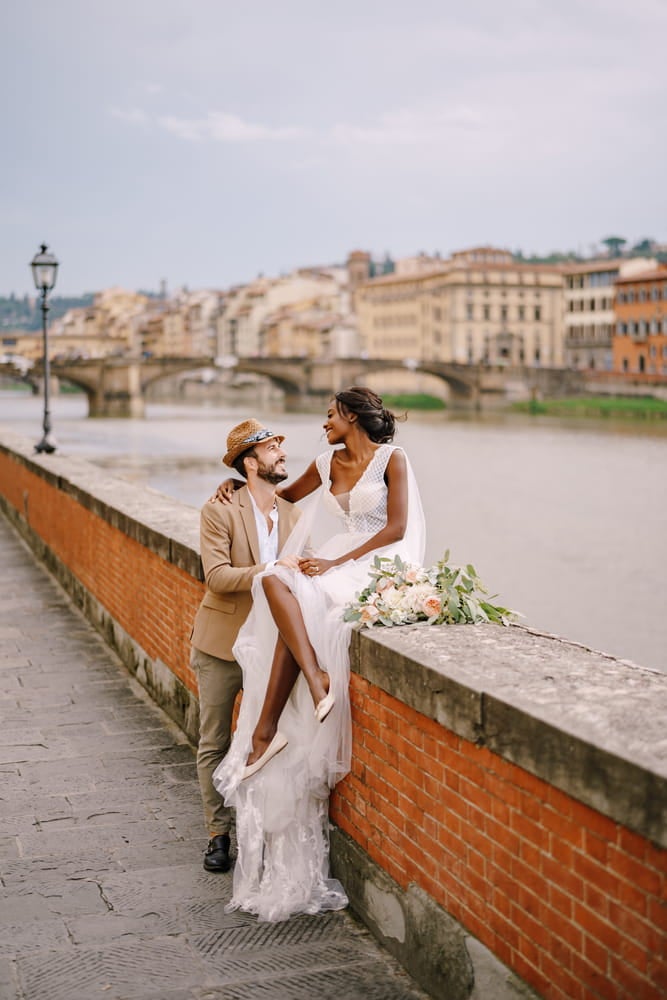
Getting married in Florence, Italy
Getting married in Florence, Italy means Renaissance architecture and a compact city your guests can walk. The city’s licensed ceremony rooms are in high demand, so book the date before anything else.

Getting married in Tuscany, Italy
Getting married in Tuscany, Italy puts vineyards, hill towns, and olive groves within reach of almost any villa you book. Comuni across the region license their own ceremony rooms, so the civil paperwork happens close to wherever you celebrate.
How much does it cost to get married in Italy?
Getting married is exciting, heart-warming, and fun. But it’s also pretty expensive. Sure, you can get away pretty cheap if all you want to do is sign the marriage documents. Still, the celebration that often follows the ceremony can come with a rather steep price tag.
That said, weddings in Italy are no more expensive than in most nearby countries. Here’s what you can expect to pay for yours:
- Paperwork for civil marriage: €82
- Trip to Italy: €100-1000+ depending on where you’re coming from
- Wedding venue: €500 to 2000+
- Food and drinks: Around €150 per person
- Photographer/videographer: €500-1000
- Accommodation: Around €100 per person
- Wedding planner: €1000-2000
- Celebrant: €500-1000
- Entertainment: €500-2000+
All in all, a rather modest wedding with a single overnight stay can cost around 10,000€ to 15,000€. If you want to extend the celebration to several days, book fancier wedding venues, top-tier performers, and fancy food, the total price can easily reach up to 50,000€ or more.
How to plan your Italian wedding
Planning your wedding is a long and tedious process. Even if you hire a wedding planner to do the bulk of the work for you, certain things are up to you to do and decide.
- Set your budget: We’ve already established that an Italian wedding can set you back anywhere from 10,000€ to 50,000€ or more. Set a budget that you’re comfortable with and work within that budget to avoid any unexpected expenses.
- Pick a wedding date: Even though you may associate Italy with constant good weather, that’s not the case across the entire country. Winters can get pretty cold, especially in the north. April to October is the safest time if you’re looking for good weather.
- Book everything early: If you want to get the wedding venue and the dates that you want, it’s best to book everything well in advance. Start booking as many things as possible at least a year in advance. This includes everything from the wedding ceremony, to planners, photographers, and entertainers.
Make wedding planning a breeze by staying connected
Having mobile internet in Italy can make your wedding experience much easier. You’ll no doubt need data to stay in touch with your wedding planner, translate marriage documents, or find wedding venues. Using an eSIM in Italy is the most convenient way to stay connected. You can set it up in minutes without the need for any additional devices or cards.
The Holafly eSIM for Italy gives you unlimited data and 24/7 support with every prepaid plan. Choose the duration that covers your trip and you’re connected from the moment you land.
Every Holafly eSIM also includes Always On: 1 GB of backup data each month at no extra cost, valid in 70+ countries, so you can still reach your planner or pull up a document if your plan runs out.
Planning trips to Italy across the whole year? Holafly Plans is a monthly subscription you can cancel at any time.
Count memories, not data
Never lose connection with unlimited data eSIMs from Holafly.
FAQs about getting married in Italy
You need a valid passport, a Nulla Osta (certificate of no impediment) from your embassy or consulate in Italy, an Atto Notorio signed by two witnesses, and a declaration of intent filed with the local civil register. Every foreign document must be legally translated into Italian and legalized. You then book a date at a licensed venue with the comune.
Yes. Italy sets no minimum residency period for foreigners, so you don’t have to live in the country or hold Italian residency to marry there. You apply through the comune where the ceremony takes place, and some comuni charge non-residents a higher fee for the civil paperwork.
Yes. You can marry in Italy on a tourist stay as long as your paperwork is complete and translated. The visa or entry stamp you hold doesn’t affect eligibility, though you should file your declaration of intent at the comune a few days before the ceremony rather than on arrival.
A civil ceremony is the shortest route. It’s held in a room licensed by the town hall, performed by the Mayor or a civil official, takes under an hour, and needs no religious paperwork or pre-marriage course. Foreigners who don’t speak Italian must bring an interpreter.
Plans that may interest you

A senior SEO writer from Lithuania, combining my passion for writing and travel at Holafly. With years of experience in technical fields, I'm here to answer all of your questions about staying connected. I specialize in turning even the most complicated topics into something everyone can understand.