Language
Denmark Christmas traditions: Food and celebrations
Discover Danish Christmas traditions, from cozy candlelit trees to the famous almond game, kid-friendly festivities, and gift-giving traditions.

Denmark’s Christmas season, known as Jul, centers around the national philosophy of hygge, coziness, and togetherness during the dark winter months. The holiday peaks on December 24 (Christmas Eve), when families gather at home for a traditional dinner and to exchange gifts.
This guide will cover everything about Danish Christmas traditions, including Christmas Eve customs, traditional food, gift-giving, tree and house decorations, family traditions, nisser, and unique Danish customs.
Those who want to experience Christmas in Denmark can stay connected using Holafly eSIM, with unlimited data, 5G speeds, and 24/7 customer support.

Peace of mind before you fly
Set up your eSIM before travel and get unlimited data on arrival.
What do Danish people call Christmas?
Danish people call Christmas jul. To wish someone a Merry Christmas in Denmark, you say “Glædelig jul,” which translates directly to “Merry Christmas.”
During the holiday season, children and families also look forward to visits from Julemanden, the Danish name for Santa Claus, who is traditionally believed to live in Greenland and deliver gifts with the help of mischievous elves known as nisse.
How is Christmas celebrated in Denmark?
Denmark celebrates Christmas with a rich blend of ancient Norse traditions, Christian customs, and cozy community spirit. ،he season is famous for its unique emphasis on hygge. This philosophy focuses on creating a warm, inviting, and intimate atmosphere during the darkest months of the year.
The key Danish Christmas traditions are:
- Advent and calendars: The season begins early with four Advent candles. Danes use Advent wreaths with four candles, lighting one each Sunday. Children often use Advent calendars. These can be a candle marked 1-24 that burns daily, or a package calendar with 24 small gifts.
- Julefrokost: Festive pre-Christmas lunches with colleagues and family featuring traditional food, beer, and snaps.
- Dec 23 (Lille Juleaften): Families decorate the tree, prepare their homes, and eat risengrød rice pudding containing a hidden almond prize (mandelgave).
- Dec 24 (Juleaften): The holiday peak features a dinner of roast pork or duck with potatoes and red cabbage.
- Dancing around the tree: Families light tree candles, hold hands, sing carols in a circle, and finally open gifts.
- Julemand: Santa Claus, believed to live in Greenland, is left a bowl of rice pudding to appease helper elves (nisse).
8 Danish Christmas traditions
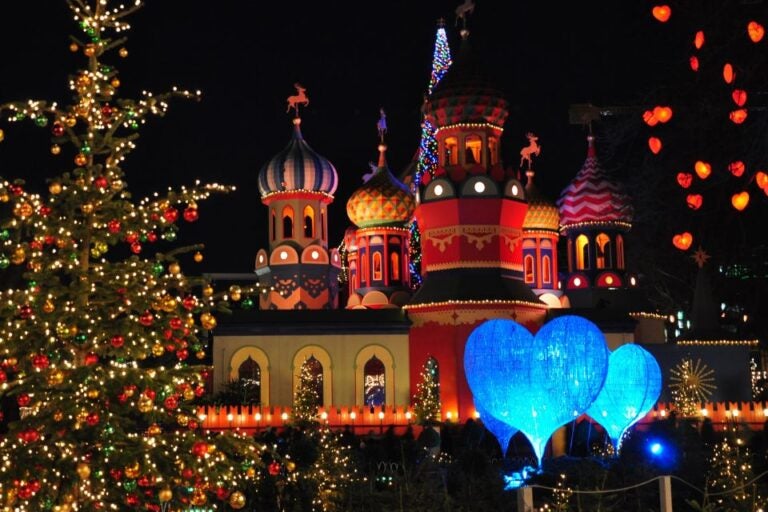
The holiday spirit begins well before December. Cities and towns glow with elaborate window displays and festive lights, most famously in Copenhagen’s Tivoli Gardens.
While many Western nations peak on Christmas Day, in Denmark, Juleaften (Christmas Eve) is the undisputed pinnacle of the holiday. This celebration takes place entirely at home with immediate family, following a cherished and familiar tradition.
Cultural summary of Danish Christmas:
- Primary day: December 24 (Christmas Eve)
- Atmosphere: Focused on hygge (coziness, candlelight, family intimacy).
- Main meal: Roast pork (flæskesteg) or roast duck with caramelized potatoes.
- Traditional dessert: Risalamande with cherry sauce.
- Celebration ritual: Holding hands, walking around the lit tree, and singing carols.
Christmas Eve and family celebrations
December 24, known as Juleaften (Christmas Eve), is the undisputed emotional and cultural peak of the Danish Christmas season.
Juleaften is traditionally spent exclusively with the immediate family at home. Businesses shut down early on December 24, and streets are empty as everyone gathers indoors to escape the winter cold and embrace hygge.
The celebration includes:
- The Christmas dinner: Danish families typically enjoy a Christmas dinner featuring roast pork with crackling or roast duck. This main course is commonly served with potatoes, gravy, and red cabbage. Dessert is risalamande (creamy rice pudding with cherry sauce), containing a hidden almond to win the mandelgave prize.
- Dancing around the tree: With real candles lit on the tree, the family joins hands, walks in a circle, and sings traditional carols together.
- Gift-diving: Presents are handed out and opened one by one only after the singing and dancing around the tree are complete.
Danish Christmas food and drinks
Danish Christmas cuisine is deeply tied to family gatherings during the cold winter months. Here is a guide to the classic foods and drinks that define Jul in Denmark:
- Flæskesteg (roast pork): The quintessential Danish Christmas centerpiece features a succulent pork roast with a thick, crunchy crackling, heavily salted and roasted to perfection.
- Anden (roast duck): Alternatively, many families roast a duck stuffed with apples and prunes.
- Brunede Kartofler (caramelized potatoes): Small boiled potatoes coated in a glistening, sweet layer of melted caramelized sugar and butter.
- Red cabbage: Served warm, often spiced with cinnamon and cloves to complement the rich meats and gravy.
- Risalamande: A cold, creamy rice pudding made from boiled rice, milk, vanilla, whipped cream, and chopped almonds. It is served smothered in a warm cherry sauce.
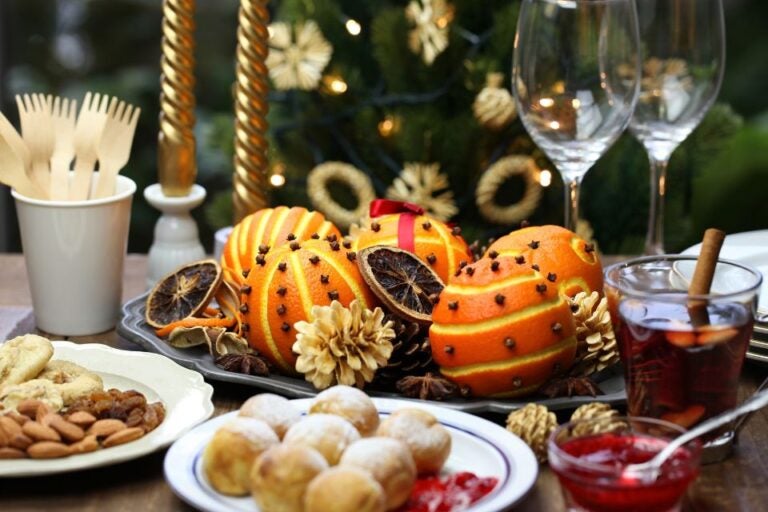
- Ebelskive: Traditional, spherical pancake puffs baked in a special cast-iron pan. They are served warm, dusted with powdered sugar, and accompanied by jam.
- Gløgg: The Danish version of mulled wine, made with red wine, spices (cinnamon and cloves), raisins, and chopped almonds, often spiked with a bit of aquavit or rum.
- Christmas cookies (Julesmåkager): Families spend time baking various traditional cookies in the lead-up to December, including brunkager (spiced brown cookies), vaniljekranse (vanilla wreaths), and pebernødder (tiny spiced pepper nuts).
One of the enjoyable Danish Christmas traditions is the hidden almond, which is placed inside the large bowl of risalamande. Whoever finds the whole almond wins the mandelgave (almond gift).
Historically, the prize was a classic marzipan pig (marcipangris), decorated with red ribbons. Today, families often give a small, lighthearted token gift, such as a chocolate bar, a small game, a deck of cards, or a small toy.
Julemanden and nisser
In Denmark, Santa Claus is called Julemanden, which means the “Christmas Man”. Like standard Santa, he wears a red suit and has a white beard. However, according to Danish tradition, Julemanden lives in Greenland rather than at the North Pole and travels on a sleigh pulled by reindeer to deliver presents to children on Christmas Eve.
Danish folklore features the nisse (plural: nisser), mischievous, gnome-like household elves wearing red hats. According to tradition, they live in the attic or barn. To keep them happy and ensure good luck for the household through the winter, families leave out a bowl of warm rice pudding on Christmas Eve.
Christmas trees and decorations
The Danish Christmas tree is the centerpiece of holiday home decor. Traditionally, a real pine or fir tree is brought indoors. Families decorate the tree with intricate ornaments and paper crafts.
The decoration items include:
- Real tree candles: Real, lit candles attached to the Christmas tree branches with small metal clips, which are lit only on Christmas Eve.
- Julehjerter: Hand-woven paper hearts made in red and white that are hung directly from the tree branches.
- Kravlenisser: Small cardboard cutouts of mischievous elves designed to “climb” along picture frames, bookshelves, and doors.
- Paper decorations: Handmade paper stars and folded paper cones are used throughout the home.
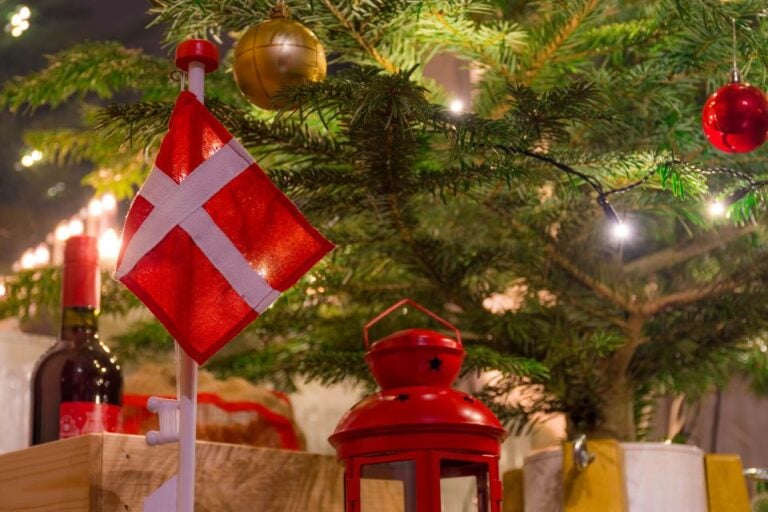
- Danish flag garlands: Strings of small Danish flags (Dannebrog) wrapped around the Christmas tree and used as room decor. It’s very similar to Finnish Christmas traditions, as they also add their paper flags to the Christmas tree.
Advent and the Danish Christmas season
The Danish Christmas season starts long before December. It’s characterized by a feeling of eager anticipation and warm traditions that help make the dark winter months brighter.
These traditions include:
- Advent candles: Families light an Advent wreath (adventskrans) with four candles, lighting one new candle on each of the four Sundays leading up to Christmas Eve.
- Calendar candles: A popular tradition in many homes is the calendar candle, which is marked with the numbers 1 through 24. It is burned down a little bit each day from December 1 until Christmas Eve.
- Christmas calendars: Both children and adults follow daily television or radio advent calendars. Many also have physical cardboard calendar windows to open each day.
- Gift calendars: Children often receive a package calendar containing 24 small, wrapped gifts to open each morning, or a calendar with small treats leading up to Christmas.
- Saint Lucia Day (December 13): Schools, churches, and hospitals hold atmospheric processions to bring light into the dark winter. Children wear white robes and carry candles, with the lead child wearing a lit candle crown while singing the traditional Lucia song.
Julefrokost and festive gatherings
Julefrokost, literally translating to “Christmas lunch”, is a traditional Danish holiday gathering. Despite the name “lunch,” these events typically start in the afternoon and often stretch late into the night.
These gatherings do not happen on just one day. The season runs throughout November and December, often stretching into January.
Danes typically attend multiple julefrokoster during the holiday season, breaking them down into different social circles:
- Workplace Julefrokost: One of the biggest social events of the year for Danish companies. Colleagues gather outside of work to eat, drink, and let loose, often serving as the company’s major holiday party. It usually takes place on Fridays or Saturdays leading up to Christmas.
- Family Julefrokost: A more traditional and relaxed gathering where extended family members come together during the weekends of December to catch up over a heavy holiday meal.
- Friends’ Julefrokost: Social circles, close friends, or sports clubs organize their own festive lunches or potlucks to celebrate the season together before everyone separates for family-only celebrations on Christmas Eve.
Danish Christmas traditions for kids
Denmark’s Christmas traditions are full of joy and interesting practices for kids. Here are the key ways children experience Jul in Denmark:
- Advent calendars: Children follow the countdown to Christmas using daily television or radio advent calendars, scratching or opening a new paper door each day from December 1 to 24.
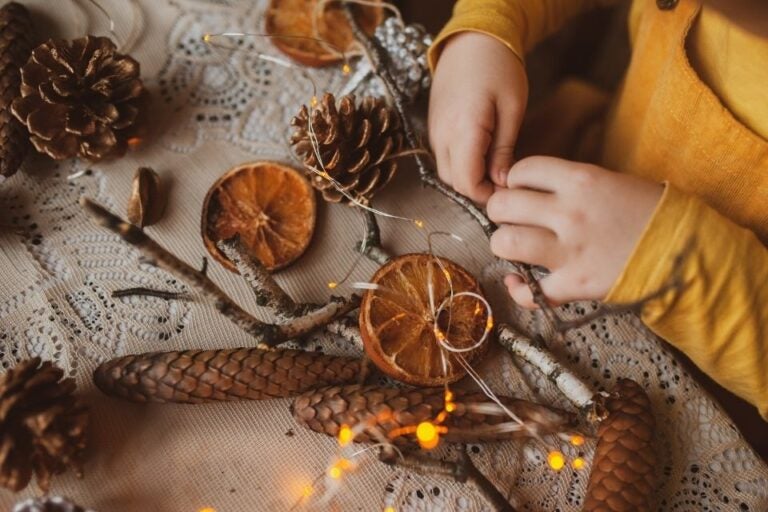
- Making Christmas decorations: Children actively help craft holiday items, such as weaving red-and-white paper hearts and folding paper stars. They also help with hanging ornaments, paper crafts, and delicate decorations on the Christmas tree.
- Eating festive treats: They enjoy warm, spherical pancake puffs called æbleskiver dusted with powdered sugar, along with sweet homemade Christmas cookies.
- Nisse traditions: Kids embrace mischievous folklore by placing climbing elves around the house and leaving a bowl of warm rice pudding out on Christmas Eve to keep the house nisse happy.
- Finding the hidden almond: During the Christmas Eve dinner dessert (risalamande), children eagerly search for the single whole almond hidden in the cream.
- Receiving gifts: The ultimate highlight for kids is finally opening the presents stacked under the tree, unwrapping them one by one in a shared, cozy family setting.
- The package game (Pakkeleg): A dice game where children and families try to roll a six to win small, wrapped presents from a central pile. Then, they frantically steal the gifts from each other before a hidden timer runs out.
Denmark Christmas fun facts
Here are a few quick, fun facts about how Denmark celebrates Christmas:
- December 24 is the big day: Unlike many Western countries, where Christmas Day (December 25) is the primary focus, Danes celebrate their main feast, dancing, and gift-opening on the evening of December 24.
- Real fire on the tree: Danish Christmas trees are traditionally decorated with real, lit candles attached to the branches with small metal clips. They are carefully lit only on Christmas Eve.
- The almond hunt: The traditional Christmas dessert, risalamande, hides a single whole almond inside. Whoever finds it wins a small prize.
- House goblins: Traditional holiday folklore features the nisse, a mischievous, gnome-like elf wearing a pointed red hat. Families still leave out a bowl of rice pudding on Christmas Eve to keep them happy.
- Orange with cloves: Danes push whole cloves into oranges to create fragrant, spicy decorations that scent the home.
Stay connected while experiencing Christmas in Denmark
Travelers who want to enjoy a calm, quiet Christmas in Denmark will need a reliable internet connection to use maps, request rideshares, and stay connected with their family. They will also have so much to share with their friends on social media.
Holafly Denmark eSIM is a convenient option for travelers with unlimited data, 5G speeds where available, 24/7 customer support, and the Always On feature with 1GB of backup data. It allows you to stay connected for up to one month after the main plan expires. However, it is only available as long as the eSIM remains installed.

Connect to the fastest networks
International eSIMs, local networks. Enjoy the best of both worlds with Holafly.
Plans that may interest you


Formerly a travel journalist turned marketing copywriter, I found my way back to the travel world with Holafly—my dream company that made remote work possible. My motto? “Dream big and make it happen.” I’m passionate about writing, exploring the world, and staying active through walking, running, swimming, and hiking. I also love learning, reflecting, and connecting with inspiring minds.