







 Language
The 9 best day trips from Cologne: Where to go and how to get there
From Bonn to the Moselle Valley: the best day trips from Cologne by train, with realistic travel times, costs, and tips for planning your visit.
Cologne sits right at the heart of the Rhineland, and that’s what makes it one of the best bases in Germany for day trips. From Cologne’s main station, fast regional and high-speed trains reach medieval towns, wine valleys, castle ruins, a major theme park, and even Belgium and the Netherlands, all without needing to book a hotel elsewhere.
This guide rounds up the best day trips from Cologne by train, with realistic travel times, approximate costs, and what makes each stop worth the trip, so you can pick your day and go.
If you’re visiting Cologne for Gamescom, these day trips are also an easy way to extend your stay and explore more of the Rhineland between or after event days.

An eSIM you can rely on
Join over 10 million Holafly customers and get connected with our trusted, global services.
Day trips from Cologne at a glance
Here’s how the nine destinations in this guide stack up for train time and what each one suits best, so you can jump straight to whichever fits your day.
| Destination | Train time from Cologne | Best for |
|---|---|---|
| Bonn | ~20–25 min | History, riverside old town |
| Düsseldorf | ~20–30 min | Shopping, nightlife |
| Aachen | ~45–75 min | Cathedral, thermal spas |
| Brühl | ~12–25 min | Phantasialand, palaces |
| Königswinter and Drachenfels | ~30–45 min | Castle ruins, Rhine views |
| Ahr Valley | ~1–2 hrs | Red wine, hiking |
| Moselle Valley | ~1h30–2h10 | Riverside castles, vineyards |
| Maastricht (Netherlands) | ~1h50–2h40 | Dutch border-city charm |
| Liège (Belgium) | ~1–2 hrs | Architecture, markets |
Best day trips from Cologne by train
These five towns are the easiest and quickest of all the day trips from Cologne by train, each reachable in under an hour, so you’ll have a full day to explore before heading back.
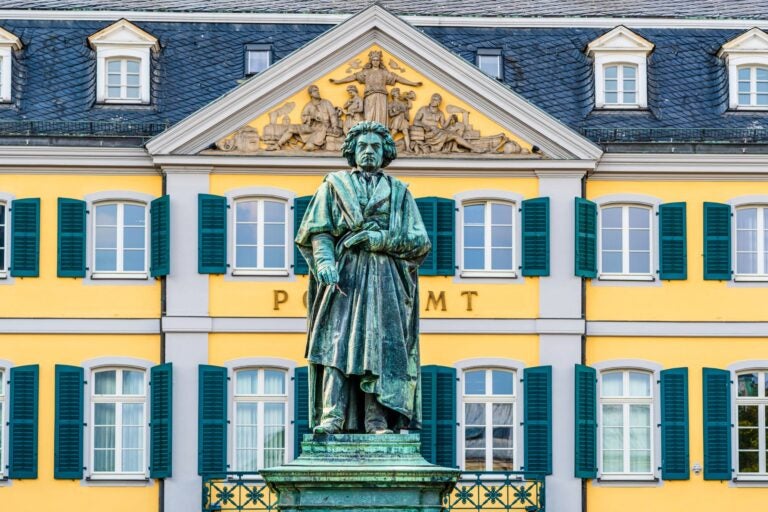
Bonn
Bonn is Germany’s former capital and Beethoven’s birthplace, with a walkable old town, a lively market square, and a Rhine promenade that’s especially pretty at sunset.
If you’re visiting in early-to-mid spring, check whether Bonn’s cherry blossom season on Heerstraße has started, the pink-canopied streets bloom for a short window and draw crowds fast.
- Train time: around 20–25 minutes on a regional RE or RB service from Cologne Hbf.
- Approximate cost: roughly between €9–25.
Düsseldorf
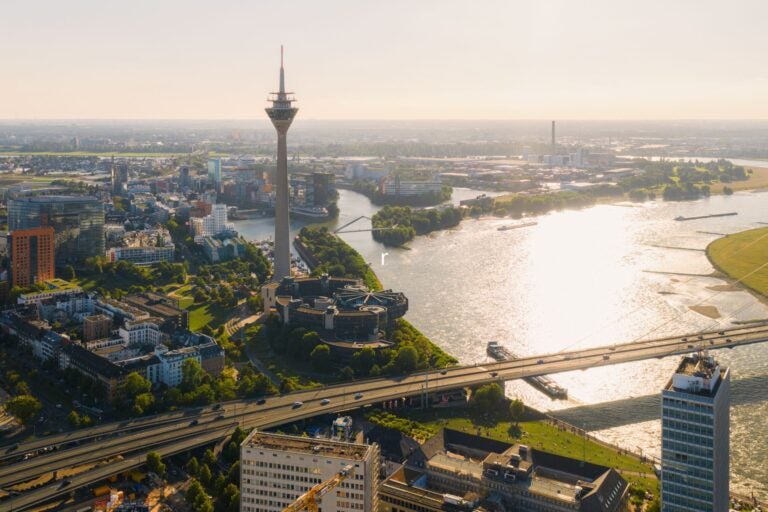
Düsseldorf is a completely different pace from Cologne, sleek shopping on Königsallee, riverside bars in the Altstadt, which locals call “the longest bar in the world”, and a skyline anchored by the Rhine Tower.
- Train time: around 20–30 minutes direct.
- Approximate cost: roughly €5–20.
Aachen
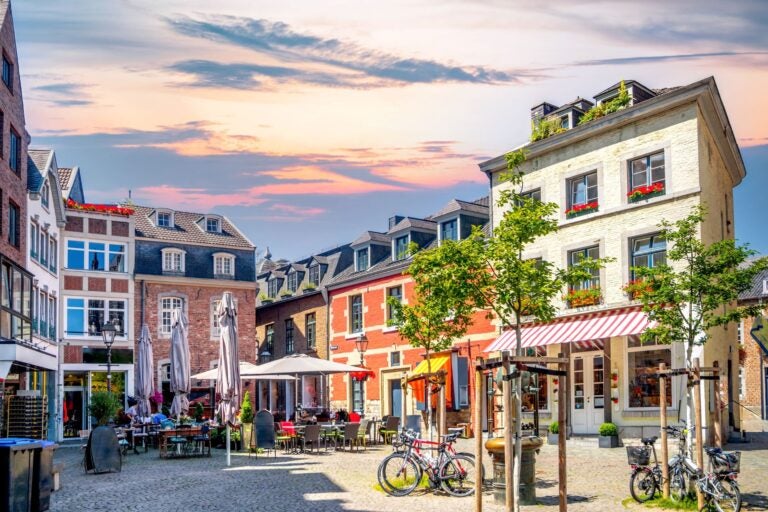
Aachen is Charlemagne’s former capital, home to the UNESCO-listed Aachen Cathedral and a centuries-old thermal spa tradition. It also sits right on the Dutch and Belgian borders, so it’s an easy warm-up if you’re planning either of the cross-border day trips further down this list.
Some tourist cards for Germany bundle discounted entry to spots like this with local transport, worth a look if you’re combining a few attractions in one visit.
- Train time: around 45–75 minutes on a regional train (faster on ICE, closer to 36 minutes, but pricier).
- Approximate cost: roughly €15–30 one-way.
Brühl
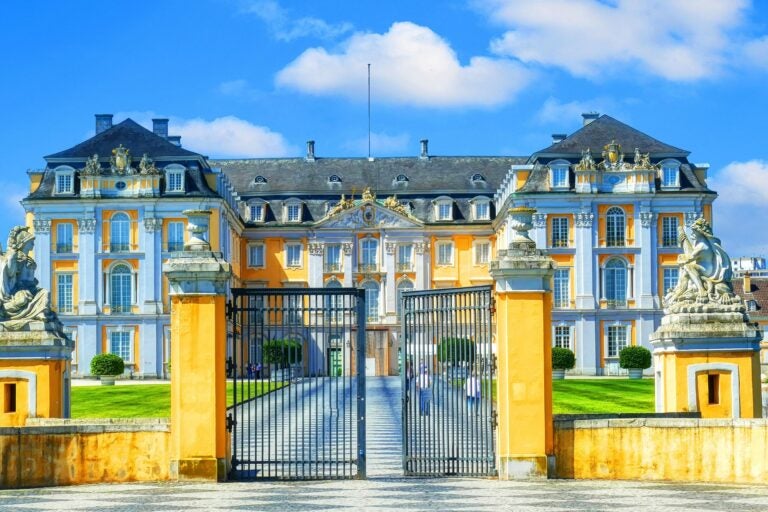
Brühl is the home to Phantasialand, one of Germany’s top-rated theme parks, plus the UNESCO-listed Augustusburg and Falkenlust Palaces nearby if you’d rather skip the rides.
Phantasialand’s ticket prices change by date and season, typically ranging from around €40 to €80, so it’s worth checking the calendar in the official shop before you commit to a day.
- Train time: around 12–25 minutes direct, one of the shortest day trips from Cologne by train.
- Approximate cost: roughly €3–6 one-way.
Königswinter and Drachenfels
The ruins of the Drachenfels castle and the fairy-tale Schloss Drachenburg, both perched above the Rhine with some of the best river views in the region, a classic pick among things to do near Cologne for anyone who wants scenery without a long journey.
- Train time: around 30–45 minutes on a regional train to Königswinter station.
- Approximate cost: roughly €12–35, plus around €12–14 for a return ride on the Drachenfelsbahn cog railway if you don’t fancy the walk up.

Wine country day trips from Cologne
If you have a bit more time, these two valleys are the best day trips from Cologne by train for wine, hiking, and a slower pace.
Ahr Valley
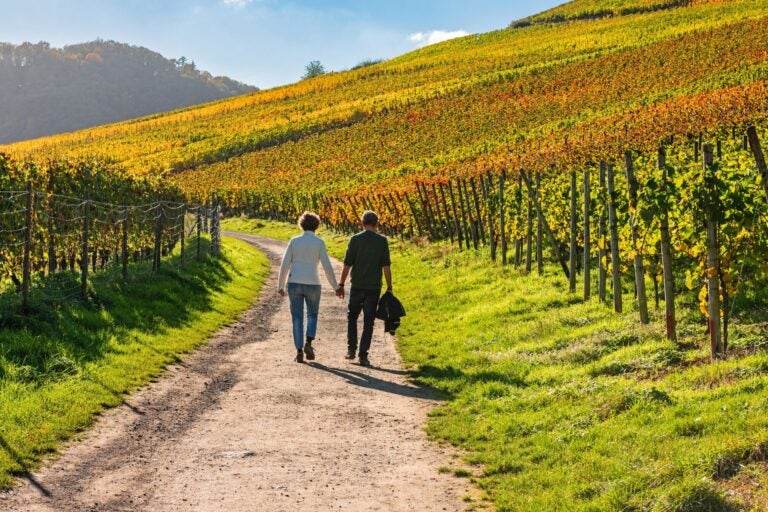
Ahr Valley is Germany’s best-known red wine region, centered on the spa town of Bad Neuenahr-Ahrweiler.
The Rotweinwanderweg (Red Wine Hiking Trail) links small wine villages along the valley, making this an easy Cologne to Bonn day trip extension for anyone who wants vineyards over city sights.
- Train time: around 1 to 2 hours, usually changing at Bonn or Remagen.
- Approximate cost: roughly €15–25 one-way.
Moselle Valley
Cochem is the most convenient Moselle Valley base for a day trip by train, with its hilltop Reichsburg Castle, terraced vineyards, and river cruises along one of Germany’s most scenic waterways. It’s a full day out, so plan an early train.
- Train time: around 1 hour 30 minutes to 2 hours 10 minutes, usually with one change.
- Approximate cost: roughly €17–30 one-way.
Cross-border day trips from Cologne
Cologne’s location also makes it possible to cross into Belgium or the Netherlands and be back the same night. If these day trips are part of a wider multi-country itinerary, a Europe travel guide can help you compare transport routes and the best way to connect destinations across the region.
For the day trip itself, Holafly’s Europe eSIM keeps your data working the moment you cross, so you’re not stuck hunting for Wi-Fi in a new country.
Maastricht
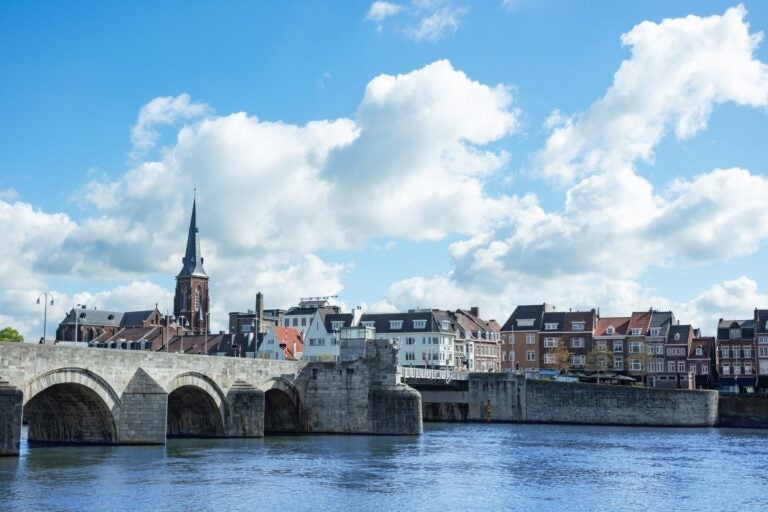
Maastricht is a compact Dutch border city with a relaxed, almost Belgian feel, cobbled squares, a bookstore built inside a converted church, and easy walking between all the main sights.
- Train time: around 1 hour 50 minutes to 2 hours 40 minutes, typically changing at Aachen.
- Approximate cost: roughly €25–45 one-way, depending on the connection and how far ahead you book.
Liège
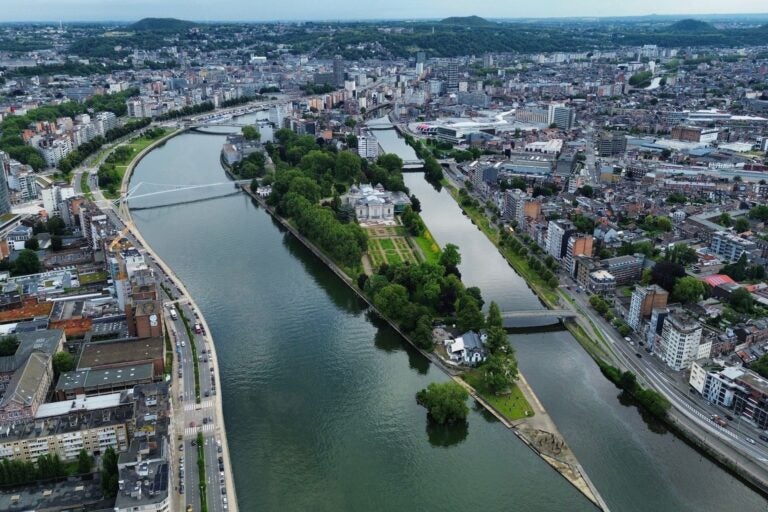
Liège’s striking Calatrava-designed train station is a sight in itself, and the city’s Sunday La Batte market along the Meuse River is one of the largest and oldest in Europe. It’s an easy add-on if you’re also considering Aachen, since both sit on the same corridor.
- Train time: around 1 hour to 2 hours, with direct high-speed options on some routes.
- Approximate cost: roughly €19–30 one-way.
Practical tips for planning day trips from Cologne
A little planning can make day trips from Cologne smoother and more affordable. Before setting off, check your transport options, ticket coverage, mobile connectivity, border requirements, and any seasonal factors that could affect your visit.
Stay connected between stops
Mobile coverage is generally reliable across Cologne and the major towns in this guide, although signals may be less consistent in rural valleys and on some train routes. Understanding how internet in Germany works before you travel can help you choose the right option, such as a Germany eSIM, for navigation, bookings, and cross-border day trips.
Regional trains vs. ICE
Most of these best day trips from Cologne by train run on regional trains, such as RE (Regional-Express) or RB (Regionalbahn), rather than the faster, pricier ICE. Regional trains take a little longer but are usually the cheaper option for day trips within Germany, and they’re covered by the regional day tickets below, which ICE fares aren’t.
Which ticket to buy
- In North Rhine-Westphalia, such as Düsseldorf, the VRR railway company provides 24h Ticket NRW, which covers unlimited regional trains, trams, and buses across the state for a flat rate, split up to 5 ways for 24 hours if you’re travelling as a group.
- Ahr and Moselle Valleys: these fall in neighboring Rhineland-Palatinate, so use the Rheinland-Pfalz-Ticket instead. It’s a one-day discount ticket that allows up to 5 people to use it.
- If you’re planning to be in Germany for a while, the Deutschland-Ticket is a monthly subscription covering regional trains and local transit nationwide. It’s only €63, which is cheaper than single tickets if you’re doing several of these trips in one visit.
- If you’re mixing in longer ICE journeys, try to compare the regional options above against a German Rail Pass to see which works out cheaper overall.
Crossing into Belgium or the Netherlands
Germany, Belgium, and the Netherlands are all part of the Schengen Area, so there are normally no passport checks at the internal border. Still, bring your passport just in case. Travellers from the US, UK, Australia, or Canada don’t need a separate visa for a day trip like this, as long as your trip duration is within the 90-days-in-180 Schengen allowance.
Regional German tickets like the 24hTicket NRW generally stop working at the border, so budget for a separate ticket to cover the final leg into Maastricht or Liège.
Consider the season as you plan
A few of these destinations have a best time of year worth building around: cherry blossoms on Bonn’s Heerstraße in early-to-mid April, wine harvest festivals in the Ahr and Moselle valleys through September and October, Carnival in Maastricht in February or March, and Phantasialand’s Wintertraum event running into January. Cologne, Düsseldorf, Aachen, and Liège all run well-known Christmas markets from late November through December, too.
Stay connected on your day trips from Cologne with Holafly
You’ll be hopping between regional trains, checking platform changes, and pulling up maps in towns you’ve never walked before, all of which falls apart without data. An eSIM for Germany from Holafly gives you unlimited data at speeds up to 5G, backed by 24/7 customer support if anything needs sorting mid-journey.
If your day trips take you across to Maastricht or Liège, an eSIM for Europe covers Germany, Belgium and the Netherlands on one plan.
Trains run late, plans stretch, and sometimes you head back to Cologne later than you meant to. Keep your Holafly eSIM installed and Always On: 1 GB of monthly backup data is there when your plan runs out, topping up every month at no extra cost. That’s enough to check the last return service, message your accommodation, or pull up a ticket at the barrier without hunting for station Wi-Fi.
Get an unlimited data eSIM
Use code MYESIMNOW5 for 5% off at checkout
Plans that may interest you


哈囉我是來自台灣的 Wen,平常最喜歡旅遊,也喜歡將旅遊的種種化成文字跟大家分享,希望大家能在我的文章中找到有用的資訊,加上 Holafly 的 eSIM,讓你的旅程更美好!✈️✈️✈️ Hi! I'm Wen, a passionate content writer and travel enthusiast from Taiwan. I transform my wanderlust adventures into engaging stories and practical guides, helping fellow travelers make the most of their journeys.Through my articles, I strive to provide travel tips while introducing how our eSIM technology can enhance your travel experience - keeping you connected wherever your adventures take you!

